
Two "direct recycling" startups just got $150M from DOE
Nth Cycle took $100M and Princeton NuEnergy $50M out of the DOE's $500M battery round. Both have operating plants and third-party numbers — which is more than most. Neither has solved the part a grant cannot buy: feedstock.
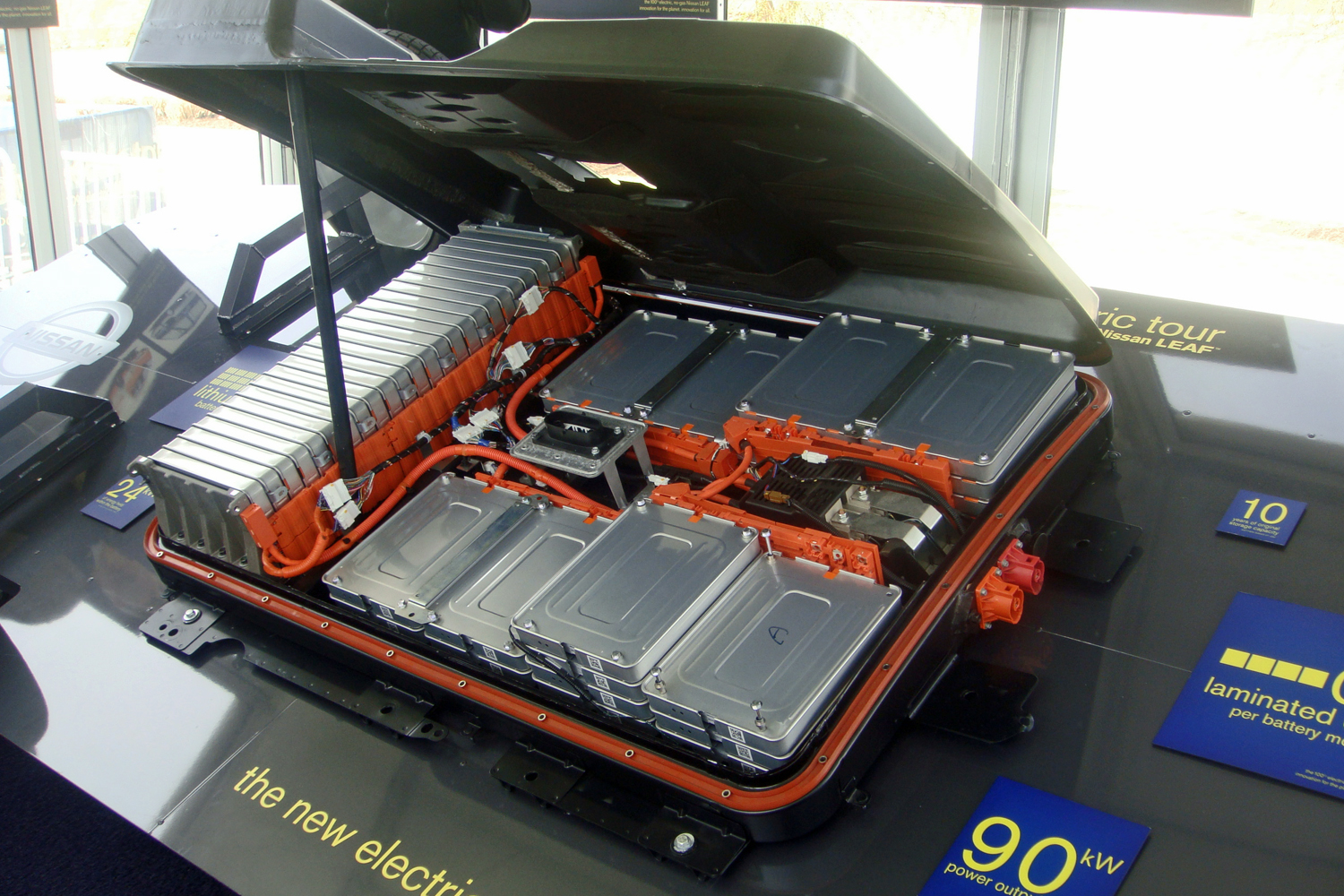
Between 20 and 25 August, Reuters, Argus, C&EN and Waste Dive all reported the same thing: the U.S. Department of Energy selected seven projects for $500 million under its battery materials processing and recycling programmes. Two of the largest awards went to recycling companies.
Nth Cycle: $100 million. Princeton NuEnergy: $50 million. Both make aggressive claims about being cleaner, cheaper and domestic. Those claims are worth separating from the grant.
What each technology actually does
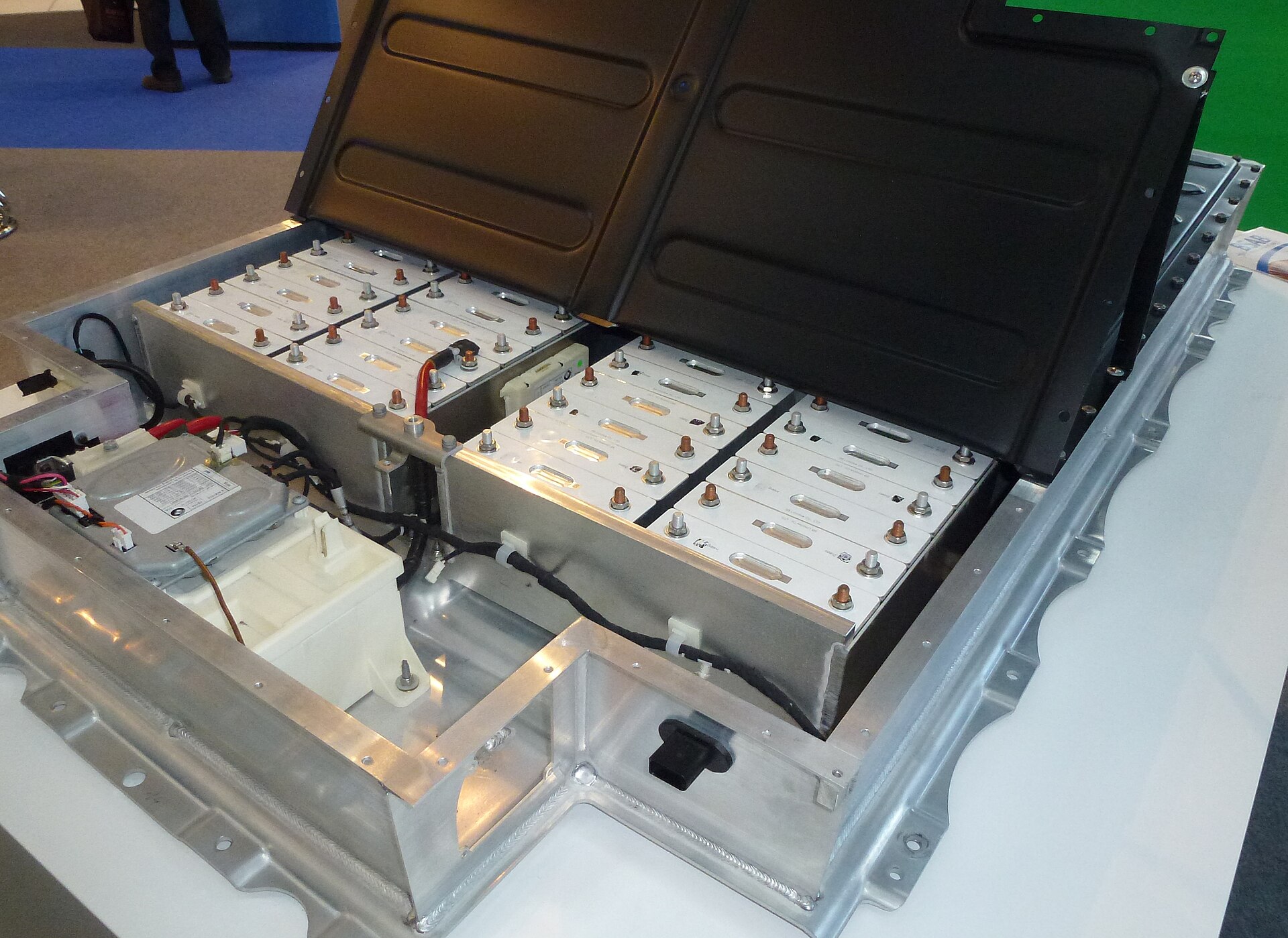
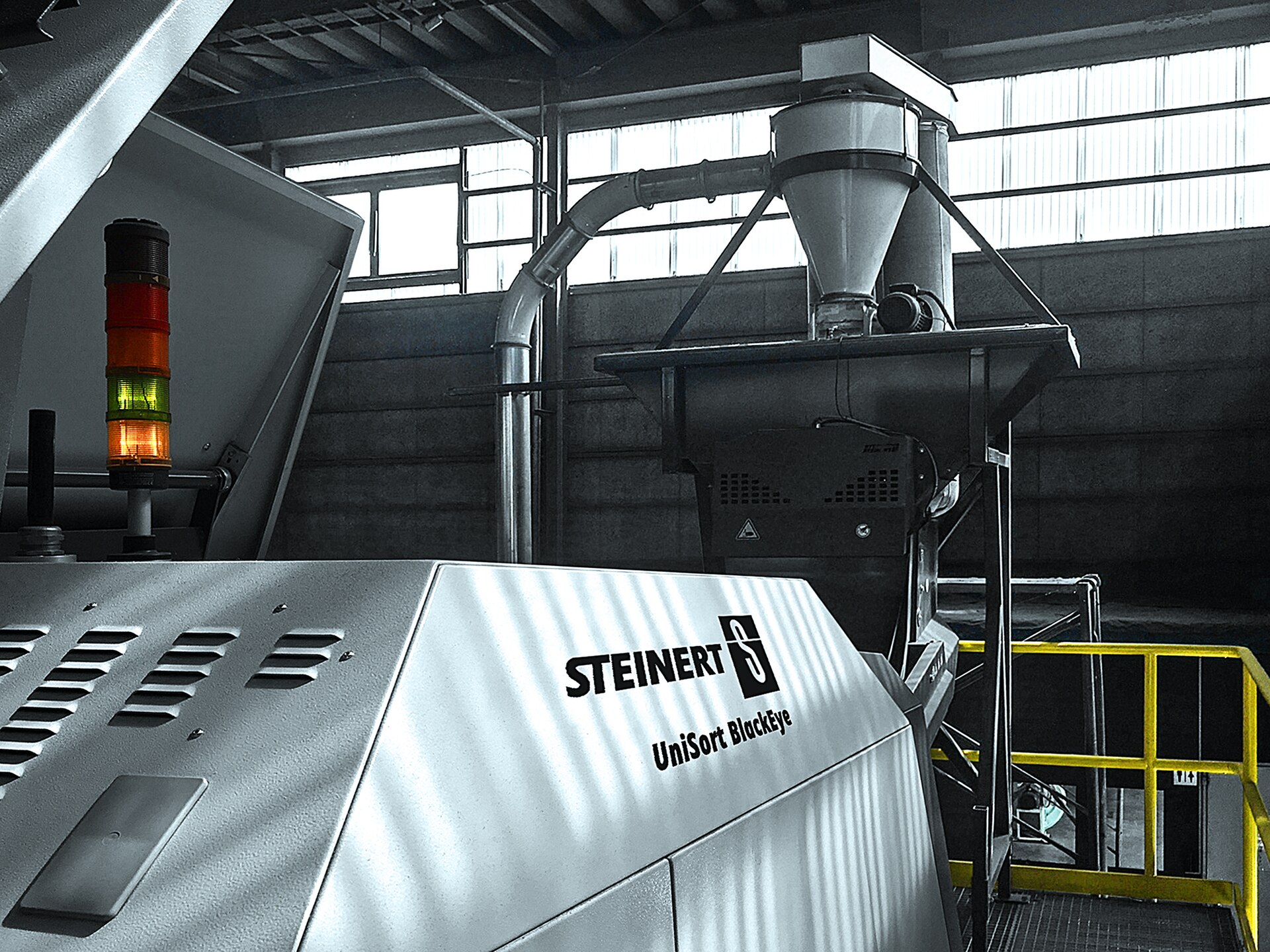
Both companies start from the same material. Cells and scrap get shredded into "black mass" — a dark powder containing the cathode and anode materials mixed together. Everything that distinguishes the two approaches happens after that.
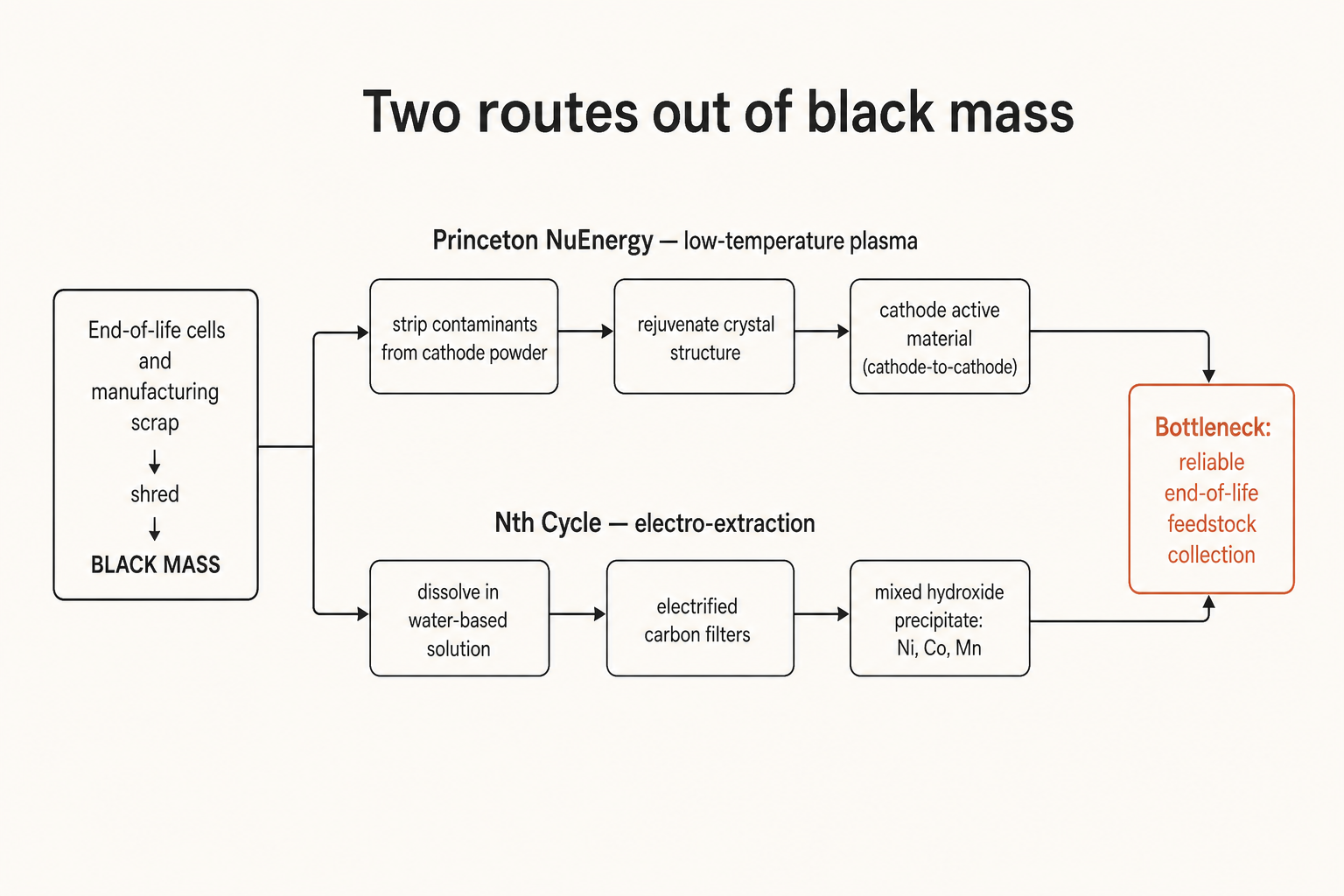
Princeton NuEnergy — low-temperature plasma. PNE's LPAS process uses a low-temperature plasma to strip contaminants off the cathode powder and rejuvenate it into battery-grade cathode active material. The point is what it avoids: it does not break the cathode down into elemental salts and rebuild it. The crystal structure survives. DOE selected PNE for $50M toward a $110M, 3,000-tonne-per-year "Cathode-to-Cathode" facility in Commerce, Georgia, running on nickel-based manufacturing scrap.
Nth Cycle — electro-extraction. Nth Cycle's OYSTER system dissolves black mass in a water-based solution and uses electrified carbon filters to selectively pull out nickel, cobalt and manganese as a mixed hydroxide precipitate. It is modular, and it runs on electricity and water rather than furnaces or strong acid. DOE awarded $100M for a southeastern U.S. facility.
What is genuinely strong
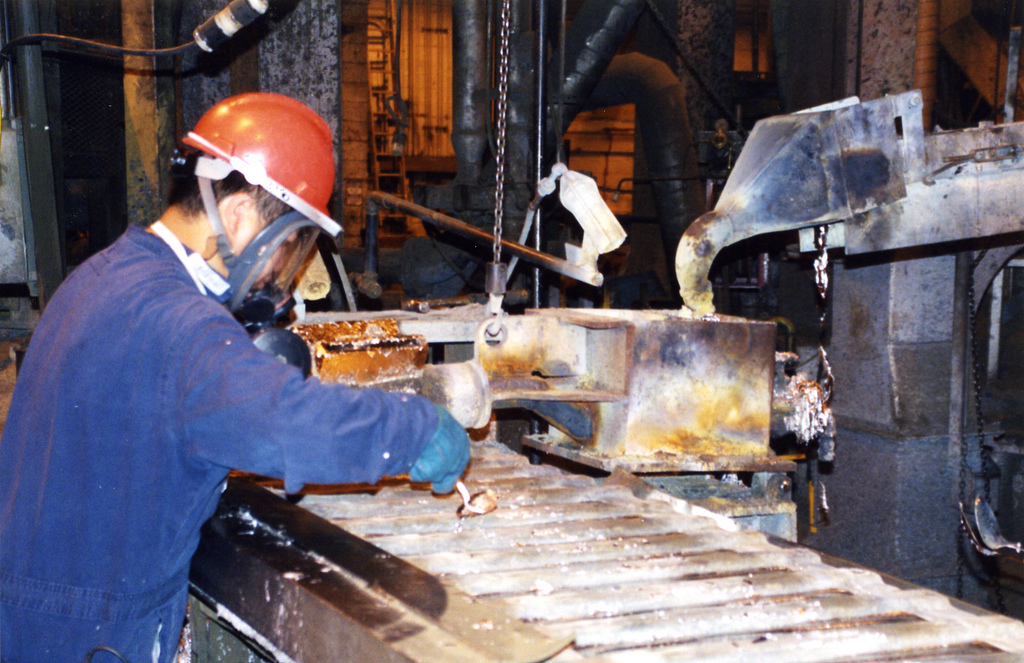
Both are structurally different from conventional pyrometallurgy and hydrometallurgy, and both keep processing onshore instead of shipping black mass to Asia and buying refined material back.
PNE is past the stage that kills most recycling startups. Its Chester, South Carolina facility was commissioned in August 2025, reports over 97% recovery yield, and is expanding to 15,000 tpa in 2026. That is a commercial plant, not a pilot skid.
Nth Cycle released an independent study on 17 August verifying 92% lower emissions than traditional mining and refining, and 44% lower than modern recycling. It also holds a $1.1 billion offtake deal with Trafigura — a commercial signal that is harder to fake than a press release.
Where the claims outrun the evidence
A $150M DOE award means these plants are being built.
A grant selection is an invitation to enter negotiations. PNE's Georgia facility and Nth Cycle's southeastern facility still have to be financed, permitted, constructed and ramped to nameplate. The distance between "selected" and "running at capacity" has ended plenty of announced projects.
Direct recycling is ~45% below virgin cathode cost with 70% less environmental waste.
Those are PNE's own figures, largely company-modelled, often citing its own Argonne/EverBatt modelling — and reported for manufacturing scrap. Scrap is clean, consistent and known. End-of-life mixed-format EV packs are none of those things, and contamination tolerance is precisely what direct recycling is most sensitive to.
Electro-extraction cuts emissions 92% against mining and refining.
Verified — against a specific baseline. The purity advantage of the mixed hydroxide product is real. But the process runs on electricity, so the greenhouse-gas result moves with the grid mix powering the cells. A plant on a coal-heavy grid does not deliver the same number as the study's baseline.
The bottleneck nobody funded
Both technologies depend on a reliable and growing supply of black mass. New U.S. export restrictions on black mass are intended to keep that material domestic, so the volume may well exist on paper.
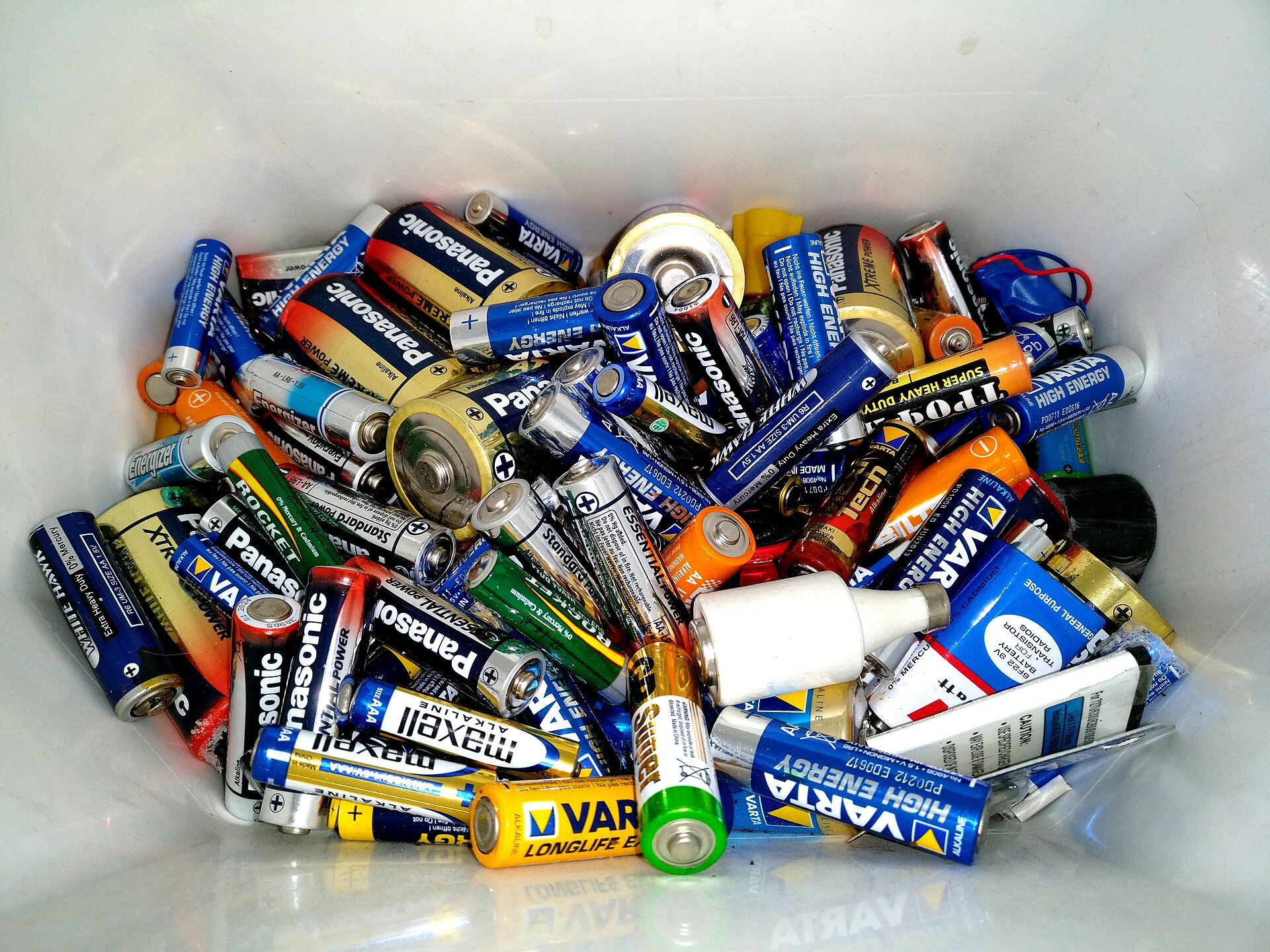
Getting it to a gate is a different problem. Collecting end-of-life consumer and EV batteries is logistics — takeback networks, transport rules for damaged cells, dismantling labour, regional aggregation. It is unglamorous, it attracts no grants, and it determines whether these facilities run full or sit idle.
Fair verdict
Should grants for recycling technology be conditioned on proving a domestic feedstock supply first — or is building the plant the only way collection infrastructure ever gets built around it?
These are among the more credible battery-recycling technologies in the field. Operating facilities, third-party validation, real offtake — not renderings.
The gap that remains is not technical credibility. It is the distance between a grant selection and a profitable, full-capacity, closed-loop domestic recycling industry, and it is governed by two variables no award can guarantee: feedstock availability and grid mix.
References and image credits›
- 01Reuters — Trump administration to back US minerals projects with $500 million in grants
- 02Argus Media — US awards $500mn to 7 battery projects
- 03C&EN — Business Watch: DOE gives out money for batteries
- 04Waste Dive — Battery recycling projects among DOE's latest $500M grant round
- 05Nth Cycle — Independent emissions verification study
Mario Roberto Duran Ortiz, Wikimedia Commons, CC BY-SA 3.0 · Xstrata Technology, Wikimedia Commons, CC BY-SA 3.0 · Calistemon, Wikimedia Commons, CC BY-SA 4.0 · RudolfSimon, Wikimedia Commons, CC BY-SA 3.0 · NIOSH, Wikimedia Commons, public domain · Santeri Viinamäki, Wikimedia Commons, CC BY-SA 4.0 · STEINERT, Wikimedia Commons, CC BY 4.0