
"Plasma and lemon juice" recycles batteries — the headline is doing a lot of work
Rice University reports ~95% recovery of critical metals using citric acid. The chemistry is genuinely clever. The framing around it — the lemon, the 10% figure, the record — does not survive a close read.
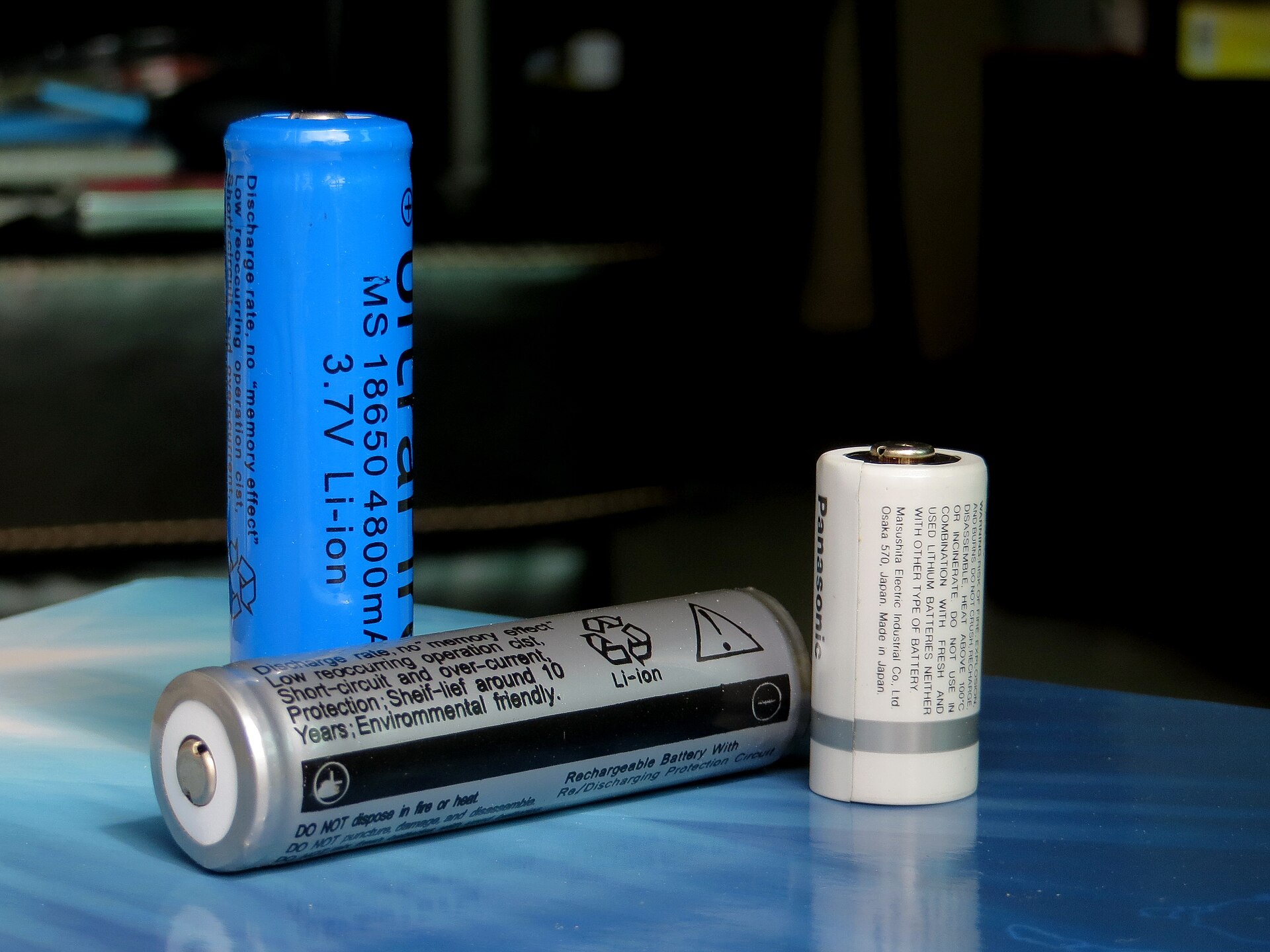
A Rice University group published a battery-recycling route that recovers nearly 95% of critical metals using, in the university''s own phrasing, "nothing harsher than the acid found in a lemon." It ran everywhere. The underlying chemistry is real and interesting. The story built on top of it has four load-bearing claims that do not hold.
What the process actually does
Spent cells get shredded into "black mass" — a powder of cathode metal oxides, anode graphite, and the lithium, nickel, cobalt and manganese everyone is after.
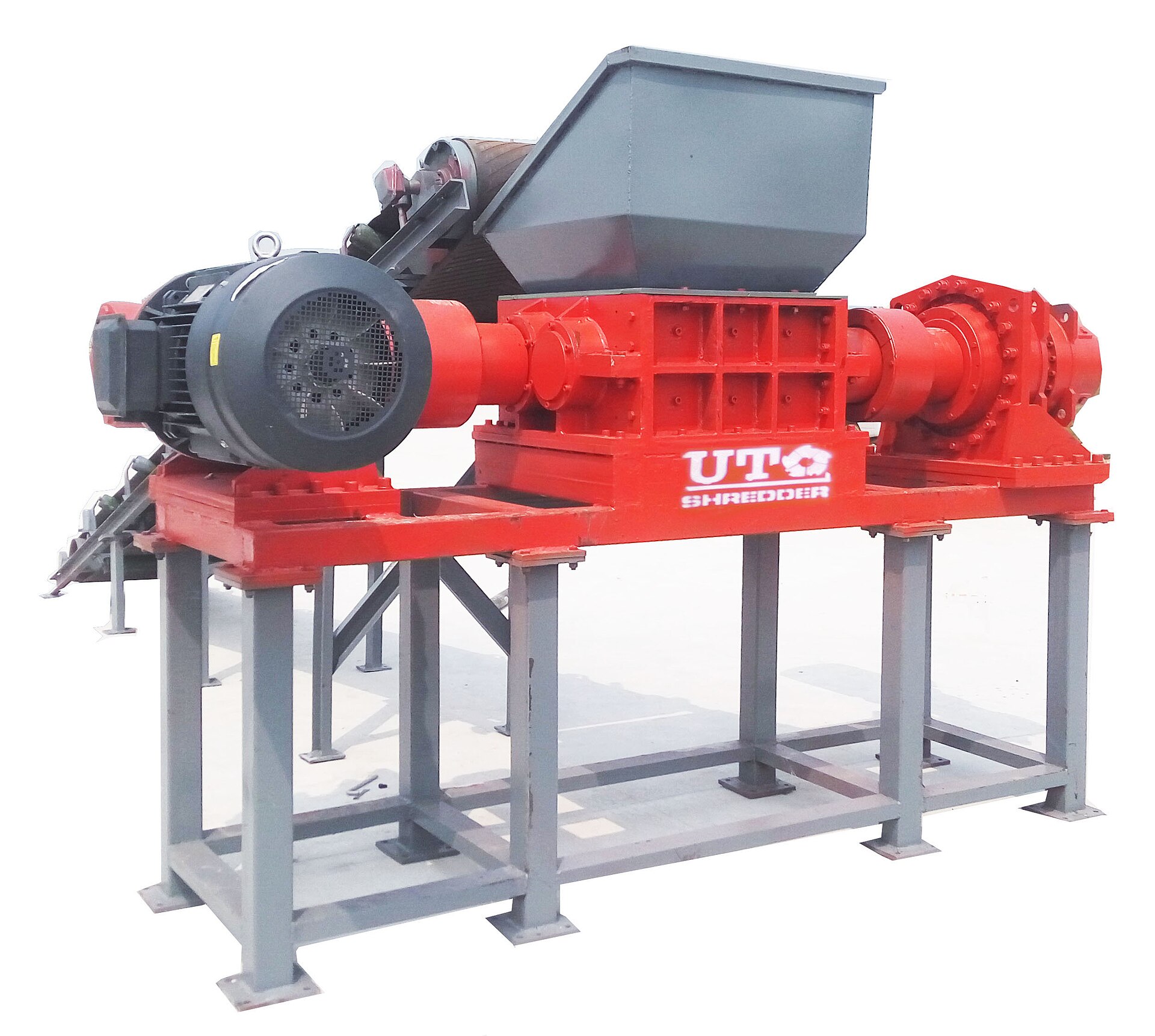
That powder is then exposed to a 15-minute microwave-induced plasma under H₂/N₂ gas. The energised hydrogen does two things at once: it chemically reduces the layered cathode oxides to metallic or lower-valence forms, and it cracks the particles open mechanically.

After that pretreatment, more than 90% of the metals dissolve in 1 M citric acid at room temperature. About 85% of the lithium comes out separately in plain water. The graphite is left behind clean enough to reuse.

A mild, room-temperature, green-solvent process recovers ~95% of critical minerals from battery waste in a single step.
It is a two-step process, and the first step is a custom microwave-plasma reactor running on hydrogen gas. The citric acid only works because the plasma already reduced and fractured the material. Describing the route by its gentlest reagent is a marketing choice, not a description.
The four numbers worth checking
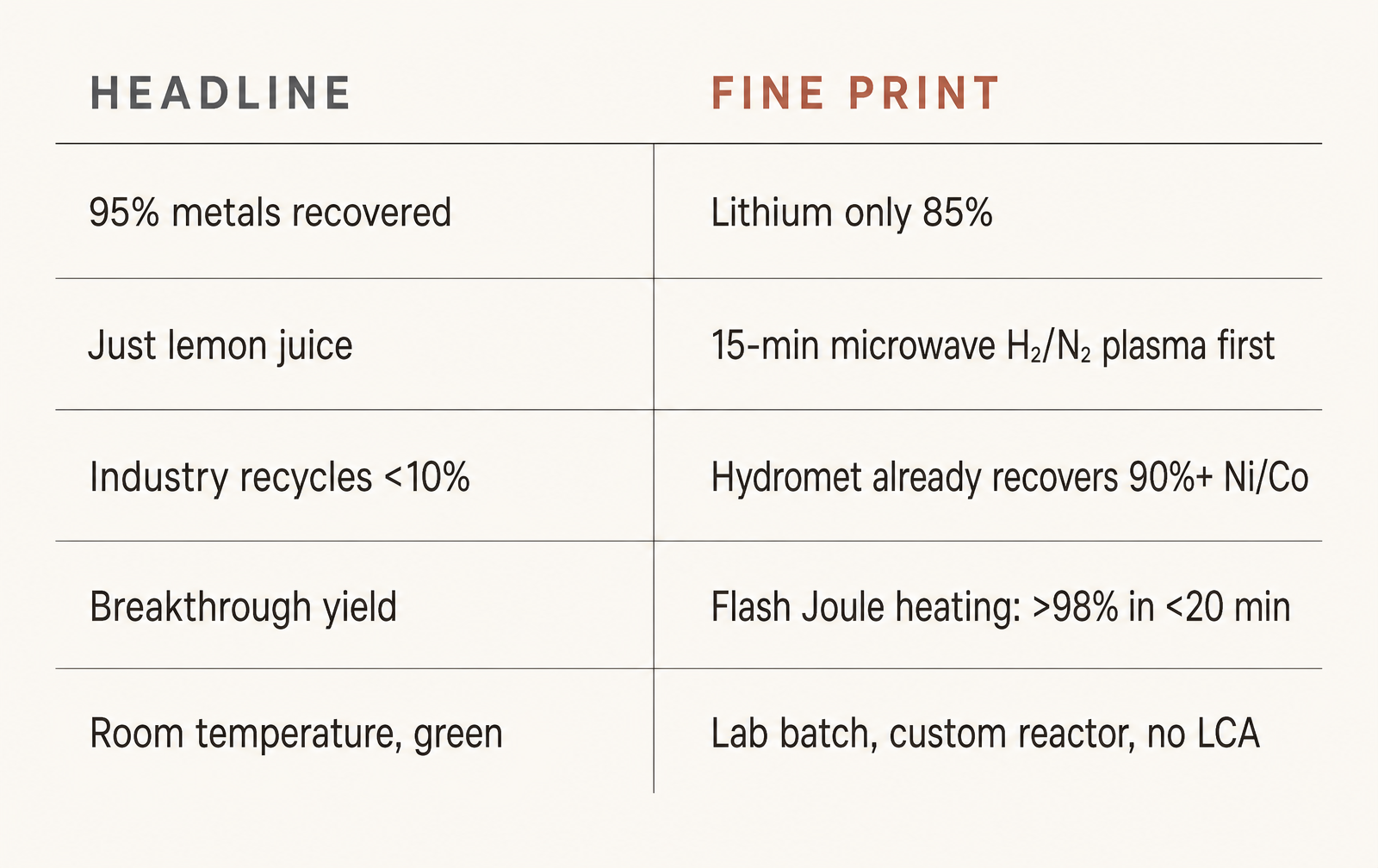
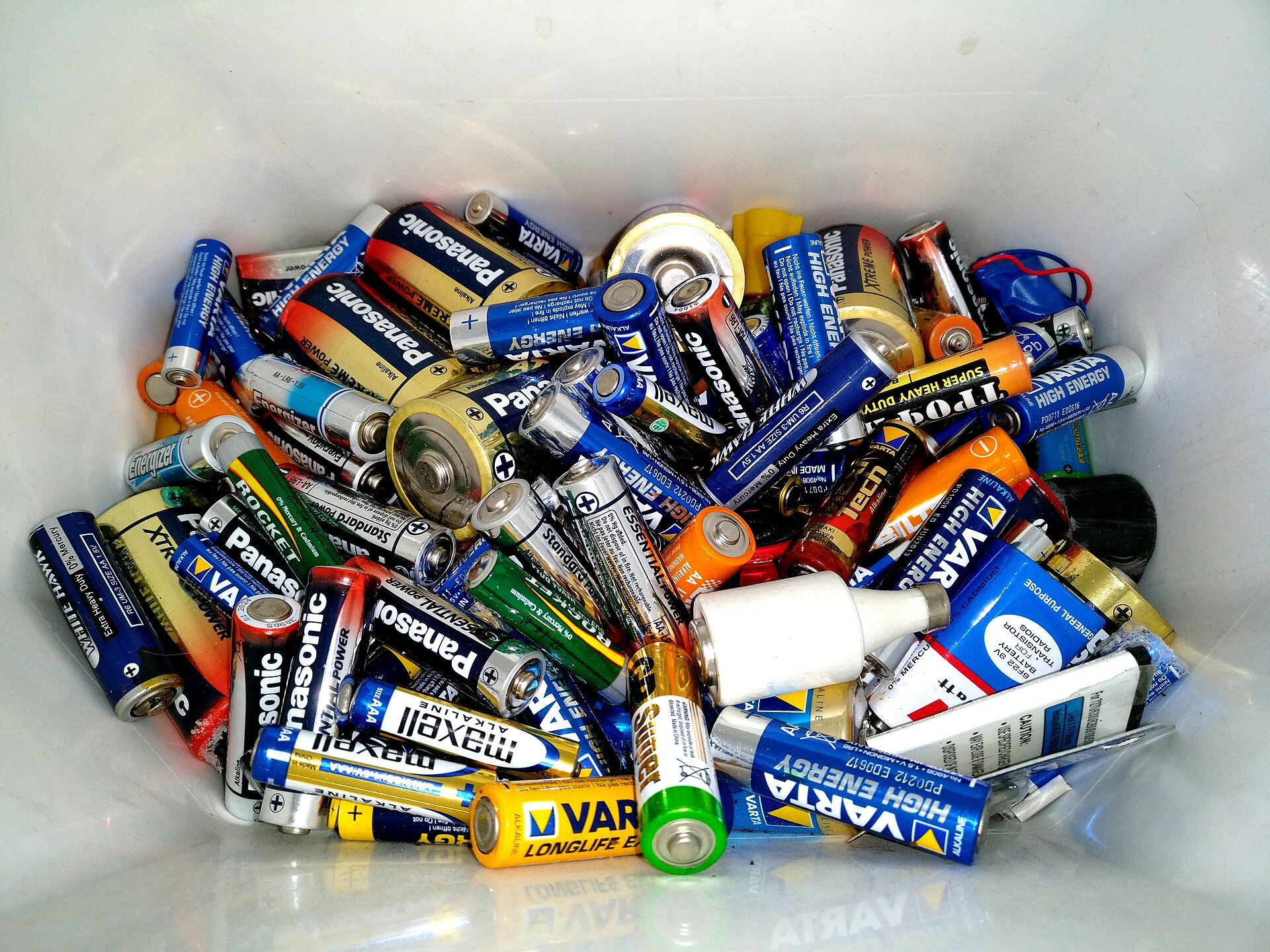
"Industry recycles under 10% of battery waste." This is the framing that makes the result look like a leap. It conflates two unrelated things: how much of the world''s battery waste gets collected, and how efficiently a recycler processes what arrives. Established hydrometallurgical plants routinely recover 90%+ of the cobalt and nickel in their feed. The 10% figure describes a collection failure, and no laboratory chemistry fixes a collection failure.
"~95%". That figure is for transition metals. Lithium — the most strategically constrained item on the list — comes out at 85%.
"Breakthrough yield." Another Rice lab, James Tour''s group, reported over 98% metal recovery in under 20 minutes using flash Joule heating. Separate microwave-assisted citric-acid leaching studies report 99%+ across Li, Co, Ni and Mn. Around 95% is a competitive number in a crowded field, not a record.
"Sustainable." Plasma generation consumes energy. The published coverage does not weigh that energy against the acid and heat savings in a full life-cycle assessment, so the environmental comparison against incumbent hydrometallurgy is asserted rather than demonstrated.
The process is greener than conventional hydrometallurgical recycling.
Plausible, and unquantified. Swapping strong mineral acid for citric acid is a real reduction in chemical intensity and effluent burden. Whether it survives the addition of a hydrogen plasma stage depends on an LCA nobody has published.
The scale question underneath all of it
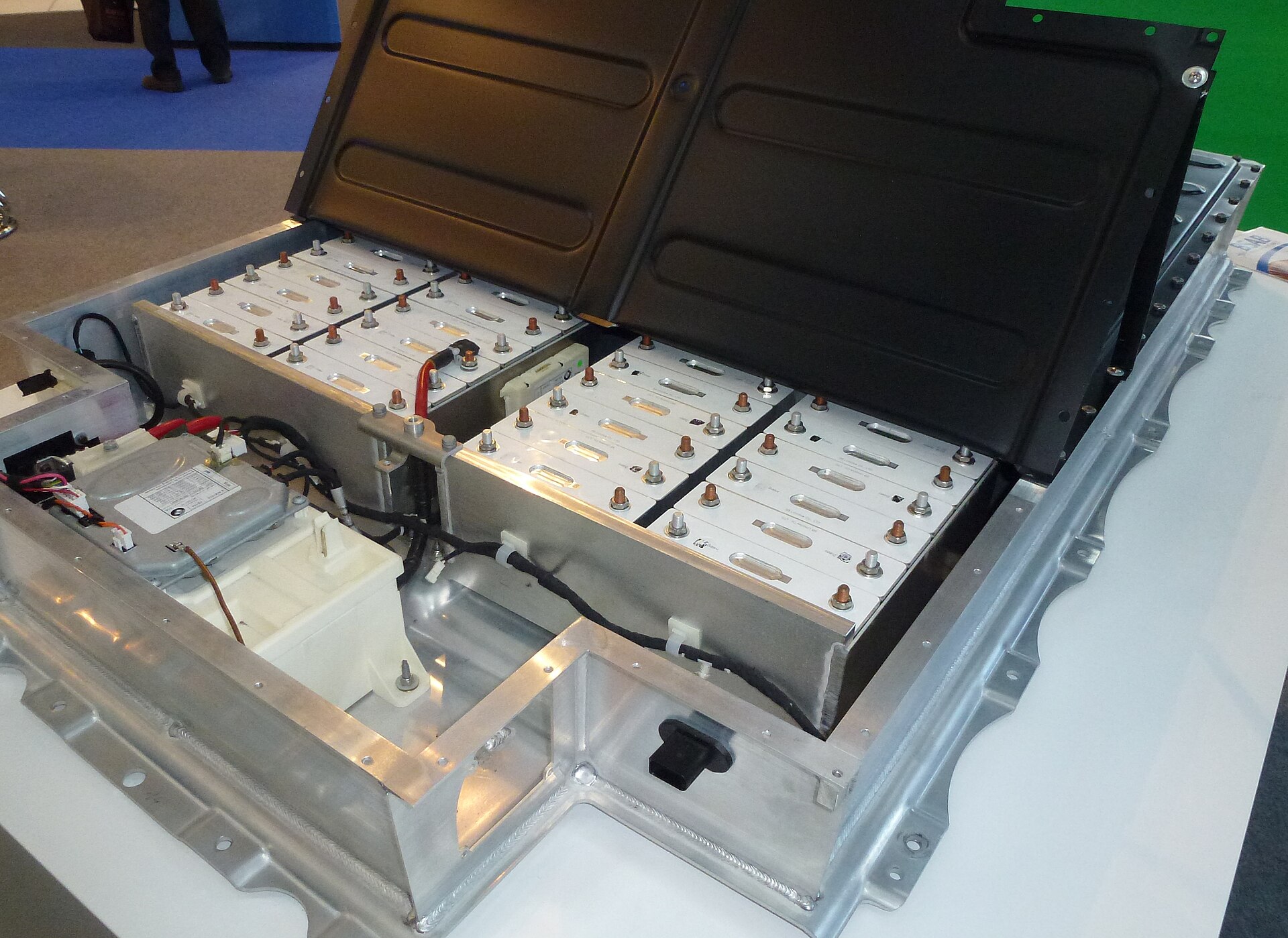
This is a batch process in a custom-built reactor handling small quantities. Commercial recyclers work in tonnes per hour, on black mass that is mixed, contaminated, and chemically inconsistent because it came from packs of different chemistries, formats and ages.
Selectivity and purity on that real feed remain untested. So does the claim that the recovered graphite is directly reusable, and that the water and acid can be recycled through repeated cycles.
The verdict
The mechanism deserves the attention: using a hydrogen plasma to pre-reduce and fracture cathode particles so a food-grade acid can finish the job is a genuinely elegant piece of process design, and if the energy accounting works out it could cut the chemical footprint of black-mass processing meaningfully.
What it is not is a fix for the recycling gap. That gap is about batteries never reaching a recycler at all — and a better leaching step, however green, does nothing about the pack sitting in a drawer.
References and image credits›
- 01Rice University News — "Plasma and lemon juice: Milder method retrieves nearly 95% of critical minerals in battery waste", 25 Mar 2026
- 02Chandrasekhar et al., "Plasma-Assisted Sustainable Recovery of Critical Minerals from Li-ion Battery Waste", Advanced Materials, DOI 10.1002/adma.202515201
- 03all-electronics.de — "Plasmaaufschluss vereinfacht Recycling von Battery Black Mass", 13 Apr 2026
Photo: Mk2010, Wikimedia Commons, CC BY-SA 3.0 · Photo: Robert Kropf, CC BY-SA 4.0 · LLHZ2805, Wikimedia Commons, CC BY-SA 4.0 · Photo: Scott Bauer, USDA, public domain · Santeri Viinamäki, Wikimedia Commons, CC BY-SA 4.0 · RudolfSimon, Wikimedia Commons, CC BY-SA 3.0 · Photo: Robert M. Lavinsky, CC BY-SA 3.0