
R3 Lithium in Covington: A $15M Series A Moving Into a $150M Building
R3 Lithium is taking over battery recycling capacity in Covington, Georgia that Ascend Elements spent far more to build. The asset is real. The question is whether the funding matches what refining lithium to spec actually costs.
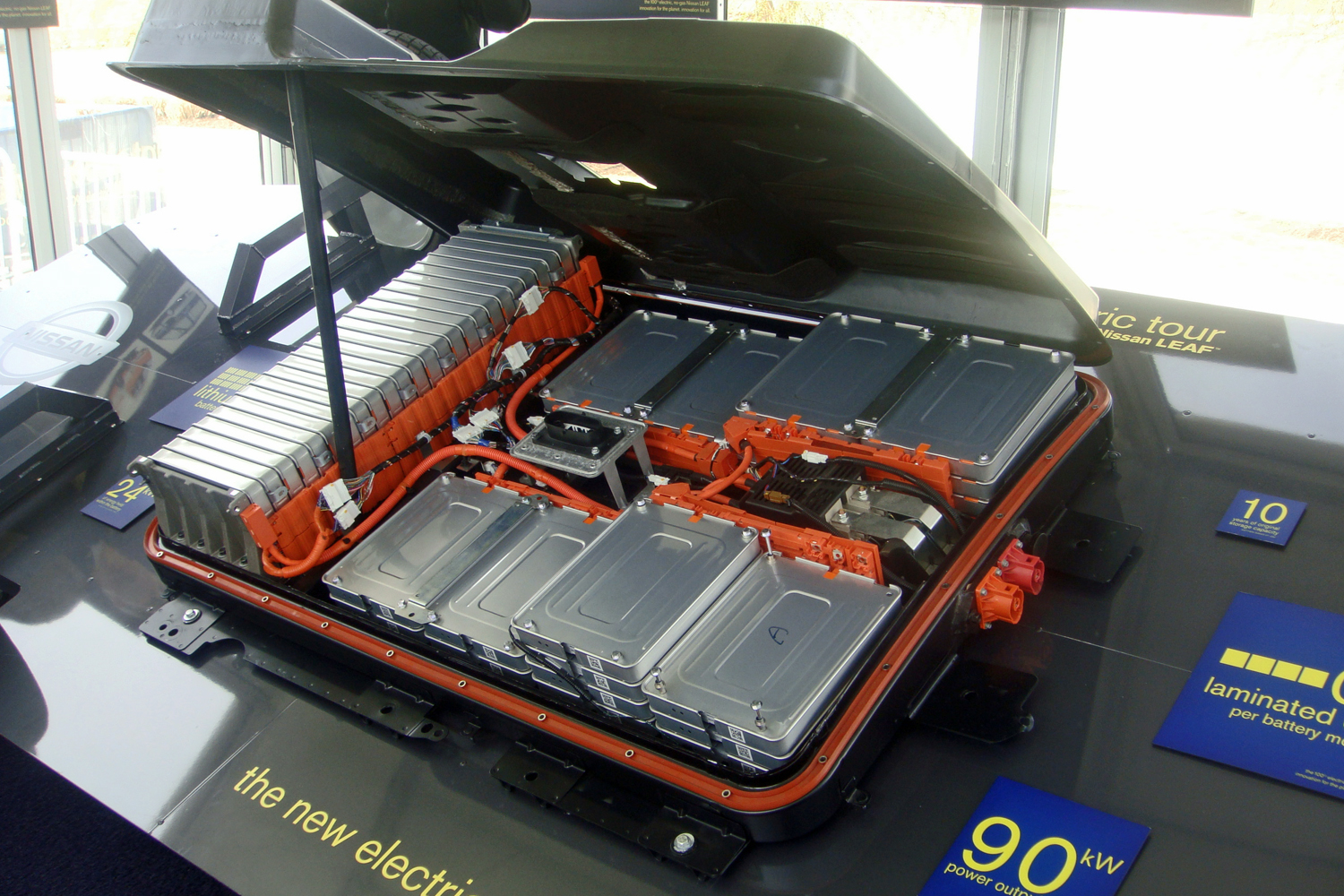
R3 Lithium announced it is establishing lithium refining operations at the Covington, Georgia site previously developed by Ascend Elements, backed by a $15 million Series A, targeting around 2,500 tonnes per year of battery-grade lithium carbonate.
Why the site matters more than the round
Acquiring commissioned process capacity is the single largest de-risking step available in this sector. Permits, utilities, containment, and hydrometallurgical equipment are the items that consistently blow budgets and timelines. Ascend Elements reportedly put around $150 million into the Covington facility. R3 is walking into that.
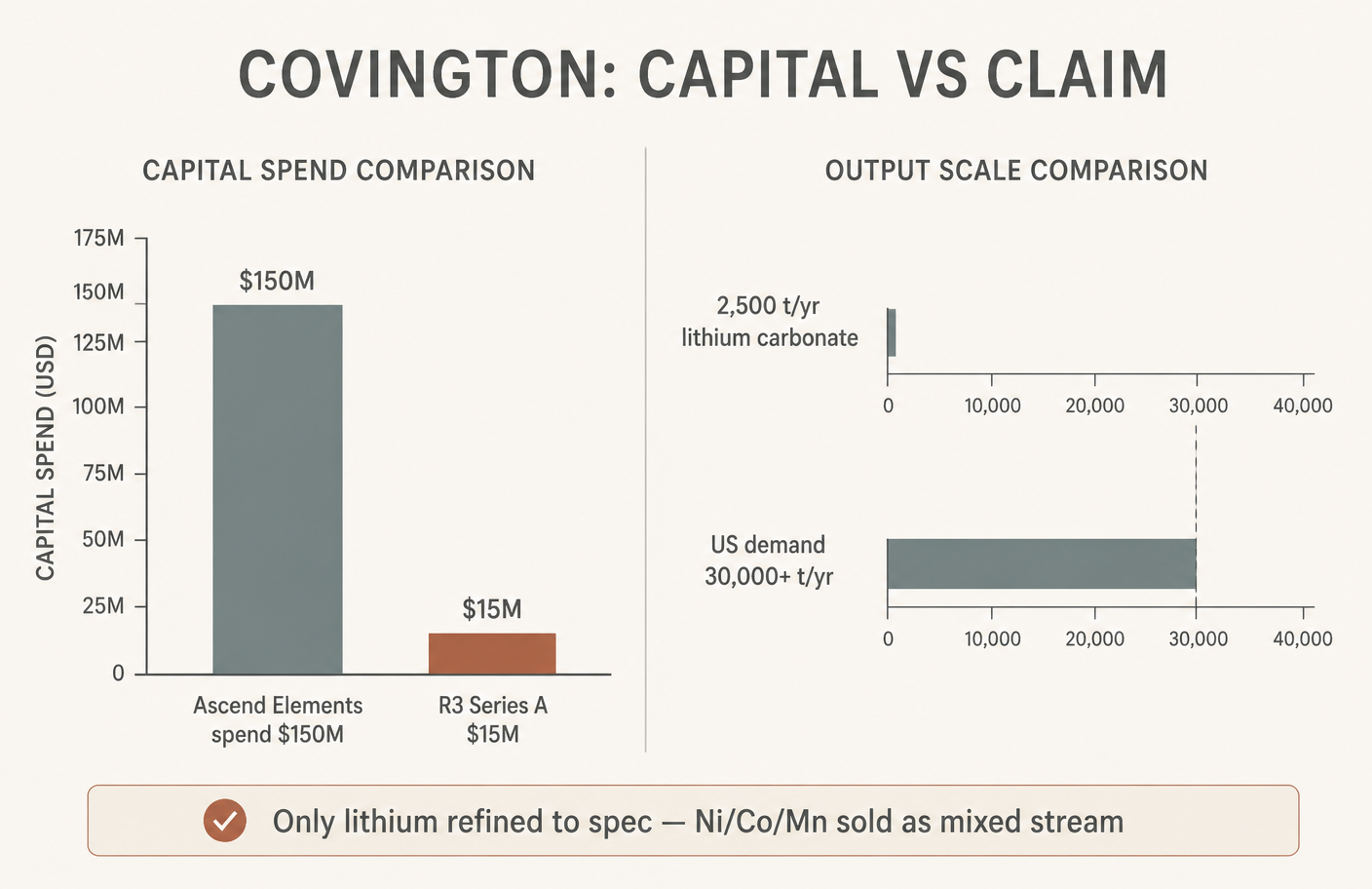
The gap between those two numbers is not automatically a problem — that is the point of buying distressed capacity. It becomes a problem if $15 million has to cover retrofitting, working capital, feedstock purchase and a commissioning ramp simultaneously.
The part of the process that is hard
Getting from batteries to black mass is close to a commodity service now. Getting from black mass to a lithium carbonate that a cathode producer will accept is not. Battery-grade specification means sub-ppm limits on sodium, magnesium, calcium and iron, plus consistent particle morphology. Hitting it once in a pilot is unremarkable; hitting it every shift for a year is the business.
Recycled lithium refining is now a solved commercial process.
Multiple well-funded operators have hit black mass production targets and then stalled on producing consistently qualified cathode-grade salts. Qualification with an offtaker typically takes 12 to 24 months on its own.
The revenue R3 is not capturing
The signal to watch is not the commissioning announcement. It is the first named offtake agreement with a cathode or cell producer, because that is the only evidence that the output actually meets spec.
R3 is refining lithium. The nickel, cobalt and manganese in the same black mass are being handled as a mixed stream rather than refined to spec. On current chemistries, those metals carry more value per tonne of black mass than the lithium does. Specialising is a defensible focus for a small team, but it means the unit economics depend on a narrow product against a market where lithium carbonate prices have been savagely volatile.
Verdict
Sensible asset play, credible focus, and a funding round that looks thin for the ramp ahead. Expect a Series B before nameplate output is reached.
References and image credits›
- 01US Geological Survey — Lithium statistics and information
- 02Argonne National Laboratory — EverBatt battery recycling model
Mario Roberto Duran Ortiz, Wikimedia Commons, CC BY-SA 3.0 · Photo: Wikimedia Commons, CC BY-SA 4.0 · Shixart1985, Wikimedia Commons, CC BY 2.0