
Can LFP batteries be recycled without dissolving them?
Iron-and-phosphate cathodes are cheap, which is exactly why conventional recycling struggles to pay for them. Direct regeneration takes a different route: repair the cathode powder instead of breaking it back down into salts.
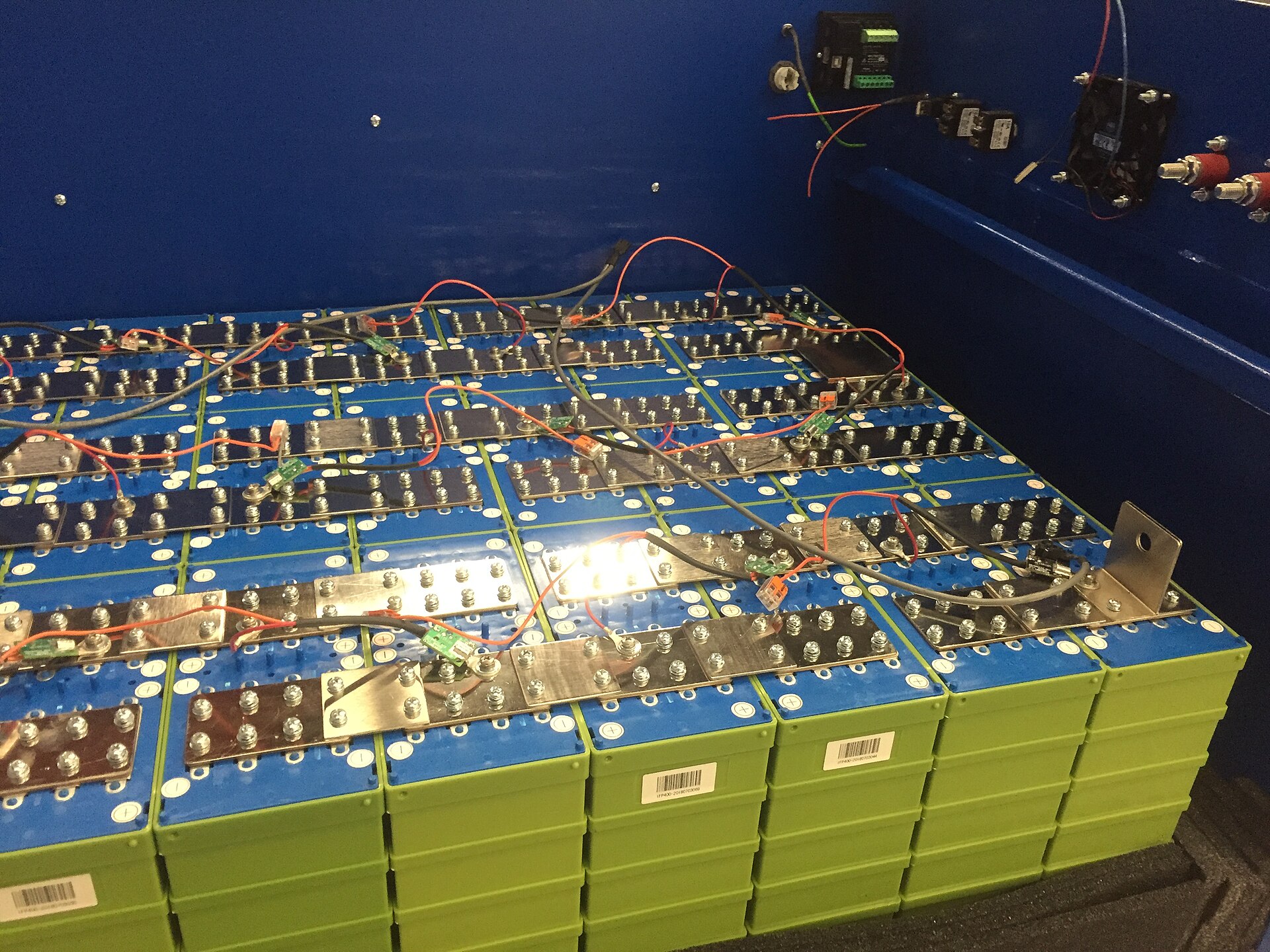
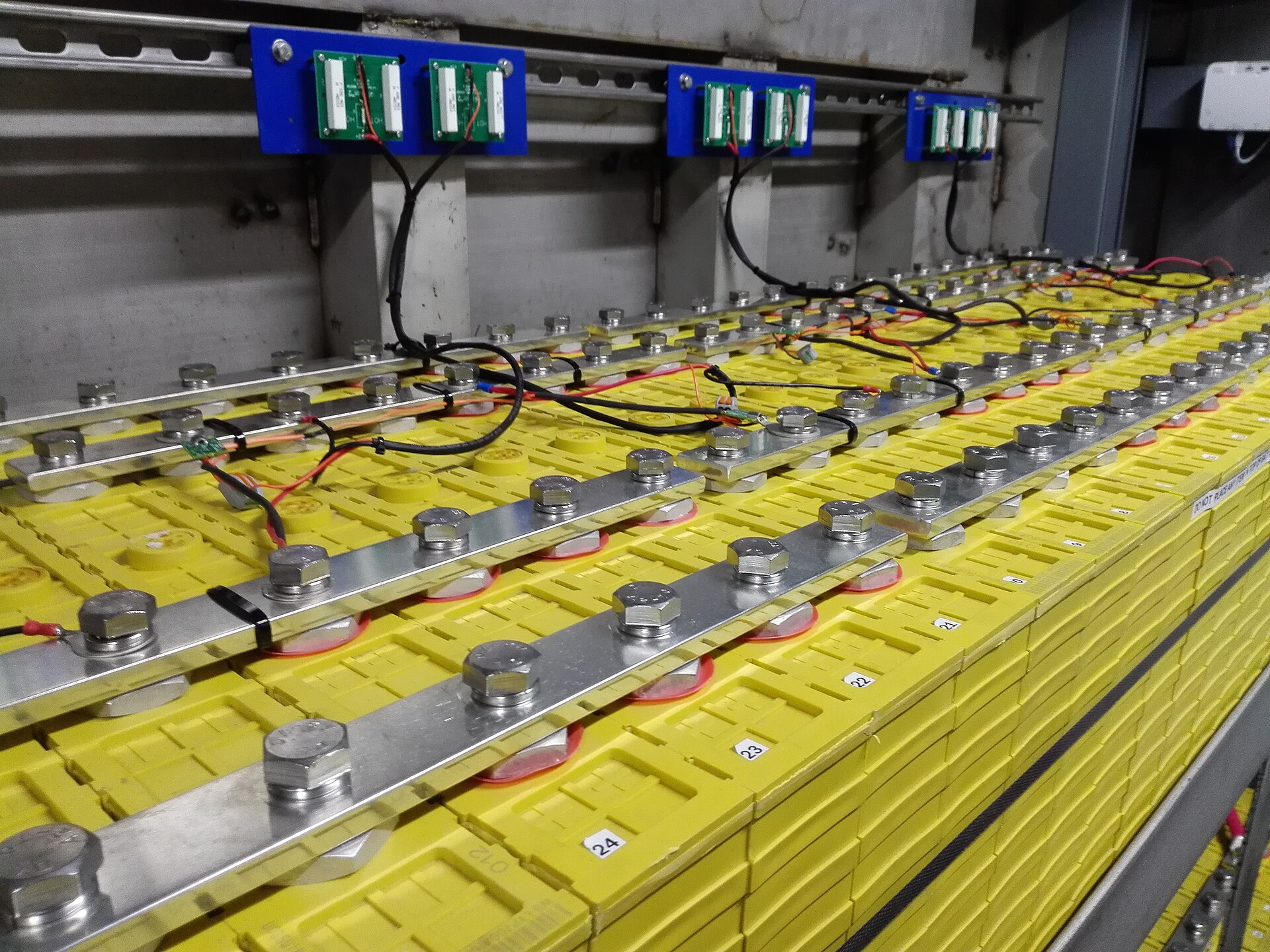
Lithium iron phosphate is winning on price, safety and cycle life. It is losing on scrap value. There is very little nickel or cobalt in an LFP pack, so the usual recycling business model — shred the battery, dissolve everything, sell the expensive metals — runs out of margin before it runs out of chemistry.
Direct recycling proposes something different. Instead of tearing the cathode down to elemental salts and rebuilding it, you take the used cathode powder, work out what cycling broke, and fix that.
Step one: make the pack safe, then take it apart
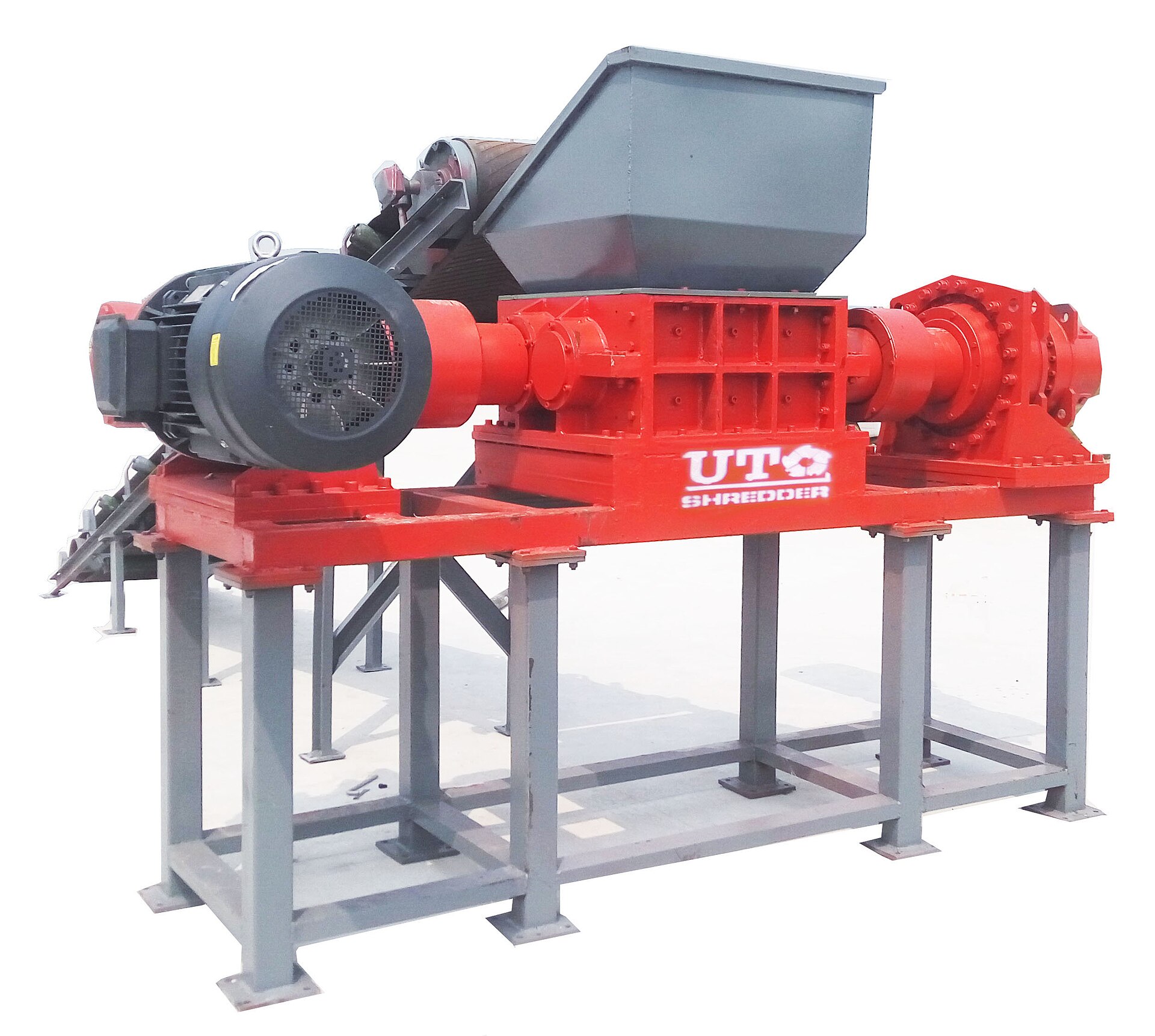
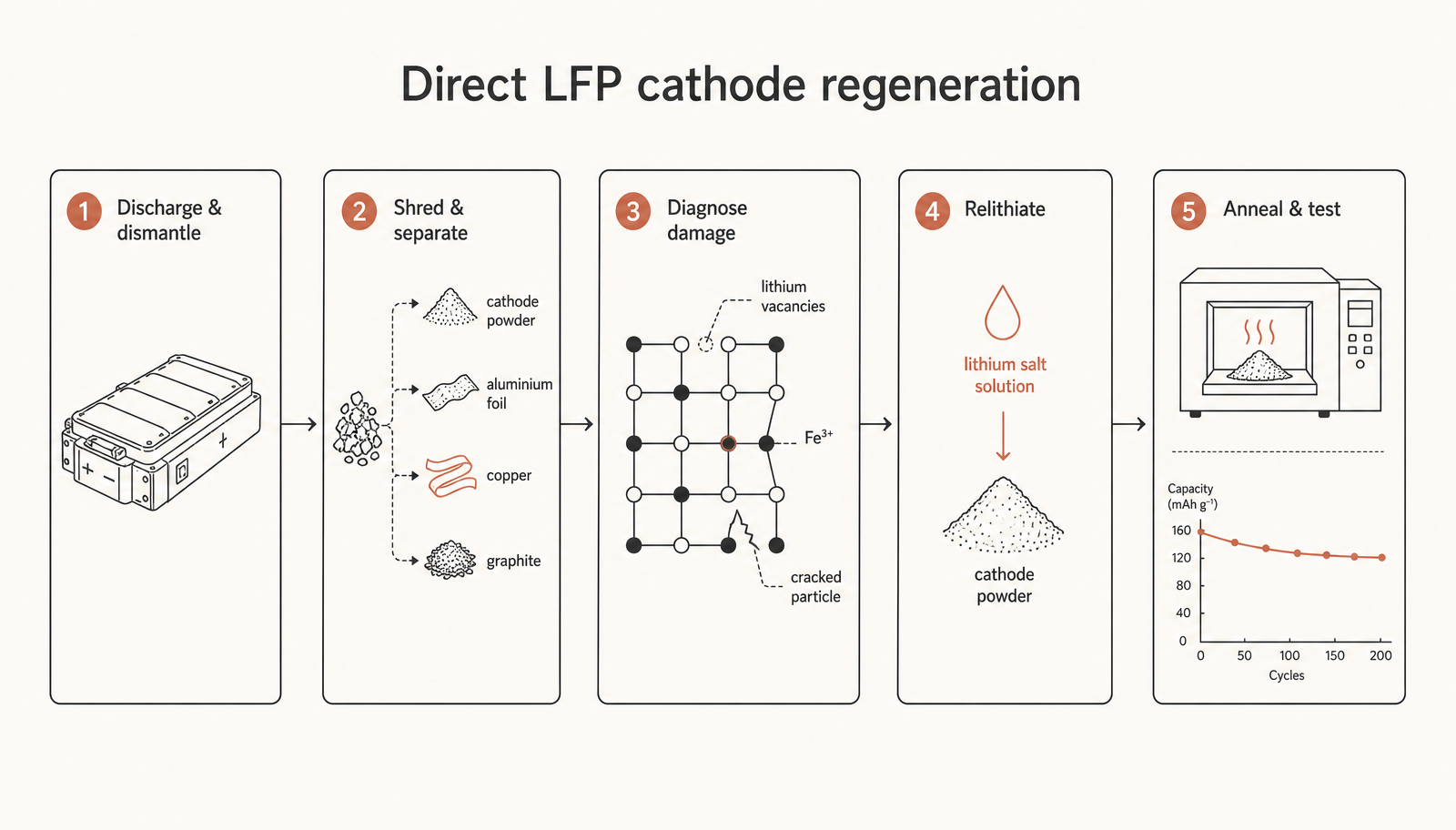
An end-of-life pack still holds energy. It is discharged first, then dismantled, then shredded. What comes out of the shredder is not "cathode" — it is a mixed stream: cathode powder, aluminium foil, binder, conductive carbon, electrolyte residue, copper and graphite.
Separation quality here sets the ceiling for everything downstream. Foil fragments and binder that ride along with the powder show up later as contamination in the regenerated cathode.
Step two: diagnose what cycling actually broke
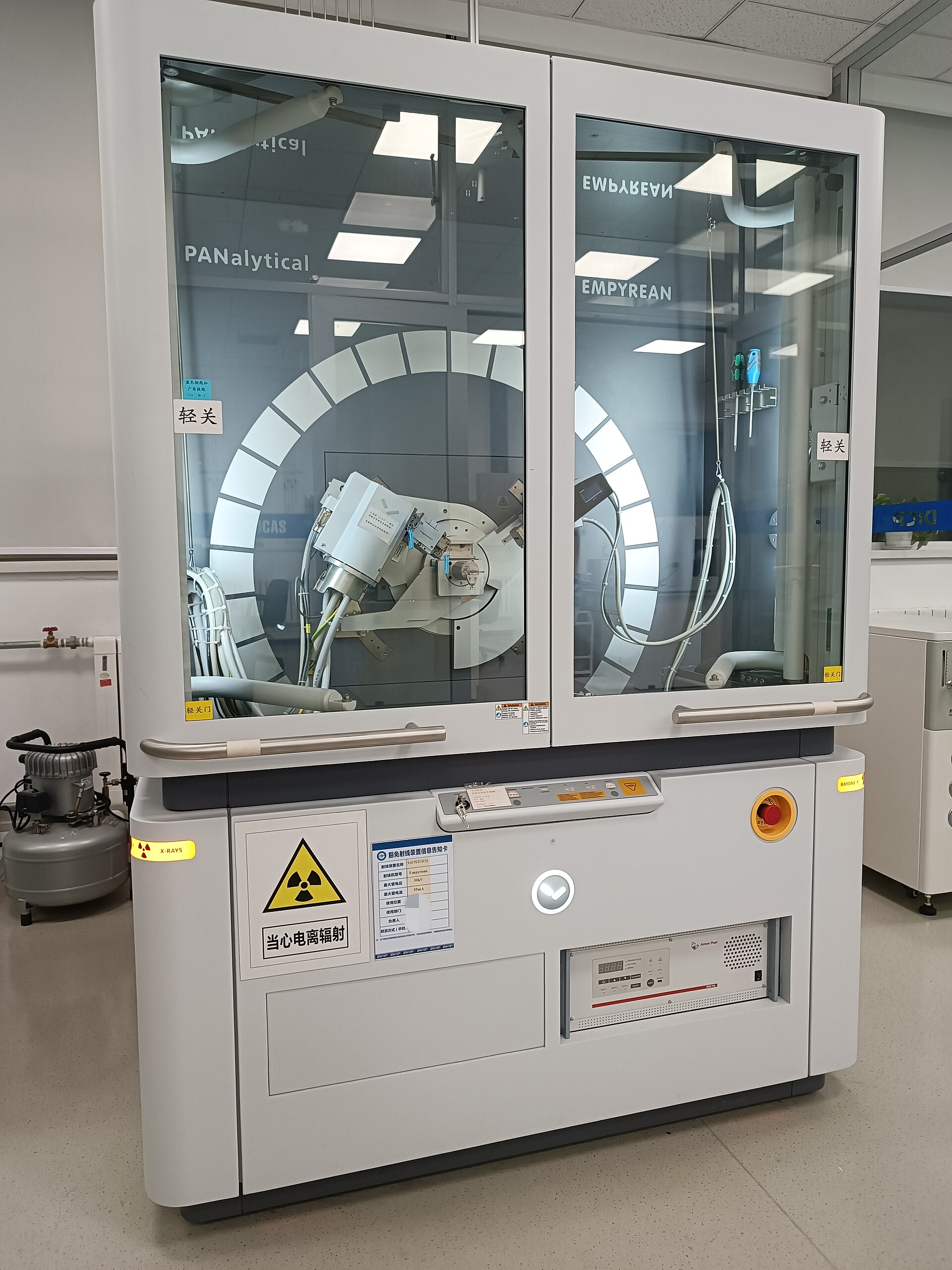
Spent LFP is not simply "used up". A few specific, measurable things have gone wrong:
- Lithium vacancies. Lithium has been lost to side reactions and the cathode is short of it.
- Antisite defects. Iron sits in crystal positions that lithium should occupy, blocking diffusion channels.
- Oxidation. Some Fe²⁺ has been pushed toward Fe³⁺.
- Mechanical damage. Particles crack, or lose electrical contact with the conductive network entirely.
Step three: put the lithium back
Relithiation is the core move. A lithium source is added to the powder — one family of routes uses low-temperature aqueous relithiation, others mix in lithium salts before a heat step.
The goal is deliberately conservative: refill the existing cathode rather than dismantle it into separate elemental salts and re-synthesise from scratch. Every element you never have to separate is a chemical, an energy input and an effluent stream you never have to pay for.
Step four: repair the lattice
Adding lithium is not sufficient if the crystal is disordered. A controlled reducing environment converts Fe³⁺ back toward Fe²⁺, and heat gives iron atoms enough mobility to migrate out of lithium sites and back into their own.
Done properly, this restores the olivine structure — and with it the one-dimensional channels that lithium ions actually travel along.
Step five: finish and prove it
After washing, drying or annealing, the regenerated powder is coated into a new cathode and tested like any other material: capacity, rate performance, cycle life. Argonne National Laboratory has reported restoring spent LFP's composition, structure and electrochemical performance to pristine-LFP levels in its demonstrations.
The catch: laboratory success is not a business
The Royal Society of Chemistry's review of the field is blunt about what stands between a good result and a profitable plant: feedstock variation between packs and manufacturers, foil and binder contamination, particle cracking, and bulk crystal defects that heat alone will not undo.
Then there is the economics. Iron and phosphate are cheap. A recycler handling LFP may need a gate fee to break even, and several existing commercial processes are tuned to chase nickel, cobalt and copper — recovering comparatively little lithium along the way.
References and image credits›
- 01Resource Recycling — LFP batteries gain acceptance. Can they be recycled?
- 02Journal of Materials Chemistry A — review of LFP direct regeneration
- 03Argonne National Laboratory — publication 169991
Photo: Yo-Co-Man, CC BY-SA 4.0 · Photo: Robert Kropf, CC BY-SA 4.0 · Photo: Yo-Co-Man, CC BY-SA 4.0 · Photo: Jan Homann, CC BY-SA 4.0