
The sunlight-and-catalyst filter that attacks wastewater pollutants
Photocatalysis usually arrives as a powder you then have to fish back out of the water. Fixing the catalyst to a resin bed turns it into something closer to a treatment step: water in one end, oxidised organics out the other.
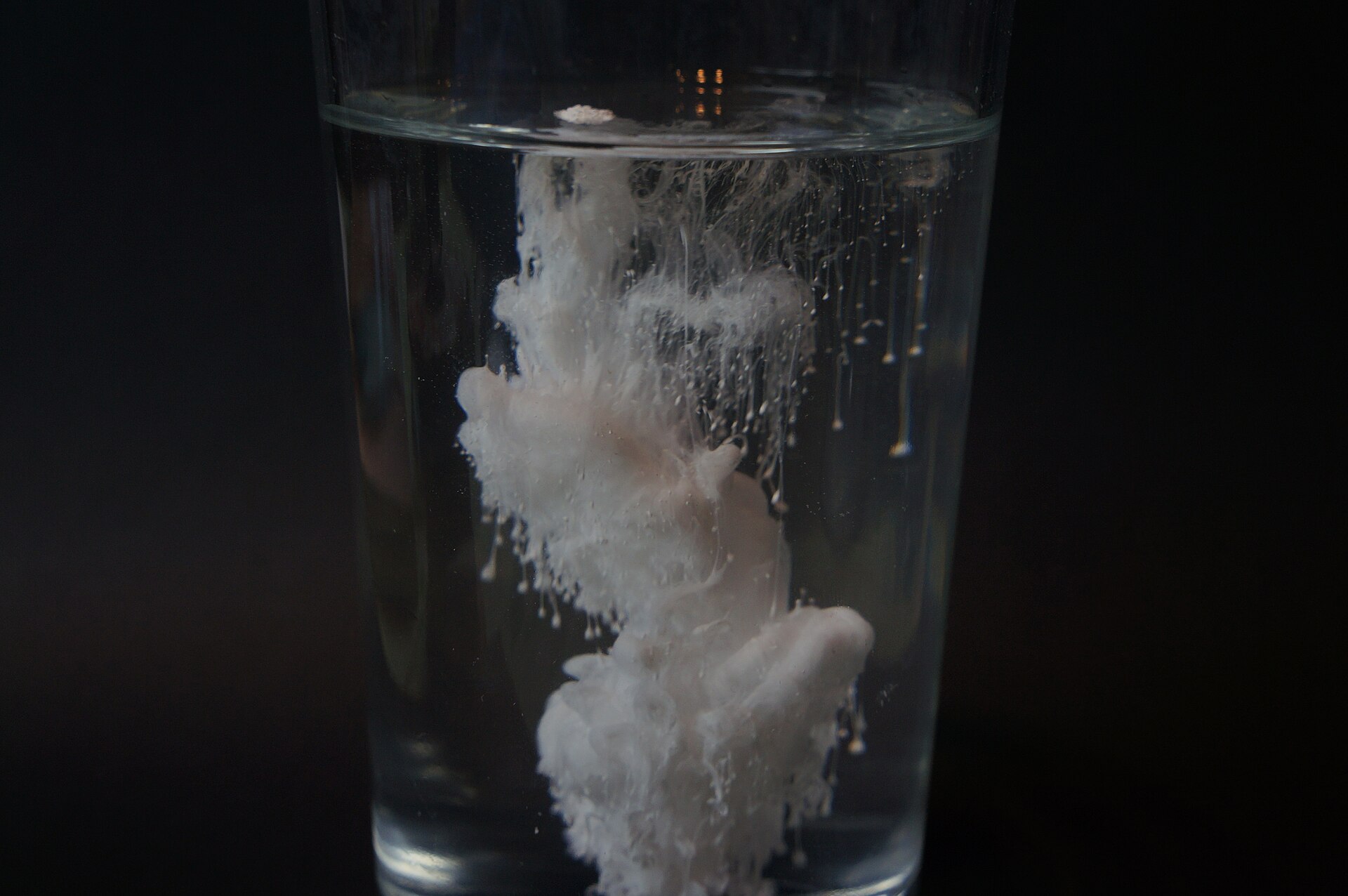
Advanced oxidation has a recovery problem. Suspend titanium dioxide or zinc oxide in an effluent, shine ultraviolet light on it, and you get hydroxyl radicals that will chew through organic molecules biology finds indigestible. Then you have to separate several hundred milligrams per litre of fine semiconductor powder from the water you just cleaned.
A 2026 in-press study takes the obvious way round that: hold the catalyst on a porous resin and run the water through a fixed bed instead.
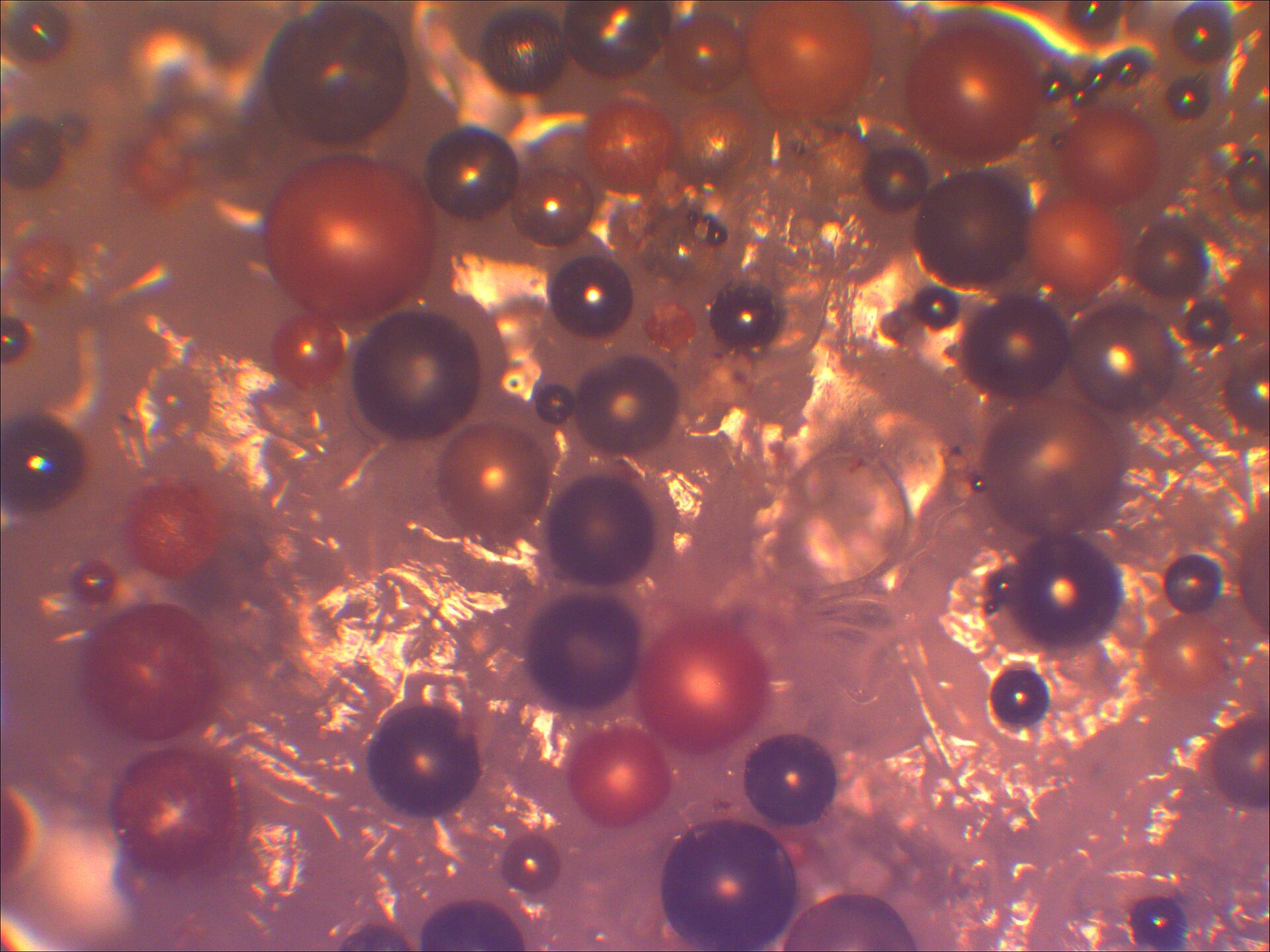
How the bed actually works
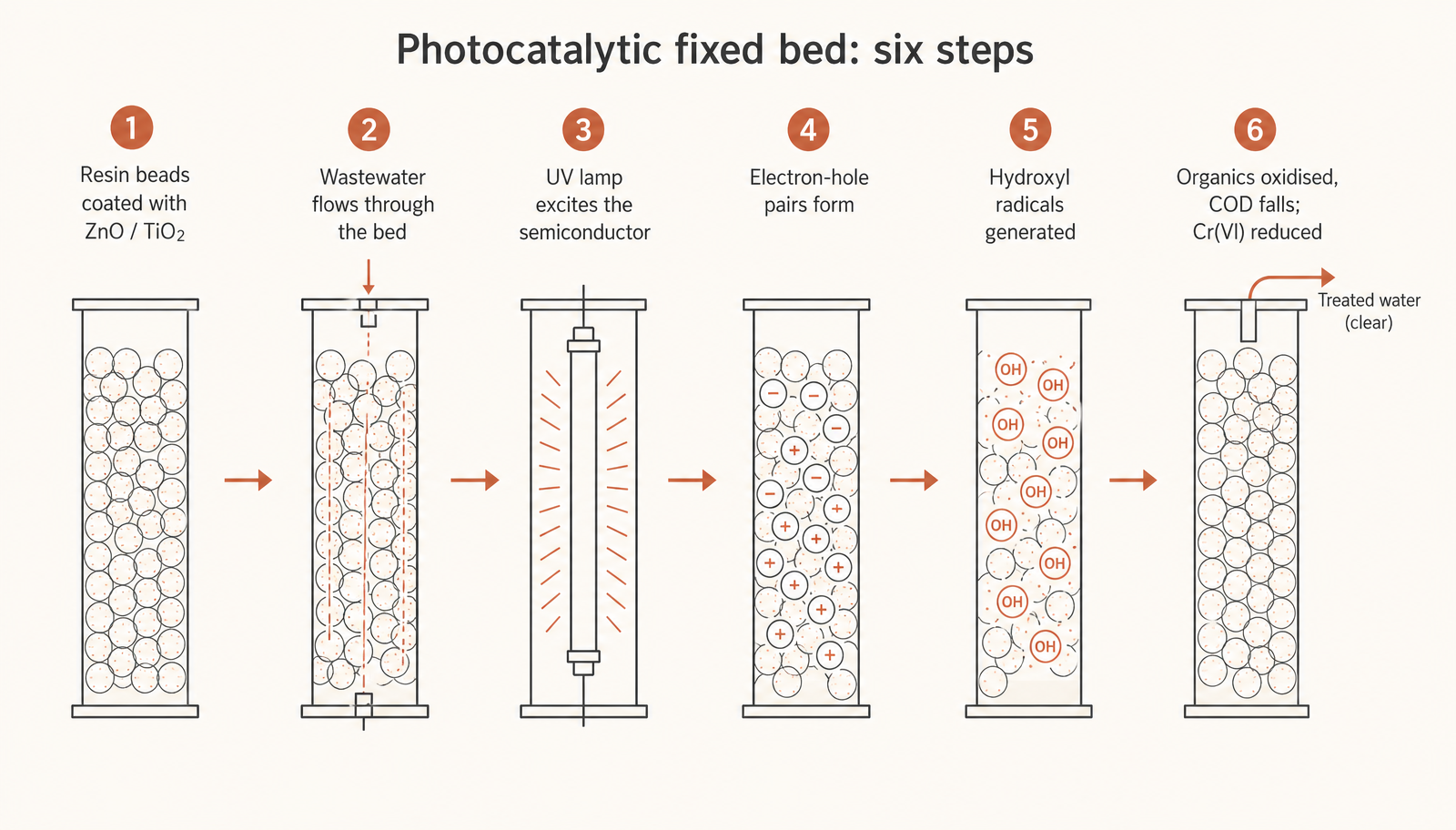
Load the bed. A porous resin carries the semiconductor. The treatment media now stays in the reactor rather than leaving with the effluent — which is the entire point.
Let water flow through. Wastewater passes through the packed bed continuously. The resin also does something less obvious: it brings dissolved pollutants close to the catalyst surface, where the chemistry actually happens.
Switch on the light. UV photons with enough energy promote an electron across the semiconductor band gap, leaving a positively charged hole behind.
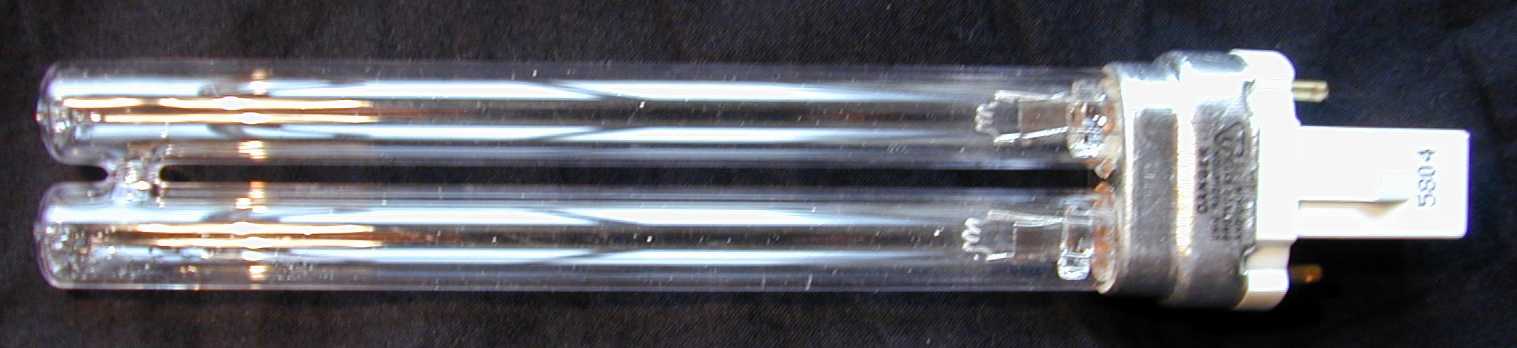
Make reactive species. Those electrons and holes react with water and dissolved oxygen. The useful product is the hydroxyl radical — short-lived, indiscriminate, and one of the strongest oxidants available in water treatment.
Break contaminants down. Radicals oxidise organic molecules, which shows up as falling chemical oxygen demand. The same redox environment can also convert hexavalent chromium, which matters because Cr(VI) is a regulated toxicant that biological treatment does not touch.
Tune the chemistry. Acidic conditions improved performance, which is consistent with stronger radical formation and more favourable Cr(VI) redox behaviour. ZnO outperformed TiO2 on both metrics — clearly on COD (92.61% versus 84.89%), marginally on chromium.
Kinetics are the design output, not the headline
The more useful result is not the removal percentage. It is that COD reduction followed first-order kinetics while Cr(VI) removal followed a second-order model.
That is the kind of number an engineer can use for sizing and residence time. A headline percentage measured on one effluent, under one lamp, at one pH, is not.
What still has to be proved
Real effluent is not synthetic effluent. It fouls resin, absorbs UV before the photons reach the catalyst, and generates partially oxidised by-products that can be more biologically active than the parent compound.
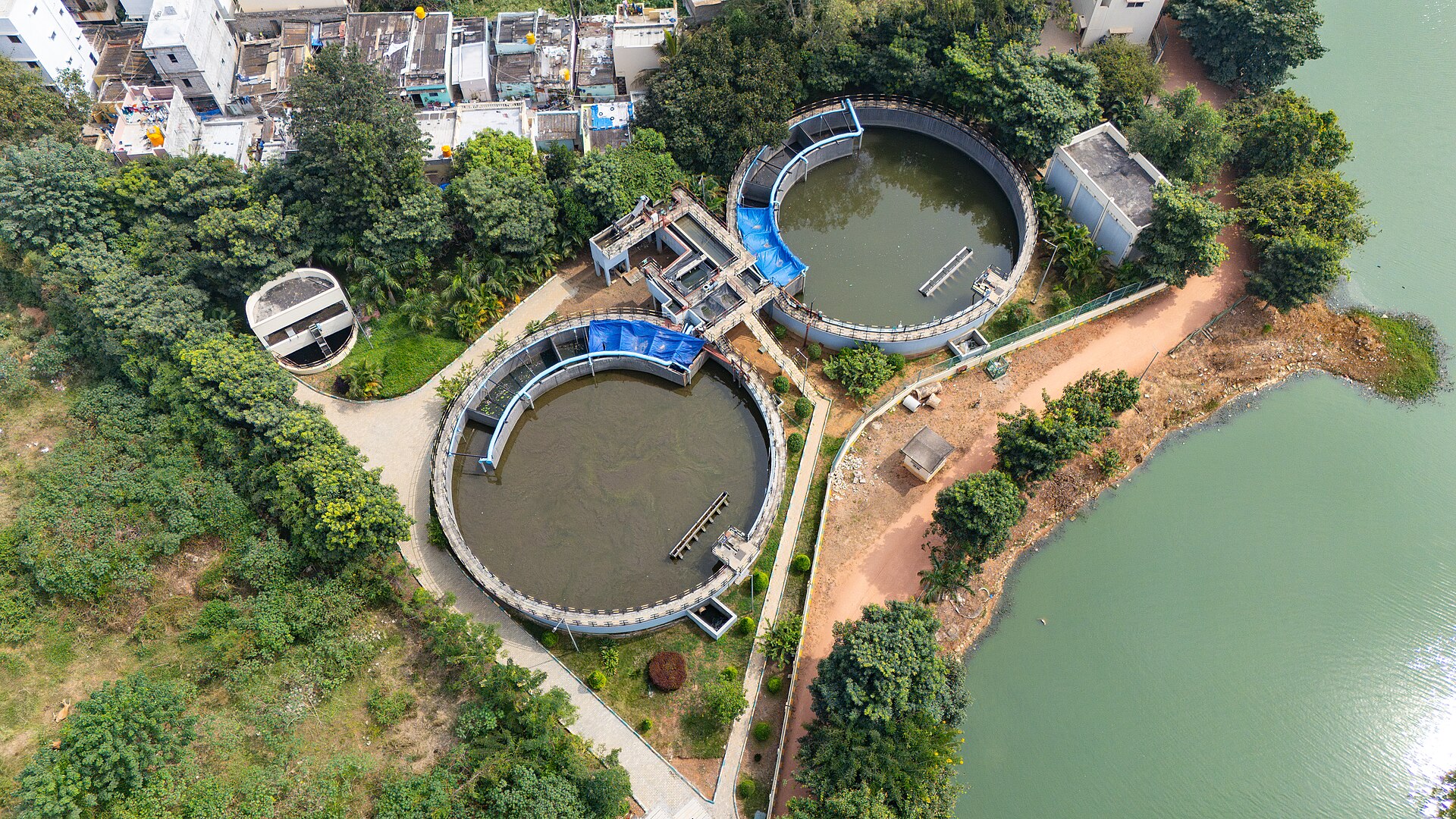
The open questions are the boring ones. Catalyst lifetime under continuous flow. Energy per cubic metre once you count the lamps. Lamp replacement intervals. Zinc leaching from the ZnO bed into treated water — a real concern given zinc aquatic toxicity. Residual toxicity of the effluent after treatment, measured rather than assumed. And cost per cubic metre against the alternatives.
This is an article in press. Treat the percentages as evidence that the mechanism works in a continuous configuration, not as a performance specification.
References and image credits›
- 01Journal of Pollution — Comparative kinetic evaluation of resin-immobilized TiO2 and ZnO photocatalysts in a continuous fixed-bed system
- 02GJESM — Immobilization of resin photocatalyst in removal of soluble effluent organic matter
Photo: ATGabdrahmanov, CC BY-SA 4.0 · Diagram: The Waste Stack · Photo: Atlant, CC BY 2.5 · Photo: Pixelmaniac pictures, CC0 · Photo: Wikimedia Commons, CC BY-SA