
"Compostable" Is a Facility Spec, Not a Property of the Object
Certified compostable packaging is engineered to break down in a hot industrial windrow. Put it in a garden bin, a recycling bin or a landfill and it behaves like ordinary plastic — because in those conditions, it is.
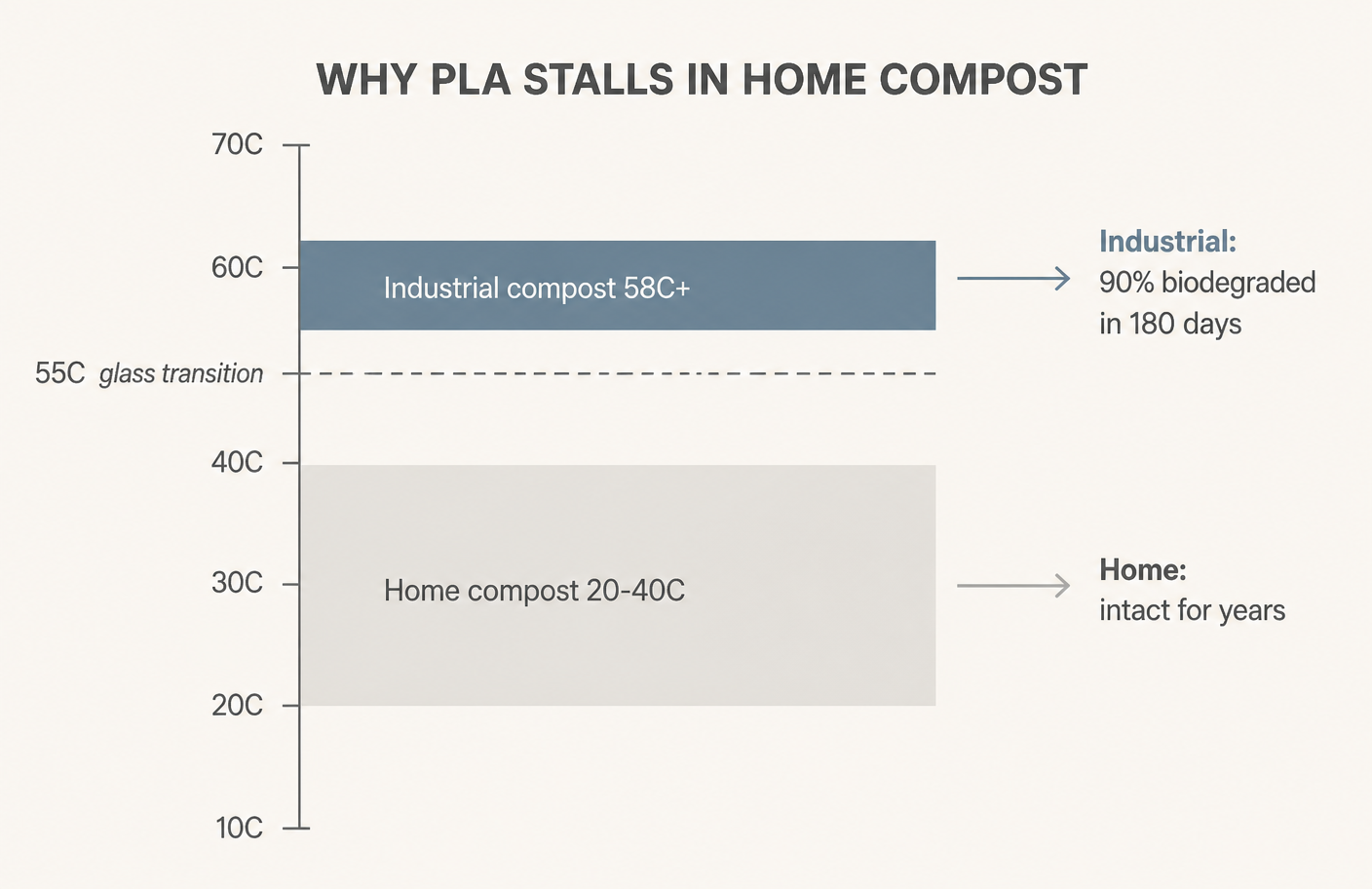
The word on the cup is "compostable". What it means is: this material achieves 90% biodegradation within 180 days under controlled conditions at 58C or above, as measured by a standard test. Everything about that sentence is a description of a facility, not a description of the cup.
The temperature threshold is the whole story
PLA — the most common compostable packaging polymer — has a glass transition temperature around 55-60C. Below it, the polymer chains are locked in a rigid glassy state and water cannot penetrate fast enough for hydrolysis to proceed at any useful rate. Above it, the material softens, water gets in, and microbial breakdown follows quickly.
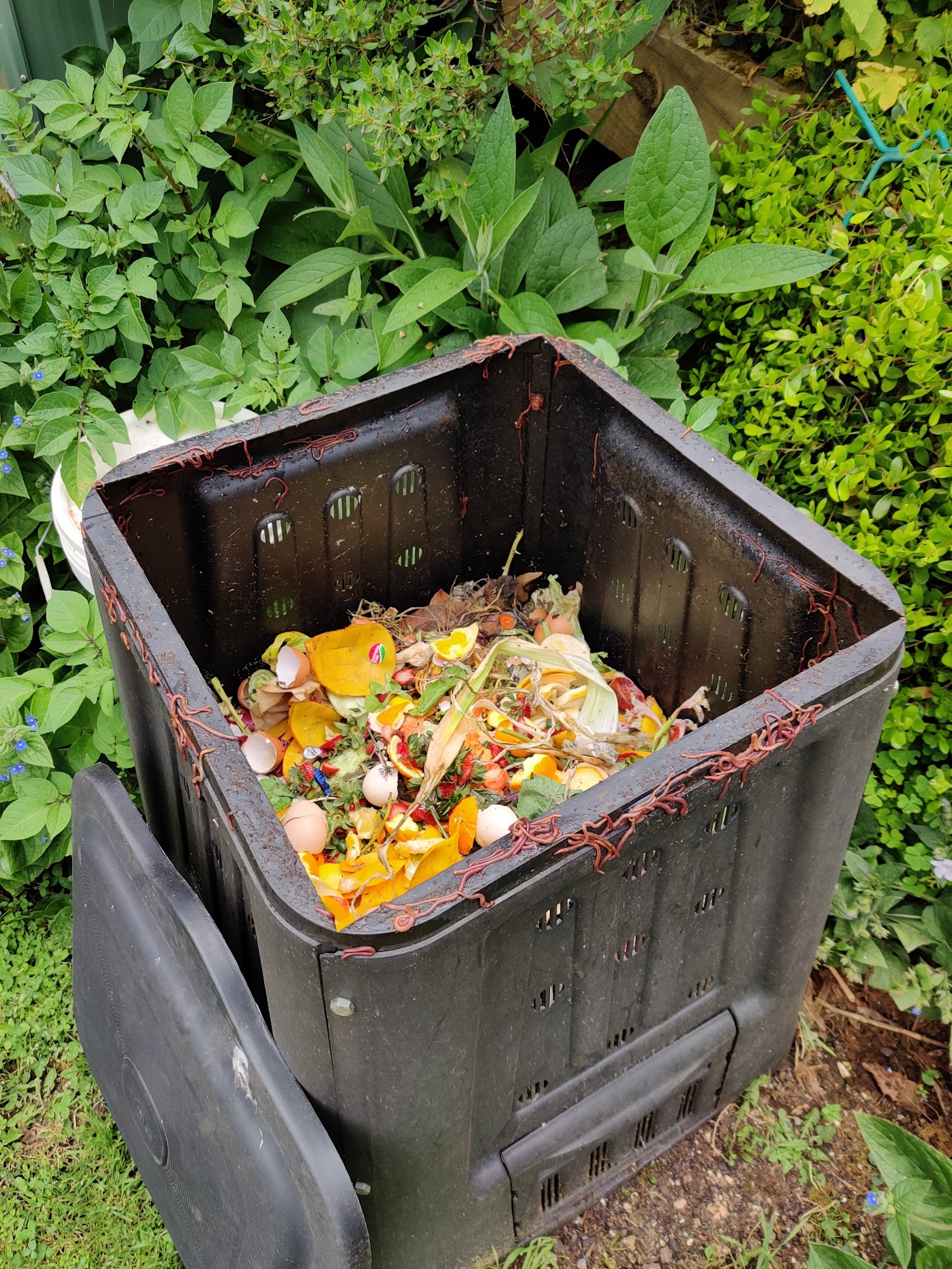
A domestic compost heap runs at 20-40C. It never crosses the threshold.
Compostable packaging breaks down harmlessly wherever it ends up.
It breaks down within a certified timeframe only in industrial composting at 58C or above, with active aeration and moisture control. Everywhere else it behaves approximately like conventional plastic.
The four destinations and what actually happens
Industrial composting. Works as specified — if the facility accepts packaging at all. Many do not, because they cannot visually distinguish certified compostable items from conventional plastic at intake speed, and the cost of a contaminated batch exceeds any benefit.
Home composting. Fragments slowly, often stays structurally intact for years. Certification schemes for home compostability exist and are much stricter; most food-service packaging does not carry them.
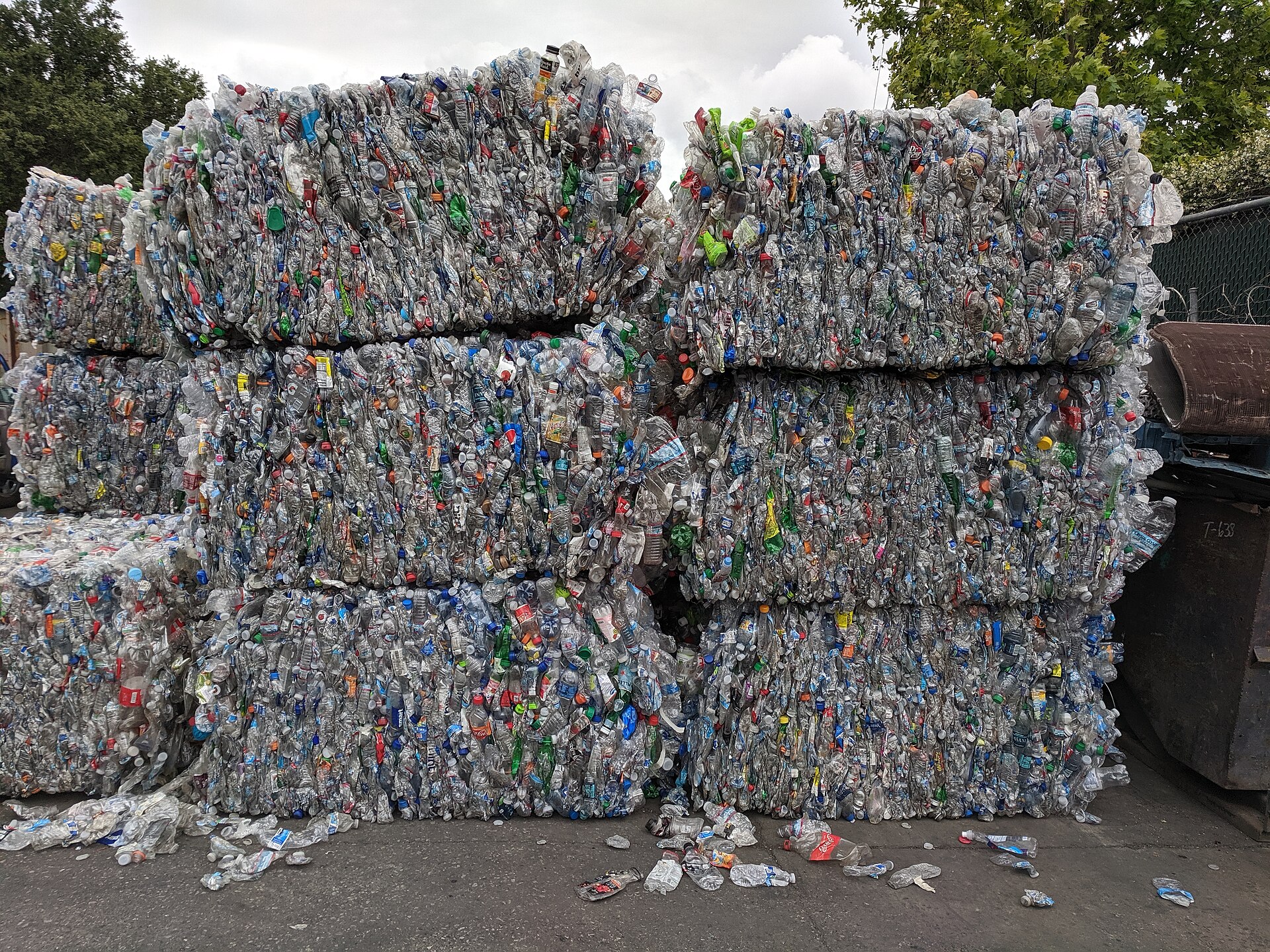
Recycling bin. Actively harmful. PLA in a PET stream is a contaminant that degrades the recyclate. Sorting equipment struggles to separate them.
Landfill. Anaerobic, cool, dark. Biodegradation is slow at best, and to the extent it happens it generates methane rather than compost. This is the worst outcome, and in most countries it is also the most common one.
Why this persists
The certification is honest. The label is not dishonest either, strictly read. The failure is that the label describes a laboratory condition and is read by a person standing in front of three bins with no information about which of them leads to a 58C windrow.

What is actually true
Compostable packaging is useful in closed systems: stadiums, festivals, canteens, hospitals — anywhere the waste stream is controlled and routed to a facility that has agreed to take it. In open consumer settings, it mostly converts a recycling problem into a contamination problem while feeling like progress.
References and image credits›
- 01European Standard EN 13432 — packaging recoverable through composting
- 02WRAP — compostable packaging guidance
Photo: Niwrat, Wikimedia Commons, CC BY-SA 4.0 · Photo: Wikimedia Commons, CC BY-SA 4.0 · Photo: PizzaToast, CC0