
Anferra Says Grinding Sludge Becomes Ferric Chloride and Hydrogen. Here Is What Is Missing.
A startup claims up to 90% iron recovery from steel grinding sludge, a saleable coagulant, hydrogen as a by-product and a negative carbon figure. Almost none of the process detail behind those numbers has been published.
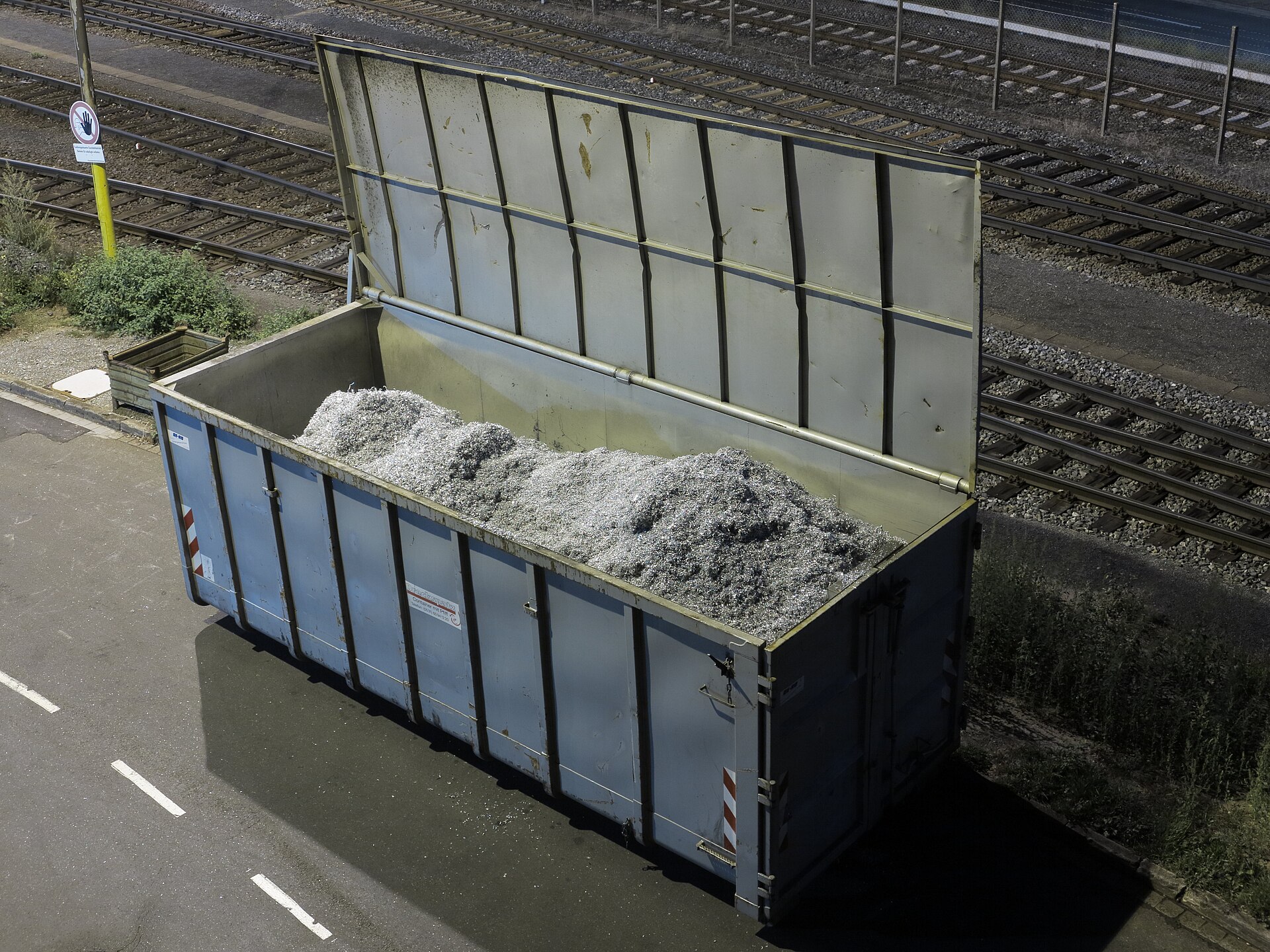
Steel grinding sludge is a genuinely awkward waste. It is a mix of fine iron particles, abrasive grit and cutting oil, produced continuously by every large machining operation, and it is usually landfilled because separating the iron from the oil and grit costs more than the iron is worth.
Anferra says it has a process that turns that sludge into ferric chloride — a standard water-treatment coagulant — with hydrogen as a by-product. The claimed figures: up to 90% iron recovery, and roughly -470 kg CO2e per tonne processed.
The chemistry is plausible
Dissolving iron in hydrochloric acid gives iron(II) chloride and hydrogen. Oxidise the iron(II) and you get ferric chloride. This is textbook, and ferric chloride is a real commodity with a real market — every water utility buys it.
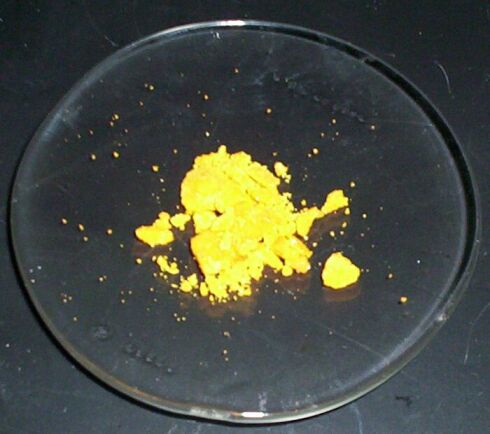
So the question is not whether the reaction works. It is whether it works on this feedstock, at this recovery rate, at a cost that beats buying ferric chloride made the conventional way.
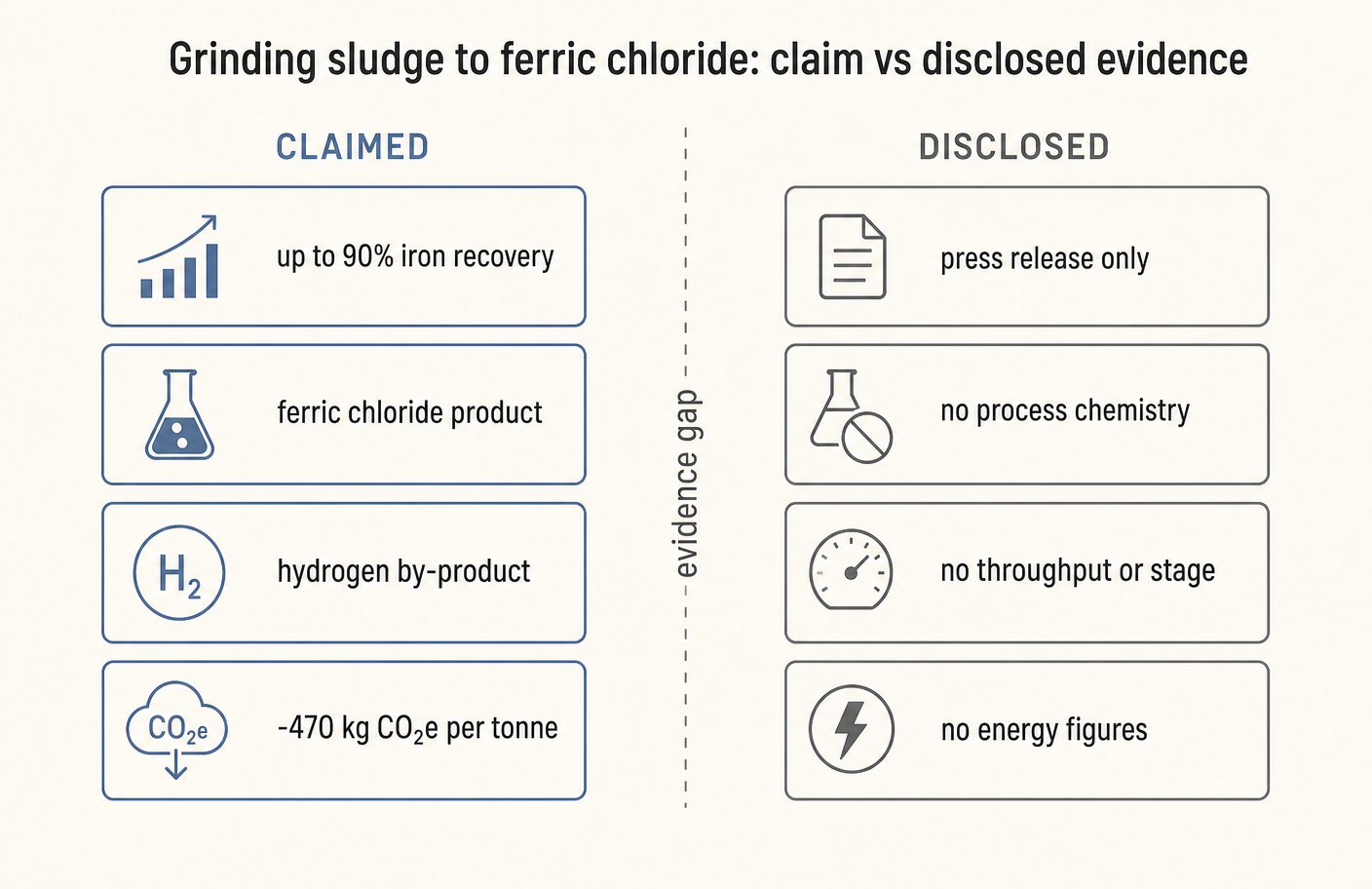
Up to 90% iron recovery, saleable ferric chloride, hydrogen by-product, -470 kg CO2e per tonne.
These figures appear in company communications. No process chemistry, throughput, stage of development or energy balance has been published alongside them.
The parts that decide the economics
Oil removal. Grinding sludge is 5-20% cutting oil by mass. That oil has to go somewhere before or during acid treatment, and dealing with it is a cost line, a waste line and possibly an emissions line.
Acid consumption. Hydrochloric acid is the main reagent and the main input cost. Whether the process regenerates acid, and at what efficiency, is the single biggest determinant of whether it pencils out. That number is not public.
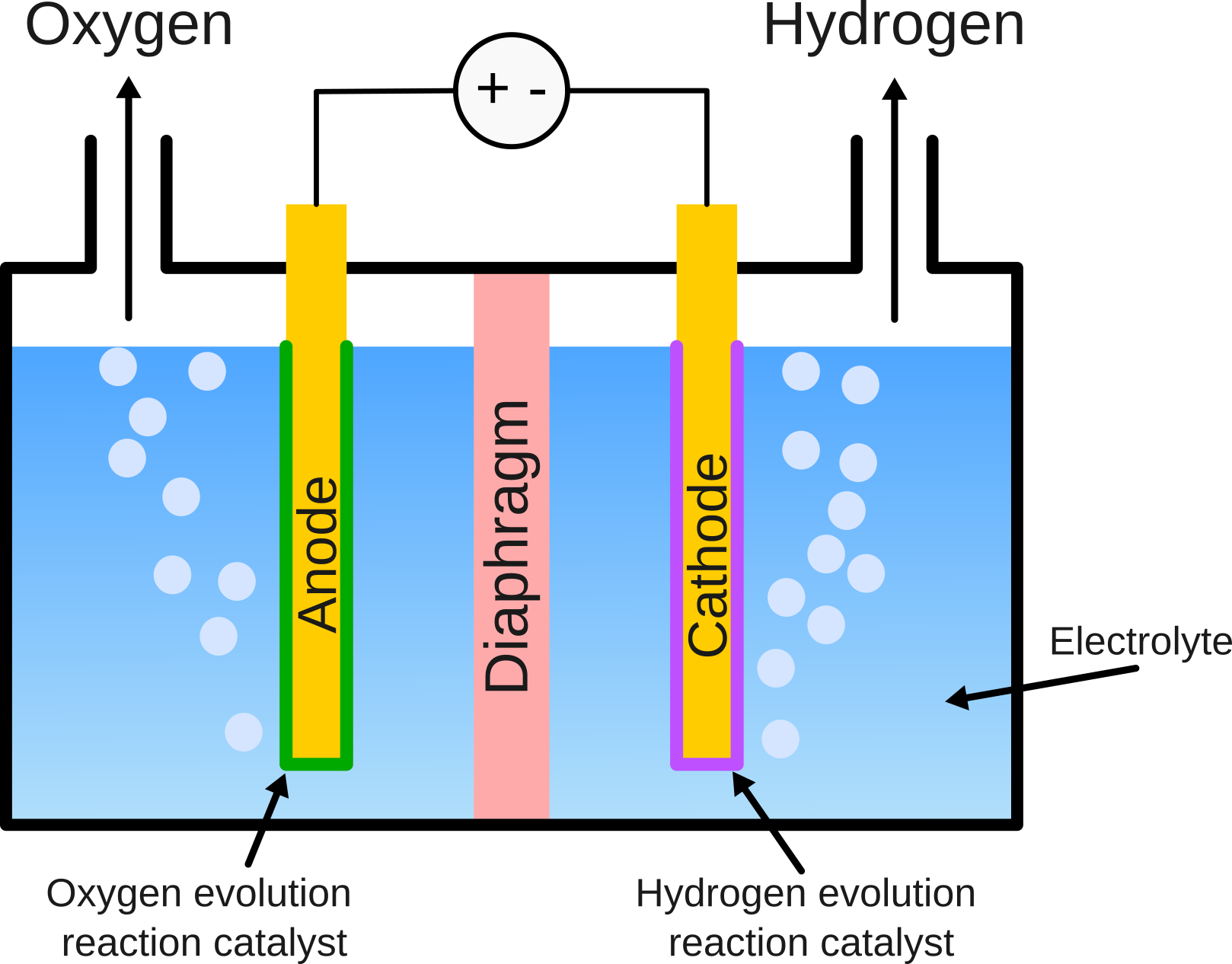
Hydrogen. Hydrogen from this route is wet, contaminated and produced at low pressure in small quantities. Calling it a by-product is accurate. Calling it a revenue stream requires purification equipment nobody has costed.
Reading the carbon figure
The useful question for any process like this is not "does the chemistry work" but "what does the acid loop cost".
A negative number per tonne usually comes from avoided burdens: iron not mined, ferric chloride not made from virgin materials, sludge not landfilled. Those credits are legitimate in principle and highly sensitive to boundary choices in practice. Without the methodology, -470 kg CO2e is a claim about an unpublished model, not a measurement.
None of this means the process is wrong. Grinding sludge genuinely deserves a better fate than landfill, and this is a sensible target product. It means the announcement is currently unfalsifiable, and should be read as an intention rather than a result.
References and image credits›
- 01Ferric chloride production and use in water treatment — overview
- 02Management of metalworking fluids and grinding swarf
Photo: TeWeBs, CC BY-SA 4.0 · Photo: Walkerma, public domain · Diagram: Kavin Teenakul, CC BY-SA 4.0