
Biochar dominates the carbon-removal market. The durability is still modelled.
Biochar delivers the overwhelming majority of the world's issued carbon-removal credits because it is cheap and available now. The hundred-to-thousand-year permanence claim rests on inference, not observation.
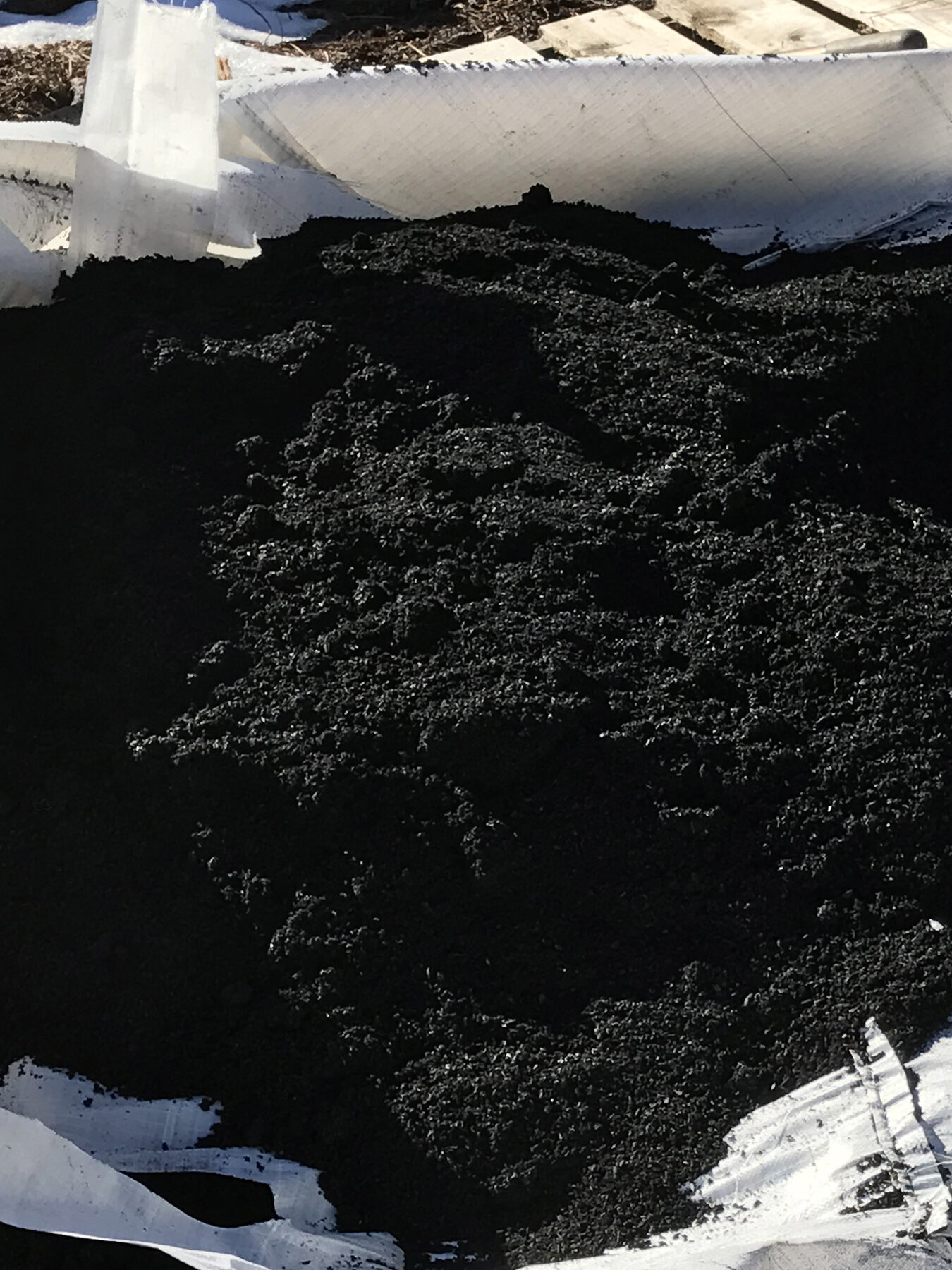
Biochar has become the default carbon-removal product. It accounts for the great majority of credits actually delivered, and it got there for two unglamorous reasons: the kit is simple, and the tonnes exist today rather than in a 2031 prospectus.
The chemistry is real. The accounting is where the argument is.
What is genuinely solid
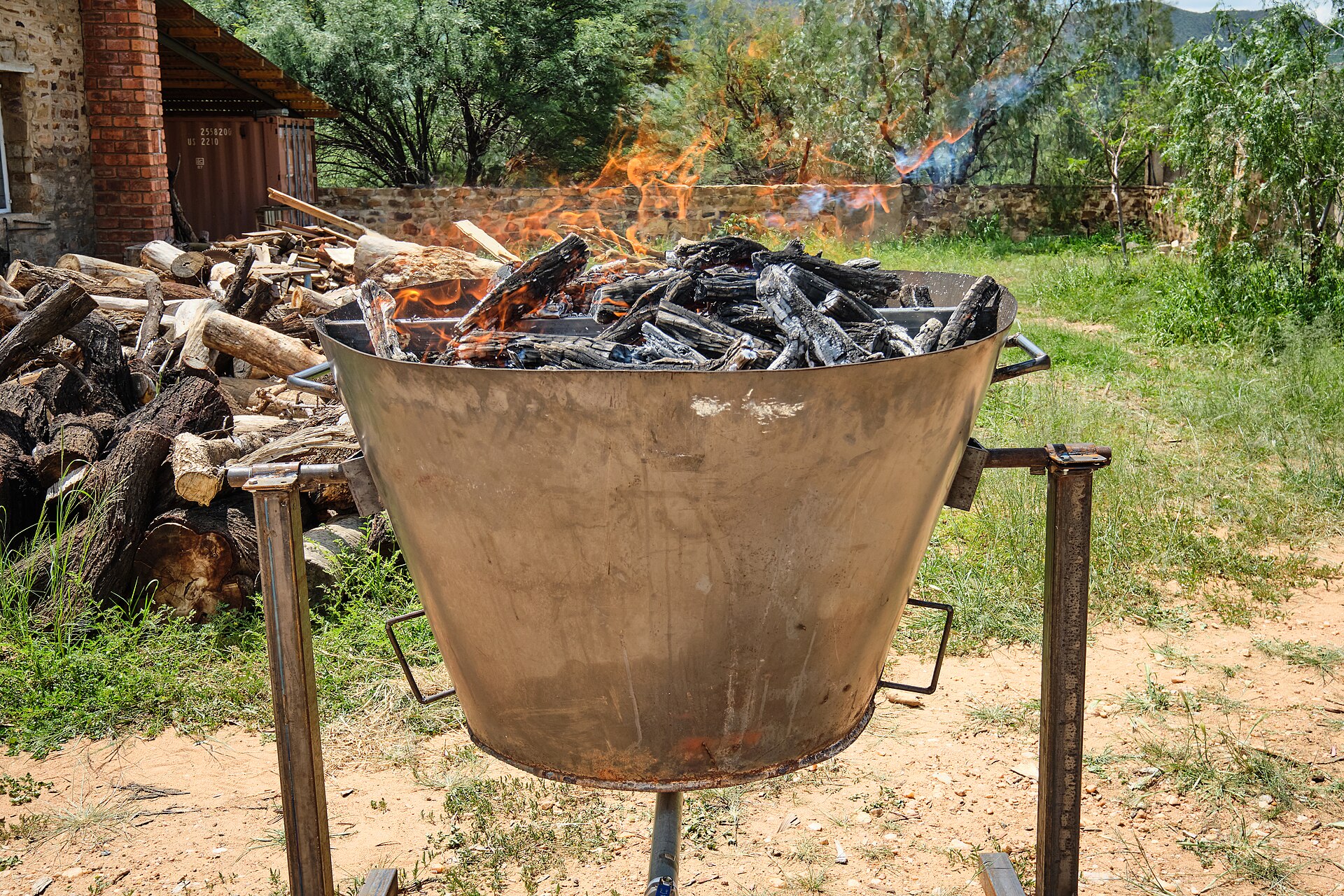
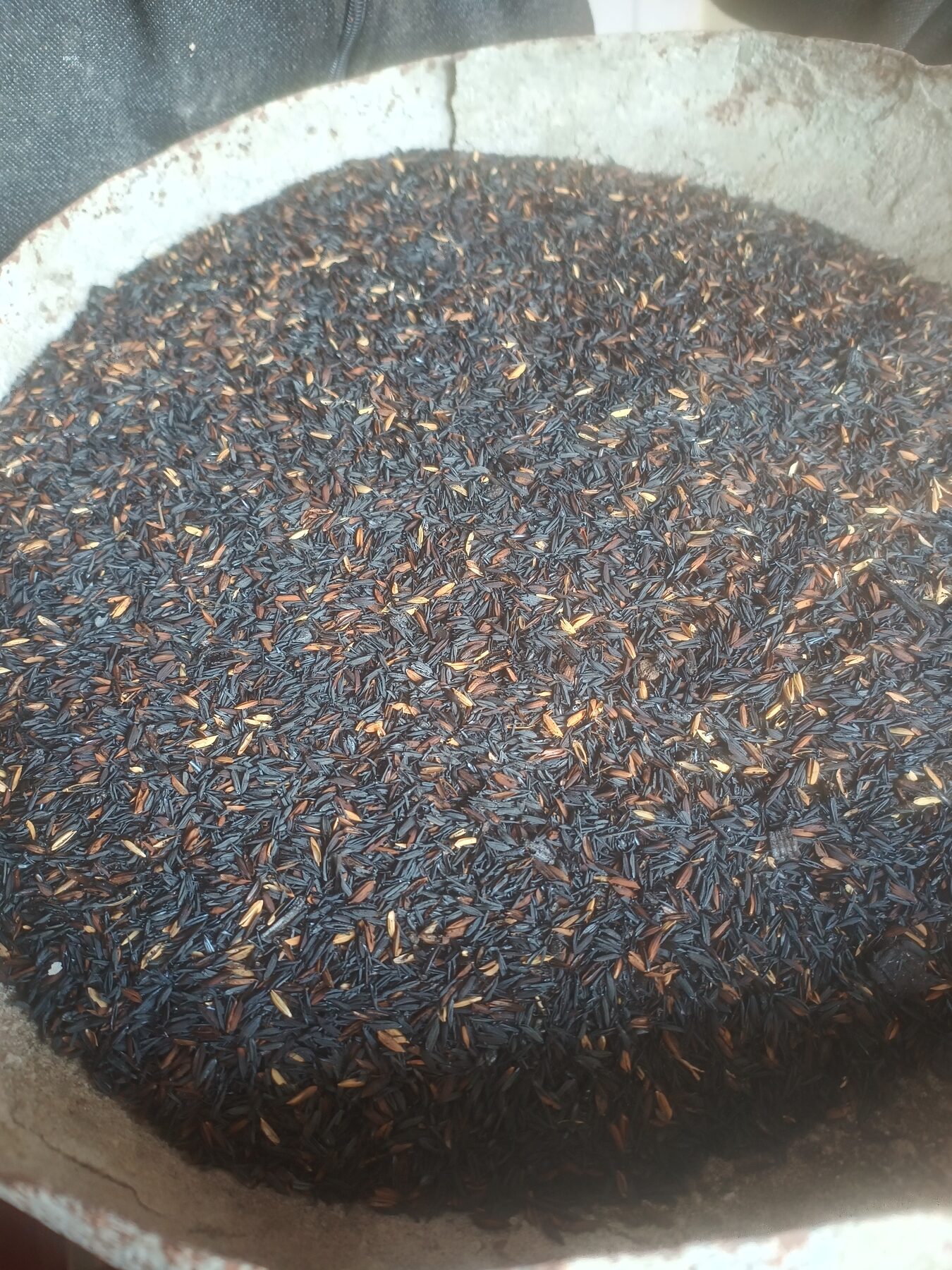
Pyrolysis — heating biomass in the absence of oxygen — drives off volatiles and leaves a carbon skeleton dominated by fused aromatic rings. Those rings are hard for soil microbes to metabolise. Biomass that would have decomposed in a season or two becomes material that decomposes over a much longer horizon.
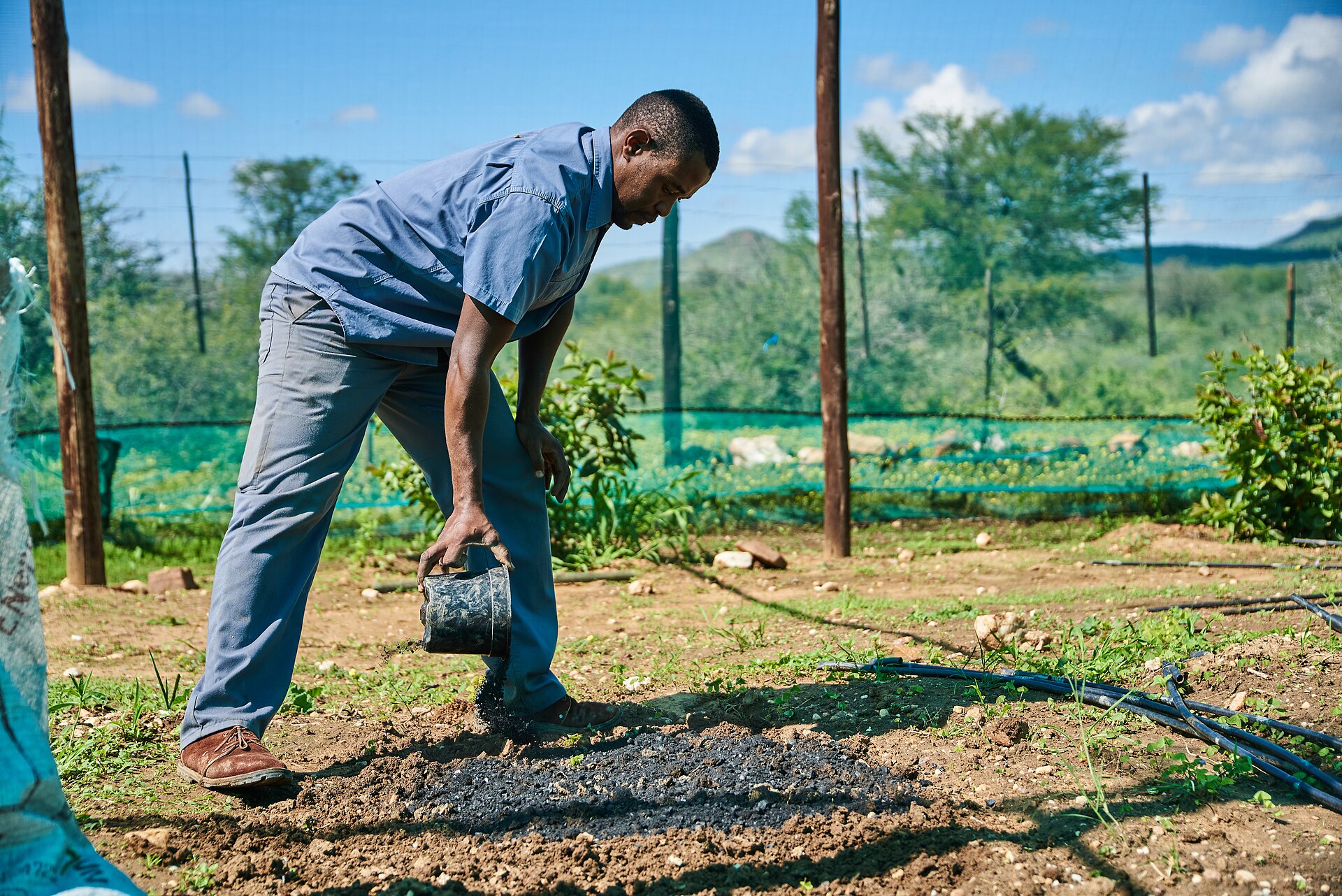
Applied to soil, biochar improves water retention, cation exchange capacity, and microbial habitat. Those are measurable agronomic benefits independent of any climate claim, which is more than most carbon-removal pathways can say.
Claim: hundreds to thousands of years of storage
Biochar carbon stays out of the atmosphere for centuries to millennia.
The estimates come from accelerated ageing experiments, molecular structure proxies such as H:C ratio, and studies of ancient charcoal in soils. Nobody has watched a modern biochar credit for a hundred years, because the industry is younger than most of the trees that feed it.
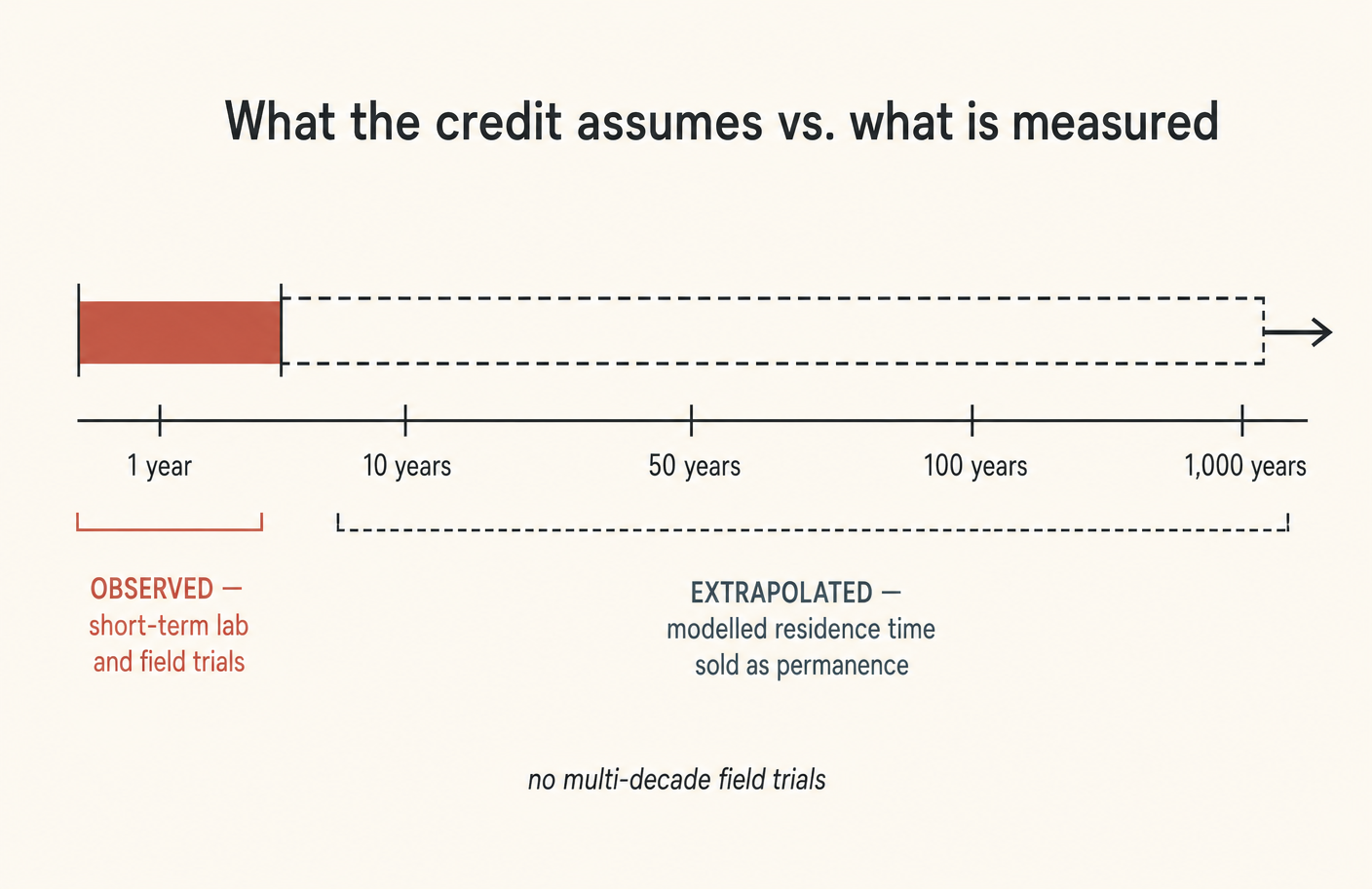
The spread is not small. Permanence depends strongly on pyrolysis temperature, feedstock, soil type, climate, and tillage. A low-temperature char in a warm, wet, worked soil behaves very differently from a high-temperature char in cool grassland. Registries handle this with conservative discount factors — but a discount factor is a policy choice about uncertainty, not a measurement of it.
Claim: the feedstock is waste
Biochar is made from residues that would otherwise rot or burn.
True for genuine residues. Not true once demand outruns residue supply — at which point the sector competes for biomass with soil incorporation, animal bedding, mulch, pulp, and bioenergy.
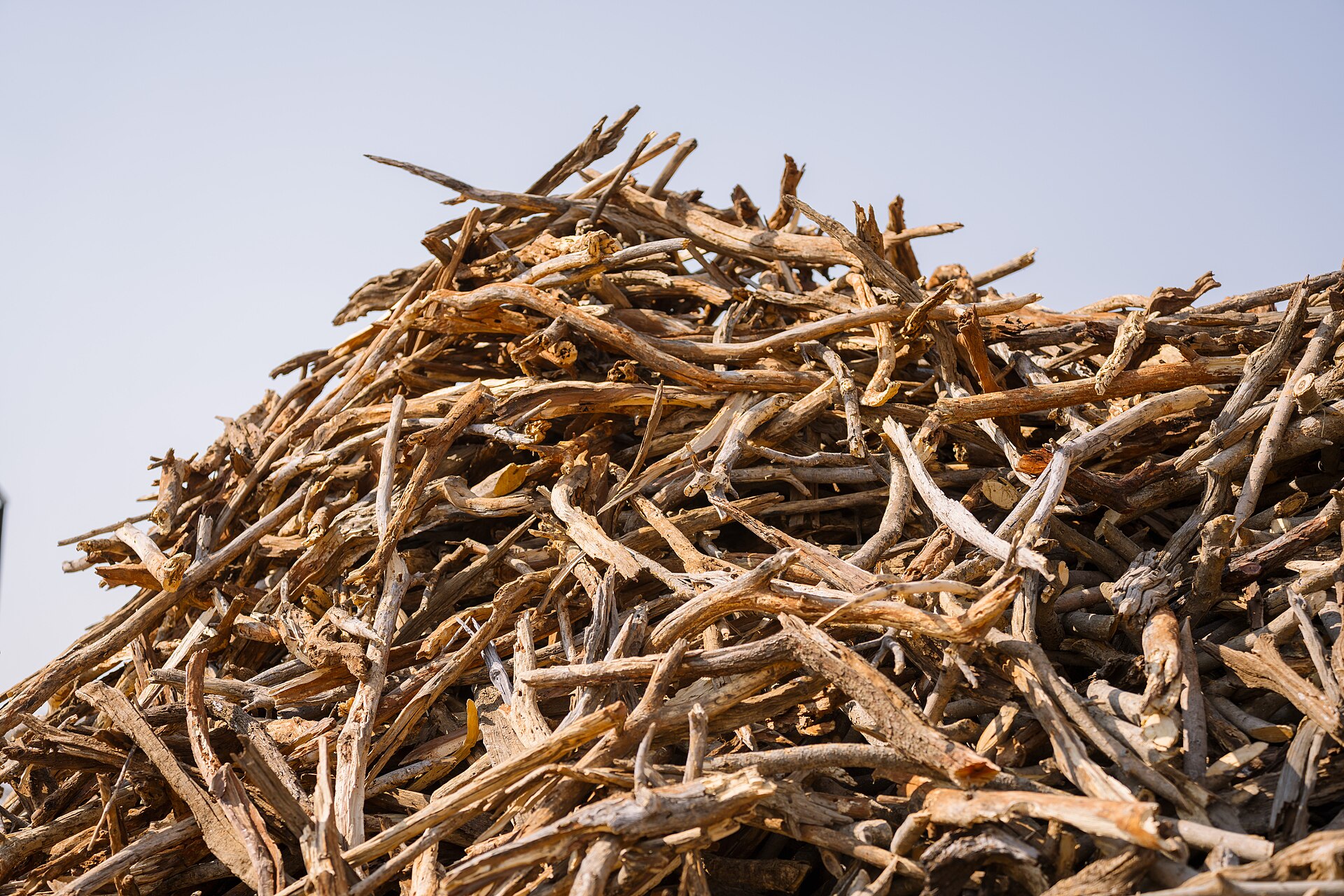
Agricultural and forestry residues are not free-floating waste. Left in the field, they return carbon and nutrients to the soil directly. Removing them to pyrolyse them has an opportunity cost that most credit accounting handles thinly.
The biosolids question
Heavy metals do not pyrolyse. They concentrate in the char. And PFAS destruction depends on reaching and holding temperatures that not every commercial unit does. A biosolids biochar is only as clean as the process that made it and the sludge that went in.
Sewage sludge is an attractive feedstock — abundant, currently expensive to dispose of, and increasingly barred from land application. Pyrolysis destroys pathogens and, at sufficient temperature, degrades many organic contaminants.
The methodology problem
Different registries credit biochar differently: different permanence assumptions, different treatment of the co-produced syngas and heat, different life-cycle boundaries for transport and drying, different handling of the counterfactual.
The consequence is that two physically identical tonnes of biochar can carry materially different credit volumes depending on who certified them. For a buyer, that is a due-diligence problem. For the market, it is a comparability problem that has not been resolved.
The fair verdict
Biochar is the most deliverable carbon-removal option currently available, with genuine agronomic co-benefits and a real physical basis for durability. It is also being sold on a permanence figure that is inferred rather than observed, using accounting that varies by registry, from a feedstock base that has hard sustainability limits.
Preferring it to a paper offset is easy. Treating a modelled century as an audited one is the error to avoid.
References and image credits›
Photo: US Department of Agriculture, public domain, via Wikimedia Commons · Photo: Tim Brunauer, GIZ, CC BY-SA 4.0 · Photo: GIZ, CC BY-SA 4.0 · Photo: GIZ, CC BY-SA 4.0 · Photo: Mukteshwaraiyya, CC BY-SA 4.0, via Wikimedia Commons · Photo: Hirho, CC BY-SA 4.0