
Reclinker makes a cement route inside steel recycling
Reactivating demolition cement in an electric arc furnace uses existing infrastructure, but feedstock, standards and carbon boundaries still matter.
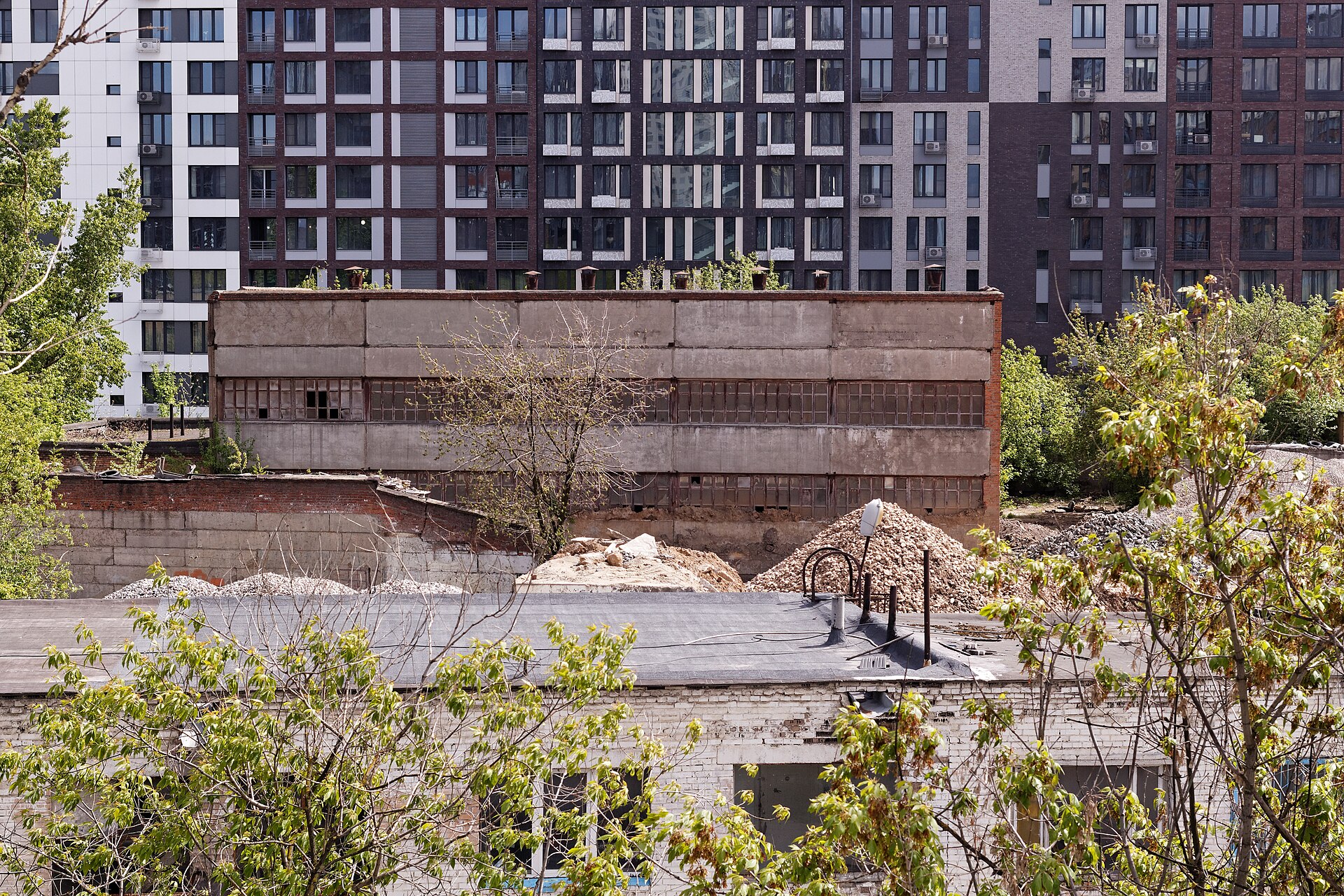
Demolition concrete contains aggregates and old cement paste. Reclinker’s approach targets the paste, using a steel-recycling electric arc furnace to help turn it into a new cementitious material.
Concrete recycling has historically been an exercise in downcycling. When a reinforced concrete structure is demolished, hydraulic breakers and mobile crushers reduce the debris into crushed concrete aggregate. While the coarse stones and sand fractions find immediate utility as sub-base material for road foundations or civil backfill, the hardened cement paste adhering to the stone fragments presents an engineering penalty. This hydrated cement matrix is porous, chemically carbonated, and mechanically weak compared to virgin quarried stone. At best, it dilutes the quality of secondary aggregate; at worst, it ends up landfilled as crusher fines. Reclinker proposes diverting this hydrated paste away from civil fill and directing it toward heavy metallurgy, leveraging existing industrial assets rather than commissioning dedicated clinkering kilns.
The thermal logic of furnace integration
An electric arc furnace already operates at high temperature to recycle steel. The process substitutes recovered cement-bearing material into the mineral chemistry of the furnace, with a resulting slag that can contribute to a new cement product after suitable processing.
In conventional steelmaking via the scrap-to-steel electric arc furnace (EAF) route, operators charge graphite electrodes with hundreds of megawatt-hours of electrical energy to melt recycled scrap metal at temperatures exceeding 1,600 degrees Celsius. To protect the refractory lining of the furnace, dephosphorise the steel, and strip unwanted impurities from the melt, operators routinely inject virgin lime or doloma as basic fluxing agents. These fluxes float on top of the liquid steel bath, reacting with non-metallic inclusions and oxidation products to form a buoyant synthetic slag layer.
Reclinker's technical proposition alters the origin of those basic flux components. By extracting calcium-rich dehydrated paste from demolition rubble, the material can act as a partial mineral surrogate within the slag-forming regimen.
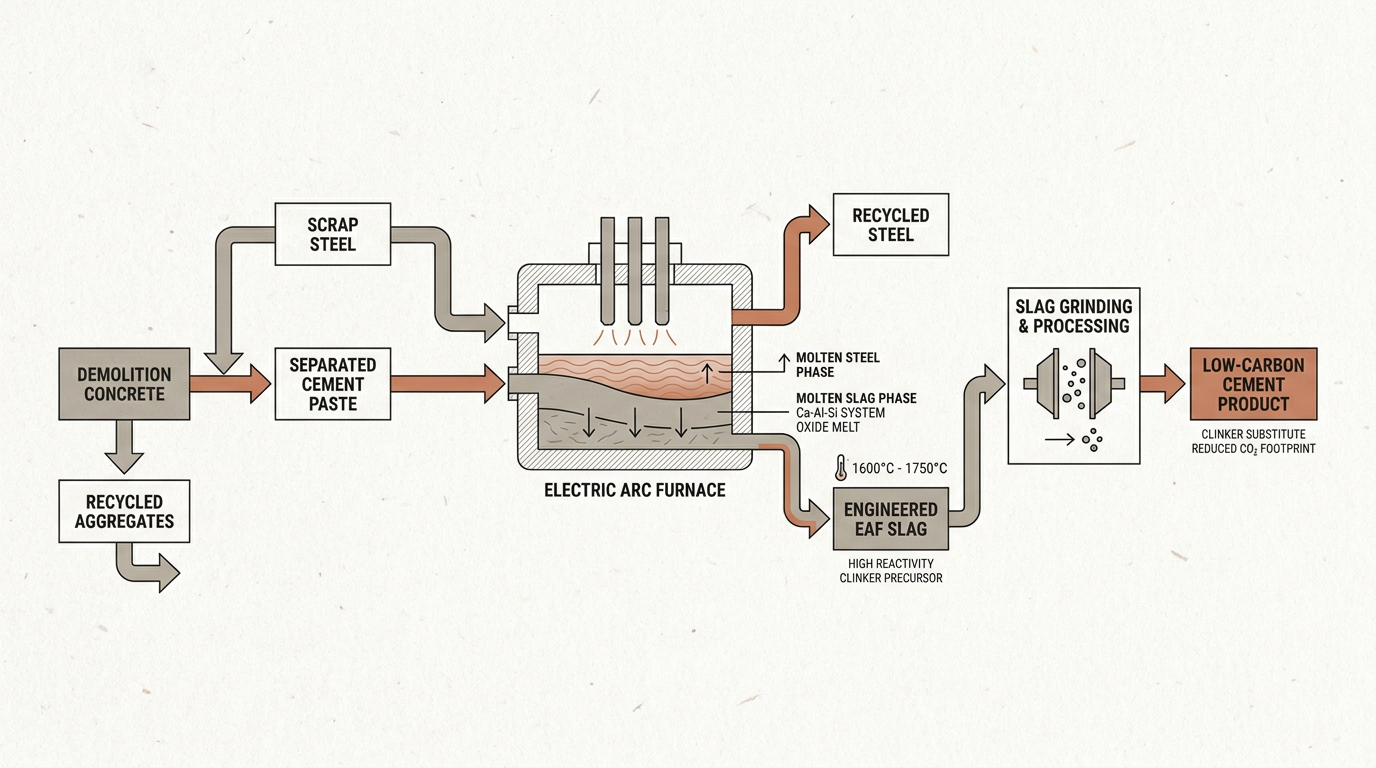
This is infrastructure integration, not a claim that unsorted demolition rubble can simply be dumped into any steel furnace. Recovering the right feedstock and controlling slag chemistry are central tasks. An electric arc furnace is engineered primarily to make specification-grade molten steel; metallurgical managers will not compromise liquid steel cleanliness, electrode consumption, or refractory campaign life to accommodate inconsistent mineral waste.
Upstream liberation and slag mineralogy
The viability of recycling cement paste inside an EAF depends on upstream beneficiation: even small amounts of residual silicate aggregates disrupt slag basicity and threaten furnace refractories.
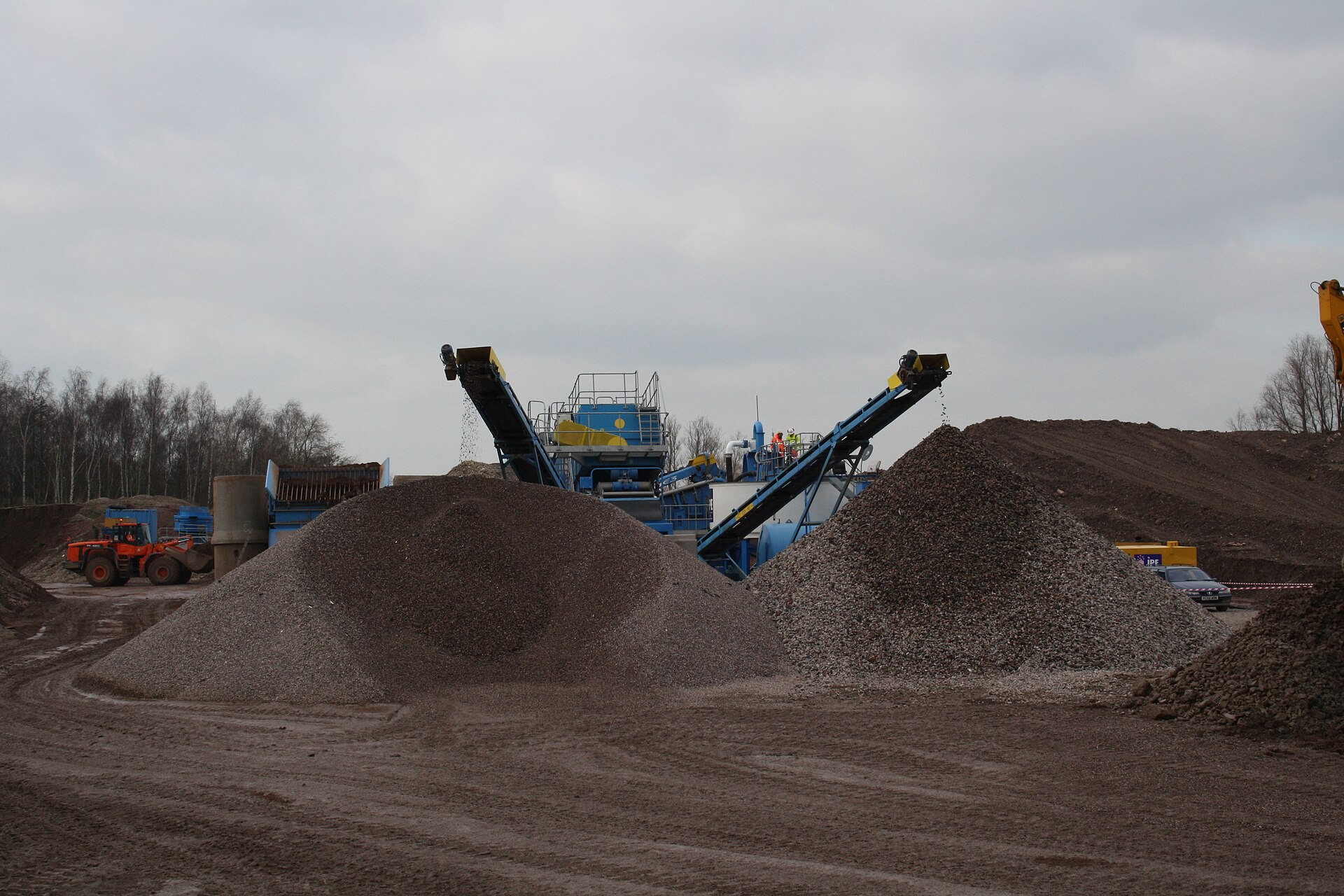
Recovering hardened cement paste requires aggressive mechanical and thermal pretreatment. Ordinary Portland cement paste bonds tightly to quartz sand, limestone chips, and siliceous gravel. To extract the cementitious fraction without excessive silica contamination from crushed aggregate, demolition rubble must undergo specialized attrition scrubbing, optical sorting, or thermal embrittlement.
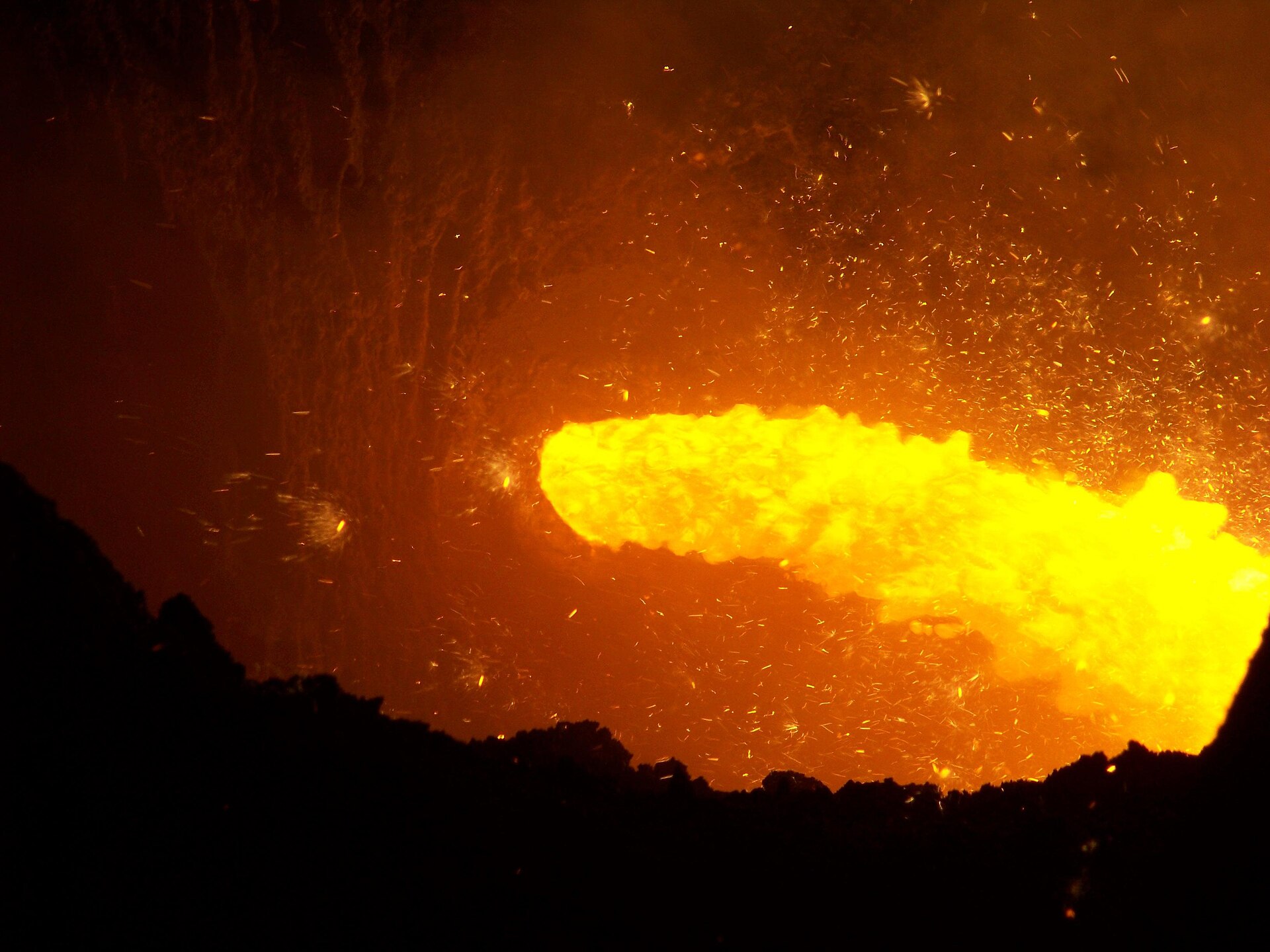
Once introduced to the arc furnace environment, the thermal energy dehydrates hydrated phases, releasing chemically bound water and incorporating calcium, silica, and alumina into the molten slag. However, controlling the resulting slag chemistry is notoriously complex. In traditional iron blast furnaces, ground granulated blast-furnace slag (GGBS) yields a reliable latent hydraulic binder because ironmaking operates under continuous, highly reducing conditions with consistent raw material feeds. An electric arc furnace operates in batch cycles under variable oxidation conditions. EAF slag contains significant fractions of iron oxides and free magnesium oxide, which can retard hydration or cause delayed expansive cracking if not carefully quenched and vitrified.
Commercial milestones and the reality of scale
The company reports trials at Cardiff’s steel facility and first commercial sales, alongside a £10 million funding round. Those are stronger commercial milestones than a laboratory specimen, but a target of 120,000 tonnes a year remains a scale-up objective rather than recorded annual production.
Moving from pilot heats at a host mill to continuous volume off-take requires overcoming substantial operational friction. Steel mills adhere to tight production schedules and strict scrap recipes. Integrating an external mineral feed derived from urban waste requires dedicated delivery infrastructure, pneumatic handling, and real-time assaying to prevent furnace disruption.
The EAF co-processing route cuts embodied cement emissions by 50% at cost parity with conventional binders.
The reported 50% emissions reduction and cost parity are company claims. Their meaning depends on electricity, processing, product performance and how emissions are allocated between steel and cement outputs.
The lifecycle mathematics of co-processing require rigorous accounting. If the carbon burden of running the high-powered electric furnace is assigned entirely to the steel output, the resultant slag appears artificially low in embodied emissions. Conversely, if furnace electricity, transport logistics for demolition waste, and upstream crushing energy are allocated proportionally across all furnace coproducts, the environmental benefit shifts. The local grid carbon intensity powering the furnace also sets a definitive floor for net emissions.
Standards, qualification, and regional limits
Without formal alignment to regional cement standards, novel industrial coproducts remain restricted to non-structural groundworks and controlled low-strength materials.
Cement specifications, durability tests and local construction approvals matter. A cementitious product is not automatically interchangeable with every conventional structural cement.
In structural engineering, hydraulic binders must satisfy exacting performance metrics under harmonized standards, such as EN 197 in Europe or ASTM C150 and C595 in North America. These criteria regulate compressive strength progression, heat of hydration, sulfate resistance, and maximum permissible concentrations of chlorides and trace heavy metals. If an EAF-derived slag product does not match established mineral categories, it faces a protracted path through specialized technical assessments and proprietary conformity approvals before structural engineers will specify it for structural foundations or precast columns.
The approach may avoid some primary raw-material and kiln demand. Its geographic constraint is equally clear: suitable demolition feedstock, processing facilities and compatible steel furnaces must connect economically. Heavy mineral products cannot absorb extensive road freight charges before their financial margin and carbon savings evaporate. An urban center undergoing demolition must exist within a viable logistics perimeter of both an EAF steelworks willing to adapt its fluxing routine and a grinding mill equipped to convert tough metallurgical slag into reactive cement powder.
The next evidence should show sustained quality, verified lifecycle data and actual production—not only a compelling shared-furnace concept.
References and image credits›
Photo: Retired electrician, CC0 · Diagram: The Waste Stack · Photo via Wikimedia Commons, CC BY-SA 3.0 · Photo: Peter Craven, CC BY 2.0