
China Deletes the Second-Life Battery Rulebook
On 30 July, MIIT abolished the announcement-management system for cascade use of retired EV batteries. Not a ban on reuse — the removal of the official channel that made reuse financeable.
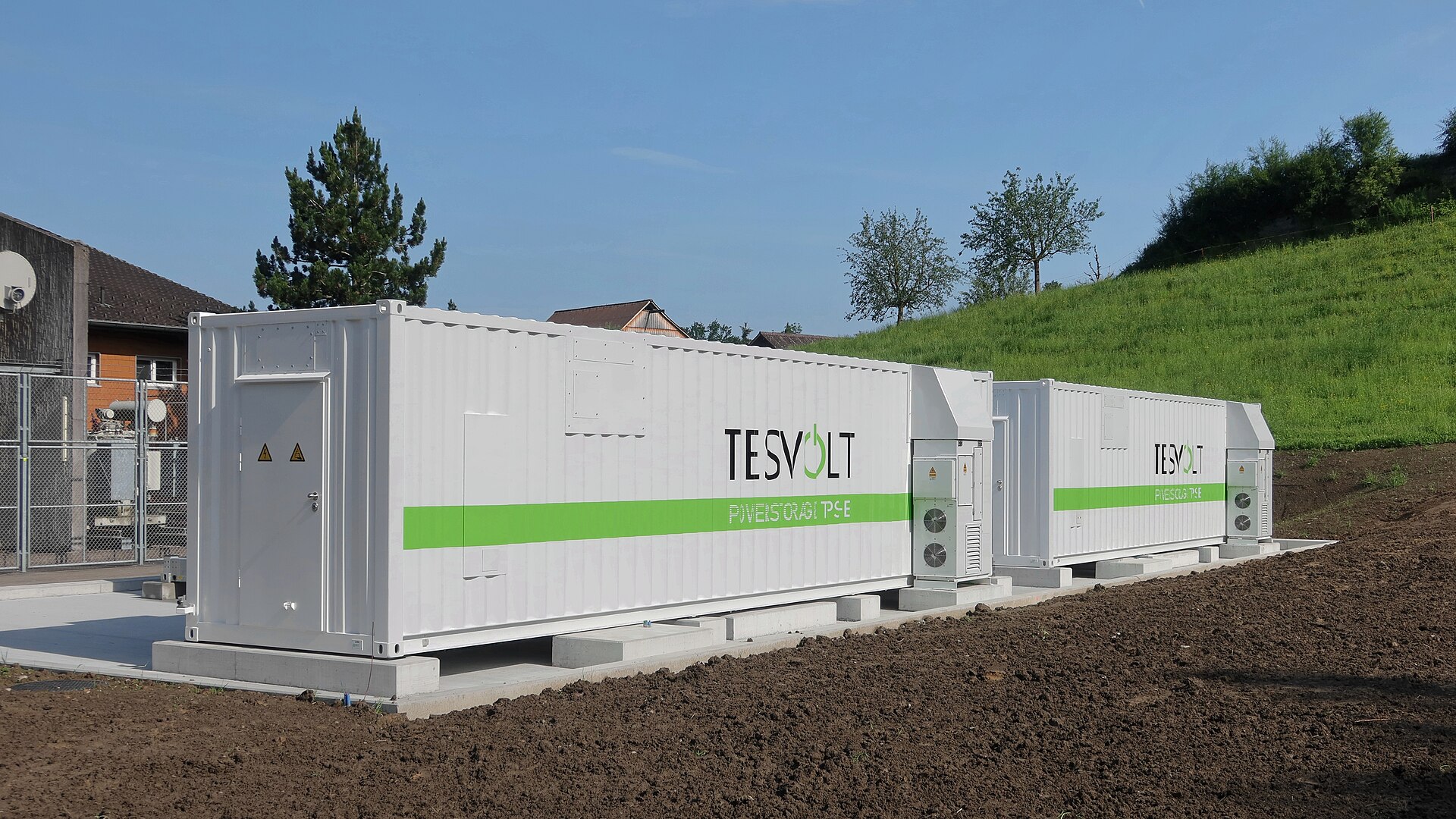
China's Ministry of Industry and Information Technology announced on 30 July that it is abolishing the regulatory provisions and the official announcement system governing cascade — second-life — use of retired new-energy-vehicle batteries. Industry analysis followed on 31 July.
What the announcement system was
Removing a whitelist does not outlaw the activity. It removes the mechanism by which the activity could prove itself.
The announcement system was a whitelist. Companies meeting MIIT's criteria for cascade utilisation were listed, and that listing functioned as the market's signal of legitimacy: it shaped who could source retired packs, who banks would lend to, and who large buyers would contract with.
What the policy is trying to fix
Retired vehicle packs are heterogeneous. Cells within a pack age unevenly, state-of-health measurement on used cells is difficult and easy to fake, and reassembling mixed-provenance modules into new products is a real thermal-runaway risk. There was also qualification arbitrage: firms holding a cascade-use listing using it as cover for activity the listing was not meant to sanction.
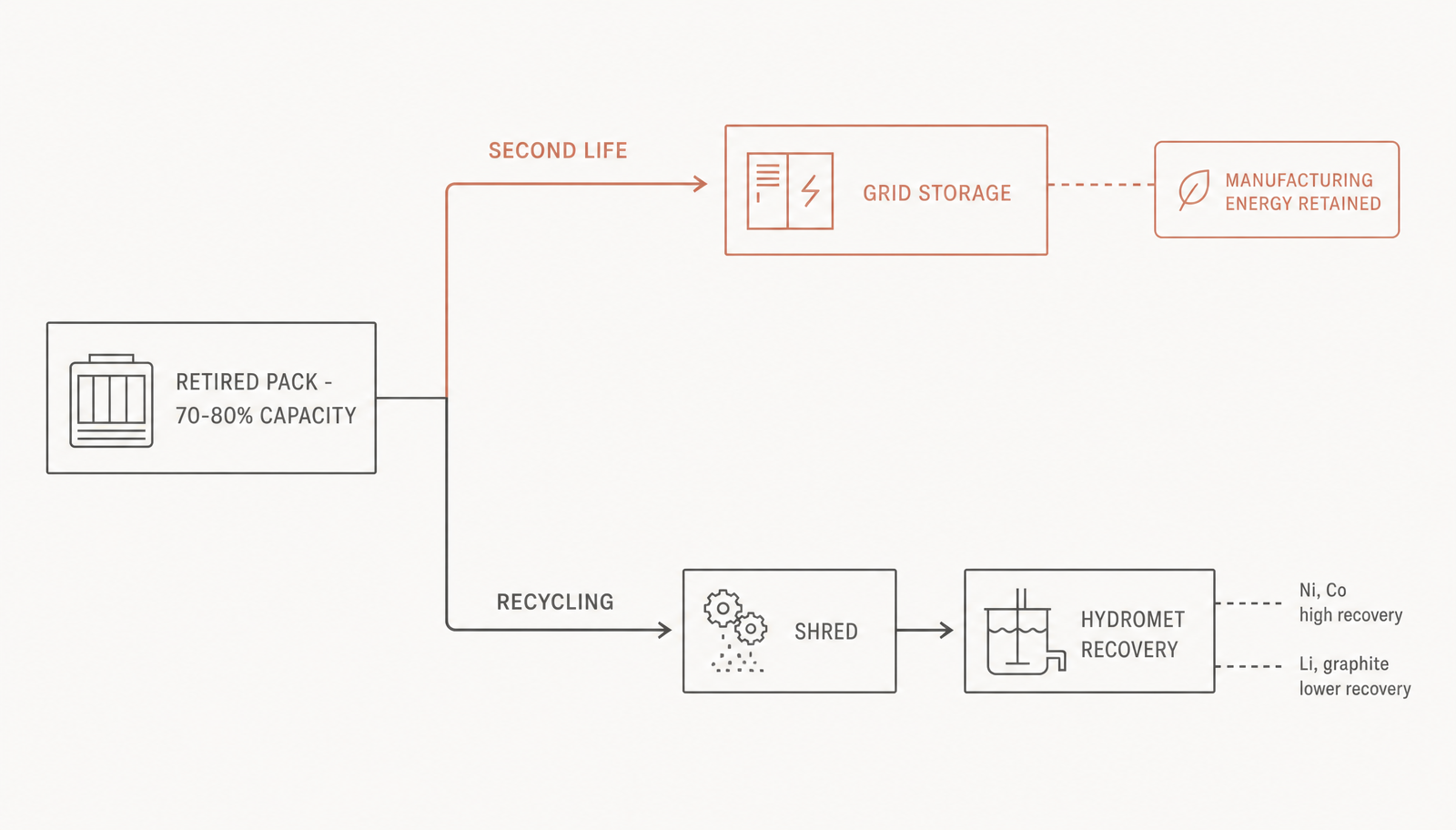
The new posture pushes more end-of-life batteries toward formal dismantling and hydrometallurgical material recovery, and requires reused battery products to meet the quality standard of whatever application they are sold into, with strengthened enforcement against non-compliant product.
What it does not do
The announcement does not explicitly prohibit every legitimate reuse case. Compliant stationary storage and backup-power applications can still exist — they simply have to qualify under the standards of their own end market rather than under a bespoke cascade-use designation.
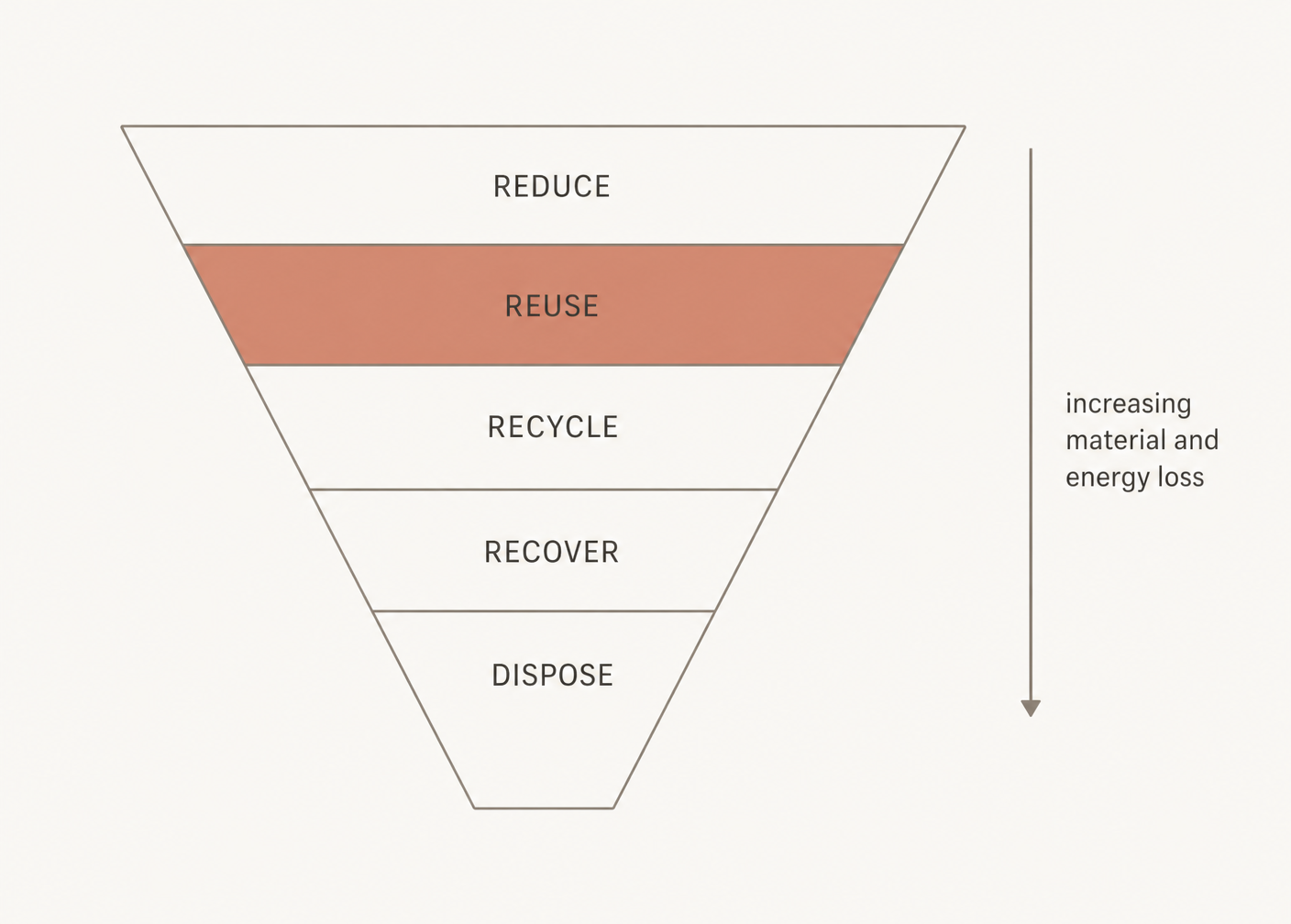
Where this sits on the hierarchy
The friction that follows
Watch whether compliant second-life projects continue reaching financial close through Q4. That is the observable test of whether this was a safety correction or a market closure.
Financing is the immediate problem. A second-life storage project that could previously point to a MIIT listing now has to construct its own credibility for every deal. Sourcing gets harder for the same reason. Meanwhile formal recycling capacity has to actually be there to absorb the redirected volume, and hydrometallurgical capacity does not expand on announcement timelines.
References and image credits›
- 01MIIT announcement, mirrored by Hunan Provincial Government
- 02Shanghai Metals Market — MIIT ends announcement management for second-life batteries
Photo: Kecko, CC BY 2.0, via Wikimedia Commons · Diagram: The Waste Stack · Diagram: The Waste Stack