
"Treated wastewater is automatically safe to drink"
"Treated" describes a process, not a permitted end use. Between sewage effluent and drinking water sit three distinct categories, each with its own treatment train, monitoring regime and regulator.
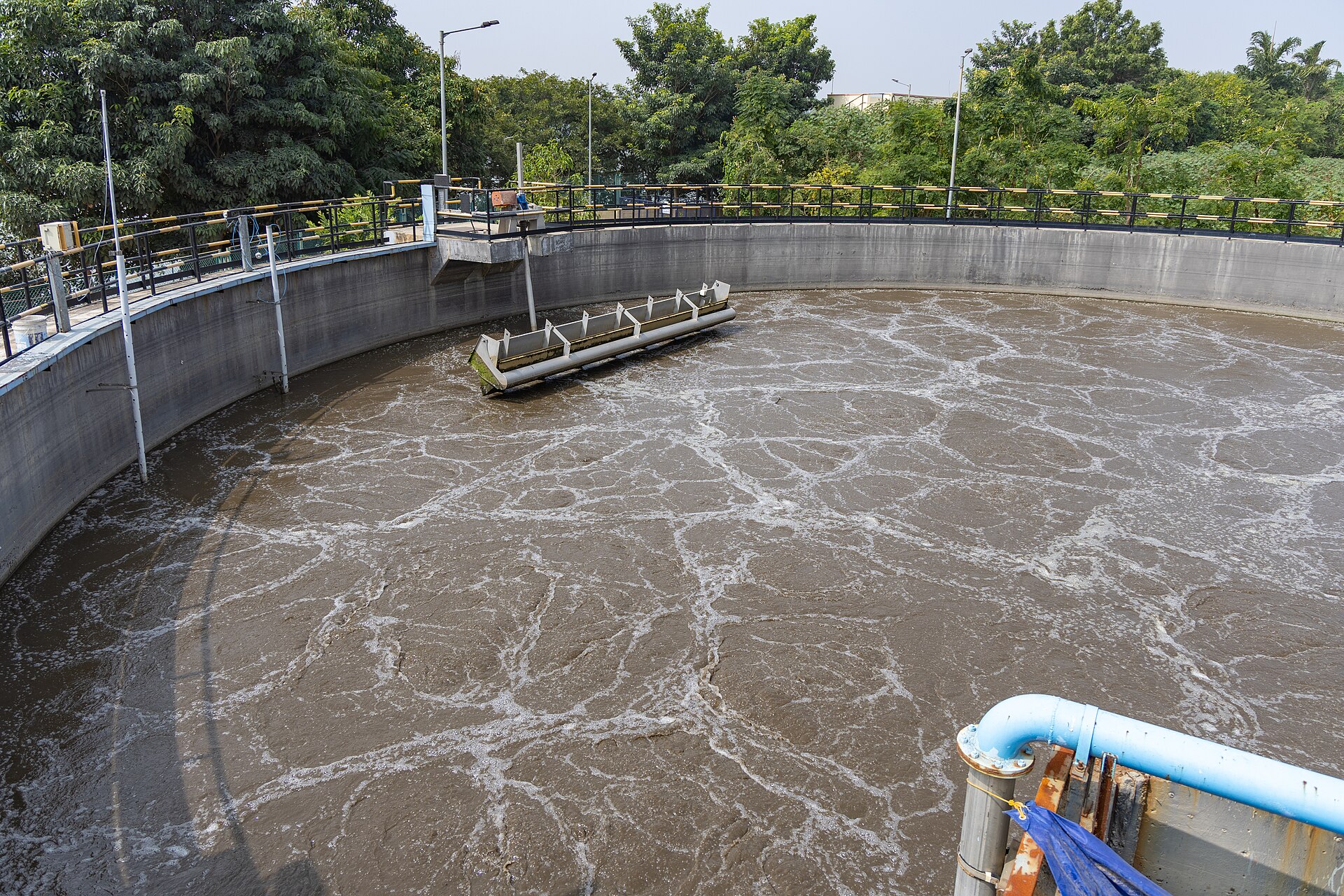
Water recycling has an unusual communication problem: the sceptics and the enthusiasts make the same mistake. Both treat "treated wastewater" as one thing. One camp concludes it must be unsafe; the other concludes it must be fine. It is neither, because it is not a single quality grade.
The myth
Once sewage passes through a wastewater plant, the effluent is essentially drinking water — the treatment already happened.
The reality
A conventional wastewater plant is designed to protect a receiving river, not a human throat. It removes solids, organic load and nutrients to a standard set by discharge permits. It is not designed to guarantee microbial, chemical and radiological safety for consumption, and it is not monitored as if it were.
The EPA draws the operative distinction: indirect potable reuse routes treated water through an environmental buffer — a lake, river or aquifer — before it enters conventional drinking-water treatment. Direct potable reuse treats and distributes without that buffer.
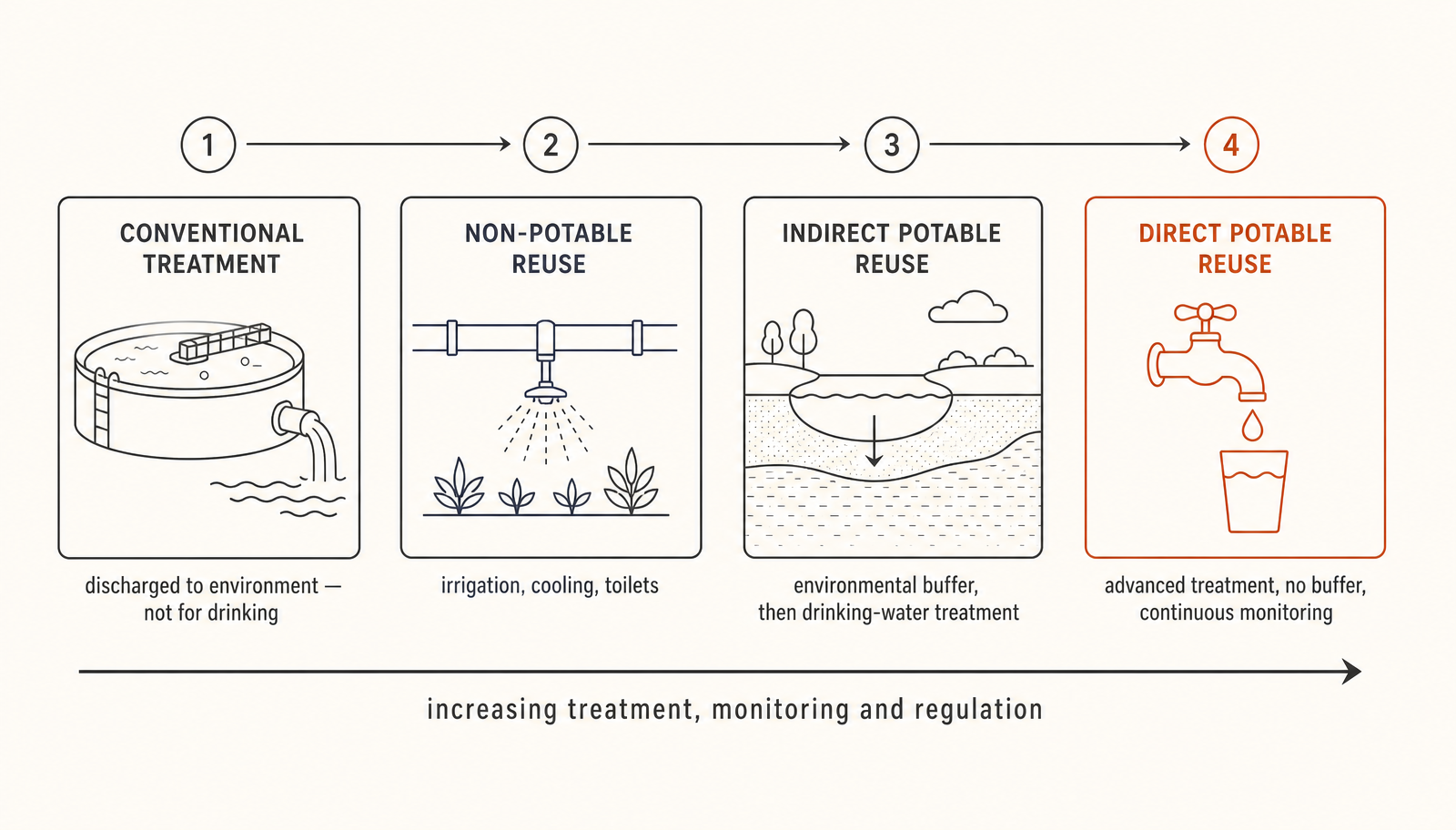
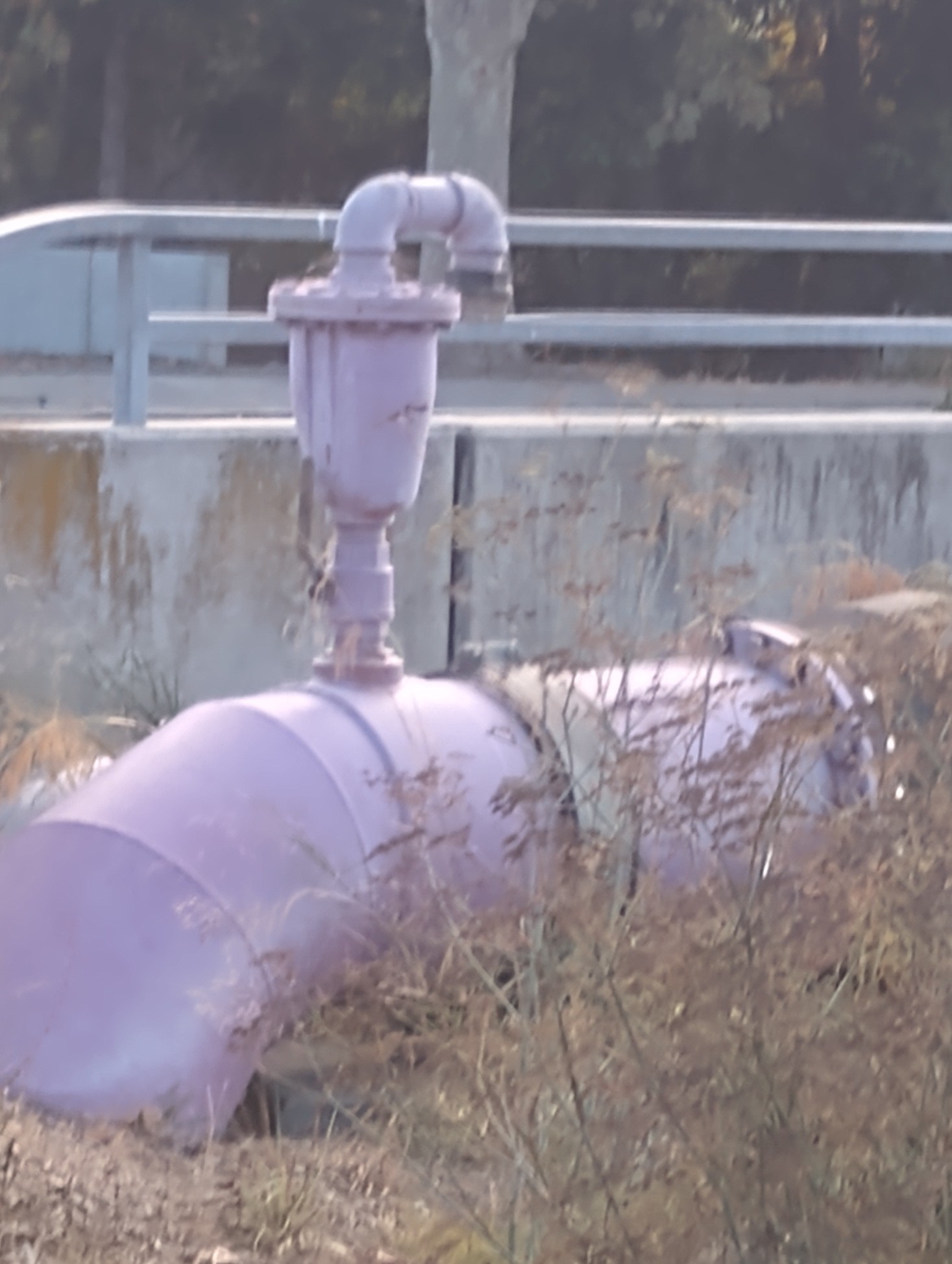
Non-potable reuse is a real category, and it is not drinking water
Reclaimed water for irrigation, cooling and toilet flushing is widespread and useful. It is also deliberately kept separate from the drinking supply — usually with purple pipework, precisely so nobody confuses the two.
What potable reuse actually requires
WHO guidance frames potable reuse as a planned, tightly controlled application: source-water protection, multiple independent control measures, continuous monitoring, and a water-safety management framework covering the whole chain.
The EPA's summary of that framework notes that safety targets span microbial, chemical and radiological parameters, with an emphasis on risk assessment, active management and independent surveillance.
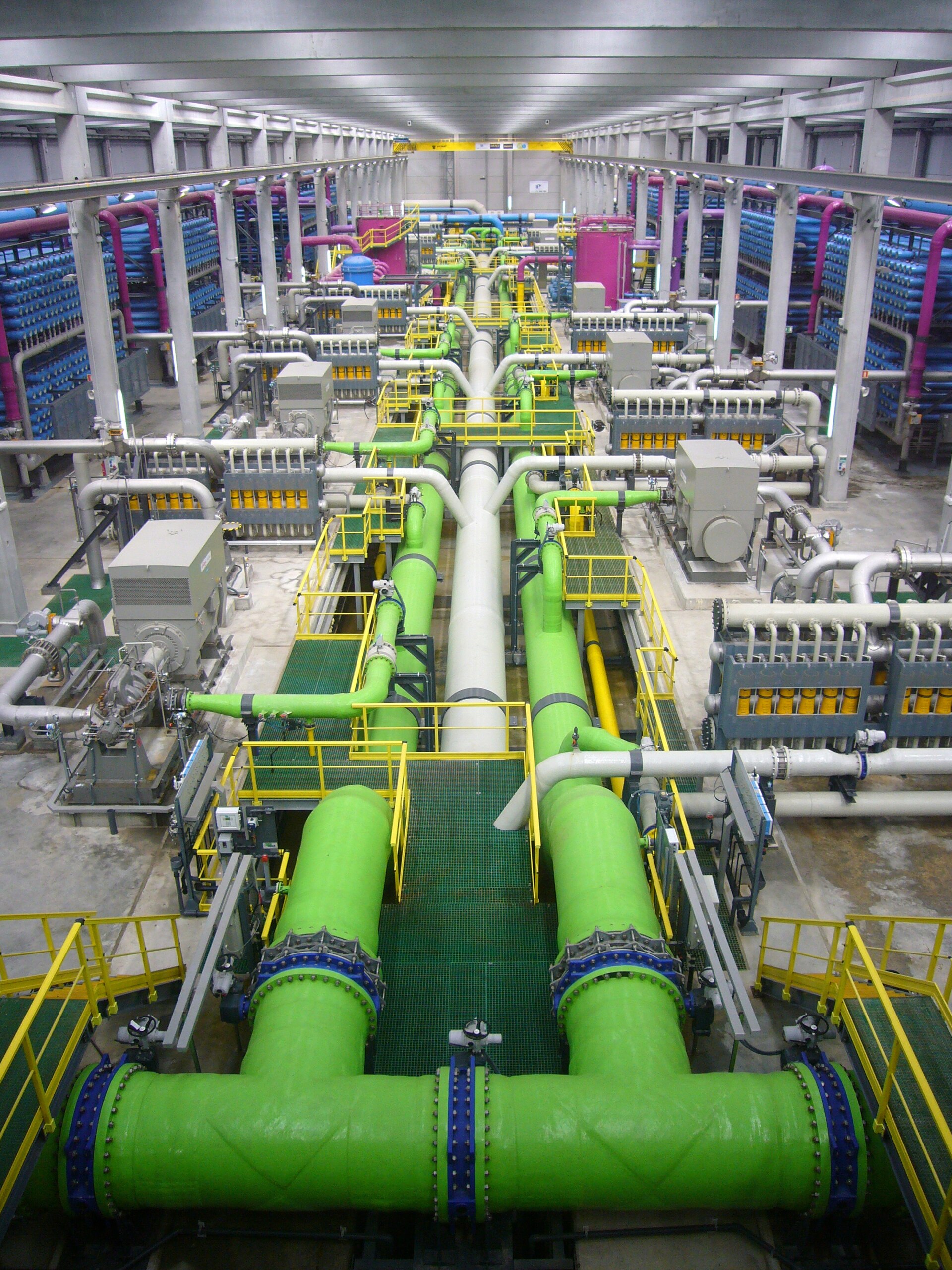
The load-bearing phrase is multiple barriers. No single process is trusted. The design assumption is that any one barrier can fail, and the system still has to be safe when it does.
The promise
Planned potable reuse can widen a region's water portfolio and make it more drought-resilient, using a supply that is reliable precisely because it does not depend on rainfall. Where it is designed, monitored and regulated to drinking-water standards, it works.

The catch
The safety case is not a property of the water. It is a property of an operating system that has to keep working continuously.
Source control. What enters the sewer sets the ceiling on what treatment has to remove. Industrial discharges and trace contaminants are managed upstream or not at all.
Energy and cost. Advanced treatment trains are expensive to build and expensive to run.
Monitoring. Continuous, instrumented, with defined responses when a reading drifts. A treatment train without surveillance is an assumption.
Regulation and acceptance. Both are slower than the engineering, and both are load-bearing.
WHO is explicit that potable reuse is appropriate in specific circumstances and requires control and monitoring. It is not a shortcut around treatment; it is more treatment, more instrumentation and more oversight than conventional supply.
References and image credits›
- 01US EPA — Potable Water Reuse and Drinking Water
- 02WHO — Potable reuse: guidance for producing safe drinking-water
- 03US EPA — Summary of WHO's Water Reuse Guideline or Regulation for Potable Water
Vraj Acharya, WELL Labs, Wikimedia Commons, CC BY-SA 4.0 · Stebanoid, Wikimedia Commons, CC0 · James Grellier, Wikimedia Commons, CC BY-SA 3.0 · AlphaBeta135, Wikimedia Commons, CC BY 4.0 · Klaus Ohlenschläger, Wikimedia Commons, CC BY-SA 3.0