
"When in doubt, put it in the recycling — they'll sort it out"
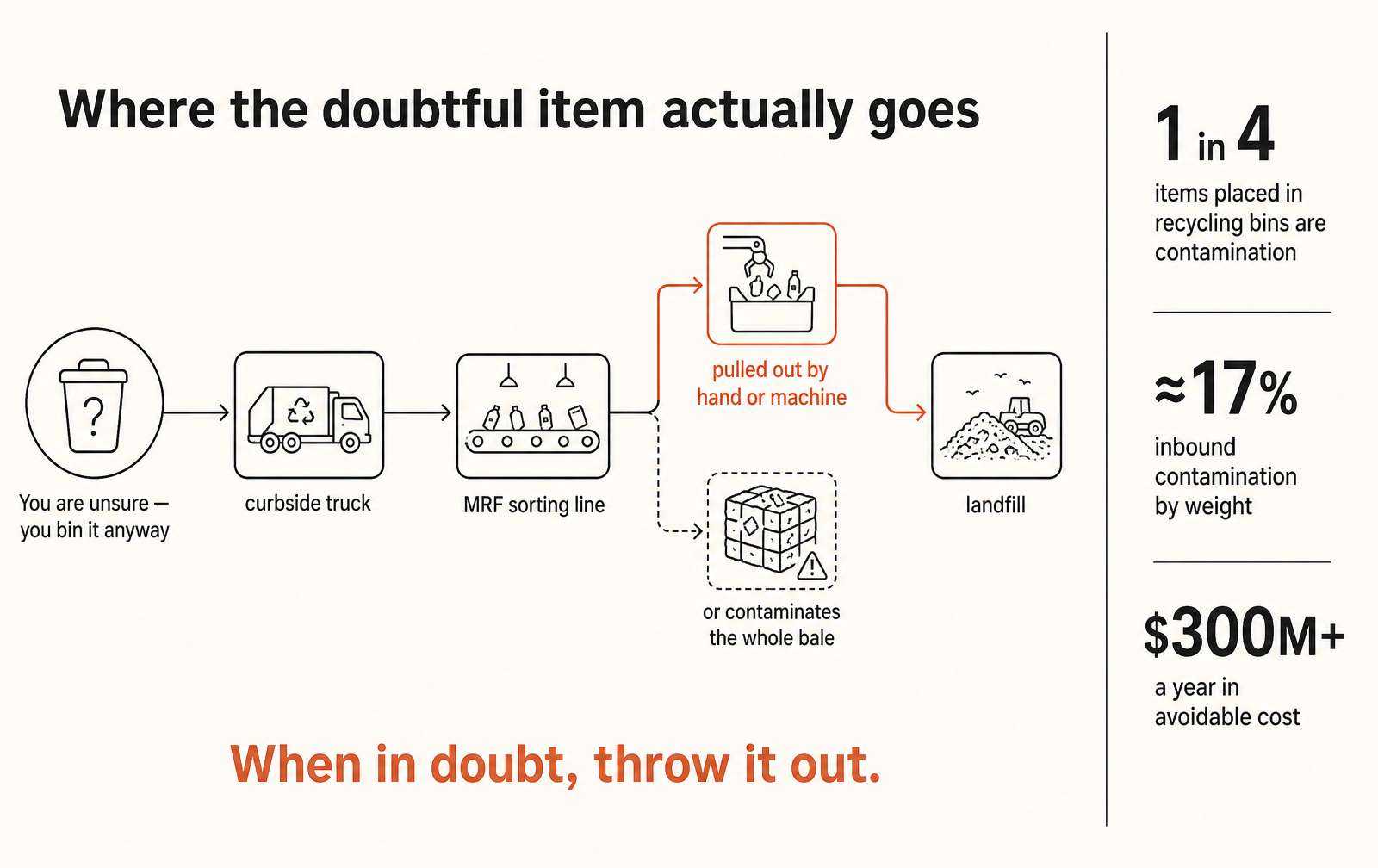
The EPA's guidance is the exact opposite sentence. One in four items in the bin is contamination, it costs the system $300 million a year, and the doubtful item does not get rescued by the machine.
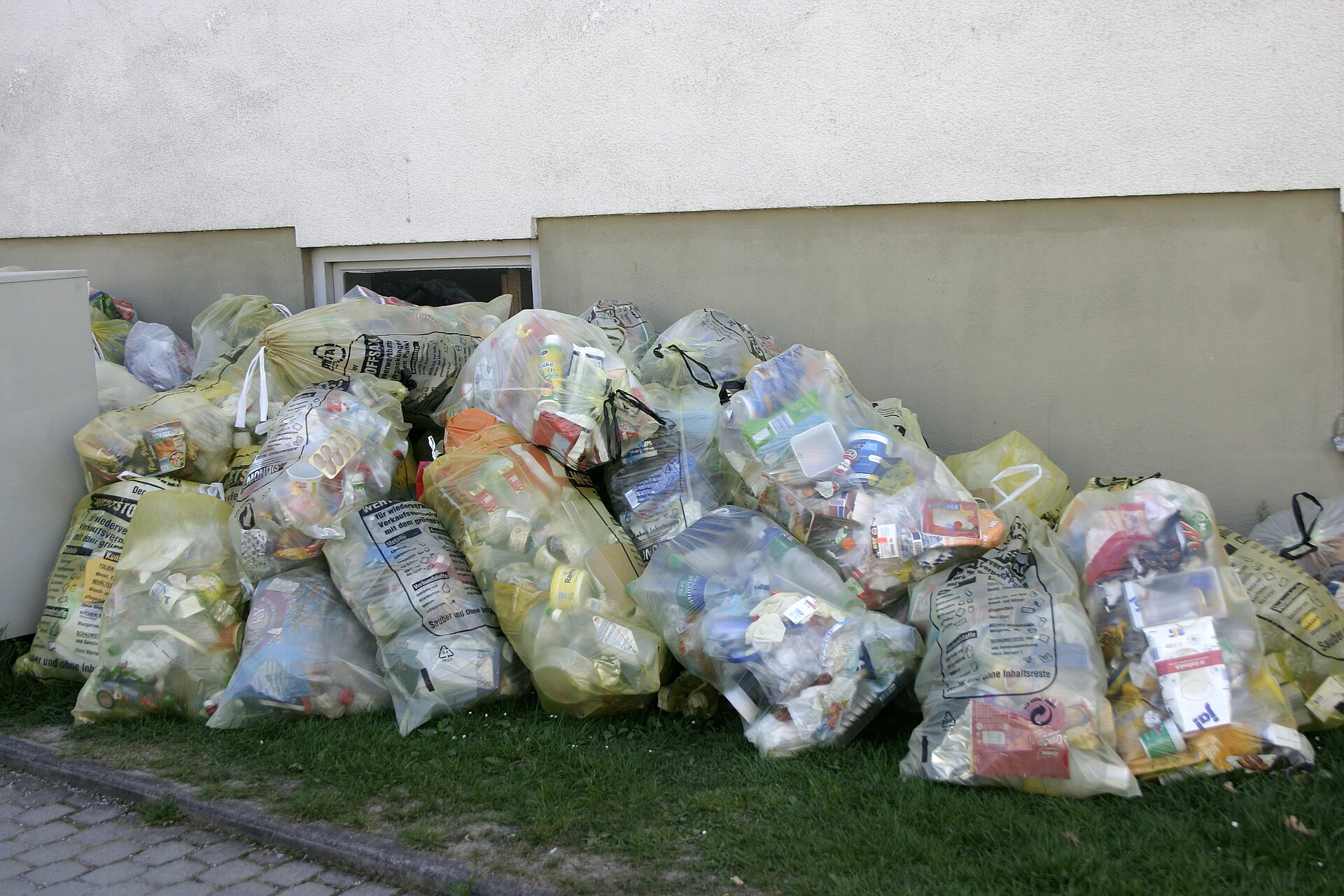
It is the most widely held piece of waste-management folk wisdom in the English-speaking world, and it is backwards.
If I am not sure whether something is recyclable, I should put it in the recycling bin anyway — the facility will sort out what does not belong.
The U.S. EPA's own guidance is the opposite sentence: "When in doubt, throw it out. Wishcycling can cause an entire batch of recyclables to get tossed."
Why the intuition is reasonable and still wrong
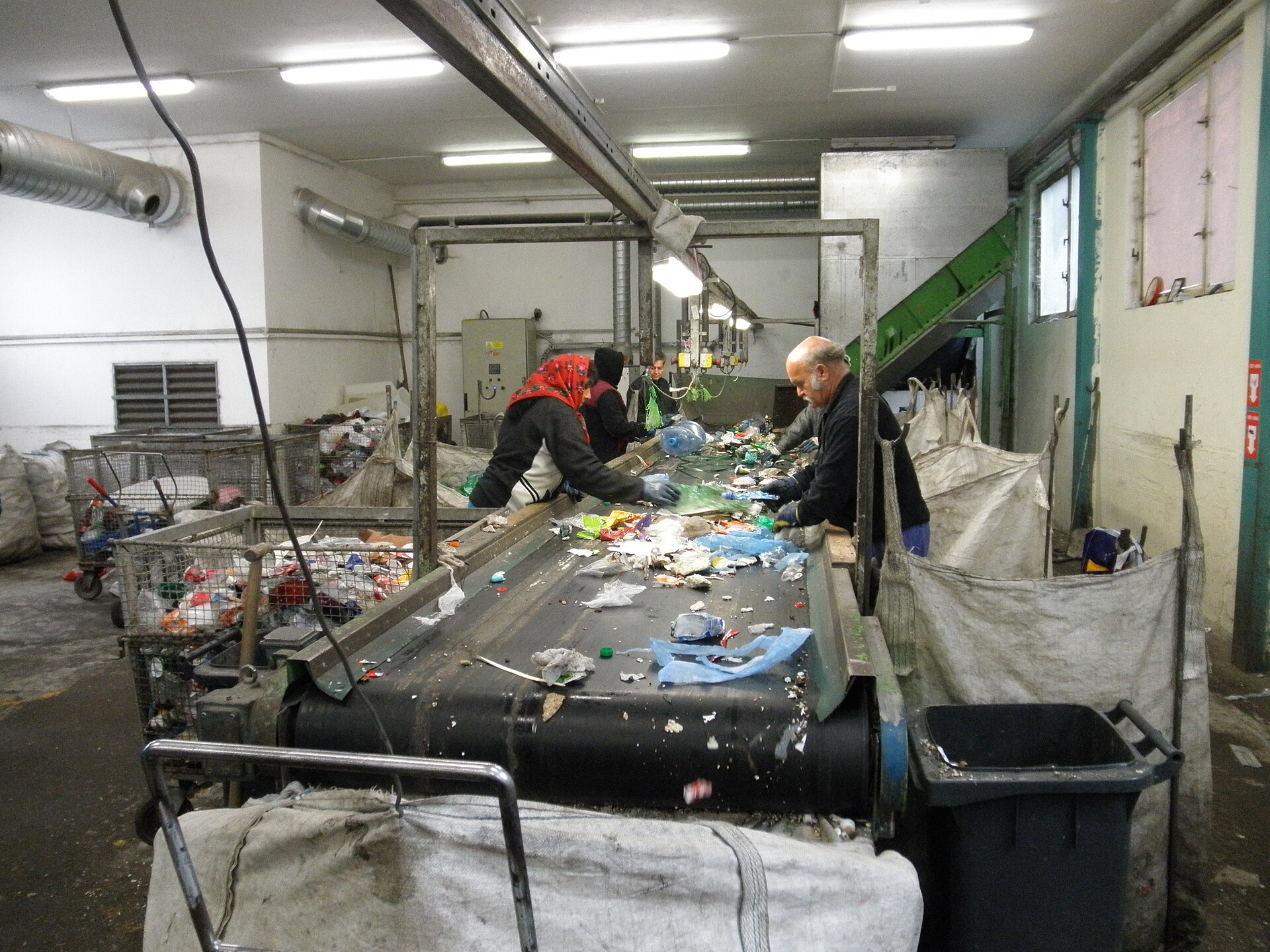
The belief is not stupid. A materials recovery facility is visibly a sorting machine — conveyors, optical sorters, magnets, eddy-current separators, people on a picking line. If its entire job is separating materials, why would one uncertain yoghurt pot matter?

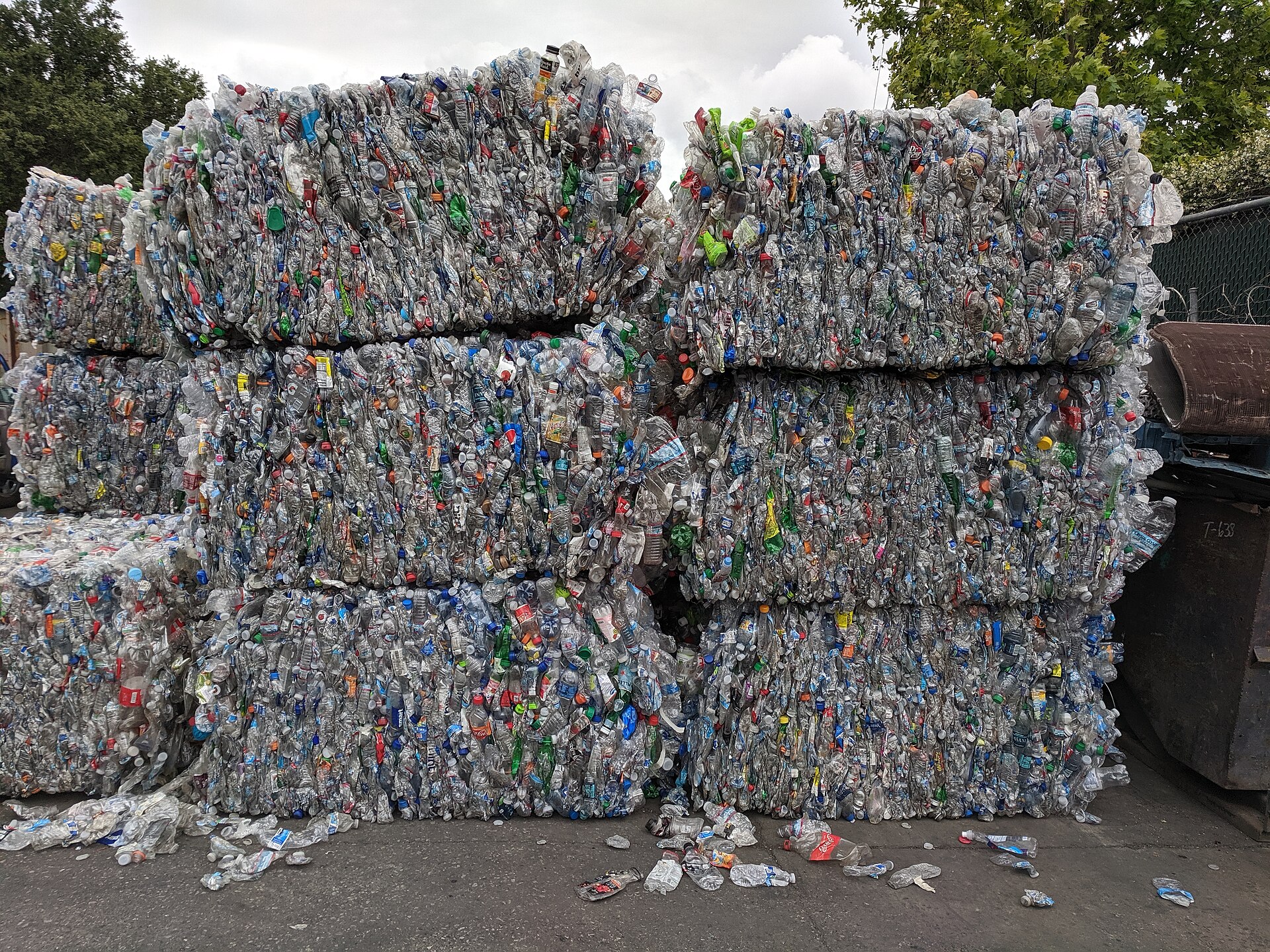
Because the machine is calibrated for a known input stream, and because the economic product is not "sorted material" — it is a bale that meets a buyer's specification. Contamination is measured against that spec, and a bale that misses it is downgraded or rejected wholesale.
Three concrete harms
One: it contaminates at scale. The Recycling Partnership's field research finds roughly one in four items placed in recycling bins is contamination that cannot be recycled, with a national average inbound contamination rate around 17% by weight and West Coast communities ranging from 8% to 46%.
Two: it is expensive. Contamination costs the U.S. recycling system at least $300 million a year — sorting labour, landfill tipping fees for material that took a truck ride first, and equipment repair.
Three: it is widespread and self-reinforcing. Close to 30% of people admit to putting something in the bin they were unsure about, specifically because they believed the gesture might help.
What actually happens to the item
It does not get rescued. It rides the truck, enters the facility, and either gets pulled off the line by a person or a machine — slowing the line, consuming labour — or it passes through and ends up baled with material it does not belong to. Either way it usually reaches a landfill in the end, but after a more expensive, more energy-intensive detour than if it had gone into the residual bin at home.
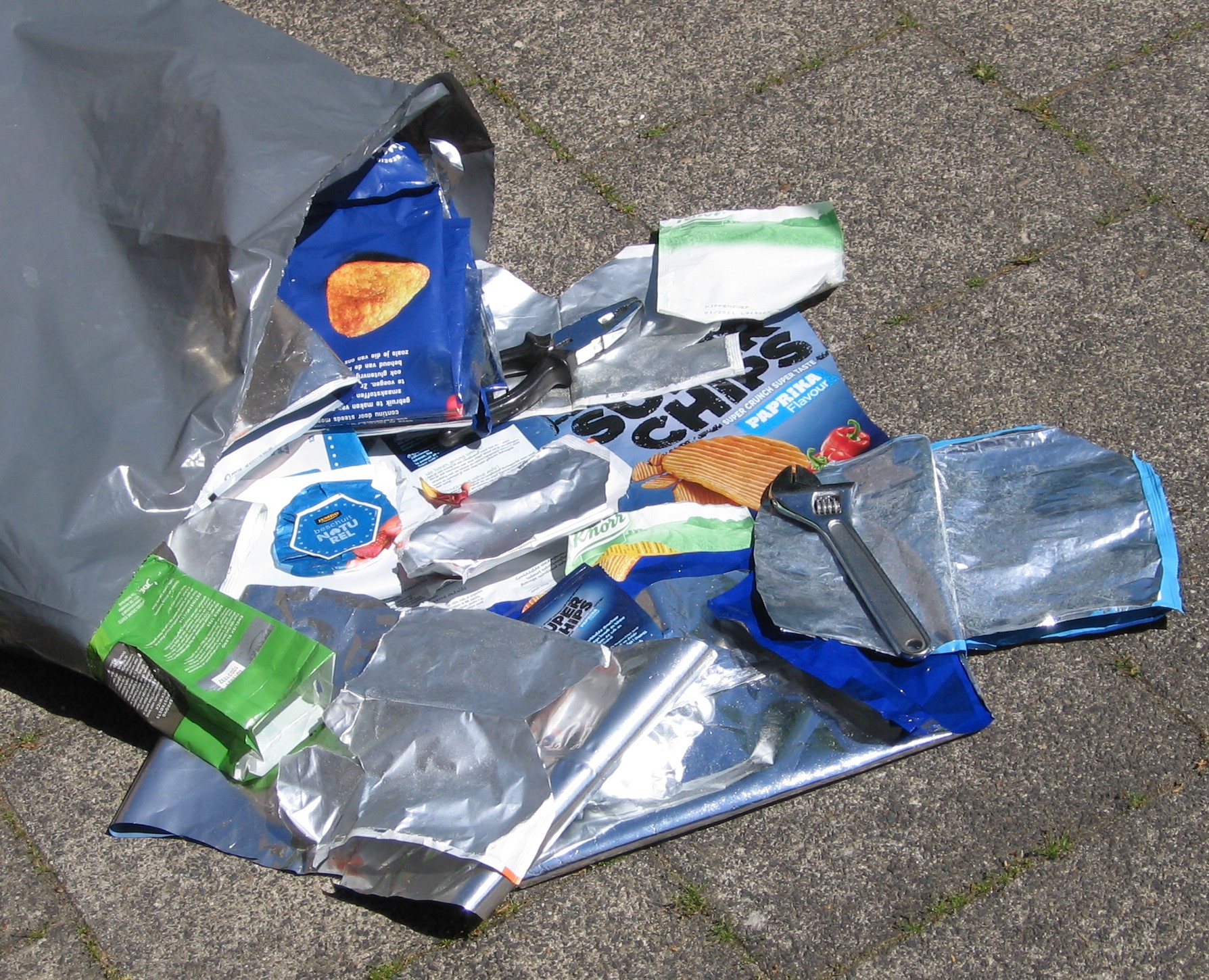
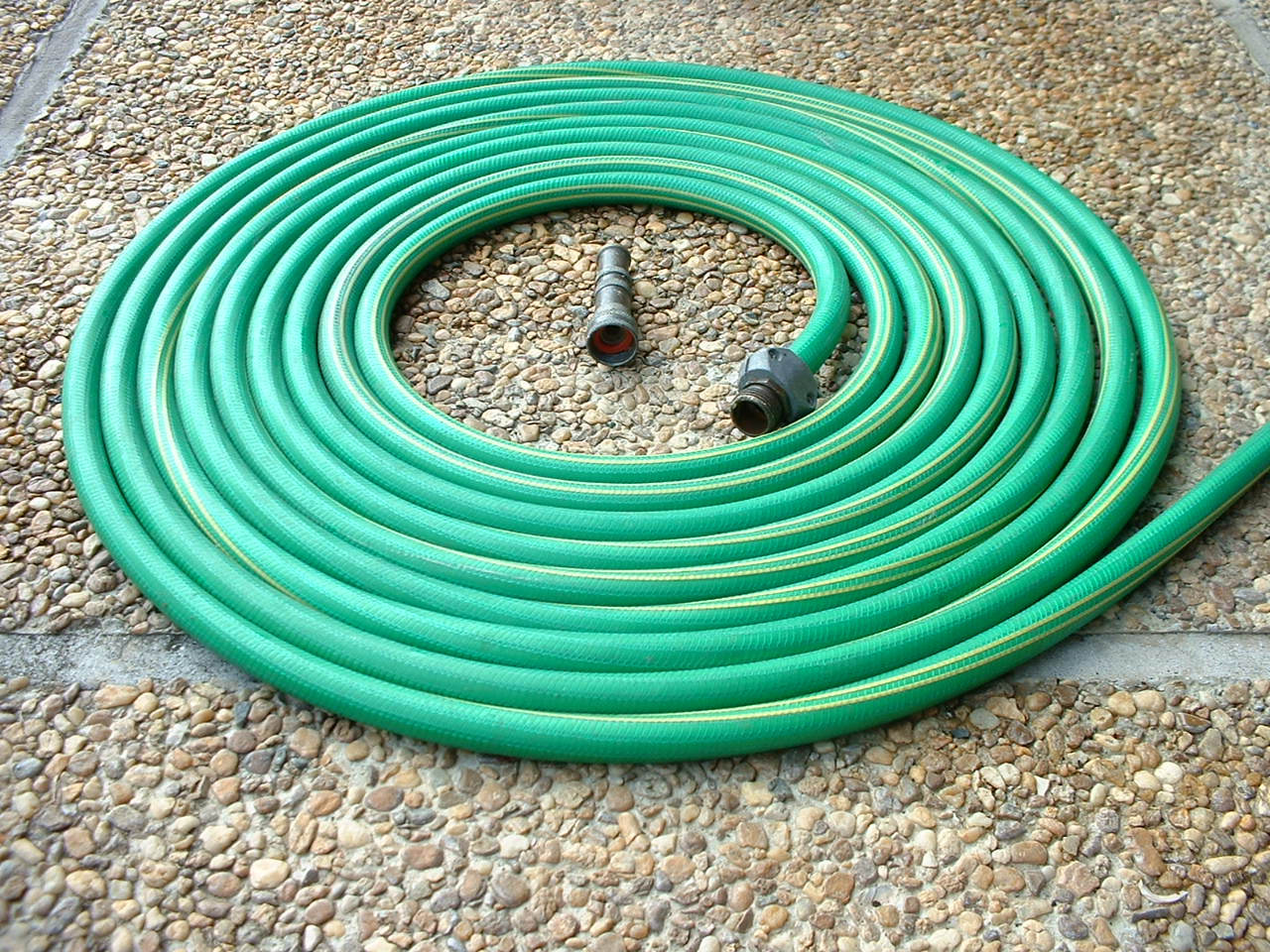
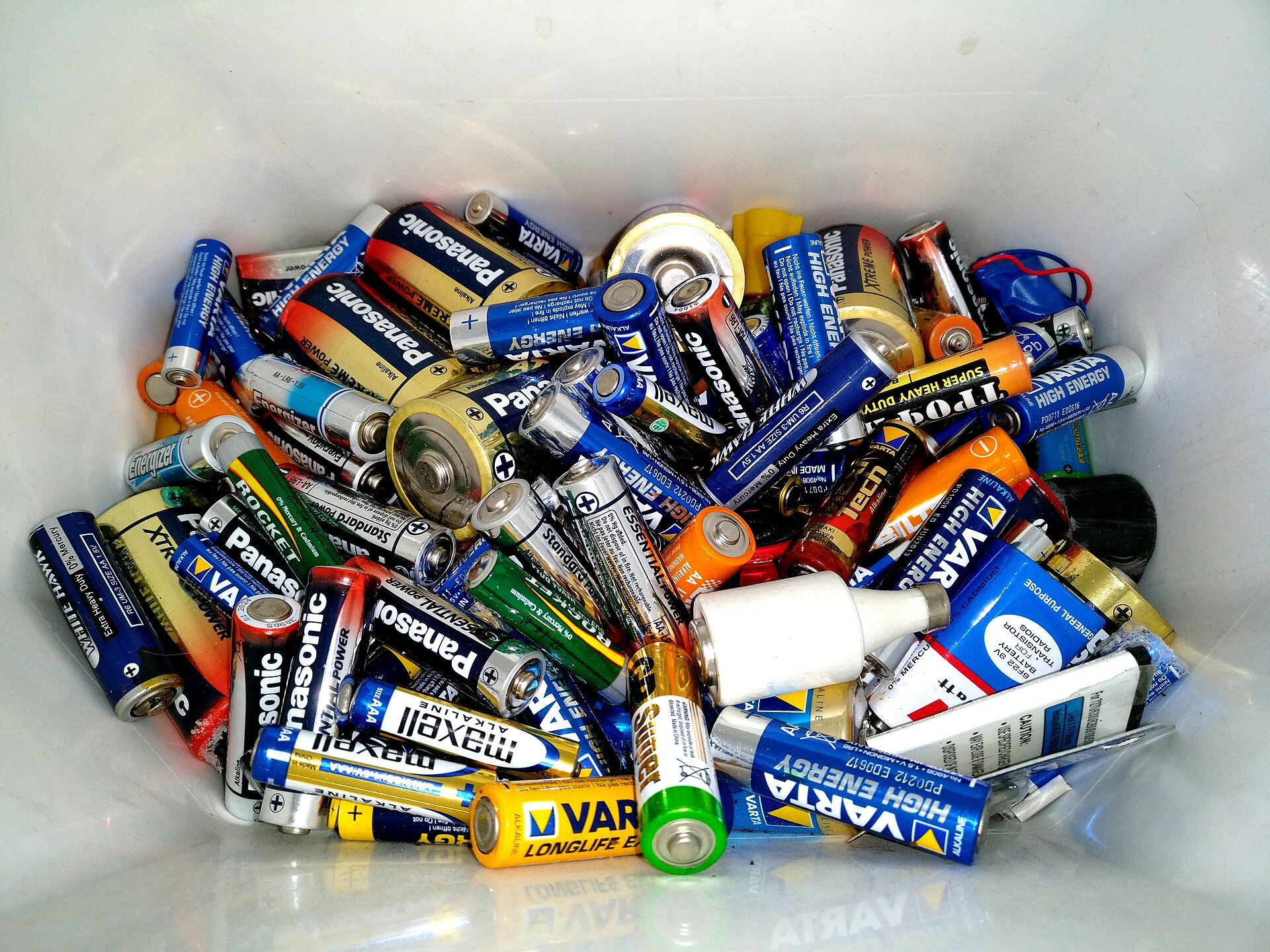
Some contaminants do worse than cost money.
The correction
The right default is the EPA's: when in doubt, throw it out. Underneath that sit four habits that matter more than any individual item.
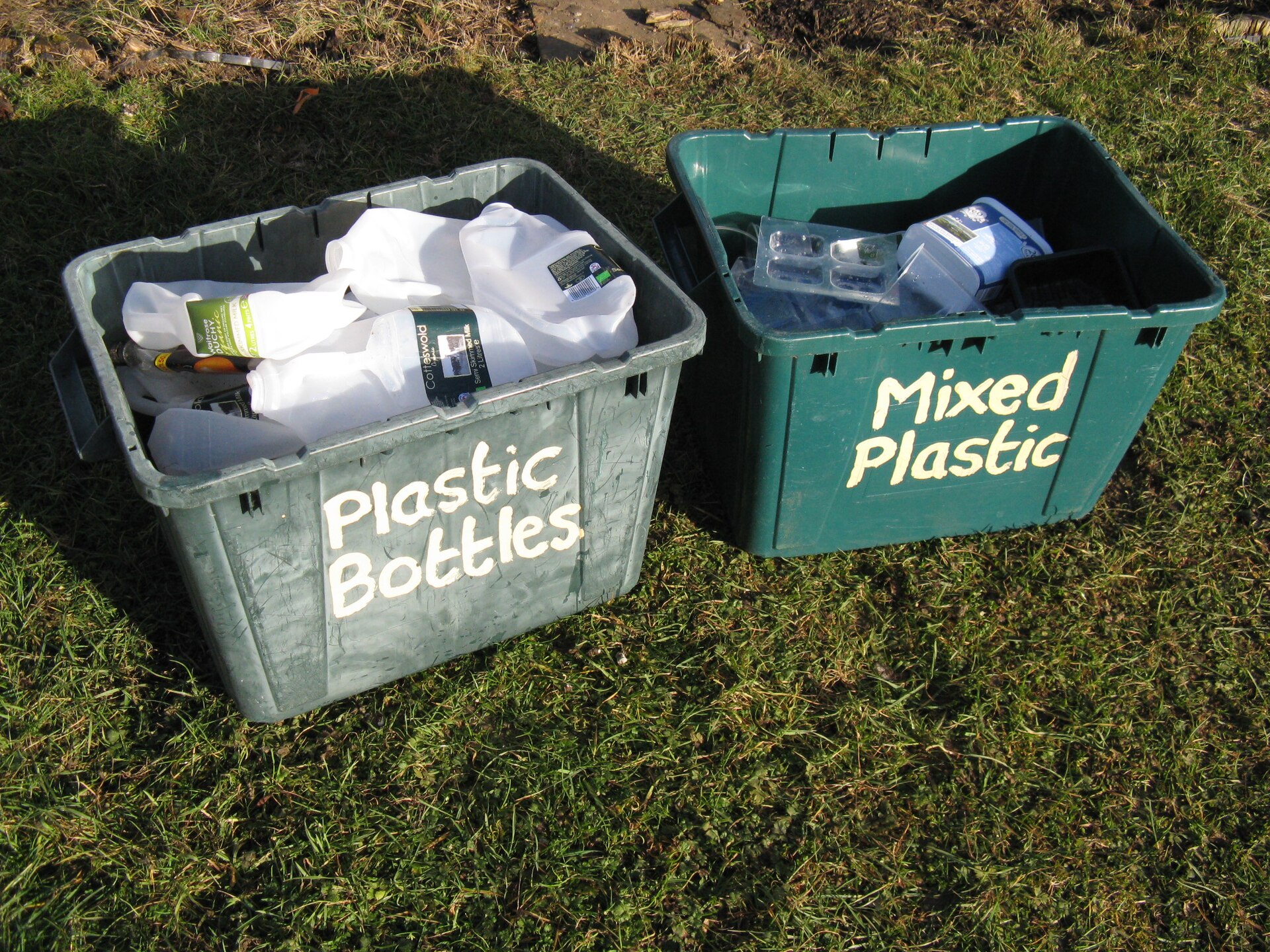
Check your local programme's accepted-materials list — acceptance genuinely varies between neighbouring towns, and the resin code on the base of a container is not a recyclability claim. Keep recyclables empty, clean and dry. Keep films, bags and textiles out of the curbside bin; bags go to store drop-off points where those exist. And do not bag your recyclables, because a sealed bag is treated as one unidentifiable object.
Recycling right is impossible because the rules keep changing.
The rules are genuinely inconsistent town to town, and that burden should sit with programme design and labelling rather than with residents. But the Recycling Partnership's interventions cut contamination by up to 57% with targeted local education — which means the information gap, not apathy, is doing most of the damage.
The honest caveat
The local-rules problem is real. Labelling is inconsistent, acceptance lists change, and the resident is currently the least-informed actor in the chain being asked to make the most decisions. That is exactly the argument for the conservative default: when you cannot verify, the residual bin costs the system nothing, and the recycling bin might cost it a bale.
References and image credits›
- 01U.S. EPA — Frequent Questions about the National Recycling Strategy
- 02U.S. EPA — Frequent Questions: Recycling
- 03The Recycling Partnership — 2023 Knowledge Report
- 04The Recycling Partnership — West Coast Contamination Initiative
- 05The Recycling Partnership — Fight Contamination toolkits
Rhododendrites, Wikimedia Commons, CC BY-SA 4.0 · Wikimedia Commons, CC BY-SA · Wikimedia Commons, CC BY-SA · Michal Maňas, Wikimedia Commons, CC BY 3.0 · Wikimedia Commons, CC BY-SA · Nandhp, Wikimedia Commons, CC BY-SA 3.0 · Wikimedia Commons, CC BY-SA · Nino Barbieri, Wikimedia Commons, CC BY-SA 2.5 · Timothy Akolamazima, Wikimedia Commons, CC BY-SA 4.0