
How an AI-assisted MRF actually sorts your recycling
Abu Dhabi is building a 400,000 tonne-a-year material recovery facility with optical sorting and AI. Here is what that machinery actually does to a conveyor belt of mixed waste - and what still falls off the end as residue.
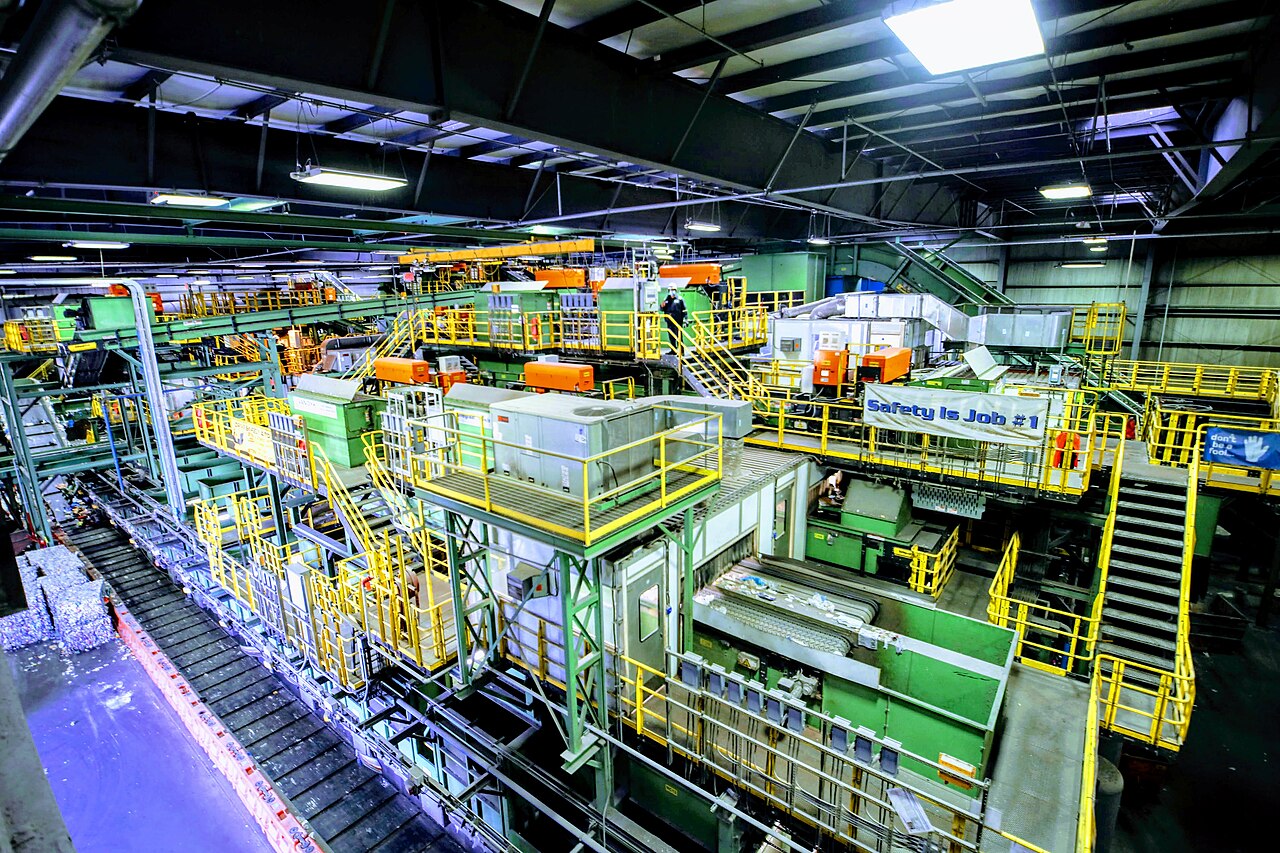
Tadweer Group is developing Abu Dhabi's first greenfield material recovery facility: 400,000 tonnes a year of municipal and commercial waste, automated optical sorting, AI on the picking line, and a target date of 2028.
"AI recycling" is a phrase that does a lot of work in a press release. On the floor of a MRF it means something quite specific and quite mechanical. Here is the line, stage by stage.
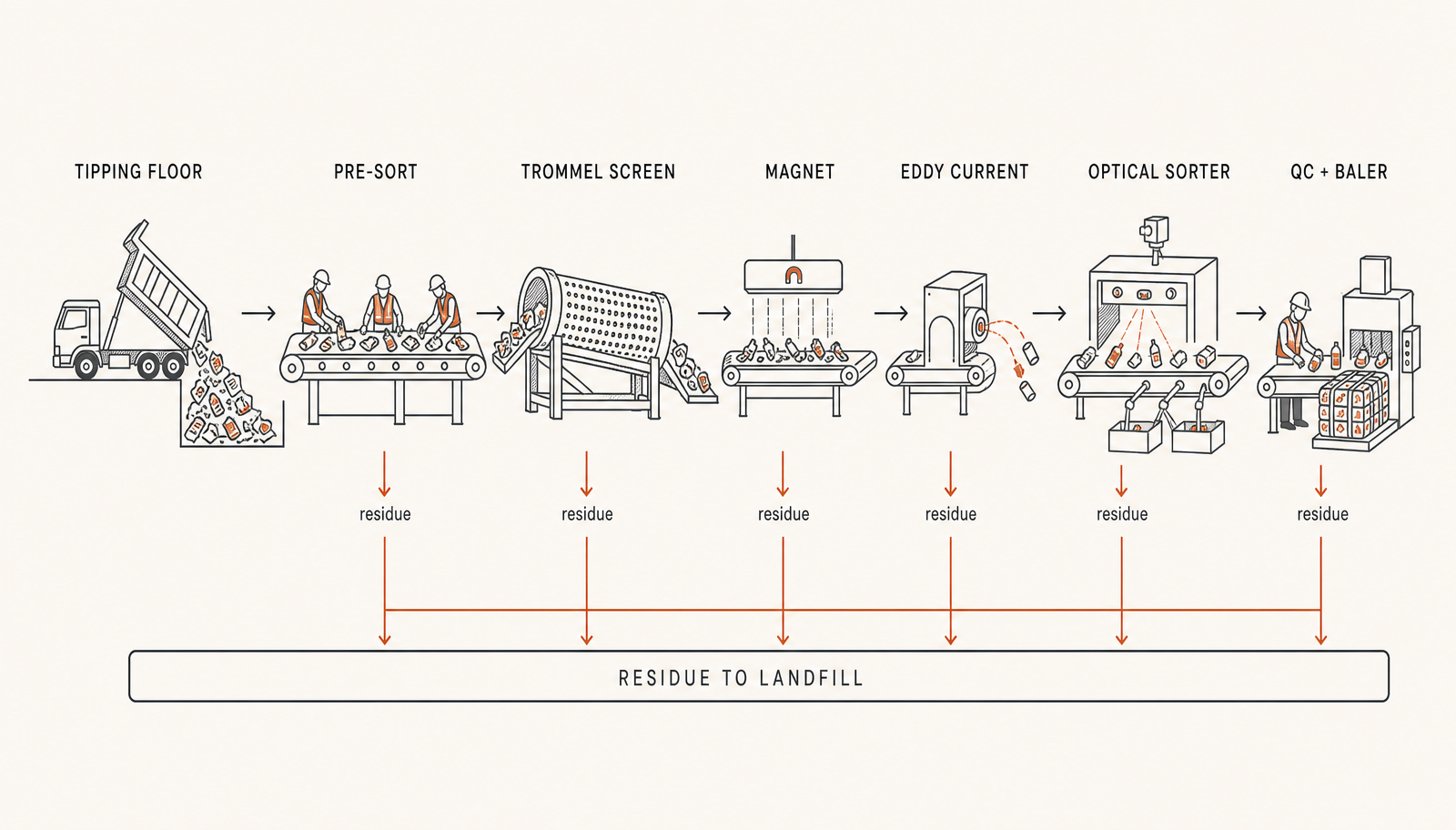
Stage one: spreading and pre-sort
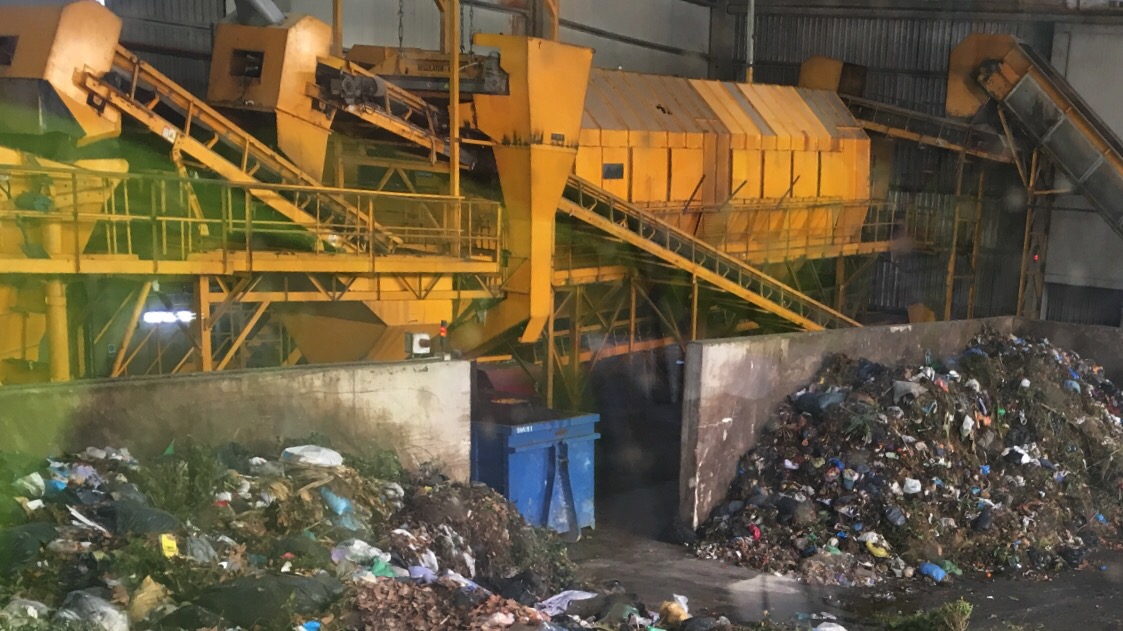
Material arrives on the tipping floor and is fed onto a belt in a thin, even layer. Nothing downstream works on a pile - the sorters need to see individual objects.
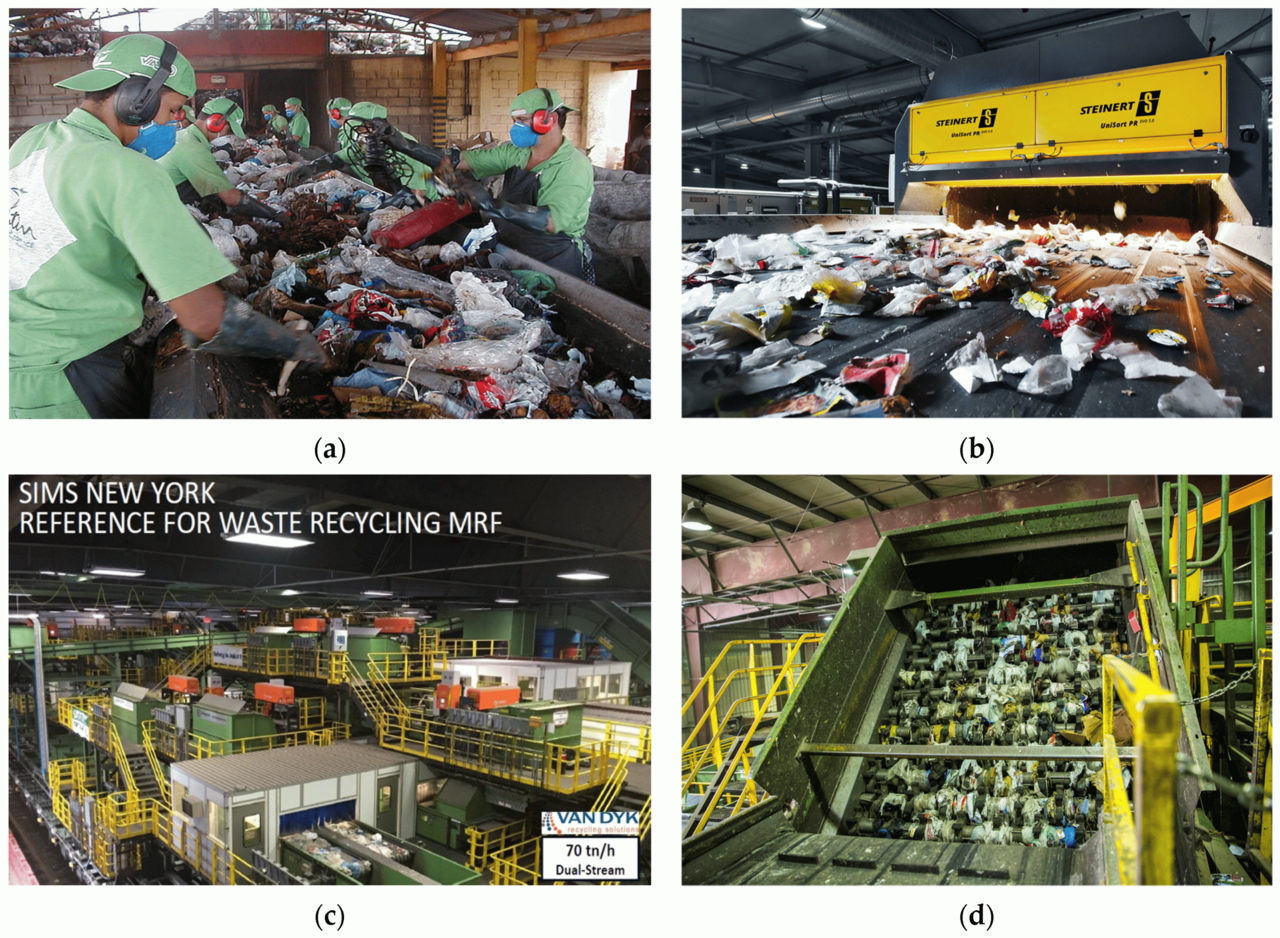
Workers or pre-sort equipment then pull out the things that would wreck the machinery or contaminate everything: bulky items, textiles and hoses that wrap around shafts, obvious garbage, and hazardous items such as batteries and gas canisters.
Stage two: screens and trommels
A trommel is a large rotating drum with holes in it. Small material falls through; large material tumbles along and out the end. Disc screens do a similar job by shape, separating flats such as paper and card from three-dimensional containers.
This is size-and-shape separation, not material separation. Nothing here knows what anything is made of. It just makes each downstream stream more uniform, which is exactly what the sensors need.
Stage three: magnets
An overband magnet suspended above the belt lifts ferrous metals - steel cans, lids, odd bits of hardware - straight off the stream.
This is the cheapest and most reliable separation in the building. It is also the least interesting: physics does all of it, and it has been doing it for a century.
Stage four: eddy currents
Aluminium is not magnetic, so a different trick is used. A rapidly rotating magnetic rotor at the end of the belt induces a current in passing non-ferrous metal, which generates its own opposing field. The can is repelled, and physically launches off the belt into a separate bunker while everything else drops straight down.
Stage five: optical sorters
This is where the sensing happens. A near-infrared camera scans the belt and reads the reflected spectrum of every object. Different polymers - PET, HDPE, PP, PVC - absorb infrared differently, so each returns a distinct signature. Colour cameras add a second dimension.
The software classifies each object and tracks its position and speed down the belt. Milliseconds later, a bank of compressed-air jets fires at exactly the right moment to knock the target object off its trajectory and into a chute.
Machine learning is what improves the classification step: models trained on images of real, dirty, crushed, partially obscured packaging recognise items that a rules-based spectral match would miss. The air jets are the same air jets they have always been.
Stage six: glass, then quality control
Glass is typically broken deliberately and screened out as a fine fraction, then cleaned of ceramics and other stubborn contaminants.
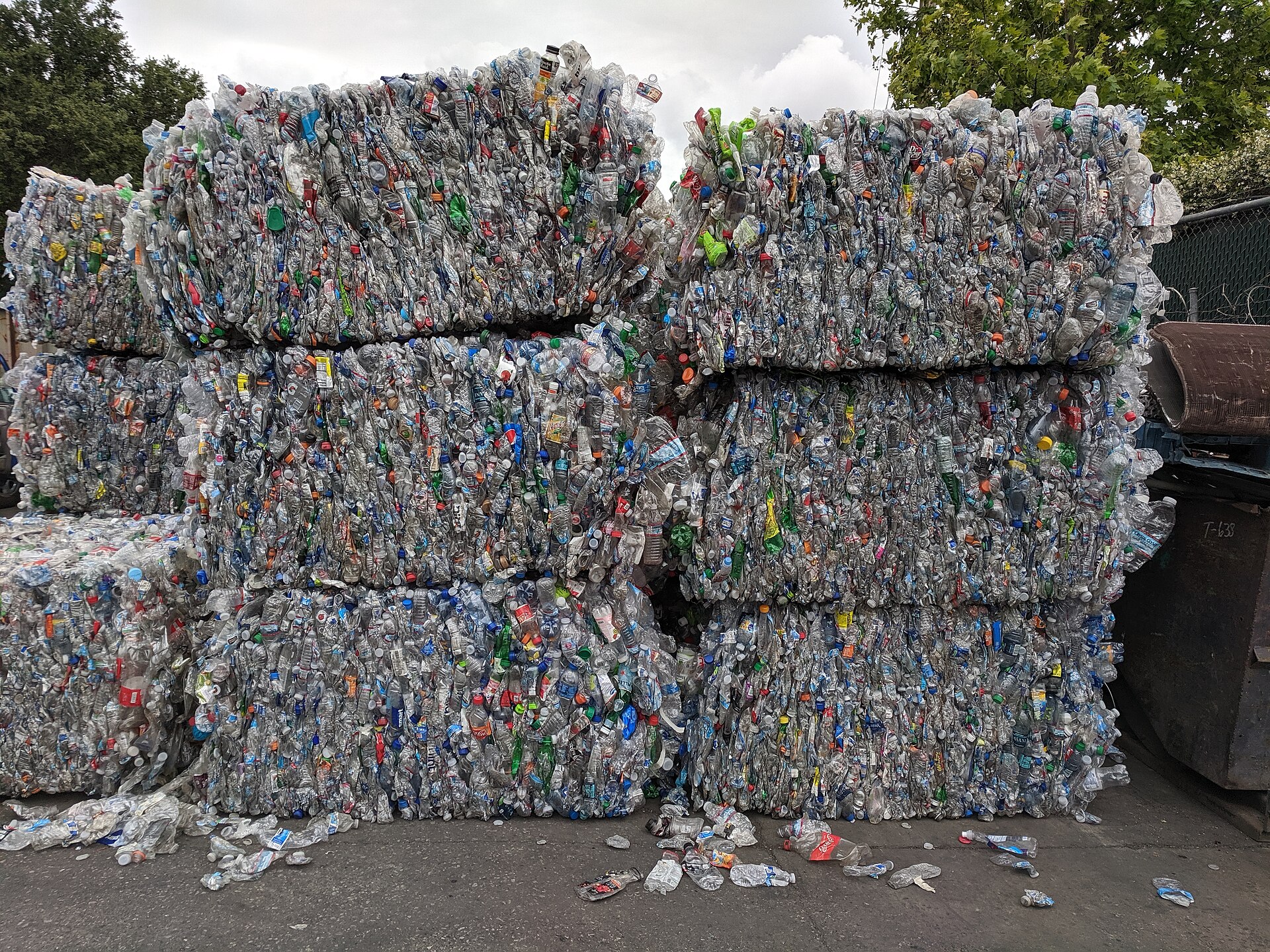
At the end, manual and automated quality control removes what got through. Then the recovered materials are baled and sold to reprocessors.
What still becomes residue
Here is the part the capacity figure hides. A 400,000-tonne input is not 400,000 tonnes of recovered product.
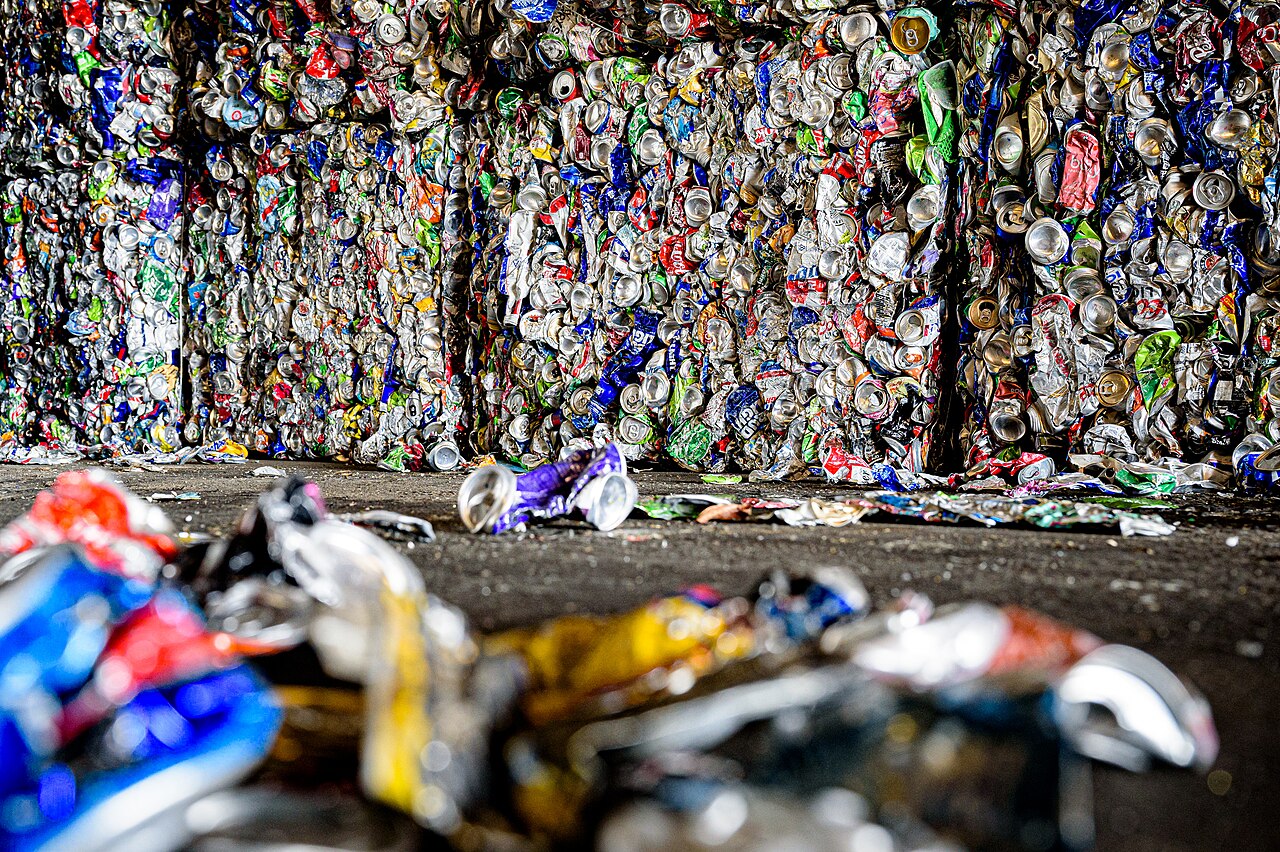
Every stage above loses material. Pre-sort discards. Screens misroute. Optical sorters miss dark, wet, flattened, or laminated items. Quality control rejects contaminated bales. Multilayer film, small-format packaging, and anything soiled with food largely leaves as residue - and residue goes to landfill or combustion.
Tadweer says the plant supports Abu Dhabi's goal of diverting 80% of its waste from landfill by 2031. Whether it does depends on four things that no press release contains yet: how much of each material the line actually captures, how clean the bales are, how much energy the sorting consumes, and whether there are reliable buyers for the output.
Automation makes the sort faster and more consistent. It does not create a market for the bale.
References and image credits›
- 01Tadweer Group announcement, Abu Dhabi greenfield MRF
- 02Al Ittihad coverage of the Abu Dhabi MRF
- 03Science Learning Hub - how a material recovery facility works
Photo: CaptJayRuffins, CC BY-SA 4.0, via Wikimedia Commons · Diagram: The Waste Stack · Photo: Xavier Dengra, CC BY-SA 4.0, via Wikimedia Commons · Diagram: Lubongo and Alexandridis, CC BY 4.0, via Wikimedia Commons · Photo: City of Greenville, NC, public domain, via Wikimedia Commons · Photo: Wikimedia Commons contributor, CC BY-SA 4.0