
Nine companies, one shared recycling line: Japan's flexible-packaging trial
A Ministry of the Environment-commissioned demonstration puts nine Japanese companies on a shared platform to delaminate and deink flexible packaging. It is a genuinely interesting infrastructure model. It is not yet proof of scale.
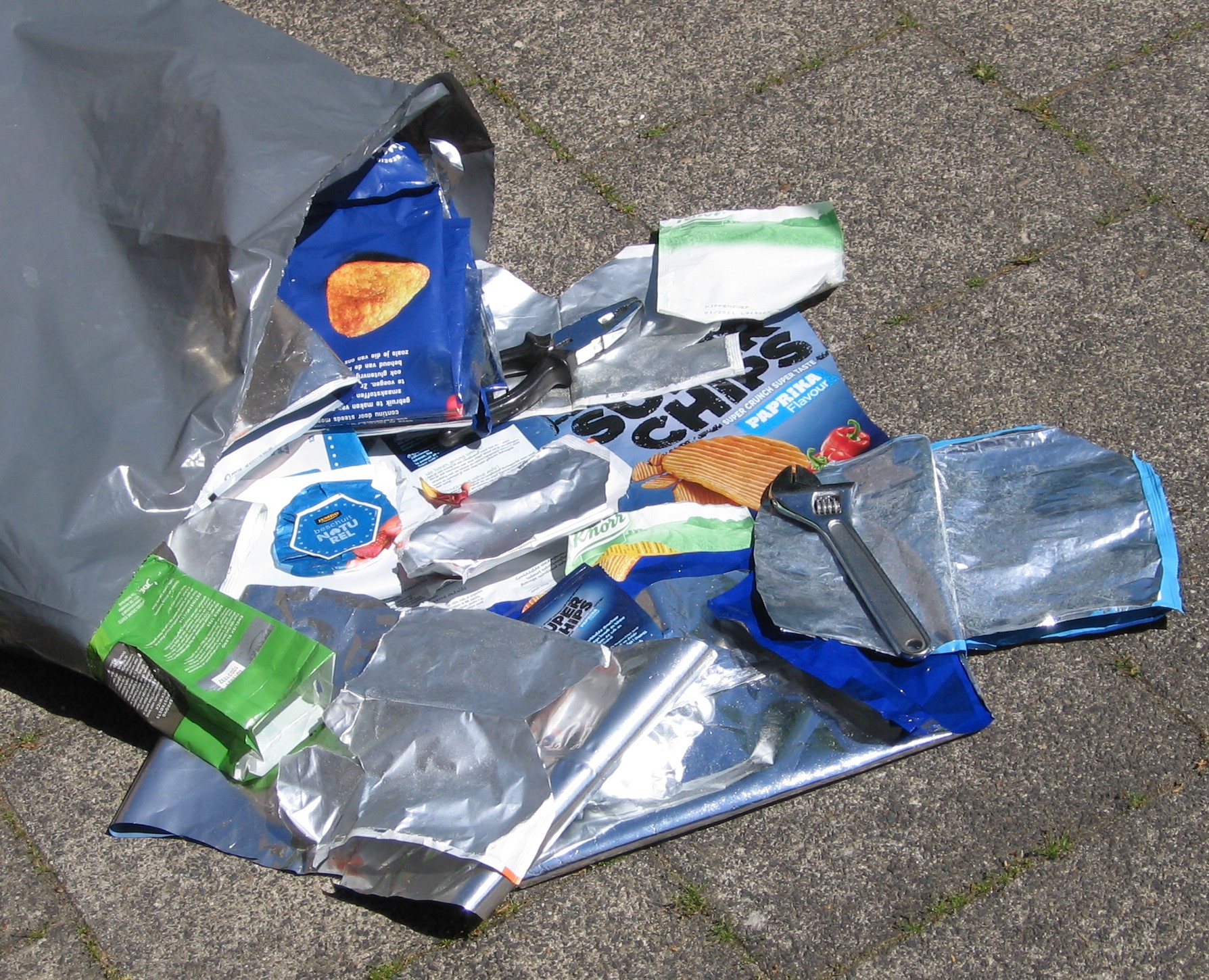
Nine packaging, printing, chemical and materials companies, one Ministry of the Environment-commissioned demonstration, and a shared set of equipment for pulling multilayer flexible packaging apart. Toyo Seikan Group Holdings announced the trial; the interesting part is the structure, not the chemistry.
Flexible packaging is the hardest common material in the waste stream. This is a serious attempt at it. It is also, at this stage, an announcement with no numbers in it.
Why flexible packaging resists recycling
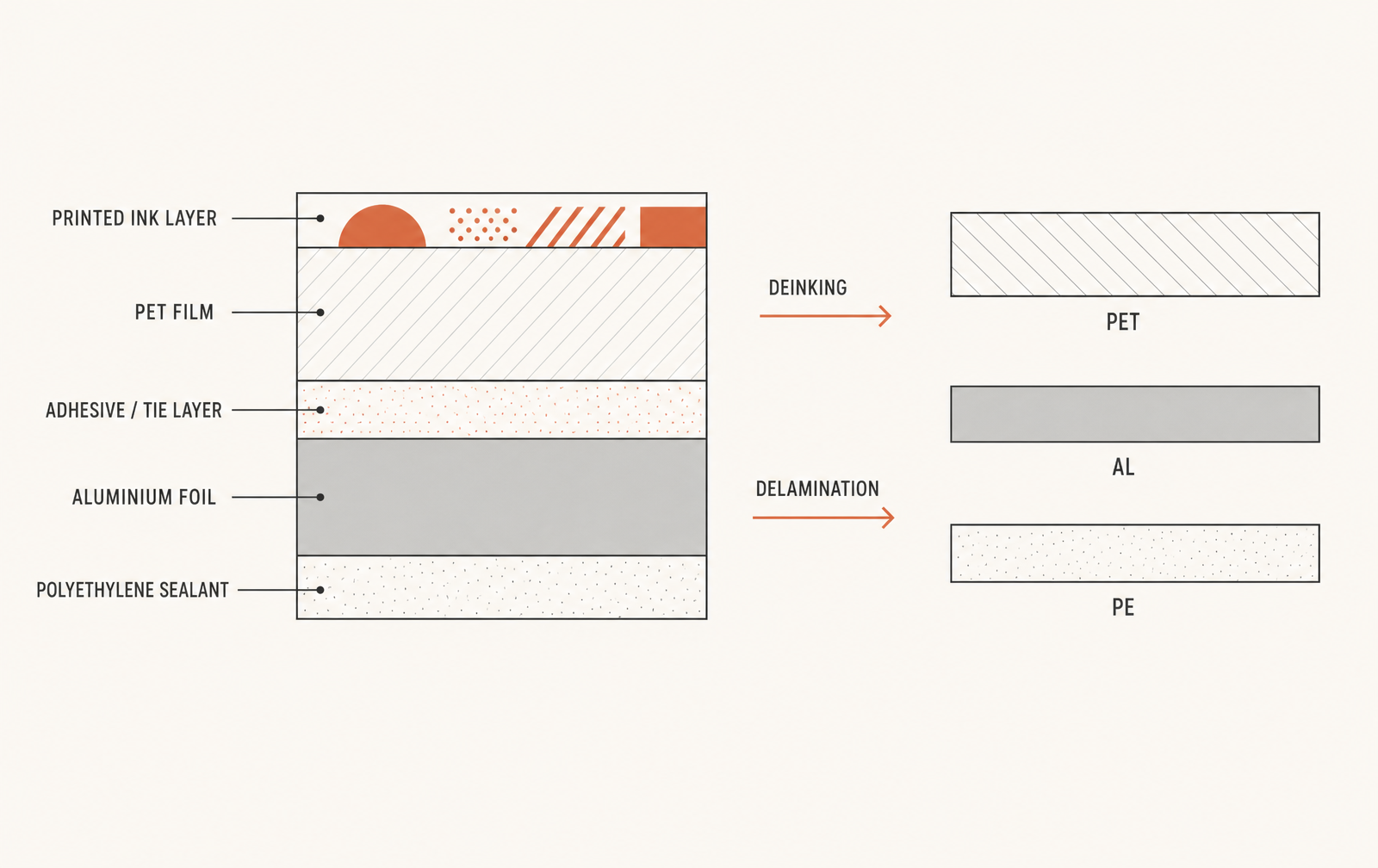
A snack wrapper or retort pouch is not one plastic. It is a laminate: a printed outer film for graphics, a barrier layer that may be aluminium or metallised film, adhesive tie layers holding them together, and a sealant layer on the inside.
Each layer is there for a reason - oxygen barrier, moisture barrier, printability, heat sealing. Together they make a package that uses less material than a rigid alternative and keeps food fresh longer. They also make it unsortable and unmeltable as a single resin.

What the trial is actually testing
The design is comparative: company-specific equipment measured against a shared "co-creation platform", using common flexible-packaging samples so results can be lined up side by side.
Two chemical steps sit at the centre of it.
Delamination targets the adhesive or tie layer holding different films together. Selective treatment dissolves or breaks that layer without dissolving the polymers themselves, so the constituent films come apart intact rather than as a mixed melt.
Deinking removes printed binders and colorants from the surface before reprocessing. Ink left in the recyclate shows up as colour and as contamination that limits what the material can be used for.
Published green-chemistry work has demonstrated that selective chemical treatment can recover constituent polymer layers without dissolving the main polymers. The laboratory case is made. This trial is about whether it survives contact with real feedstock and real cost accounting.
The infrastructure argument
This is the part worth taking seriously.
Any single company attempting flexible-packaging recycling faces the same three problems: not enough feedstock to run a plant at scale, capital costs that cannot be justified on its own volume, and no comparable performance data from anyone else to benchmark against.
A shared platform attacks all three at once. Pool feedstock across nine participants and the volume problem softens. Share the capital and no single balance sheet carries the risk. Use common samples and the results become comparable rather than nine sets of unfalsifiable vendor claims.
The trial is explicitly examining recyclate quality, cost competitiveness, supply stability, and the roles of each participant from collection through reuse. That last item matters more than the chemistry: a technology with no defined collection route and no defined buyer is a laboratory result.
What the announcement does not contain
Missing numbers checklist: yield per polymer, energy per tonne, solvent recovery rate, cost per tonne, and end-market quality specification. Publish those five and the pilot becomes assessable.
Commercial throughput. Full solvent or chemical recovery rates. Energy intensity per tonne. Capital and operating cost. Contamination tolerance of the input. Collection contracts. Offtake commitments for the recovered polymers.
None of these are hostile questions. They are the standard set that separates a demonstration from a plant, and the published material answers none of them yet.
The economics are the real test
The research literature identifies solvent recovery and environmental impact as the unresolved scale-up questions - which is a polite way of saying the process only works if you get nearly all your solvent back, repeatedly, without a large energy penalty.
A European Commission Joint Research Centre assessment goes further, showing that flexible-packaging recycling economics can be net-cost depending on feedstock quality and the value of the recovered output. In other words: even when the chemistry works, the sums may not, and whether they do is decided by how dirty the input is and what the output is worth.
The verdict
A promising infrastructure model, not yet a proof of scale.
The shared-platform structure is a genuinely good answer to the feedstock-and-capital deadlock that has stalled flexible-packaging recycling everywhere else. The chemistry has laboratory support. The pilot is publicly commissioned, which raises the odds that results actually get published.
But nothing announced so far establishes that this can run continuously, at cost, on contaminated real-world film, with somewhere for the output to go. Judge it on the first dataset, not the first press release.
References and image credits›
- 01Toyo Seikan Group Holdings - demonstration announcement
- 02K-online / Plastics Information Europe - trial details
- 03Green Chemistry - selective delamination of multilayer films
- 04European Commission Joint Research Centre - flexible packaging recycling assessment
Photo: Wikimedia Commons contributor, CC BY-SA 4.0 · Diagram: The Waste Stack · Photo: Wikimedia Commons contributor, CC BY-SA 4.0 · Photo: Wikimedia Commons contributor, CC BY-SA 4.0