
AIST's ABCS Reactor: Splitting Digestion in Two to Stop It Souring
Japan's AIST reports a two-stage anaerobic digestion design that keeps acid production and methane production in separate vessels. The concept is decades old; the claim is that this configuration holds up at high loading.
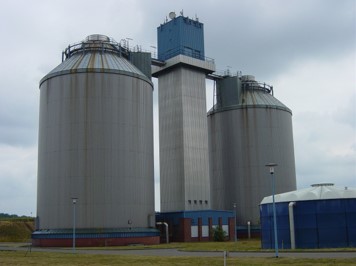
Researchers at Japan''s National Institute of Advanced Industrial Science and Technology reported results from an Acidogenic-Biofilm Coupled System (ABCS), a two-stage anaerobic digestion configuration aimed at higher organic loading rates and improved methane yield.
Why single-stage digestion is fragile
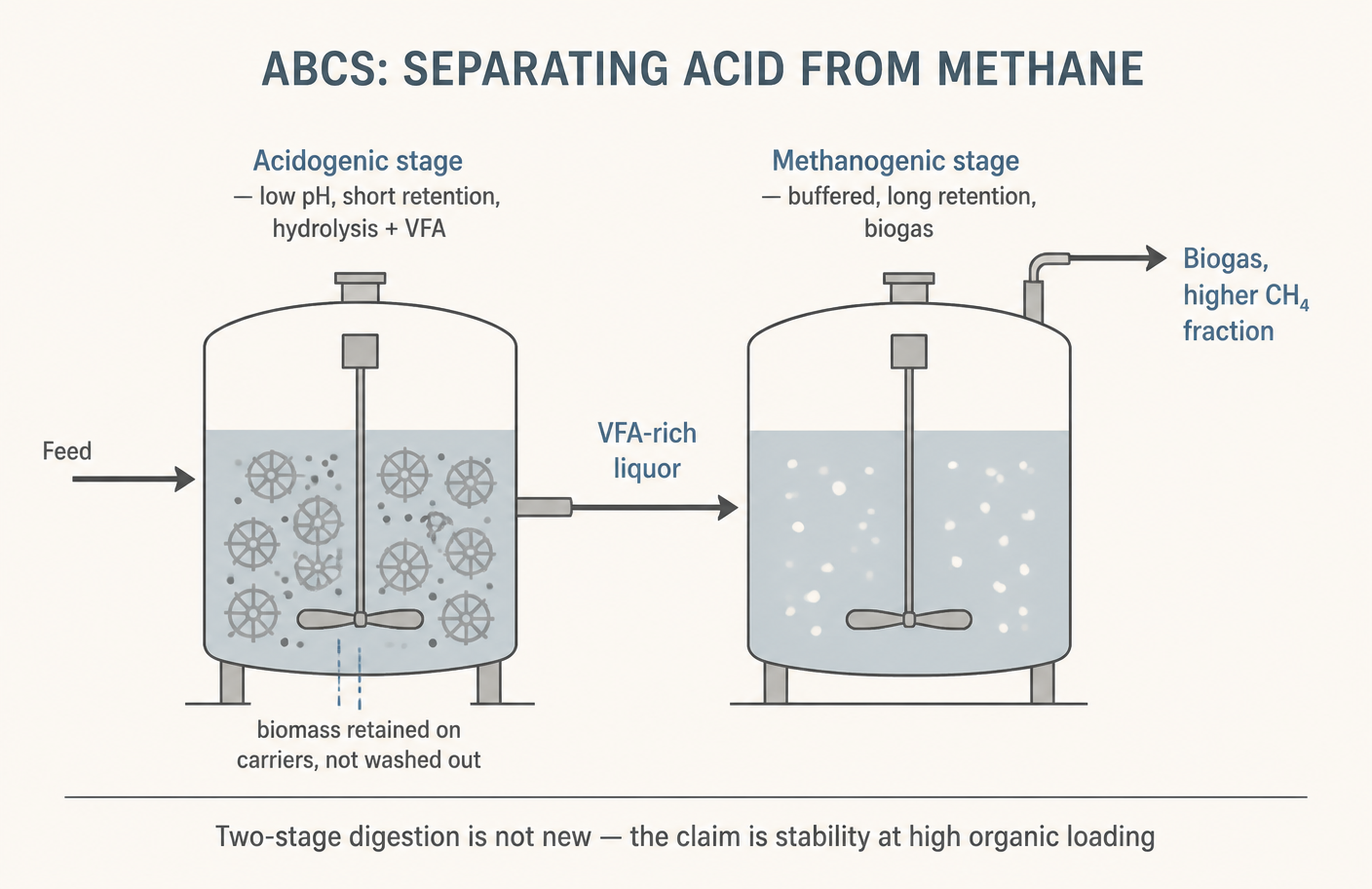
Anaerobic digestion is two biological processes sharing one tank. Acidogenic bacteria hydrolyse and ferment organic matter into volatile fatty acids — fast, robust, tolerant of low pH. Methanogenic archaea convert those acids into methane — slow, fragile, and inhibited below about pH 6.5.
Push the feeding rate up and the fast process outruns the slow one. Acids accumulate, pH falls, methanogens are inhibited, less acid is consumed, pH falls further. This runaway is called souring, and recovering a soured digester takes weeks of lost production. It is why most operators run well below theoretical capacity: the failure mode is expensive and asymmetric.
What separation achieves
Two vessels let each population run at its own pH, temperature and retention time. The acidogenic stage can be short and acidic; the methanogenic stage long and buffered. The biofilm element matters too — immobilising methanogens on carrier media decouples biomass retention from liquid retention, so the slow-growing organisms are not washed out when throughput rises.
A new reactor design that raises loading rate and methane yield.
Two-stage digestion and biofilm carriers are both established technologies, used commercially since the 1980s. The contribution is a specific coupling and operating regime, evaluated at laboratory scale.
The reason two-stage is not already standard
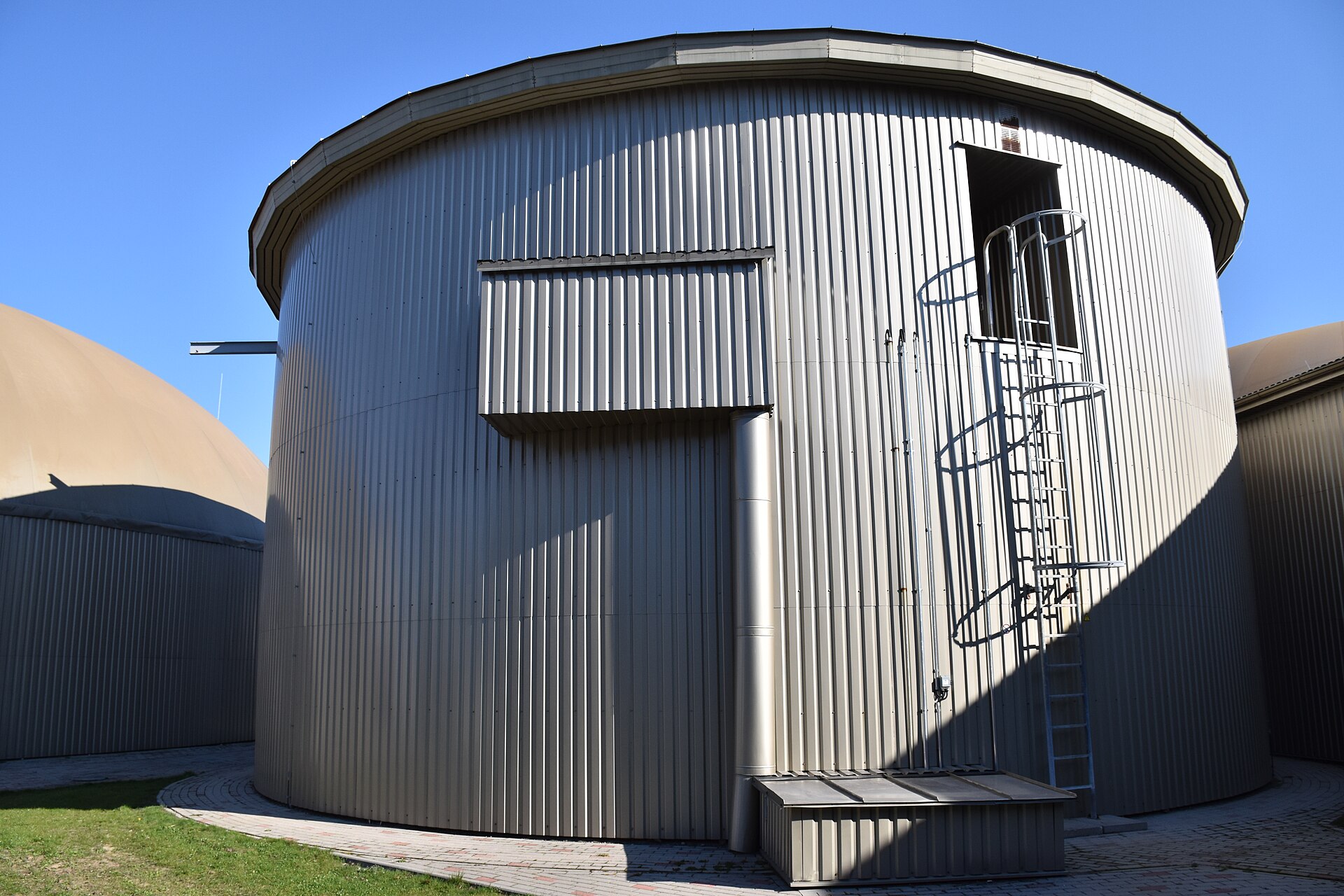
Two tanks cost more than one. They need interstage pumping, more control instrumentation, and more operator attention. For a farm digester running on a predictable manure feed, single-stage at conservative loading is simply cheaper and adequate. Two-stage earns its cost only where feedstock is high-strength, variable, or prone to rapid acidification — food waste, industrial effluent, energy crops.
What to look for next
Pilot-scale operation on genuine mixed feedstock for at least a year, a capital cost comparison against single-stage at equal output, and evidence that the biofilm carriers do not blind with solids. Two-stage digestion has a long history of excellent laboratory results and modest commercial adoption, and nothing here yet changes that pattern.
References and image credits›
Photo: Wikimedia Commons, CC BY-SA 3.0 · Photo: Wikimedia Commons, CC BY-SA 3.0 · Photo: Wikimedia Commons, CC BY-SA 4.0