
Terahertz Sorting: Seeing Through the Plastics That Near-Infrared Cannot
Near-infrared sorters are blind to black plastic and confused by multilayer film. Terahertz sensing sees through both. The physics is real; the belt speed and the detector price are not there yet.
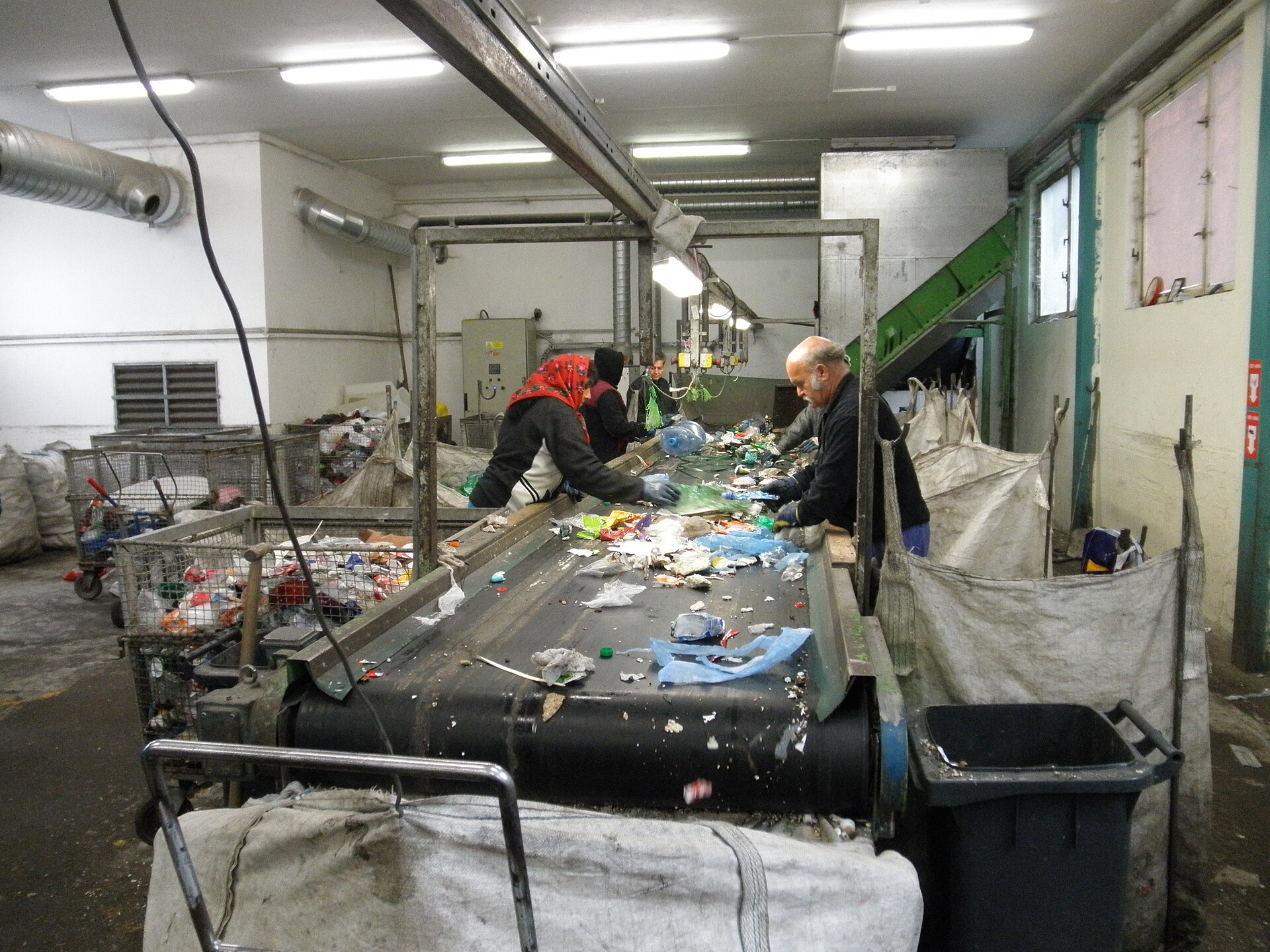
Research groups are reporting terahertz spectroscopy as a route to identifying plastics that defeat conventional sorting equipment. It addresses two of the most persistent failures in material recovery.
What near-infrared cannot do
Almost every automated plastic sorter uses near-infrared reflectance. A lamp illuminates the belt, polymer bonds absorb at characteristic wavelengths, a spectrometer reads the reflected signature, and an air jet ejects the item. It is fast, cheap and reliable — within limits.
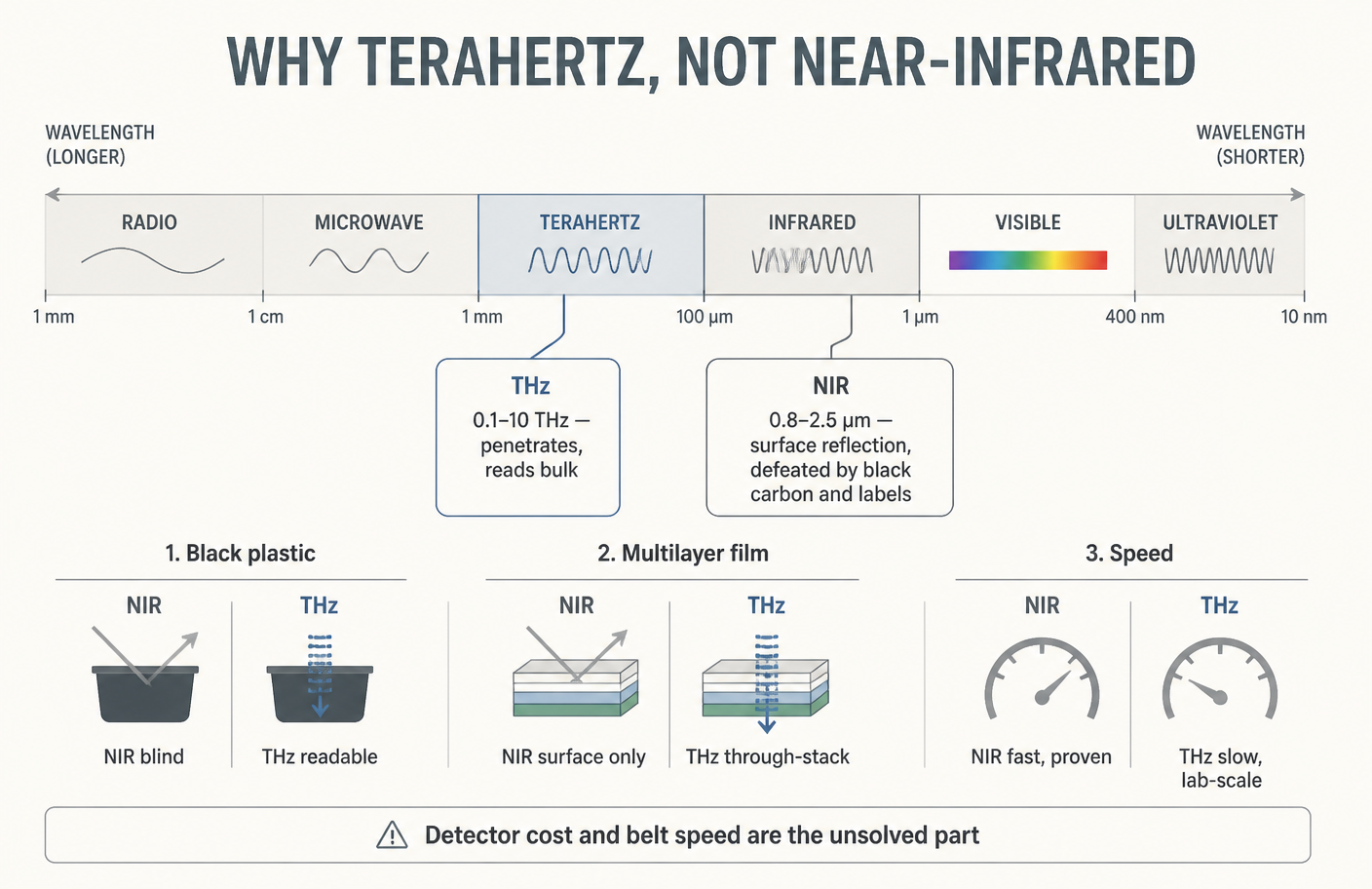
Two failures are structural. Carbon black, used to colour a large share of packaging and nearly all automotive plastic, absorbs across the near-infrared band and returns no usable signature: the sorter sees nothing and the item goes to residue. And because NIR reads only a shallow surface layer, a multilayer film reports as whatever polymer happens to be outermost, which is exactly the wrong answer for deciding where the item should go.
Why terahertz is different
Terahertz radiation sits between microwave and infrared. Most non-polar polymers are largely transparent to it, and carbon black does not absorb it the way it absorbs near-infrared. That combination means the radiation passes through the object rather than bouncing off the first micron, so the measurement reflects bulk composition and can resolve a layer structure rather than a surface.
Terahertz sensing can sort black and multilayer plastics that current equipment cannot.
Demonstrated in laboratory conditions on stationary or slow-moving samples. Commercial sorters process material at two to three metres per second with items overlapping and tumbling.
The engineering gap
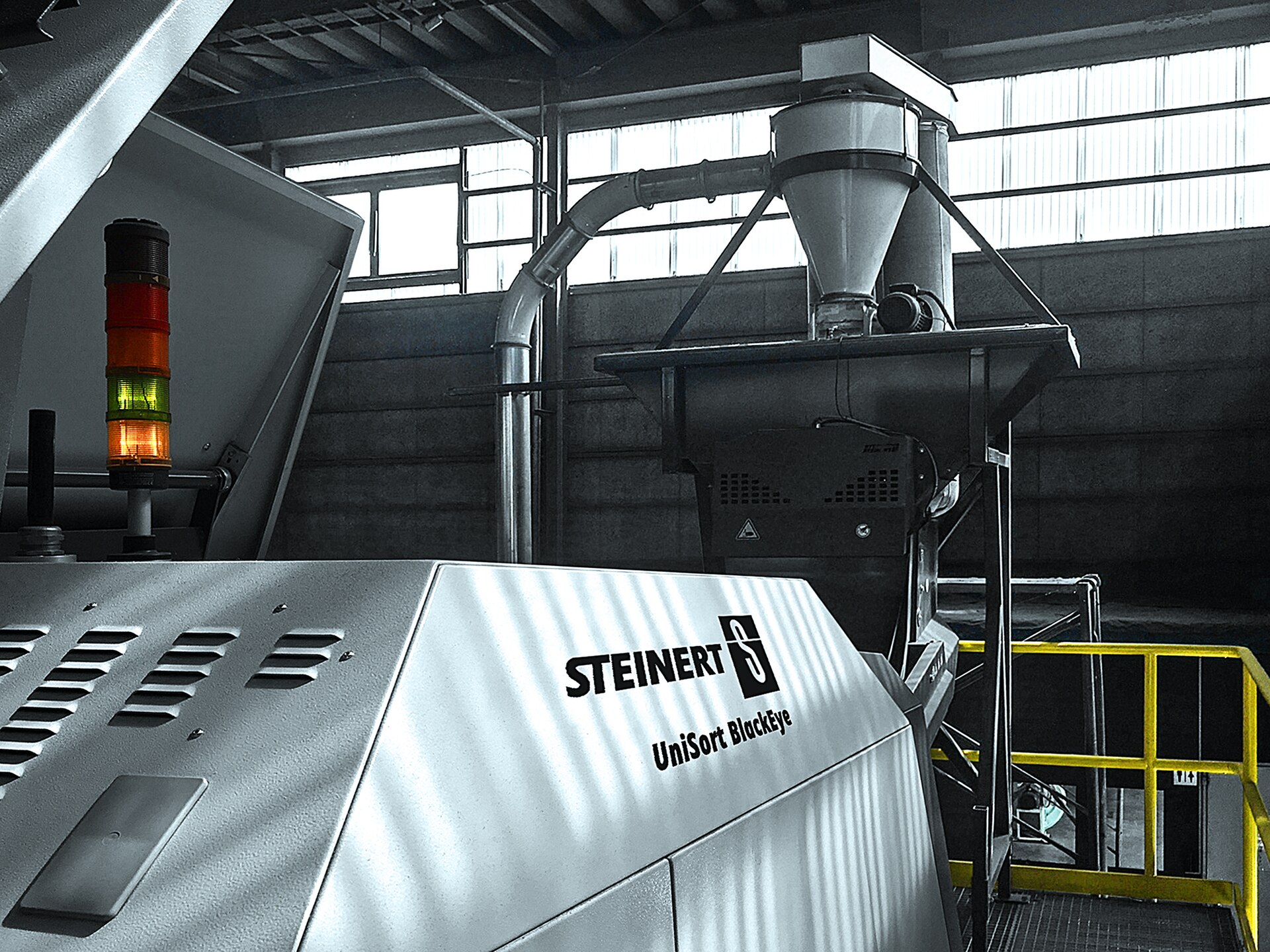
Three problems stand between the laboratory and the belt. Acquisition speed: terahertz systems need integration time that is orders of magnitude longer than an NIR line scan. Cost: sources and detectors run into tens of thousands of euros per channel, against a few thousand for an NIR spectrometer, and a sorter needs a full-width array. Water: terahertz is strongly absorbed by water, and material recovery facility feed is routinely damp.
Where it lands first
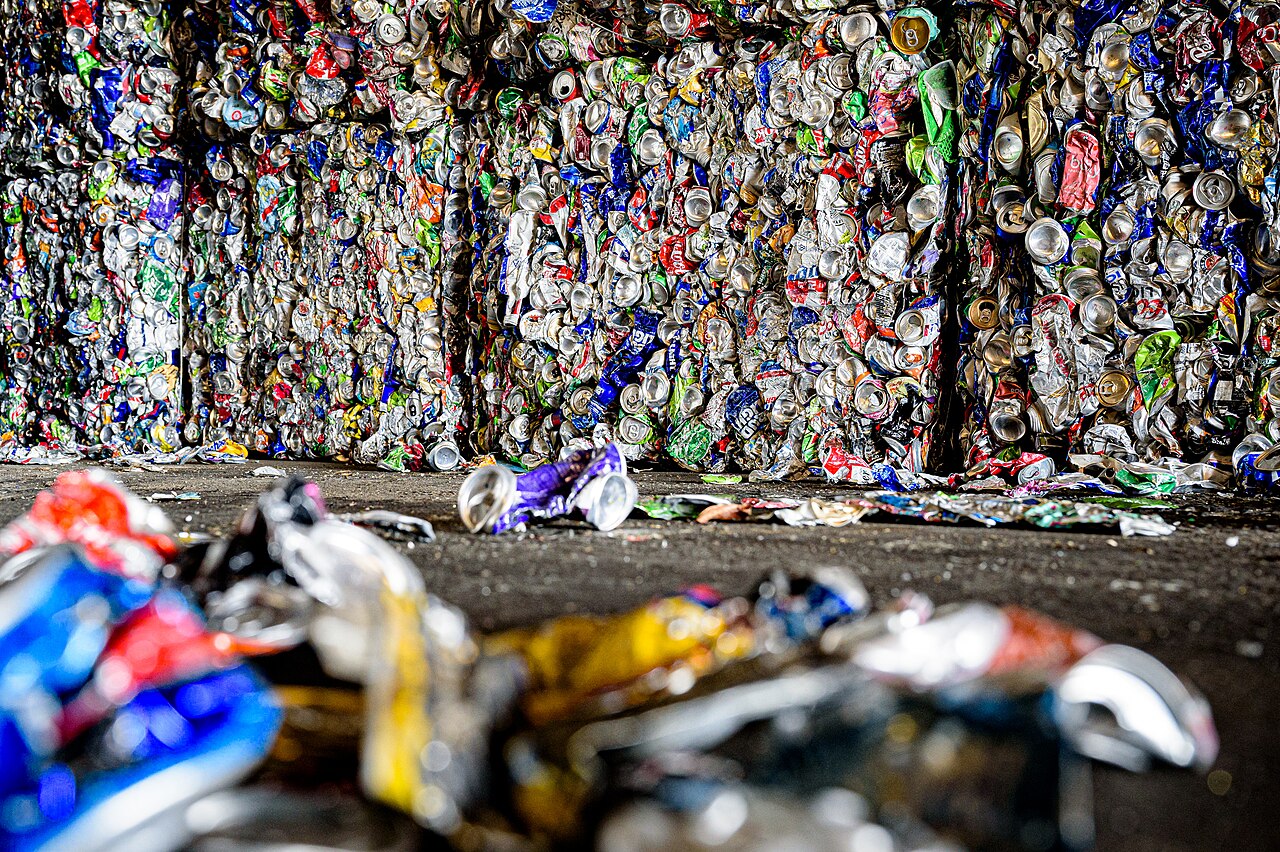
Not in municipal recycling. High-value, low-throughput streams — automotive plastic recovery, electronics, quality assurance on recyclate batches — can absorb the cost and accept slower throughput. If detector costs fall the way near-infrared costs did over two decades, general sorting becomes plausible. That is a long horizon, and worth saying plainly rather than implying otherwise.
References and image credits›
Michal Maňas, Wikimedia Commons, CC BY 3.0 · Photo: Wikimedia Commons, CC BY-SA 4.0 · Photo: Wikimedia Commons, CC BY-SA 4.0