
Silex World and Magnet Recycling: The Chemistry Works, the Collection Does Not
Recovering neodymium and dysprosium from used magnets has been technically demonstrated many times over. Almost none of it happens, and the reason has nothing to do with metallurgy.
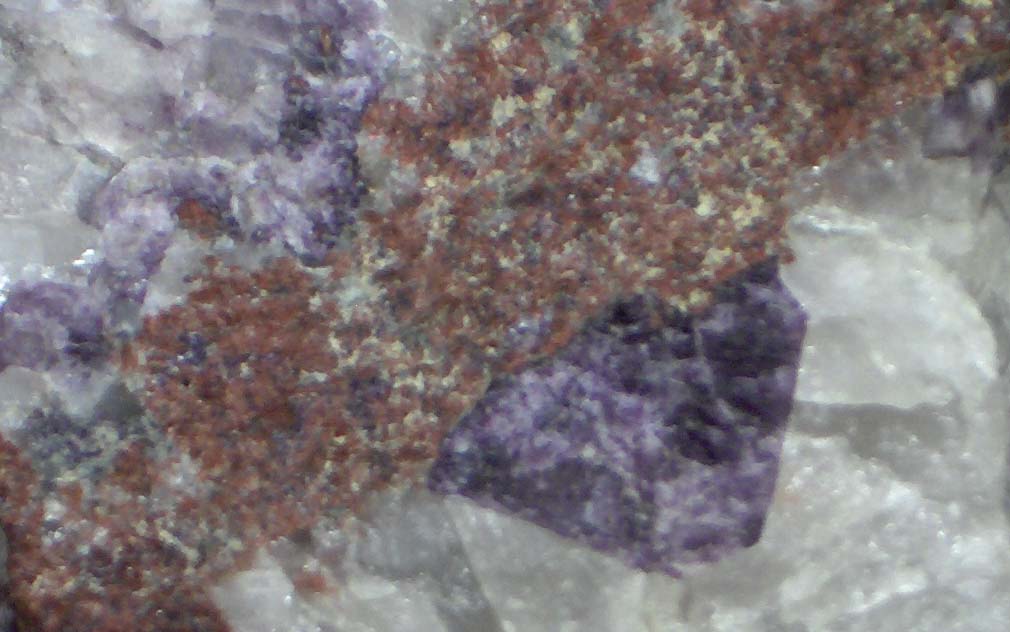
Silex World is among a growing set of companies positioning around rare earth magnet recycling, a market that policy attention has made suddenly fashionable. The processes on offer are sound. The supply is not there.
The recovery routes are mature
Three approaches are well documented. Hydrometallurgical leaching dissolves the magnet in acid and separates neodymium, praseodymium and dysprosium by solvent extraction — the same unit operations used on mined concentrate, applied to a much richer feed. Pyrometallurgical routes use molten salt or liquid metal extraction. Direct reuse reprocesses demagnetised magnets into new ones through hydrogen decrepitation, skipping separation chemistry entirely and using far less energy.
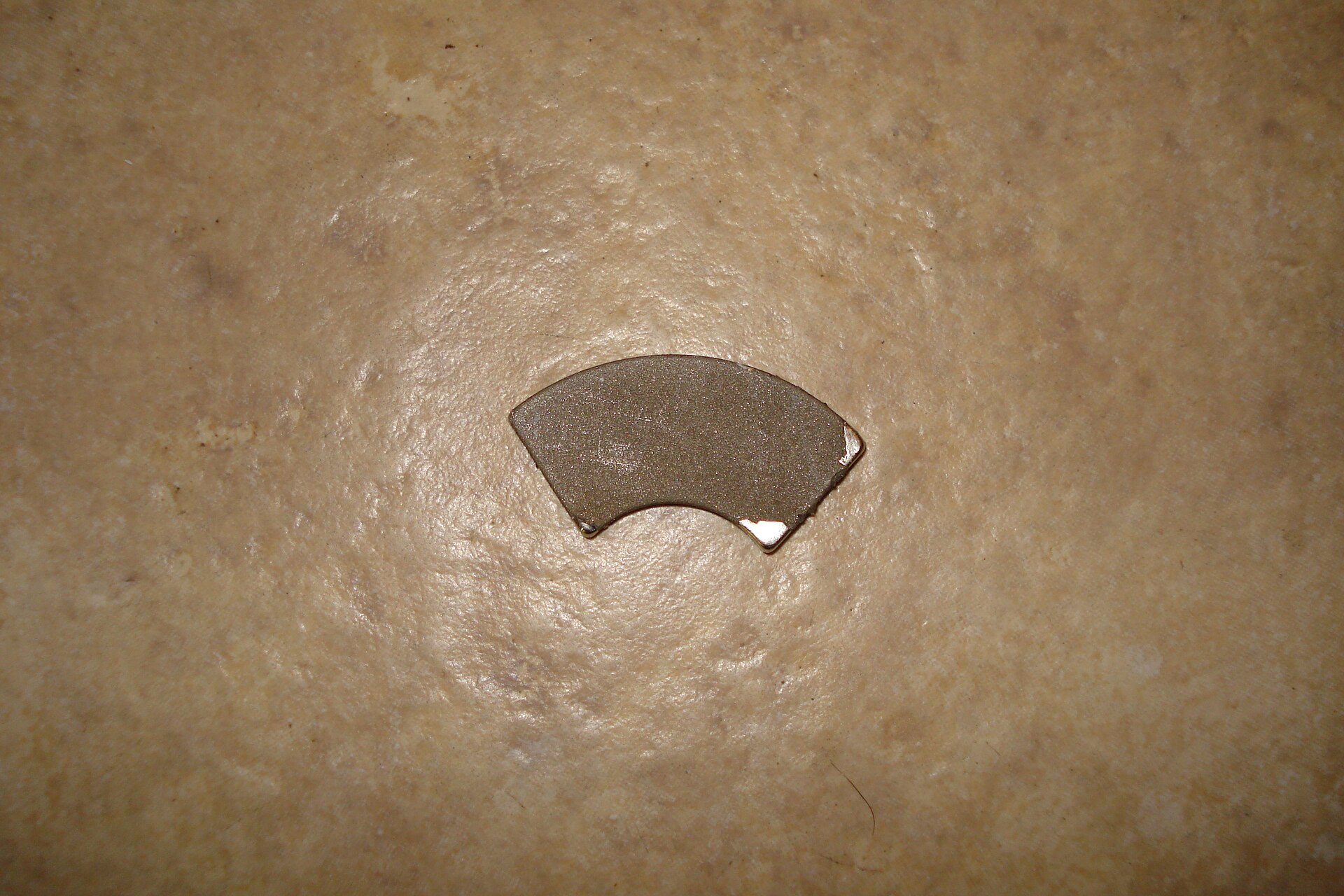
On concentration grounds alone, recycling should dominate. It does not.
Where the material actually goes
Magnet recycling can meaningfully reduce dependence on primary rare earth supply.
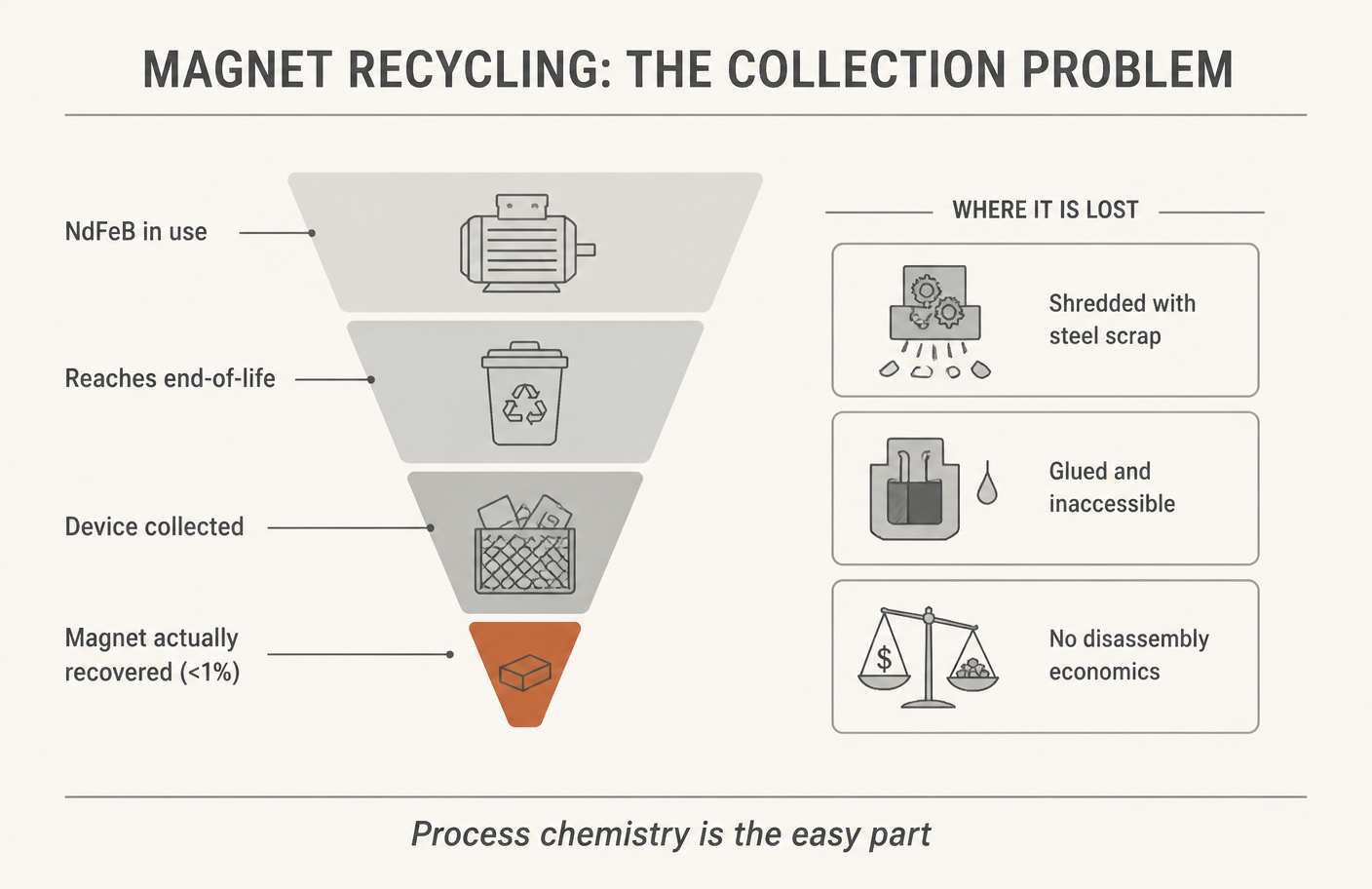
Under one percent of rare earths are recovered from end-of-life products globally. The processes exist; the feedstock does not reach them.
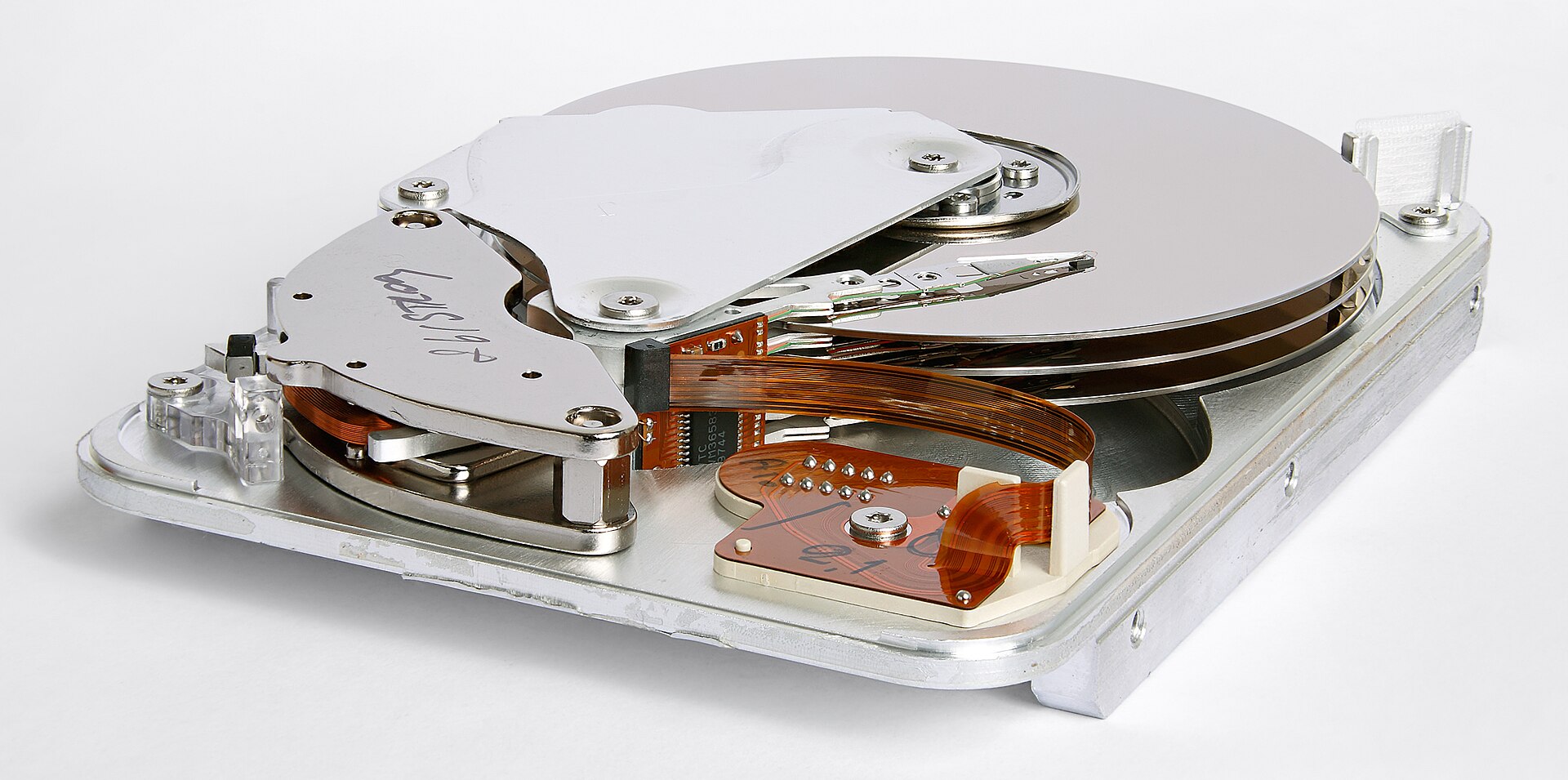
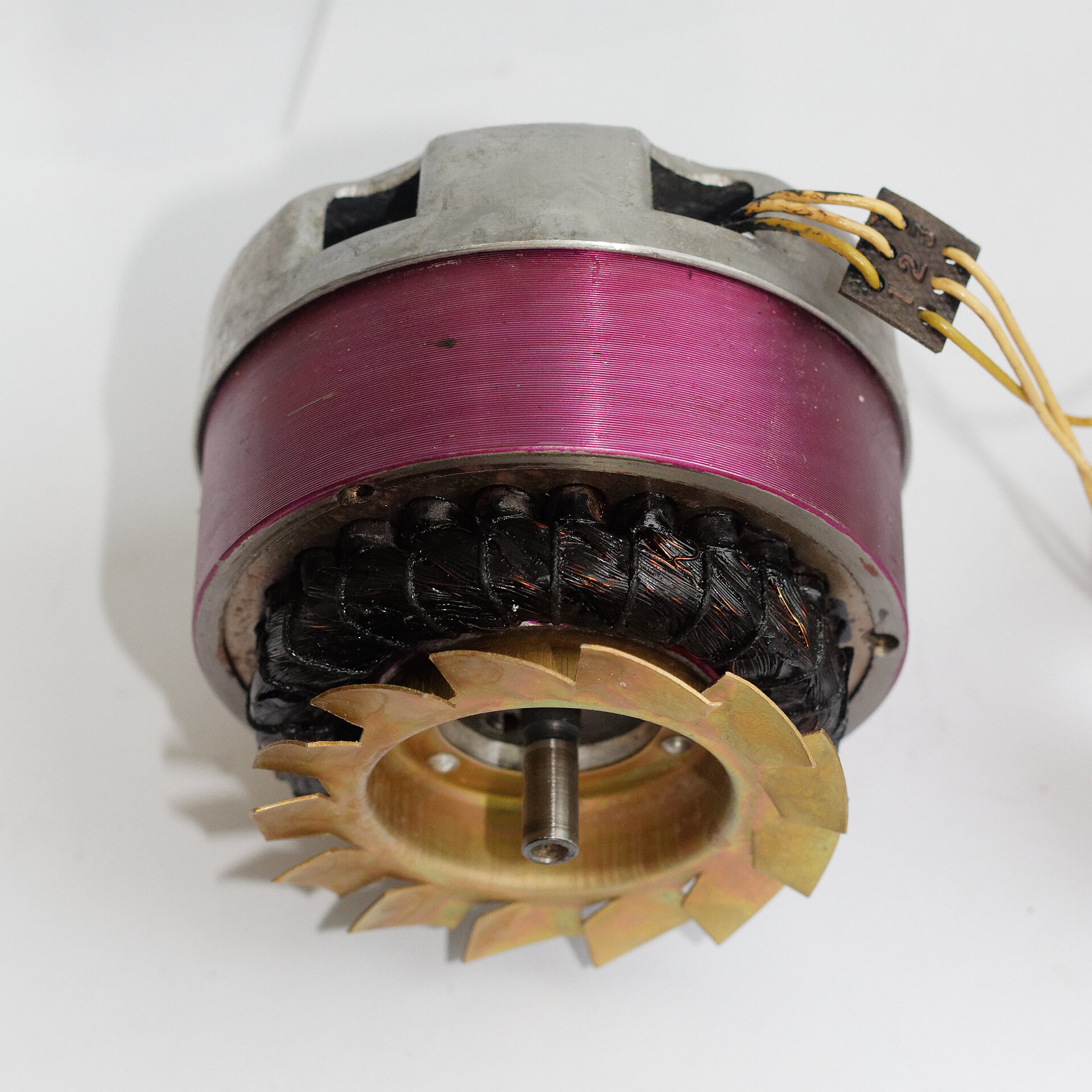
Magnets are small, glued, and buried inside assemblies. A hard drive''s actuator magnet is held under a steel keeper plate behind several screws. A motor''s magnets are bonded into the rotor. Manual extraction costs more in labour than the recovered metal is worth at most price points.
So devices go to the shredder. In a shredder, NdFeB fragments report to the ferrous fraction — they are iron-based and magnetically attracted — and end up diluted in steel scrap at concentrations far too low to recover. The rare earths are not destroyed; they are dispersed into the steel cycle, which is effectively the same thing.
What would actually shift this
Manufacturing scrap is the realistic near-term feed — magnet production generates 20-30% offcuts, already clean, already concentrated, already located at a known industrial address. Most credible operators start there and describe it as recycling, which is defensible but is not closing a consumer loop.
Beyond that: design rules requiring removable magnets, extended producer responsibility with magnet-specific targets, and automated disassembly that costs less than the metal. Those are policy and robotics problems, not chemistry problems.
References and image credits›
Photo: Mike Beauregard, CC BY 2.0 · Photo: Tremaster, public domain · Photo: Eric Gaba, CC BY-SA 3.0 · Photo: Wikimedia Commons, CC BY-SA 3.0