
AMP Portsmouth: mixed-waste sorting and biochar are two different proof points
The expanded system links recovery with carbon removal, but operating sorting capacity is not operating biochar capacity.
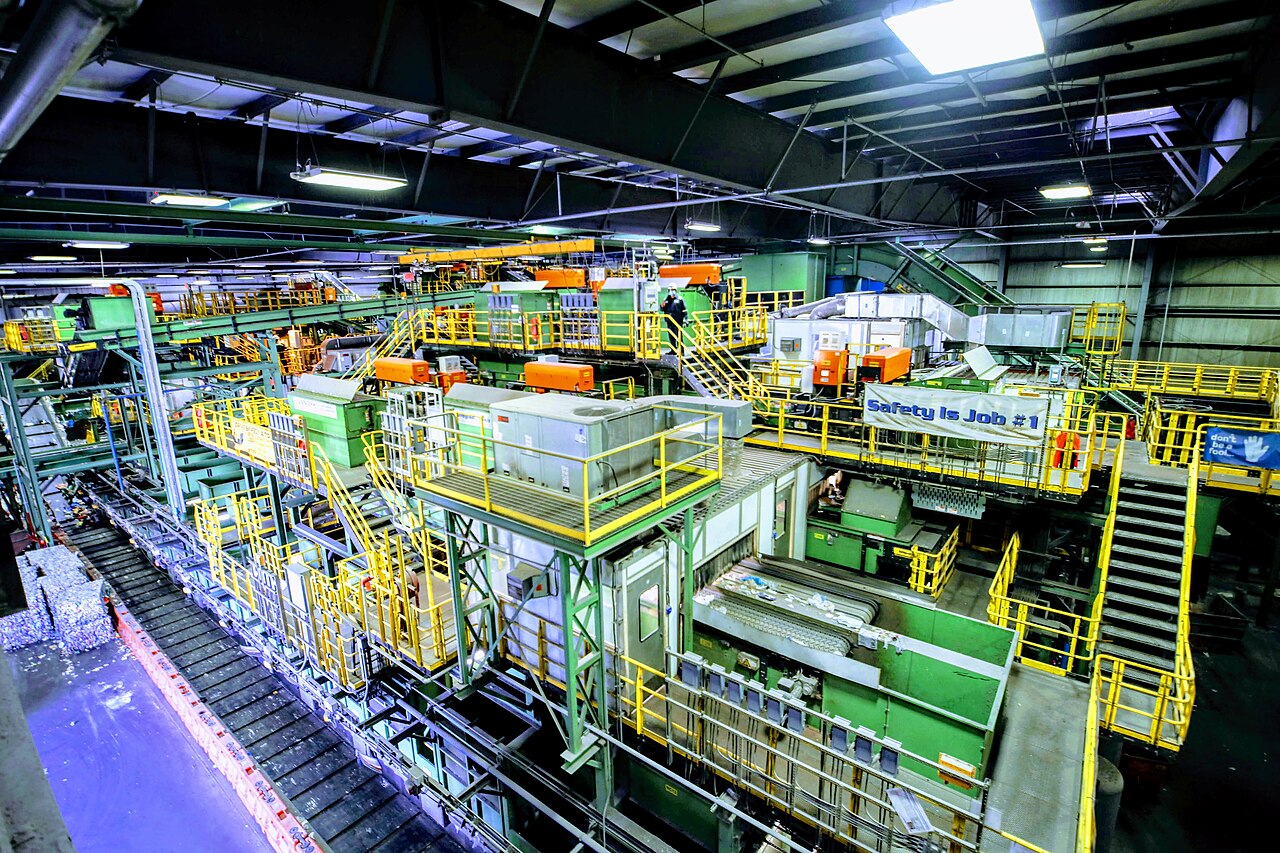
Most modern recycling operations depend entirely on citizen compliance. In standard municipal infrastructure, clean stream separation occurs at the kitchen counter or curbside bin: clean paper and cardboard enter one container, rigid containers another, and organic waste goes into a green bin or directly into residual trash. When contamination spikes, material recovery facility (MRF) economics degrade quickly, as sorting lines slow down and unmarketable secondary materials are landfilled anyway.
AMP’s facility in Portsmouth takes a fundamentally different operational approach. Rather than relying on public behavior upstream, the site processes raw, mixed municipal solid waste (MSW)—the black-bag garbage historically destined straight for landfills or mass-burn incinerators. By attempting to separate recyclables and putrescible organics directly out of unsorted refuse, the facility aims to reclaim value from discarded materials that current curbside recycling programs never capture.
Mechanical preparation dictates optical yield
Designing a sorting line for mixed municipal waste introduces engineering hurdles unseen in single-stream recycling. Household waste arrives packed into tightly cinched plastic bags, commingled with liquids, food residues, flexible packaging, and abrasive grit. Before computer vision systems can do any useful work, that consolidated stream must be completely disaggregated.
Bags must pass through mechanical bag rippers or shredders set to open containment without pulverizing glass bottles or cross-contaminating fibrous matter with wet organic pastes. Once liberated, the mass must spread evenly across wide, high-speed acceleration belts. Optical recognition relies on spectral reflectance—near-infrared (NIR), visible spectrum color cameras, and spatial pattern identification trained through machine learning models.
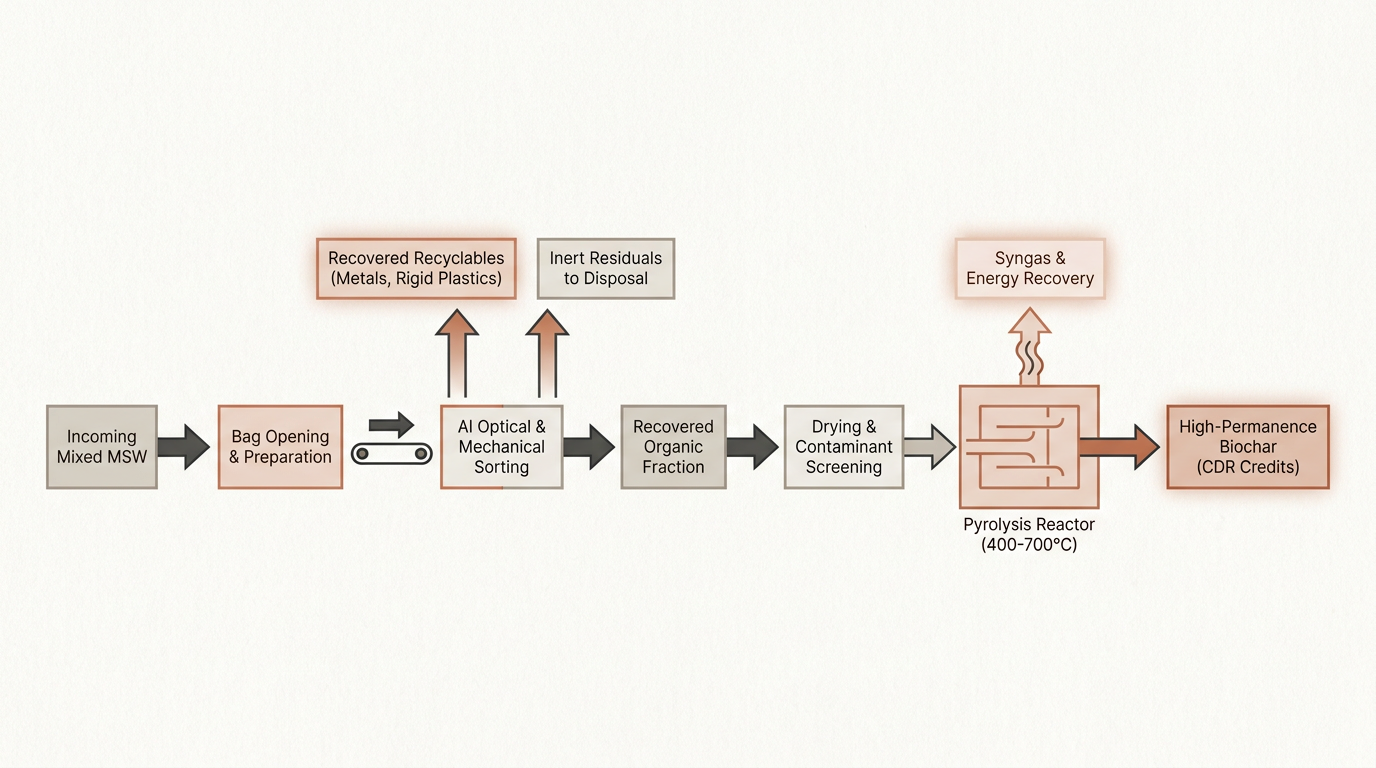
Yet recognition is not recovery. An inference engine running at hundreds of frames per second can positively identify a high-density polyethylene (HDPE) bottle or an aluminum can, but a pneumatic air jet or delta robot must physically eject that target into a separate bunker. If an identified container is pinned beneath heavy, damp cardboard or tangled in textiles, the mechanical separation step will fail. Furthermore, a camera scanning a single surface cannot certify the unseen contents of an opaque sealed container or folded substrate.
Reported current processing capacity is 108,000 tons a year. The broader system targets 540,000 tons and at least 50% diversion. Targets describe the proposed system, not measured annual recovery or product purity.
Deploying automated AI sorting on mixed waste reliably achieves greater than 50% mass diversion from disposal.
Nameplate diversion targets represent theoretical recovery upper bounds; actual diversion depends on inbound moisture, mechanical singulation efficiency, and secondary market purity specifications.
Pyrolysis chemistry and the contamination barrier
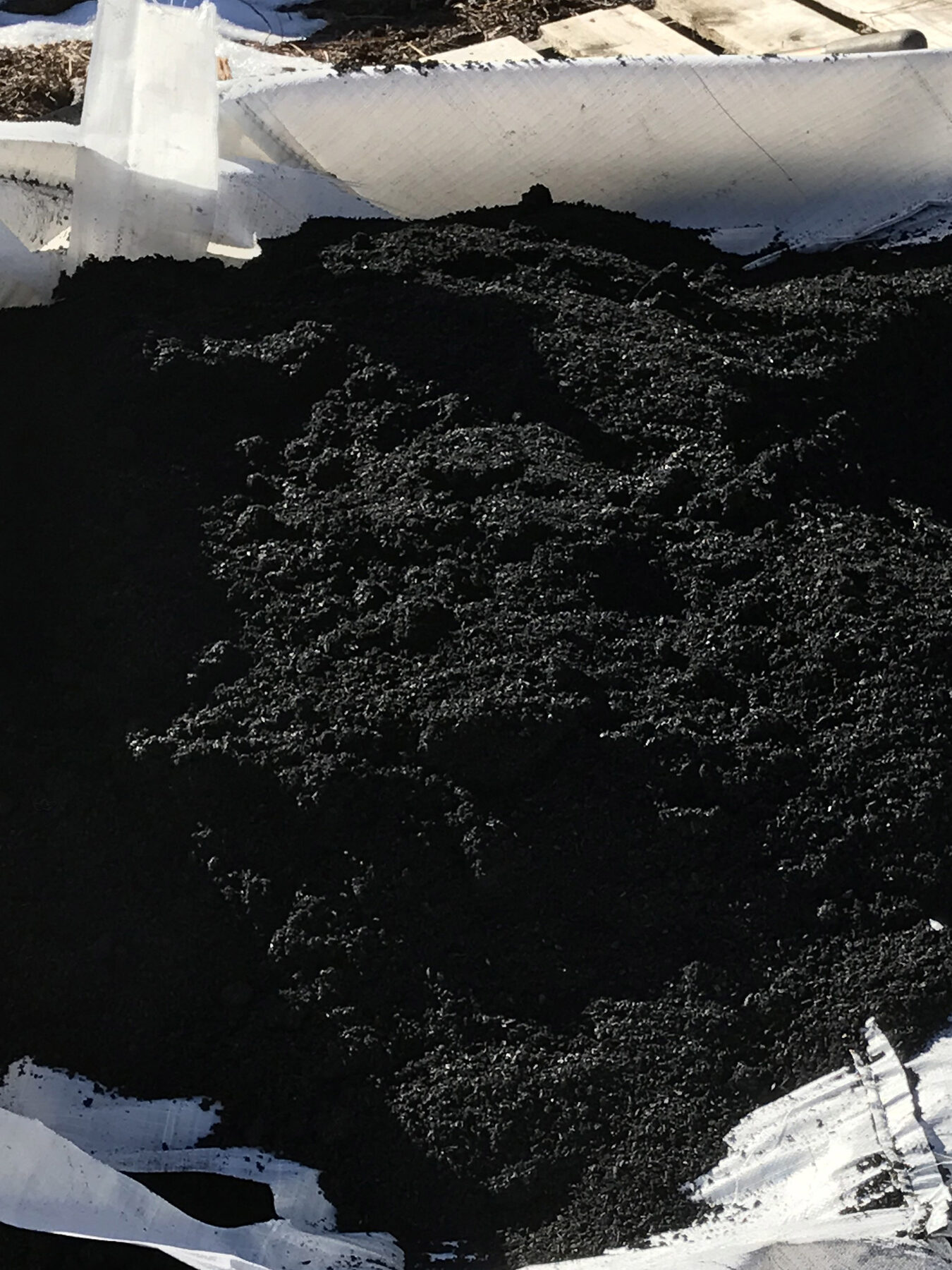
Extracting rigid plastics and metals leaves behind two massive waste categories: inert non-recyclables and wet organic matter. Rather than landfilling the organic fraction or routing it to standard composting, the Portsmouth model routes recovered biogenic material toward thermal conversion to produce biochar.
Pyrolysis—thermal decomposition in an oxygen-depleted reactor vessel operating between 400°C and 700°C—cleaves volatile hydrocarbon compounds from organic solids. The process converts the feedstock into three distinct outputs: non-condensable syngas (consisting largely of carbon monoxide, hydrogen, and methane), condensable bio-oils, and a porous, carbon-dense solid known as biochar. By heating the material without sufficient oxygen to fuel combustion, a substantial portion of the original biogenic carbon is converted into persistent aromatic carbon structures that resist microbial decay over centuries.
However, biochar derived from mixed municipal organics operates under severe compositional risks that do not apply to clean forestry residues or agricultural husks. Household waste contains heavy metals (lead, cadmium, zinc from batteries and hardware), persistent organic pollutants, and synthetic fluorinated compounds (PFAS). In addition, fine particles of chlorinated plastics like polyvinyl chloride (PVC) can generate dioxins and furans during thermal processing or introduce chlorine into the syngas stream, causing severe boiler and reactor corrosion.
Producing a biochar grade that meets structural soil-amendment standards or high-performance remediation criteria demands stringent, multi-stage screening before pyrolysis. Ash content must be tightly managed; high mineral or grit percentages dilute the fixed-carbon ratio of the finished biochar, depressing its commercial value and carbon permanence metrics.
Credit mechanisms versus physical tonnes
Biochar has emerged as one of the few high-permanence carbon dioxide removal (CDR) techniques capable of delivering measurable removals in the near term. This economic reality has enabled the project to secure corporate backing.
Biochar yield, carbon stability, processing emissions and the counterfactual waste pathway all matter to carbon-removal accounting. A Google purchase agreement for removal credits is commercial support, not evidence that every planned tonne has already been produced and verified.
Rigorous carbon accounting for mixed-waste biochar must establish an accurate baseline scenario. If the biogenic waste would otherwise have decomposed anaerobically in an unmanaged landfill, releasing methane with high immediate global warming potential, the emissions avoidance profile is high. Conversely, if baseline local disposal involves state-of-the-art waste-to-energy combustion with electrical export, diverting that mass alters grid-offset dynamics.
Every megajoule of auxiliary thermal energy consumed to dry damp incoming feedstock, and every kilogram of fossil fuel expended on transport and mechanical handling, must be subtracted from the gross carbon sequestered within the biochar's recalcitrant carbon matrix.
Financing is not commissioning
The reported $70 million project financing supports expansion. The second sorting facility and biochar system remain distinct development milestones. An operating first line does not make the whole future system operational.
Industrial waste infrastructure projects routinely experience significant commissioning friction between primary mechanical installations and downstream chemical or biological refining. While automated optical sorters operate as discrete electromechanical units with relatively rapid startup curves, continuous-feed pyrolysis reactors running heterogeneous waste materials suffer from feed-hopper blockages, tar condensation in gas ducts, and thermal cycling stress on refractory liners.
The model deserves attention because it integrates several revenue and treatment streams. Its next proof is a joined-up balance: incoming waste, recovered product quality, residual disposal, organics contamination and verified net carbon removal.
References and image credits›
Photo: CaptJayRuffins, CC BY-SA 4.0, via Wikimedia Commons · Diagram: The Waste Stack · Photo: US Department of Agriculture, public domain, via Wikimedia Commons · Photo: Kate Jewell, CC BY-SA 2.0, via Wikimedia Commons