
Carbonating Demolition Waste: How Old Concrete Absorbs CO2 Back
Crushed concrete reacts with CO2 to form calcium carbonate. Done deliberately, that upgrades recycled aggregate and stores a modest amount of carbon — and the modest part is where most reporting goes wrong.
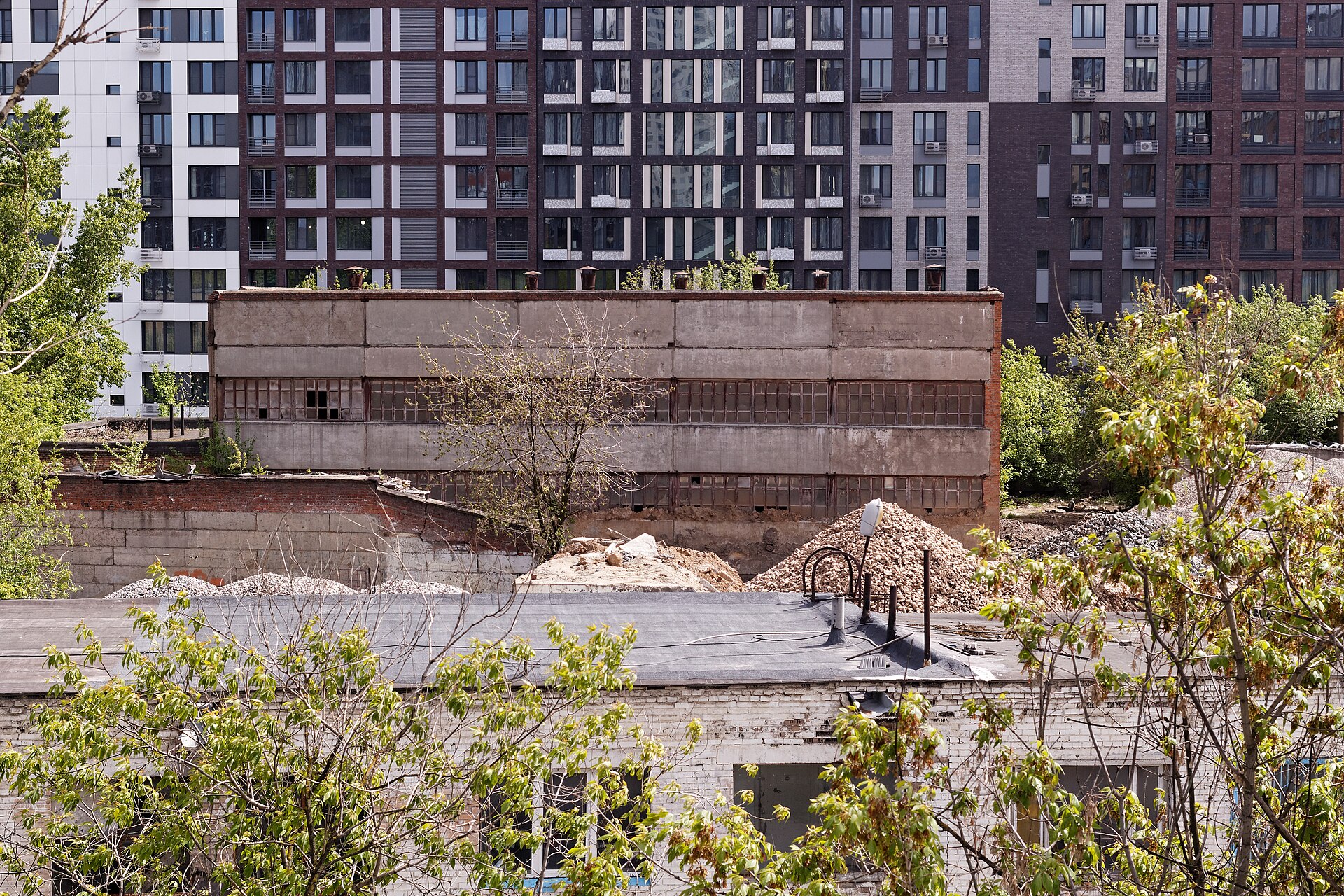
Concrete has a slow, well-documented habit: it reabsorbs CO2. Calcium hydroxide in hardened cement paste reacts with atmospheric CO2 to form calcium carbonate. In a structure this is a durability problem, because carbonation lowers pore pH and lets reinforcement corrode. In crushed demolition waste, with no steel present, the same reaction is useful.
Why recycled aggregate normally underperforms
Crushed concrete is not just stone. Each particle carries a shell of old cement paste, which is porous and weak. That shell absorbs water, weakens the interfacial bond in new concrete, and is why recycled aggregate is generally restricted to sub-base and low-grade applications rather than structural use.
What forced carbonation changes
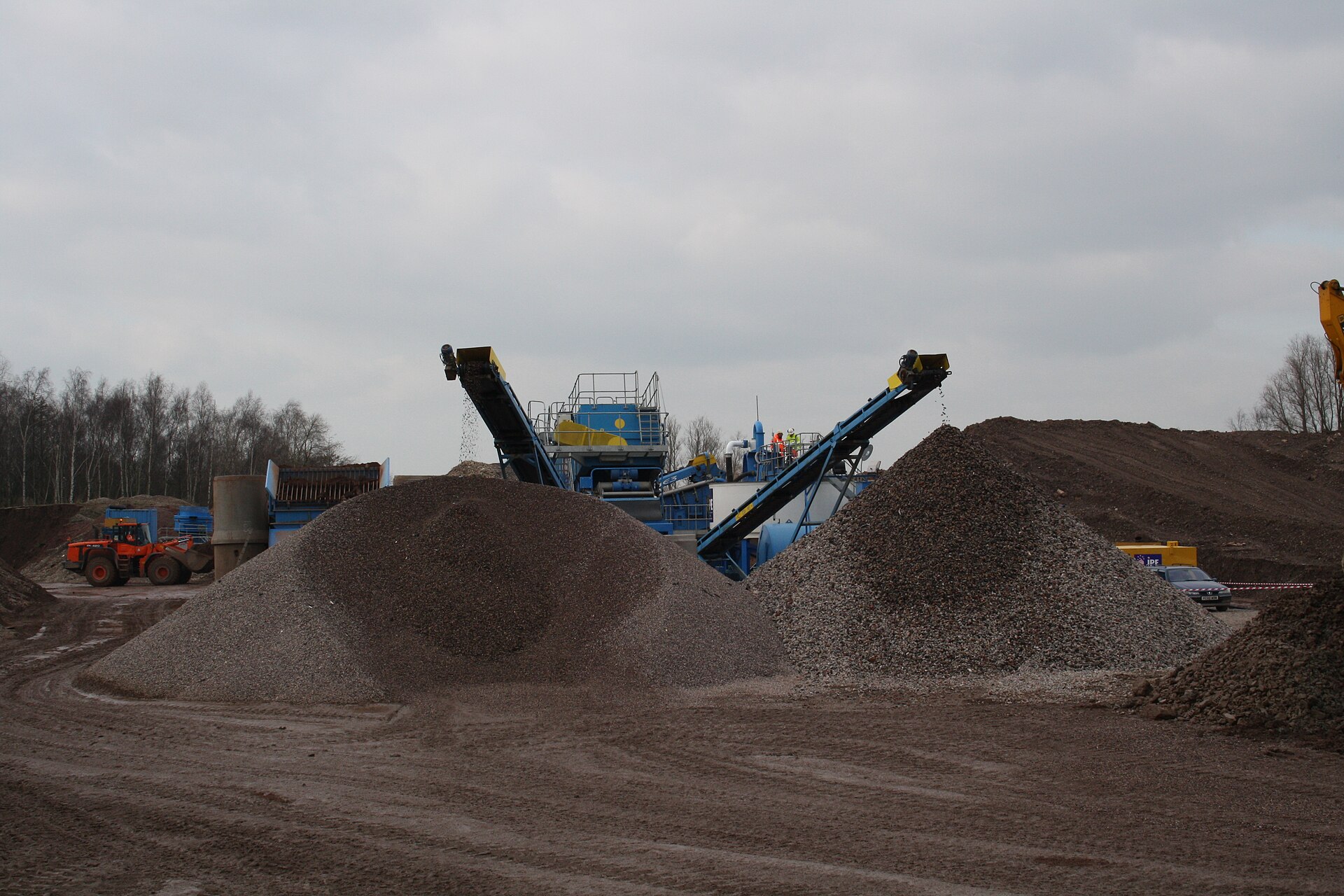
Expose the crushed material to a CO2-rich gas stream at controlled humidity and the calcium hydroxide in that paste shell converts to calcium carbonate. Calcium carbonate occupies more volume than the hydroxide it replaces, so it fills pores. The shell densifies, water absorption drops, and the aggregate's mechanical performance improves toward that of natural stone.
That is a genuine materials improvement, and it is the main commercial argument. The carbon storage is secondary.
The size of the carbon claim
Uptake is typically 5-15 kg CO2 per tonne of recycled aggregate treated, depending on the paste content and process conditions. Producing a tonne of cement emits around 600-900 kg CO2, and a tonne of concrete perhaps 100-150 kg.
So carbonation of demolition waste recovers a single-digit percentage of the original emissions. It is real and it is small. Reports that describe it as making concrete carbon-negative are describing a different, unproven thing.
The practical constraints
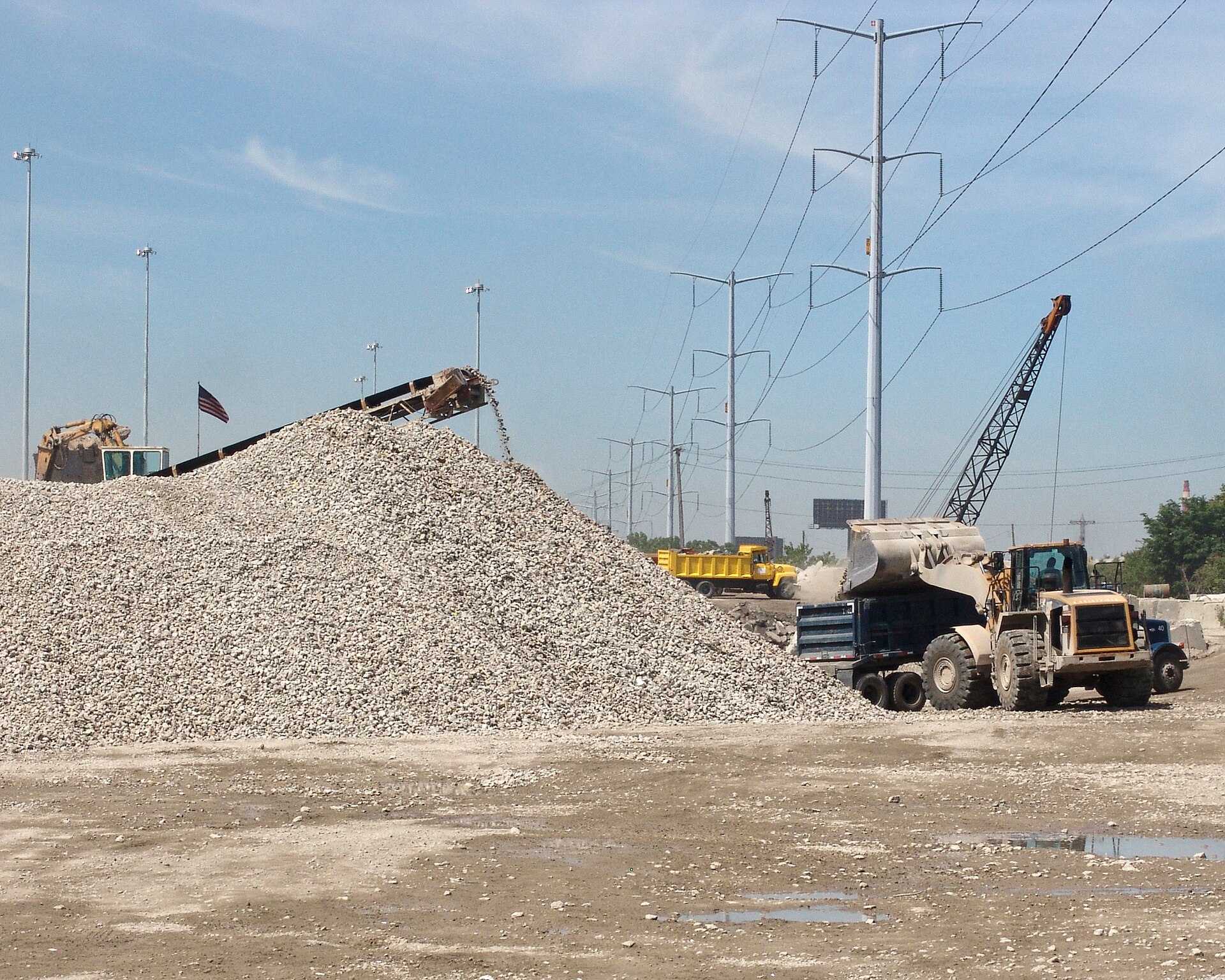
CO2 supply. The gas has to come from somewhere, and a captured industrial stream near a demolition recycling site is not a given. Trucking bottled CO2 to a low-value aggregate operation destroys the carbon case.
Residence time. Diffusion into a particle takes hours, and it slows as the outer layer carbonates. Throughput and reactor volume follow from that.
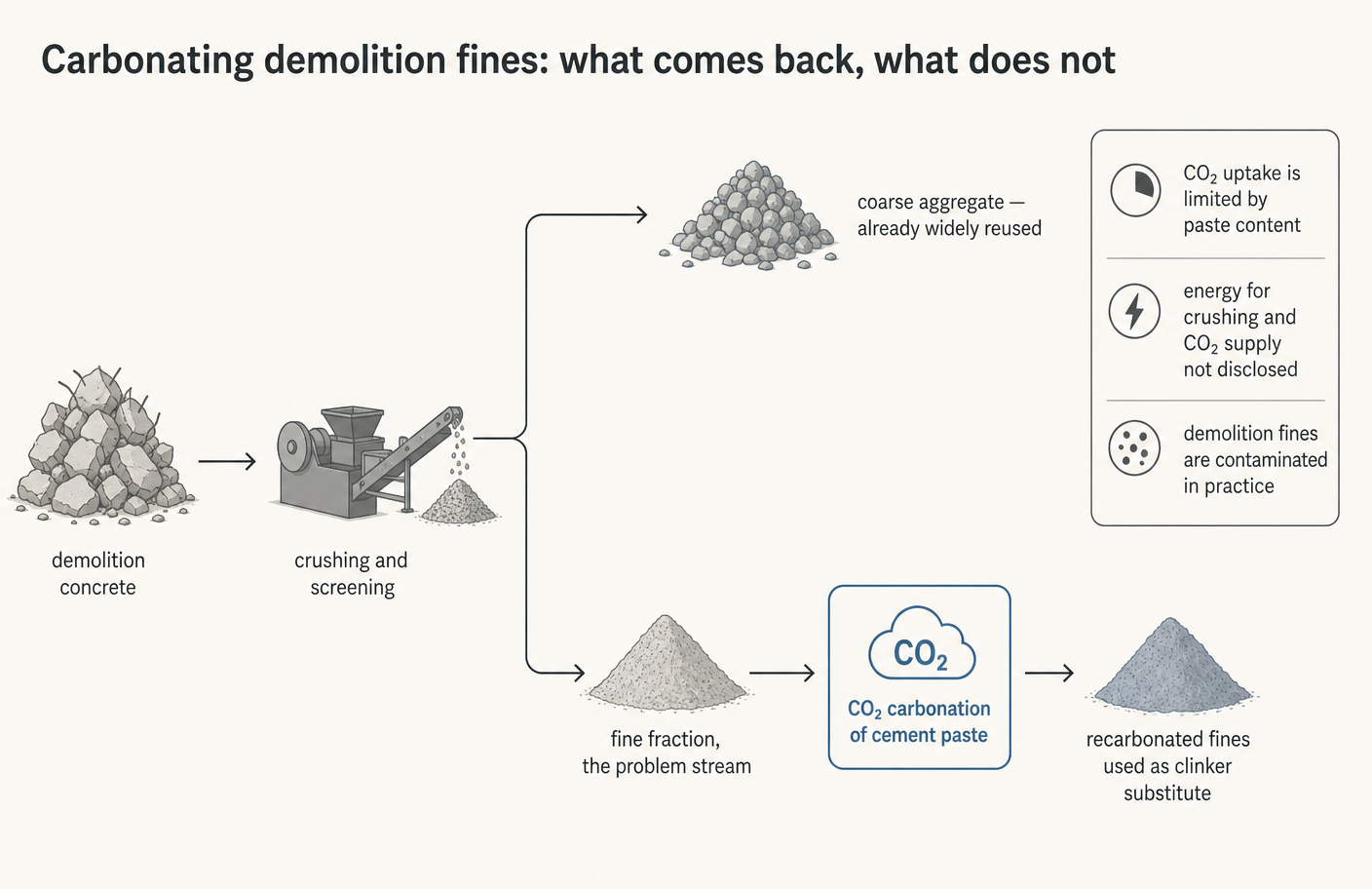
Fines. The reaction is fastest in the finest fraction, which is also the fraction with the least market value. There is a real opportunity in carbonating recycled concrete fines specifically and using them as a supplementary cementitious material.
The strategic value is that it makes recycled aggregate specifiable in higher-value applications, which increases how much demolition waste stays out of landfill. That displacement effect is likely worth more than the stored CO2.
References and image credits›
Photo: Retired electrician, CC0 · Photo: Peter Craven, CC BY 2.0 · Photo via Wikimedia Commons, CC BY-SA 3.0