
Does BASF's tyre-derived wall paint close the loop?
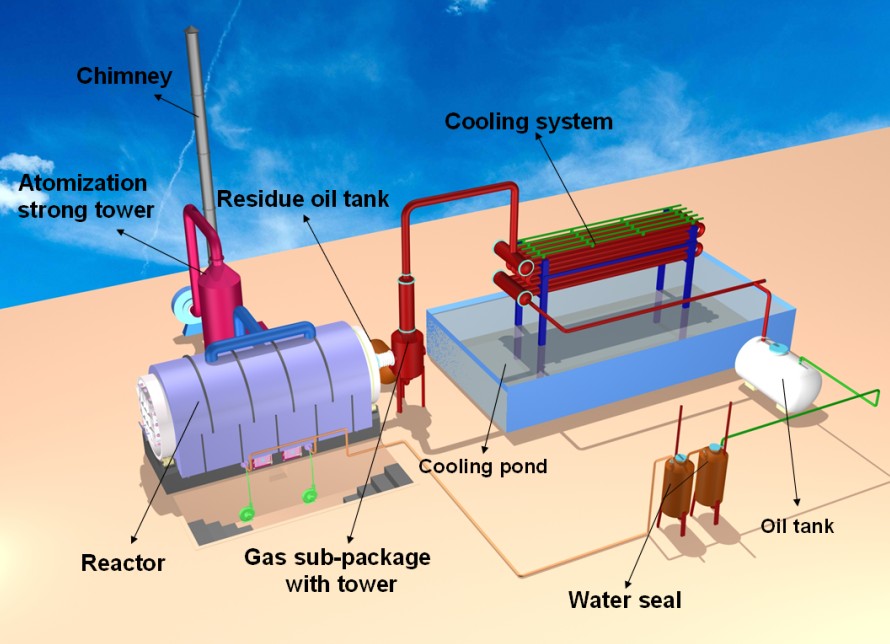
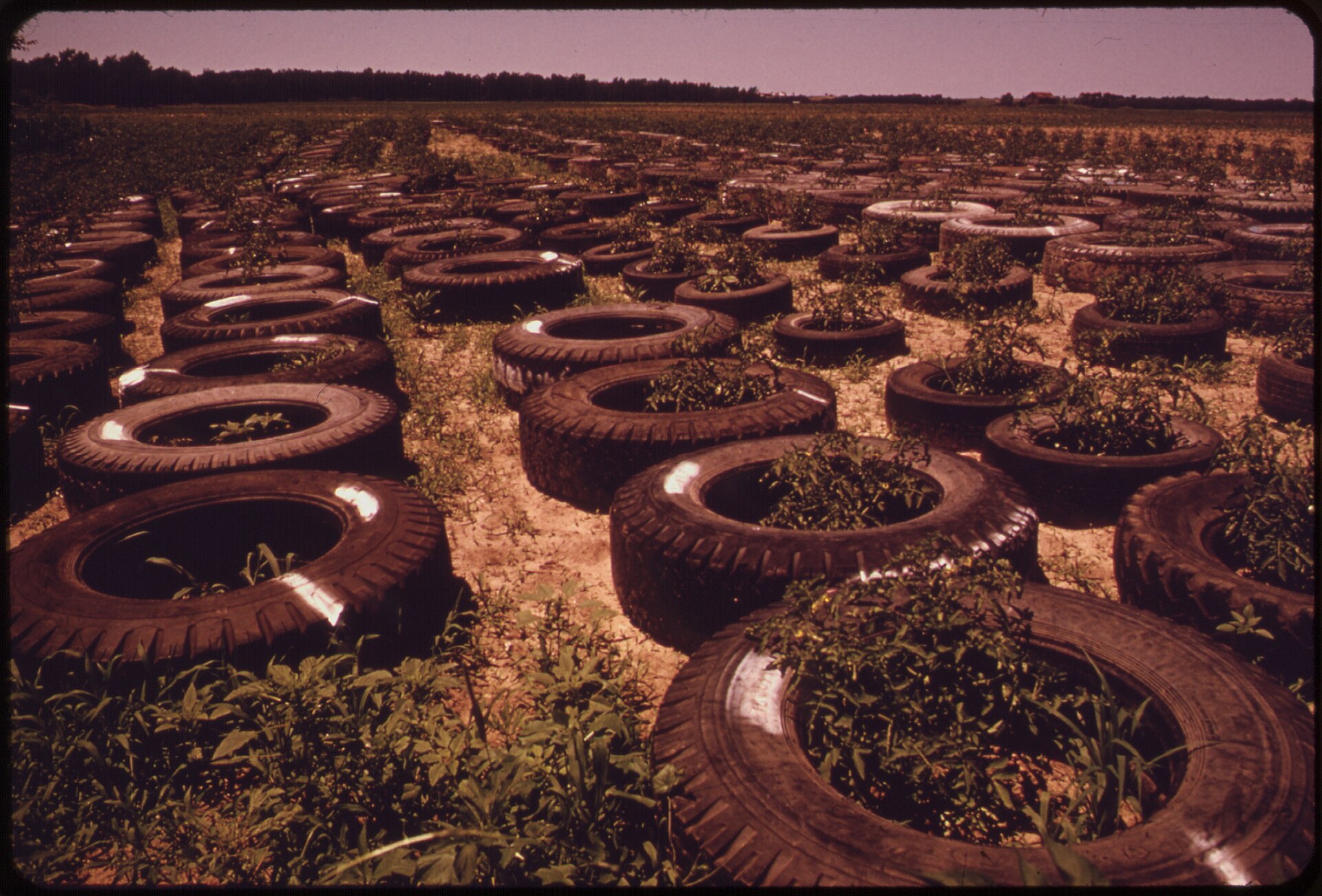
End-of-life tyres go into a pyrolysis reactor; a certified share of recycled feedstock comes out attributed to a tin of interior paint. The chemistry is real, the audit is real, and the word doing the most work is "attributed".
BASF and Cromology are putting chemically recycled feedstock derived from end-of-life tyres into the acrylic binder of Tollens Maxiline+, an interior wall paint on sale in France since March 2026. August trade coverage brought it back into view.
It is a good teardown subject precisely because the disclosure is unusually honest. The interesting question is not whether anyone is lying. It is what "circular" is being asked to mean.
The claim
Tyres are pyrolysed into an oil. BASF feeds that oil into its chemical production network. A certified mass-balance method then allocates the recycled input to Acronal Ccycled styrene-acrylate binder, which goes into the paint.
The allocation is third-party audited under REDcert2. That is more than most "circular" consumer products offer.
The strength
This is a commercial product line, not a laboratory output. Pyrolysis handles a genuinely difficult mixed waste stream — vulcanised rubber, steel, carbon black, textile — that mechanical recycling largely downcycles into crumb and fuel. The binder is engineered to deliver the same performance as its fossil equivalent, which means no consumer trade-off and therefore actual volume.

First skepticism test: molecules versus ledgers
Two end-of-life tyres went into this 10-litre tin of paint.
A quantity of tyre-derived feedstock equivalent to two tyres entered a shared chemical network, and the certificate for it was assigned to this tin. The molecules in the tin are statistically fossil.
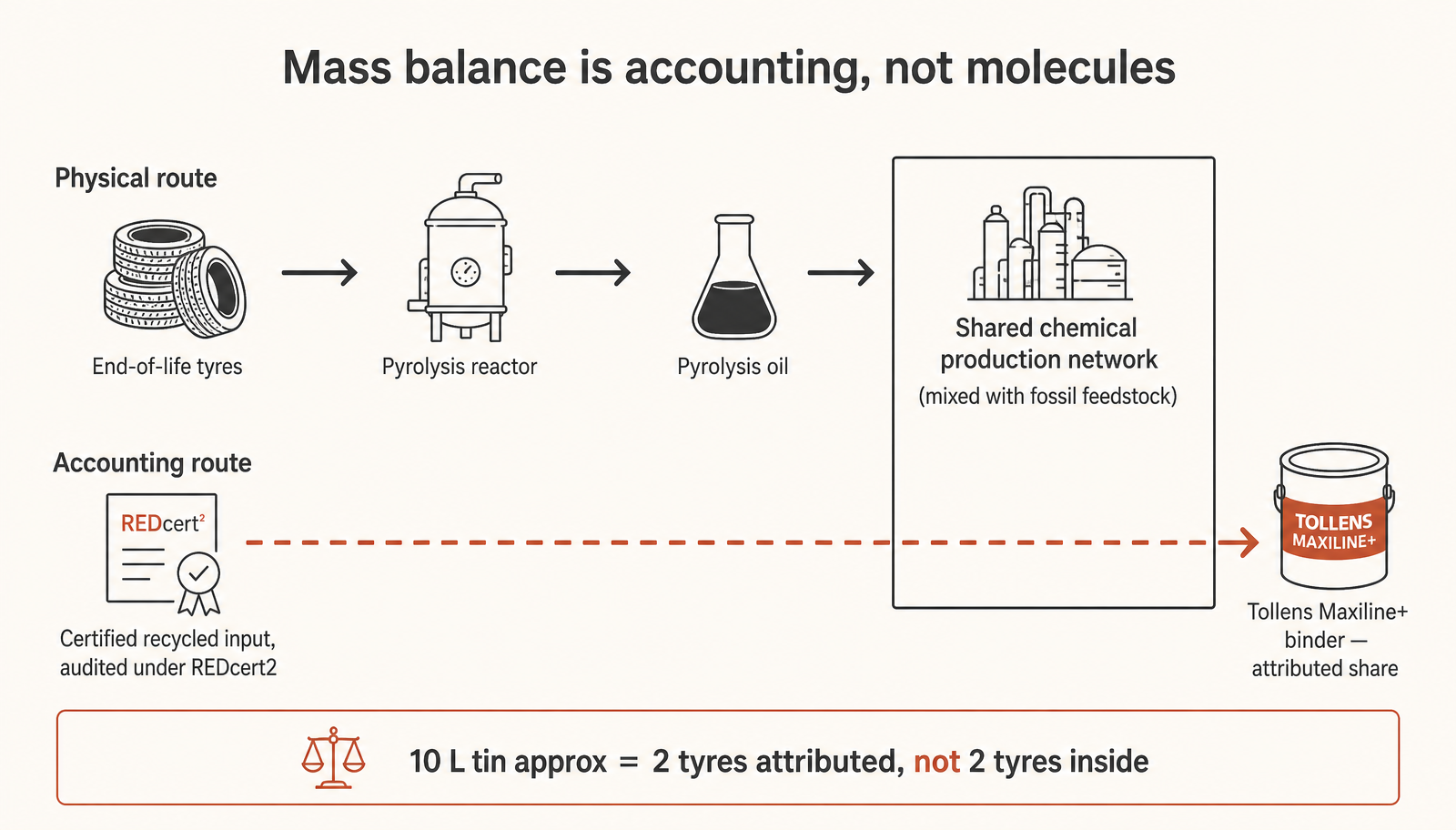
Mass balance is not a trick. It is how you get recycled feedstock into a continuous cracker without building a parallel plant, and it is the same logic as green electricity tariffs. But it is an accounting mechanism for creating demand, and consumer-facing language should say so.
Second skepticism test: pyrolysis is not automatically clean
The environmental result depends on collection logistics, reactor energy, oil upgrading, co-product allocation, emissions controls and transport — none of which are published in full here.
BASF gives a case-specific cradle-to-gate carbon footprint reduction. It does not publish the underlying inventory, and it does not compare the route against retreading, reuse, mechanical rubber recovery or direct tyre-to-tyre chemical routes. Those comparisons are the ones that decide whether this is the best use of a scarce waste stream.
The circularity question
Paint is a terminal destination. It cures into a thin cross-linked film bonded to a wall, and no one is recovering it. Carbon that enters a paint binder leaves the material economy.
So this is waste-to-chemical substitution with one extra use of the carbon before dispersal — worthwhile, but structurally different from a loop.
Fair verdict
A credible commercial route for a hard-to-recycle stream, with unusually clear disclosure that the accounting is mass balance. The win is displaced virgin fossil input and a paying market for tyre-derived feedstock. The unresolved question is whether the whole system beats higher-value tyre reuse or mechanical recovery on climate, toxicity and resource efficiency — and nothing published so far answers it.
References and image credits›
- 01BASF — Turning end-of-life tires into new resources for wall paint
- 02ChemXplore — BASF and Cromology convert end-of-life tires into binder for Tollens paint
- 03Baulinks — BASF und Cromology bringen zirkulaere Innenwandfarbe auf den Markt
Photo: US National Archives, public domain · Photo: Zzkysb, CC BY-SA 3.0 · Photo: Michael Cory, CC BY 2.0 · Diagram: The Waste Stack · Photo: Wikimedia Commons, CC BY-SA