
"If it is plastic, put it in the recycling bin"
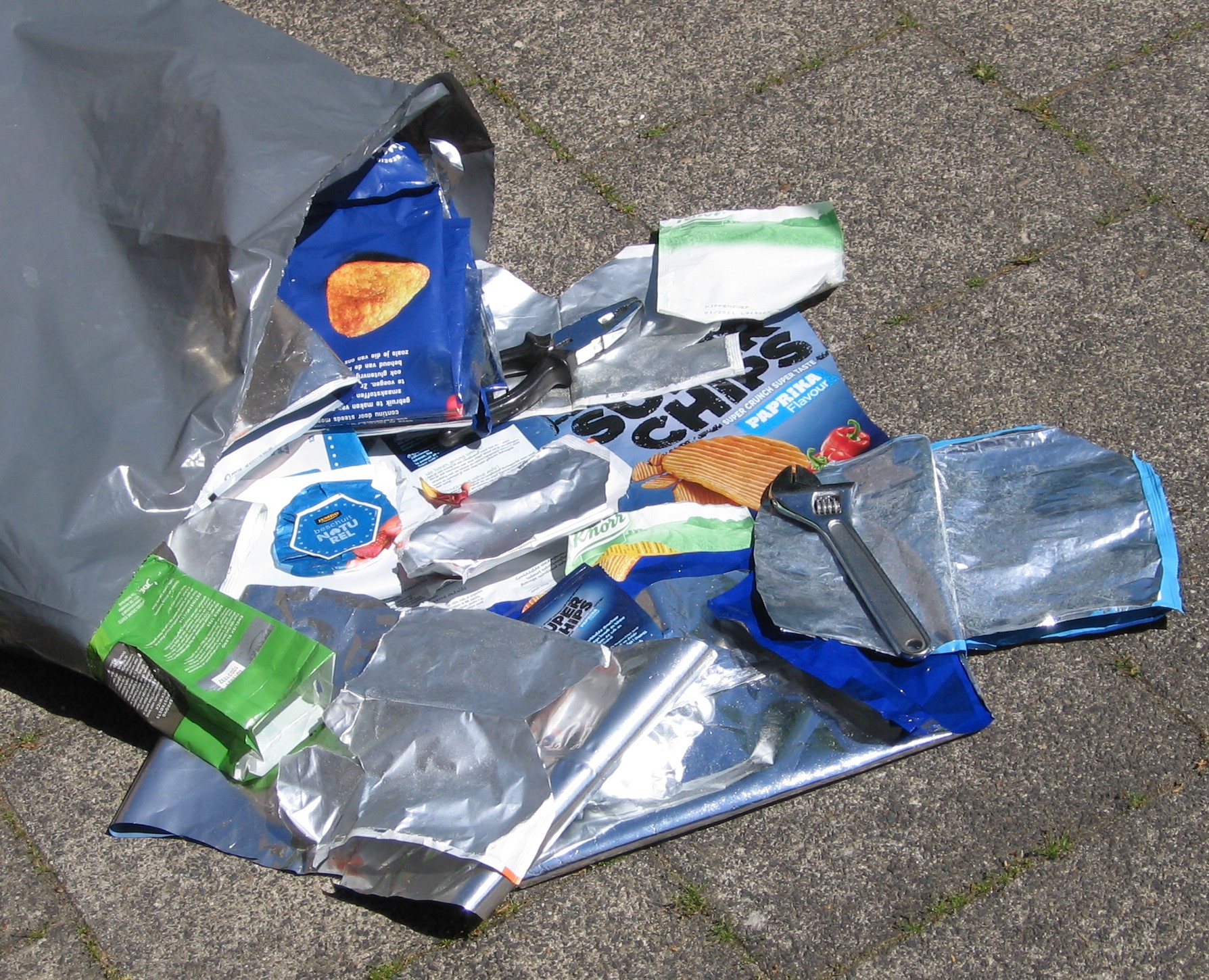
Bags, wraps and mailers are plastic, carry resin codes, and look recyclable. They are also one of the most reliable ways to shut down a sorting line.
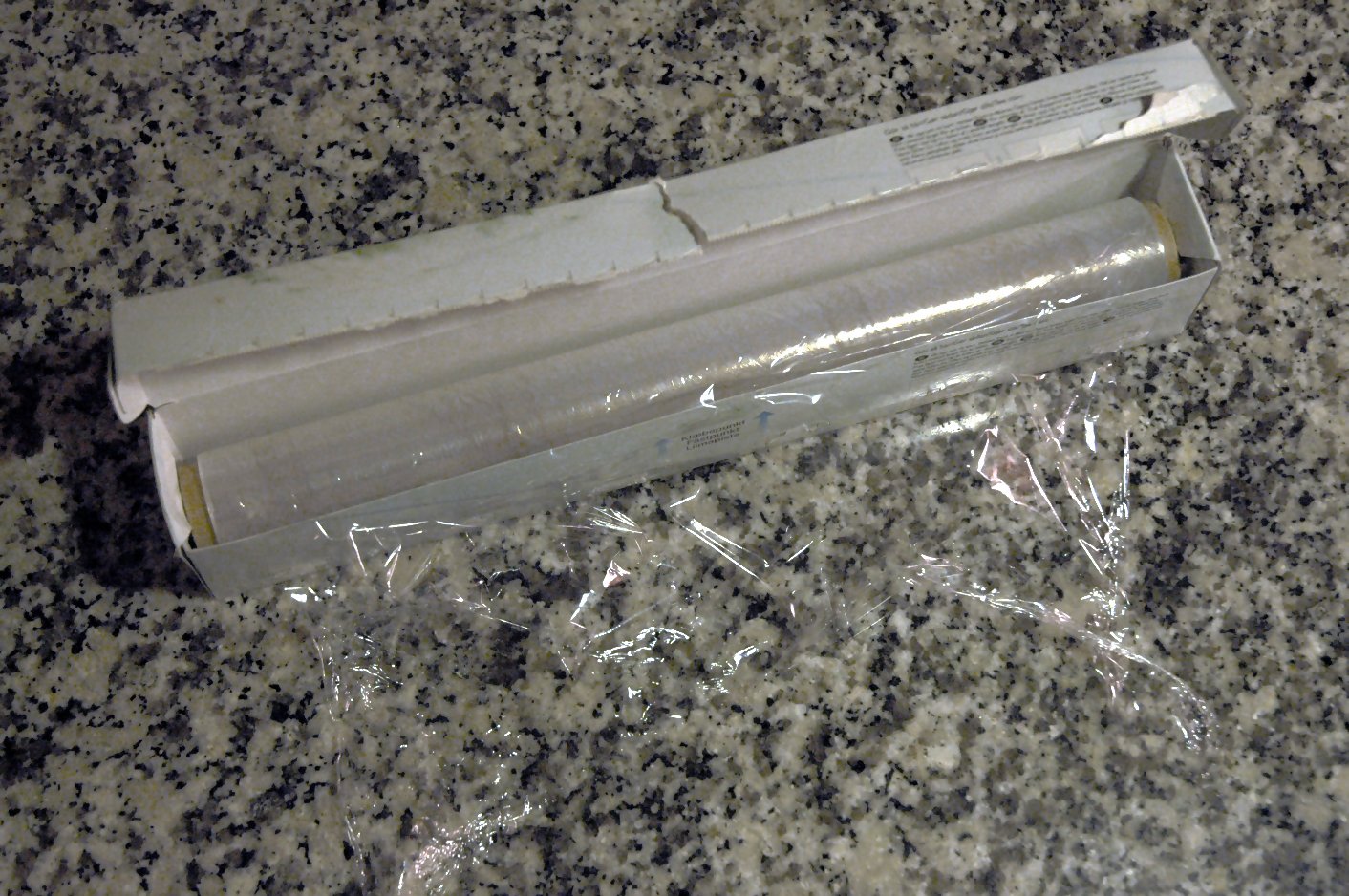
This one is not a moral failing. It is a reasonable inference from bad labelling: the item is plastic, it has a chasing-arrows triangle on it, the bin is for plastic.
The U.S. EPA is unusually blunt about it. Bags, wraps and films are recyclable in some systems and cannot go in the household recycling bin.
The myth
A grocery bag, cling film, bread bag or shipping mailer is made of plastic, so it belongs with the bottles and tubs in the curbside cart.
Film is flexible. In a material-recovery facility it wraps around conveyor shafts, screens and disc rollers, and staff have to stop the line and cut it off by hand.
Why the shape matters more than the polymer
A MRF is a sequence of machines that sort by physical property: size on trommels, density on air classifiers, shape and rigidity on disc screens, polymer type on optical sorters. Every one of those assumes the object holds a shape.
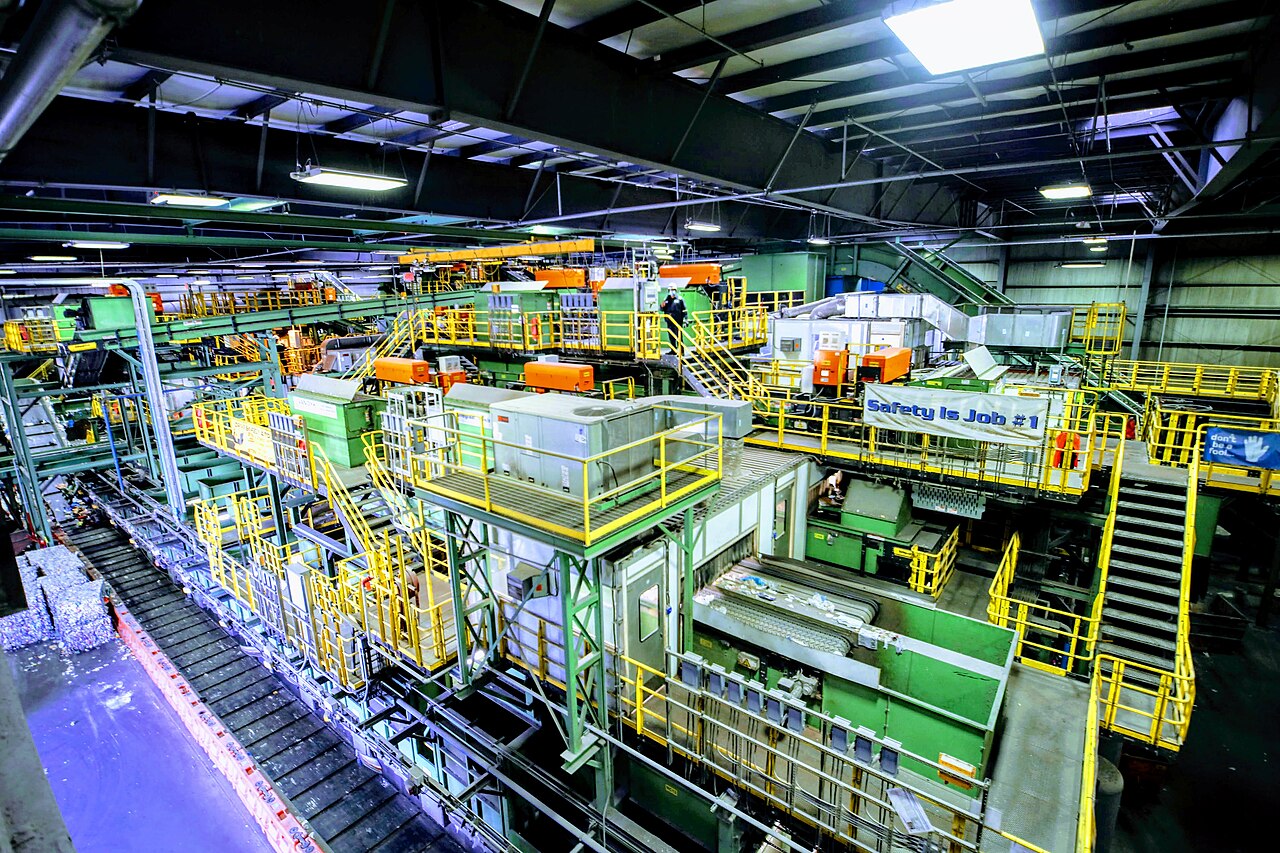
Film does not. It drapes, it flies, it tangles. Polyethylene bag material is perfectly recyclable as a polymer — it is the geometry that the collection system cannot handle, not the chemistry.
The practical rule
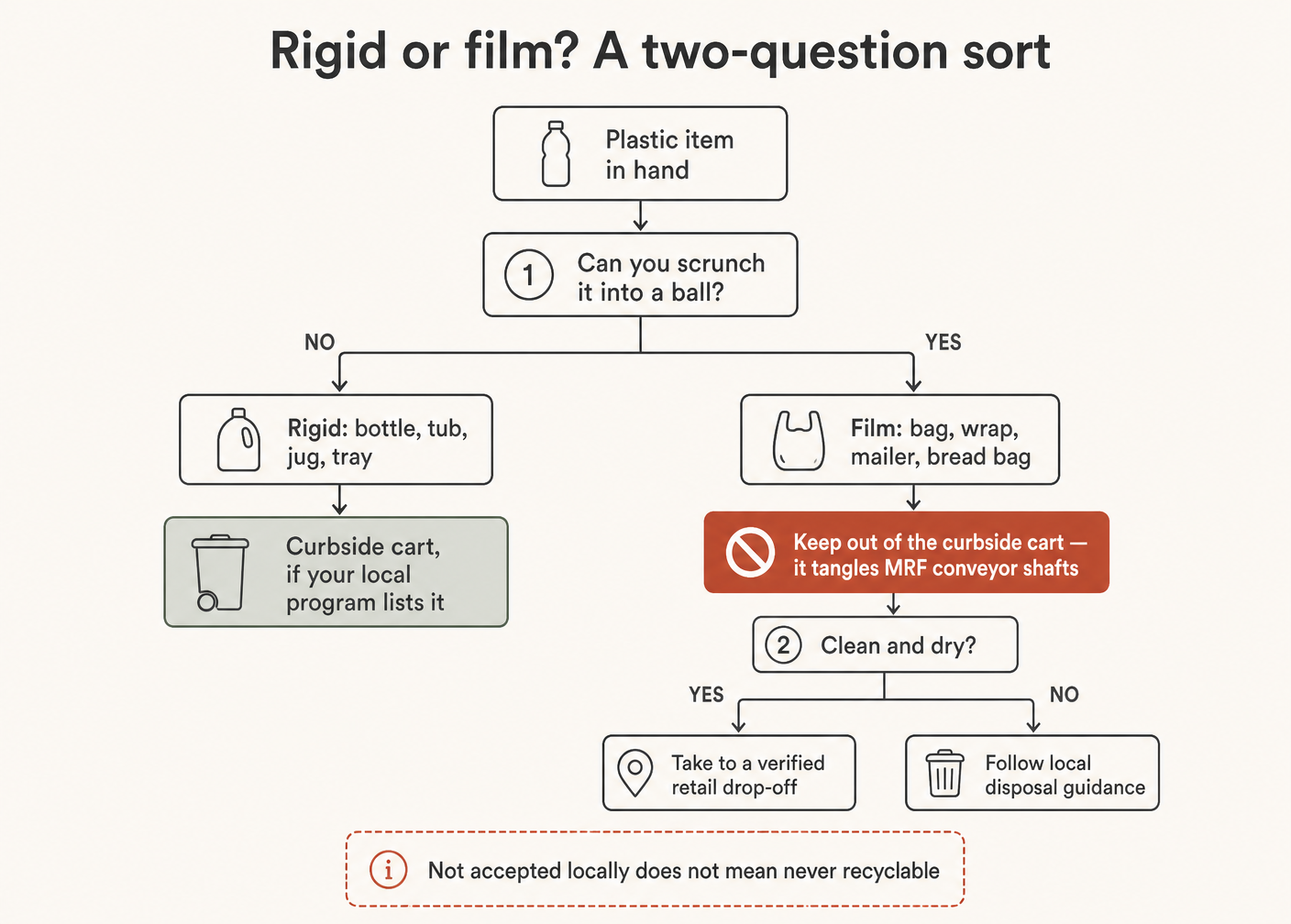
Keep bags, wraps and films out of the curbside cart. If it scrunches into a ball and stays there, it is film. Clean and dry film can go to a verified retail or specialist drop-off where one exists; if there is no legitimate take-back route near you, follow local disposal guidance.
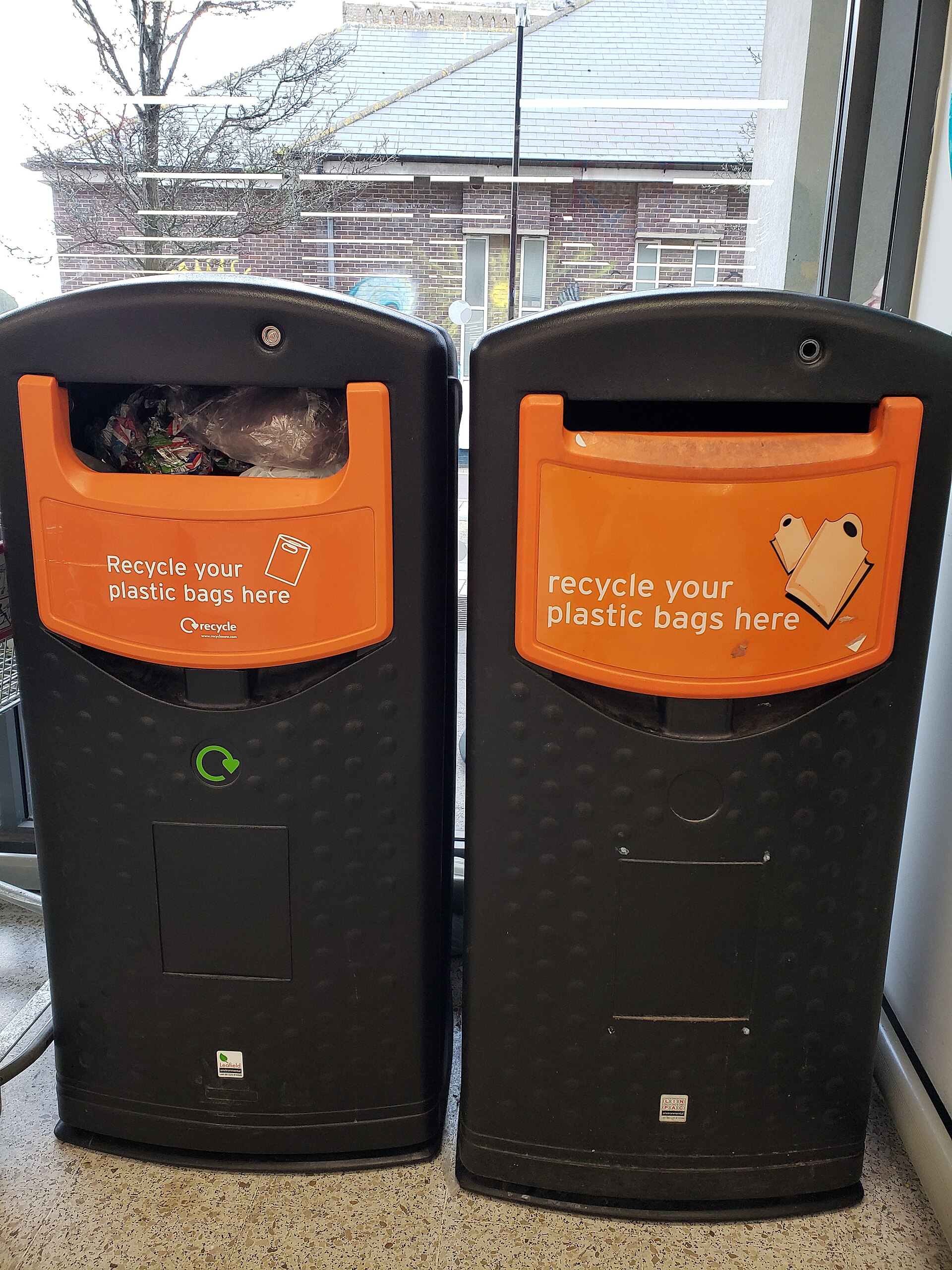
The nuance worth keeping
"Not accepted in my curbside program" is not the same as "this material can never be recycled". The collection route and the sorting equipment are part of whether recycling works at all — which is why local rules genuinely differ and why checking yours is not a cop-out answer.
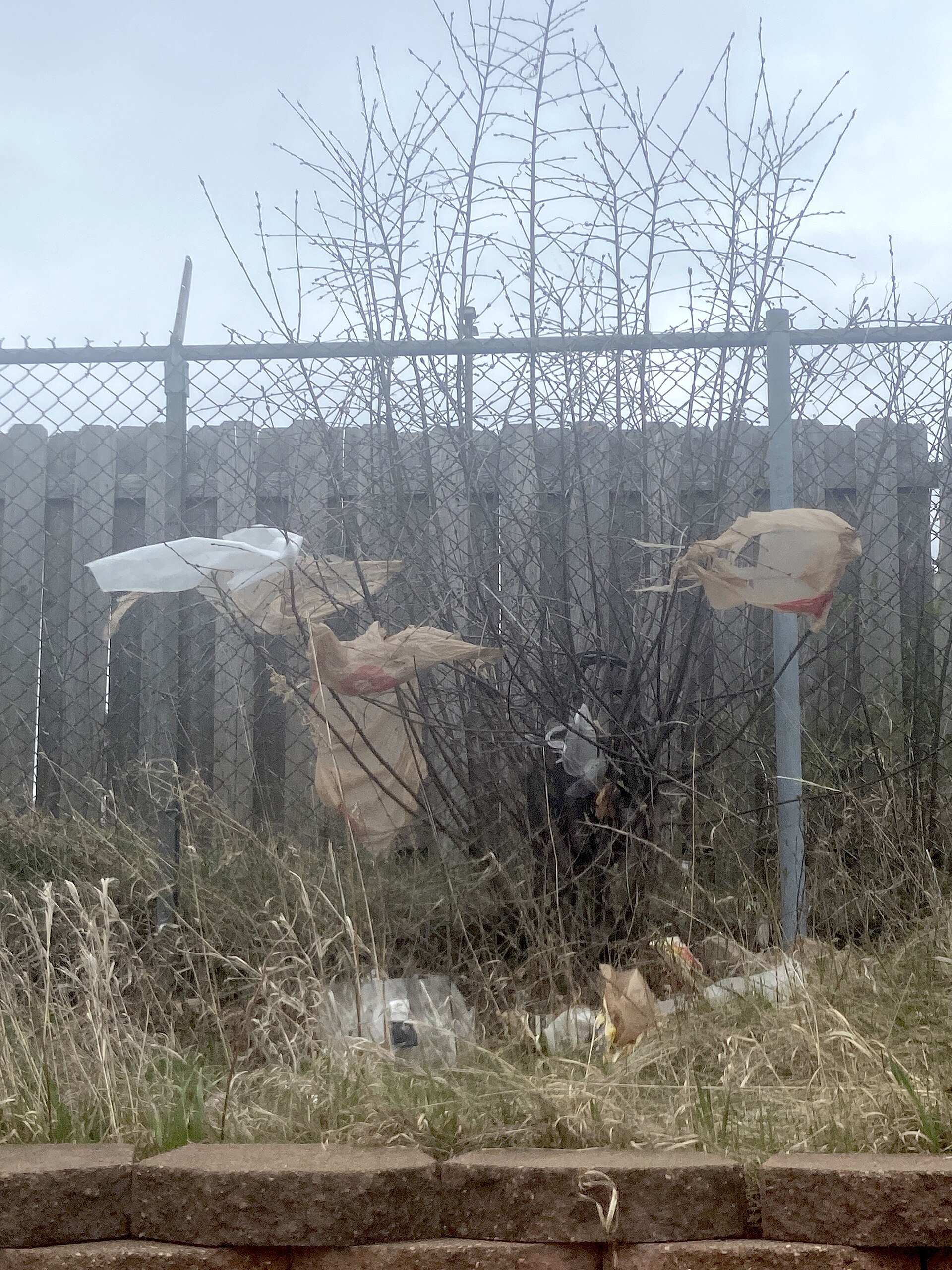
And the honest caveat about drop-offs: they are not universal, and "collection available" does not guarantee that every item is accepted or that it becomes a new product. Using fewer disposable bags and choosing durable alternatives avoids the collection problem rather than managing it.
References and image credits›
- 01U.S. EPA — How do I recycle common recyclables?
- 02U.S. EPA — Frequent questions on recycling
- 03U.S. EPA — FAQs about plastic recycling and composting
Photo: Ilmari Karonen, public domain · Photo: Wikimedia Commons, CC BY-SA · Photo: Wikimedia Commons, CC BY-SA · Diagram: The Waste Stack · Photo: Onthewings, CC0 · Photo: Myotus, CC0