
Brightly food-rescue credits: the food is real, the baseline needs scrutiny
Food rescue can fund climate benefits, but credits depend on additionality, the alternative disposal route and verified accounting.
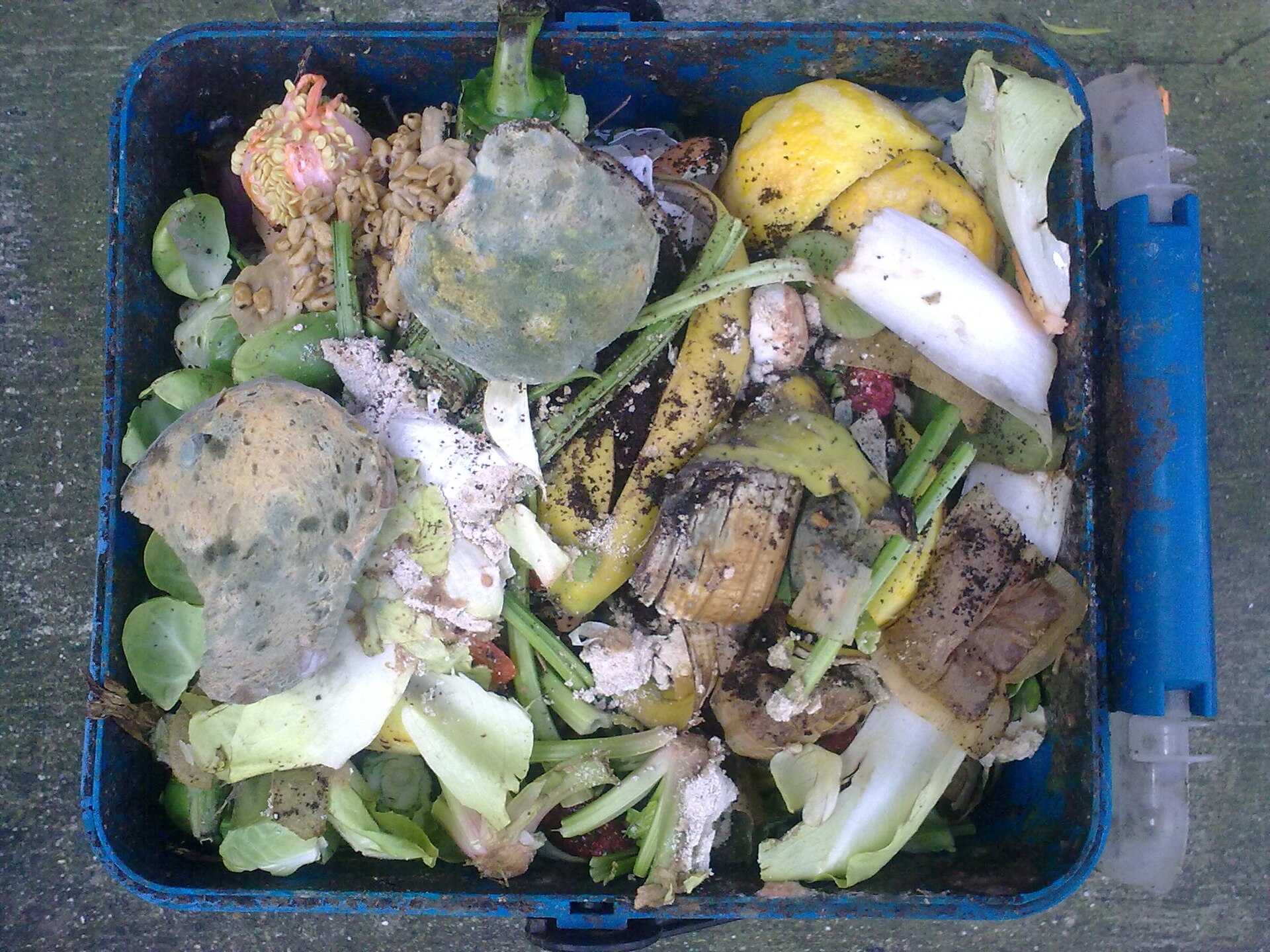
Food rescue has an immediate social purpose: edible food reaches people instead of becoming waste. Across supply chains, surplus produce, short-dated shelf goods, and overproduced commercial inventory are routinely redirected to food banks and community pantries. In recent years, climate-finance developers have sought to connect this established logistics sector to voluntary carbon markets. Brightly’s carbon-credit model adds a second transaction to that distribution chain. Verified emissions avoidance can be sold, with revenue intended to help fund more collection and distribution.
Transforming surplus calories into carbon finance sounds like an ideal circular economy intervention. Capital flows to underfunded frontline charities while corporate buyers receive credits toward their voluntary climate targets. However, translating the physical distribution of groceries into tradeable avoidance credits introduces layers of baseline modeling, boundary definition, and additionality questions that require careful engineering scrutiny.
What is being credited?
Carbon credits from waste diversion do not quantify the weight of rescued groceries; they quantify the modeled differential in atmospheric methane emissions between a project intervention and an unmitigated disposal counterfactual.
Verra’s VM0046 methodology provides a framework for food-loss and waste projects. The climate claim is not simply “we moved a tonne of food.” It compares a project with a defensible baseline and accounts for the emissions difference.
When municipal organic matter is discarded in a conventional landfill, it undergoes anaerobic microbial degradation. Heterotrophic bacteria break down carbohydrates, fats, and proteins in the absence of molecular oxygen, yielding landfill gas comprising roughly equal volumetric parts methane and carbon dioxide. Because methane has a substantially higher global warming potential than carbon dioxide over both 20-year and 100-year horizons, preventing the anaerobic decay of organic waste avoids significant atmospheric warming forcing.
Food sent to a landfill can produce methane. But food that would already have been donated, composted or handled differently has another baseline. Transport, storage and other project activities also affect the net result. Weight alone does not establish an offset quantity.
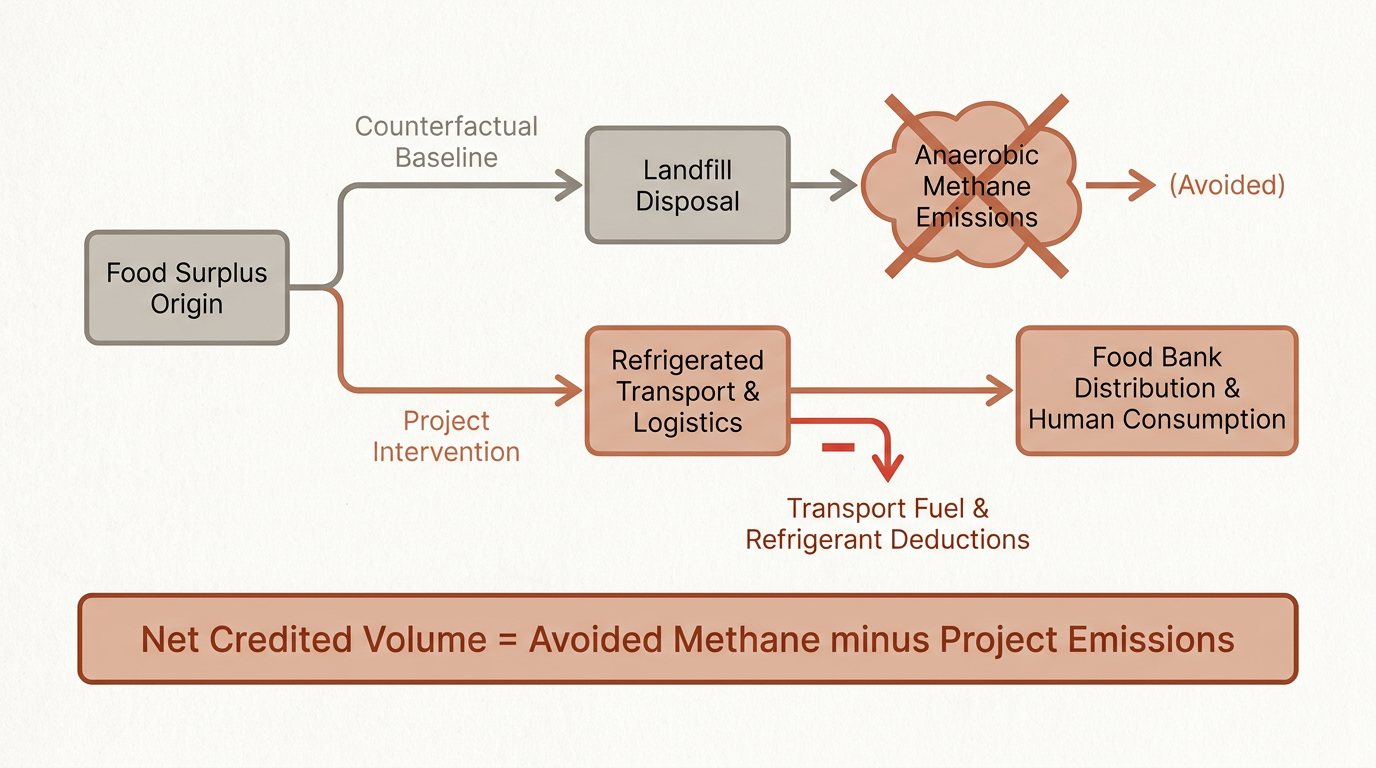
The baseline dilemma and counterfactual routing
To establish credit volumes, a project developer must construct a counterfactual scenario: what specific disposal pathway would this precise pallet of produce or packaged goods have taken in the absolute absence of the intervention? Establishing this baseline is inherently challenging within commercial supply chains.
In agricultural fields, unharvested surplus crops or graded-out produce left on the surface decompose largely via aerobic respiration, producing biogenic carbon dioxide rather than landfill-derived fugitive methane. In industrial food processing, solid organic residues are frequently diverted to livestock feed, rendering facilities, or licensed anaerobic digesters equipped with biogas capture systems. In retail settings, food waste may enter municipal collection streams subject to mandatory landfill organic bans, aerobic commercial composting, or waste-to-energy incineration facilities.
If rescued food is drawn from a supplier that would have diverted surplus to animal feed, composting, or energy recovery, the avoided methane claim evaporates. Calculating credits requires granular provenance data proving that each recovered batch was destined specifically for an unmanaged or minimally managed landfill with known gas collection efficiencies. Assuming a universal, single-pathway baseline of unmitigated landfill burial overstates baseline emissions.
Rescuing edible food automatically generates a one-to-one offset against an organization's industrial fossil fuel emissions.
Avoided methane emissions represent a counterfactual avoidance, not direct atmospheric removal, and do not neutralize the physical atmospheric accumulation of ongoing fossil combustion.
Registration and issuance are different milestones
Brightly works with food-rescue organisations, and Verra has announced the first credits under the methodology. A project’s forecast reductions at registration must not be confused with the quantity later issued. Nor should all issued credits be called forward-looking or assigned an “A” rating without a specific source identifying the credit, rating body and assessment.
In standard carbon project governance, registration simply confirms that a project design document meets procedural rules and intended monitoring frameworks. Registration figures reflect prospective estimates over a multi-year crediting lifecycle. Issuance, by contrast, occurs only ex-post: after activities take place, monitoring data is compiled, and an independent validation and verification body audits physical haul manifests, weight receipts, and baseline verification documents.
Third-party rules improve consistency. They do not remove the need to examine monitoring records, additionality and whether the activity would have occurred without credit revenue. Additionality is the foundational test of any carbon credit: would the rescue network have gathered and distributed this volume anyway under existing philanthropic donations, municipal grants, or corporate food-waste reduction targets? If an existing pantry run is retroactively credited without carbon revenue directly causing the operational expansion, the resulting credit provides no incremental atmospheric benefit.
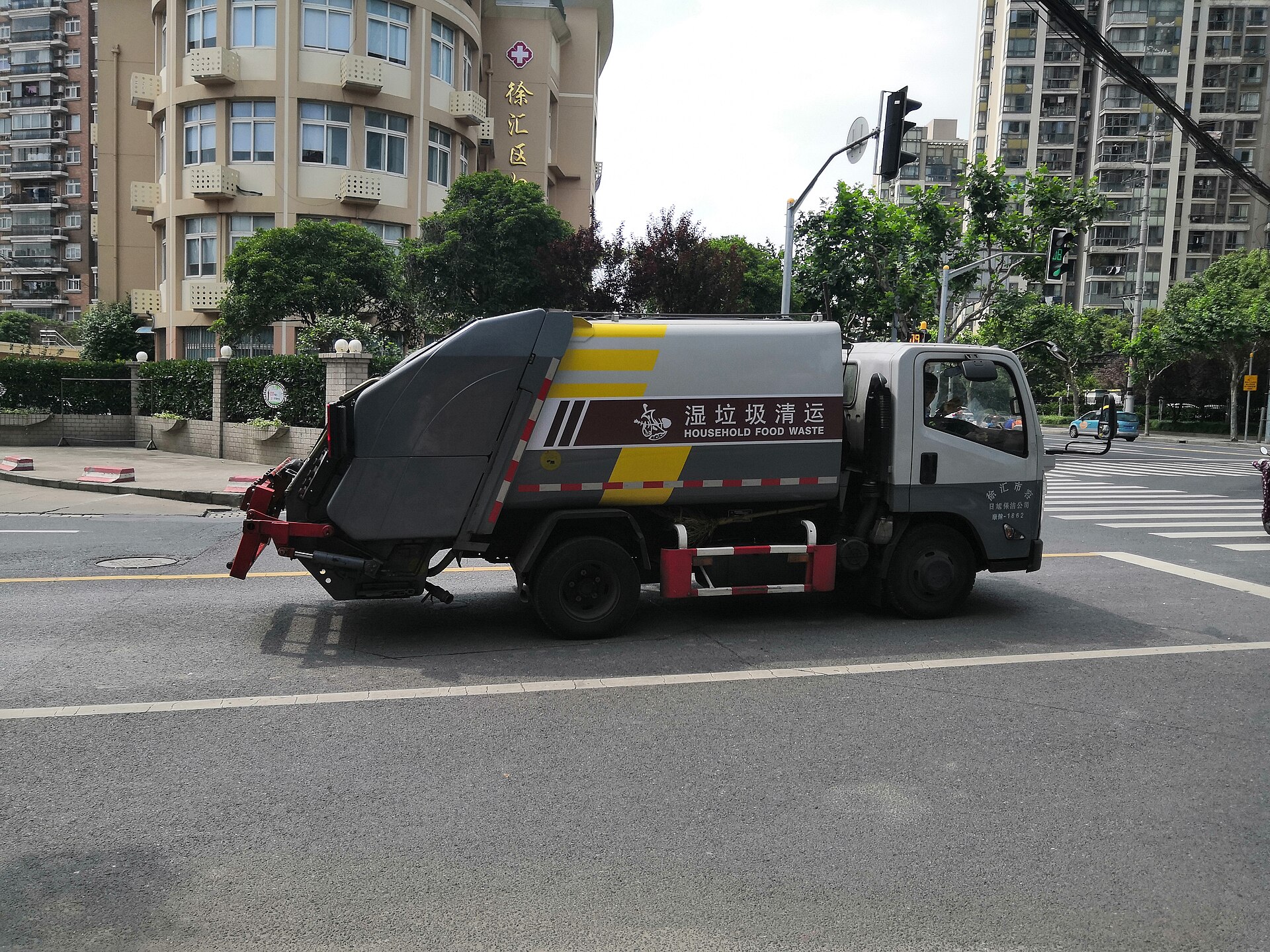
Inside the accounting boundary
Crediting emissions avoidance requires rigorous net accounting across the entire project operational boundary. Food distribution is carbon-intensive. Cold chains, refrigerated transport vehicles, centralized warehousing, sorting equipment, and final distribution legs all generate greenhouse gas emissions.
When a fleet of diesel box trucks drives hundreds of miles to salvage perishable inventory, the combustion emissions from those vehicles must be measured and deducted from gross avoided methane calculations. Refrigerant leakage from mobile transport units and industrial cold-storage facilities also represents high-potency fugitive greenhouse gases that belong inside the net ledger.
Furthermore, secondary spoilage within the rescue chain must be monitored. If salvaged perishable greens spoil at an intermediate distribution warehouse or in a household refrigerator and end up deposited into a municipal landfill anyway, the methane production has not been prevented; it has merely been delayed by several days. High-integrity accounting requires documented proof of end-stage consumption or final handling.
The claim a buyer can honestly make
Funding food rescue does not physically cancel the buyer’s own smokestack or fuel emissions. Buyers should disclose the credited project and vintage separately from progress on their direct emissions.
Corporate greenhouse gas accounting frameworks distinguish sharply between direct Scope 1 and Scope 2 emission reductions and market-purchased avoidance offsets. When a corporation purchases food-rescue credits, it is not removing carbon dioxide from the atmosphere or reducing the operational footprint of its own supply chain. It is providing a counterfactual financing contribution to an external waste-diversion activity.
The useful question is not whether food rescue is good—it is whether this particular credit represents a quantified, additional climate benefit. Better evidence would show monitored rescue volumes, baseline disposal assumptions, leakage deductions, verification documents and how much revenue reaches the rescue work. A compelling social mission should strengthen accountability, not replace it.
References and image credits›
Photo: Nick Saltmarsh, CC BY 2.0 · Diagram: The Waste Stack · Photo: Kate Jewell, CC BY-SA 2.0, via Wikimedia Commons · Photo: WQL, CC BY-SA 3.0