
Cairo's CanBank Machines Take the Cans. The Zabaleen Were Already Taking Them.
Two reverse vending machines in Dokki pay phone credit for bottles and cans — the exact fraction that has funded an informal collection economy for a century.
Reuters reported on 10 September that the deployment of CanBank reverse vending machines in Cairo had put a long-running struggle over the city''s rubbish into public view. The technology is unremarkable. The conflict is the story.
How the machine works
CanBank is built by ZeroPrime Technologies, an Egyptian startup founded by Eslam El-Refaey in 2017 and first pitched on Egypt''s Shark Tank in 2023. You feed in a plastic bottle or aluminium can; the machine identifies the container type and size, sorts it internally, and credits you points.
One point for a small bottle, two for a large bottle or a can. Two machines went live on Tahrir Street in Dokki, a middle-class district, in late August 2026. ZeroPrime says it is self-financed, claims 30 to 40 percent margins, and plans 20,000 machines nationwide by 2030.
Who was already doing this
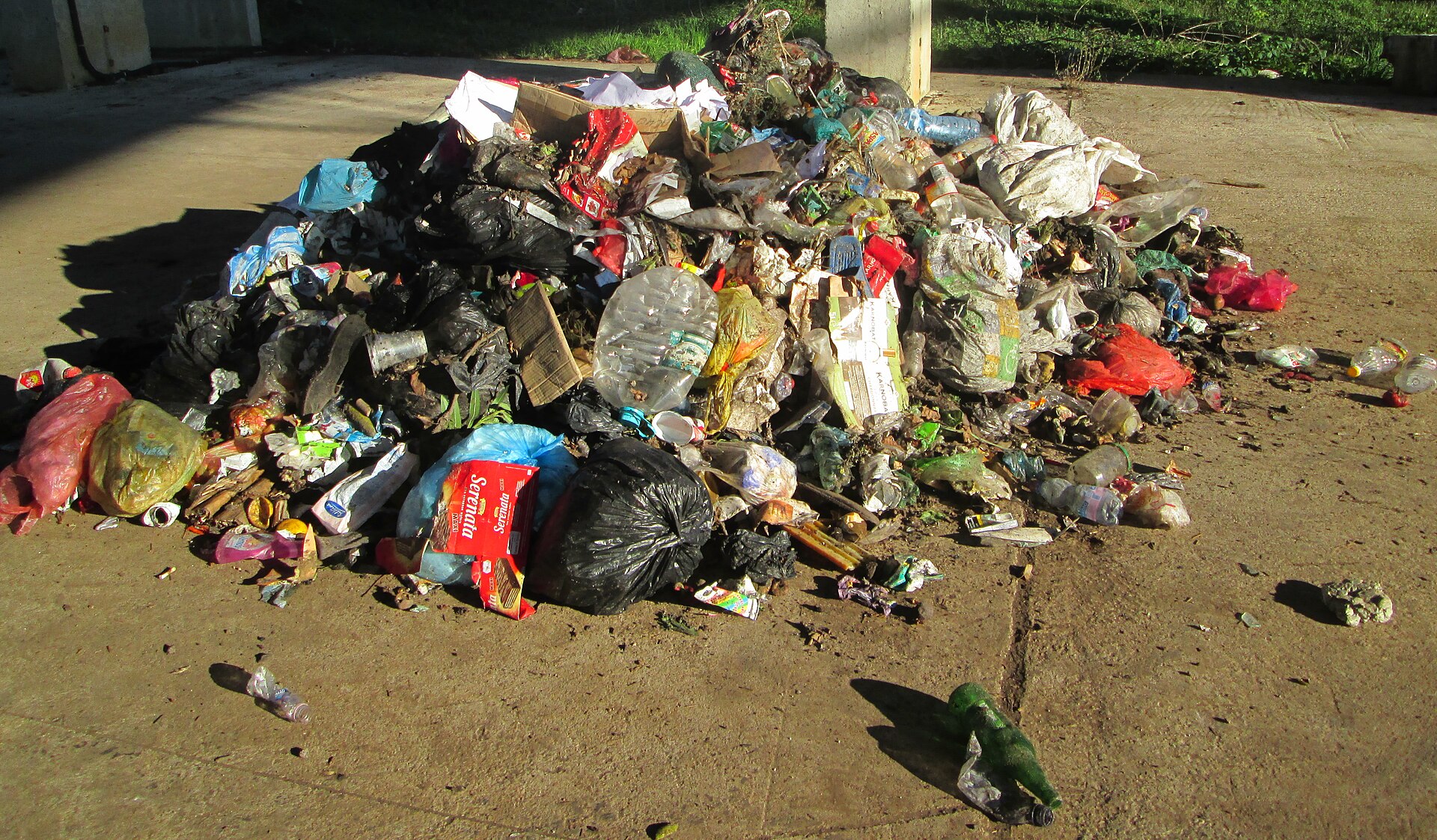
The zabaleen — a Coptic Christian community that has collected, sorted and recycled Cairo''s waste by hand for close to a century — currently handle as much as half the city''s rubbish. Their income comes from pulling recyclables out of mixed waste and selling them on to factories. Their recovery rates on the material they touch are, by most accounts, higher than those of formal systems in far richer cities.
The mechanism of the conflict
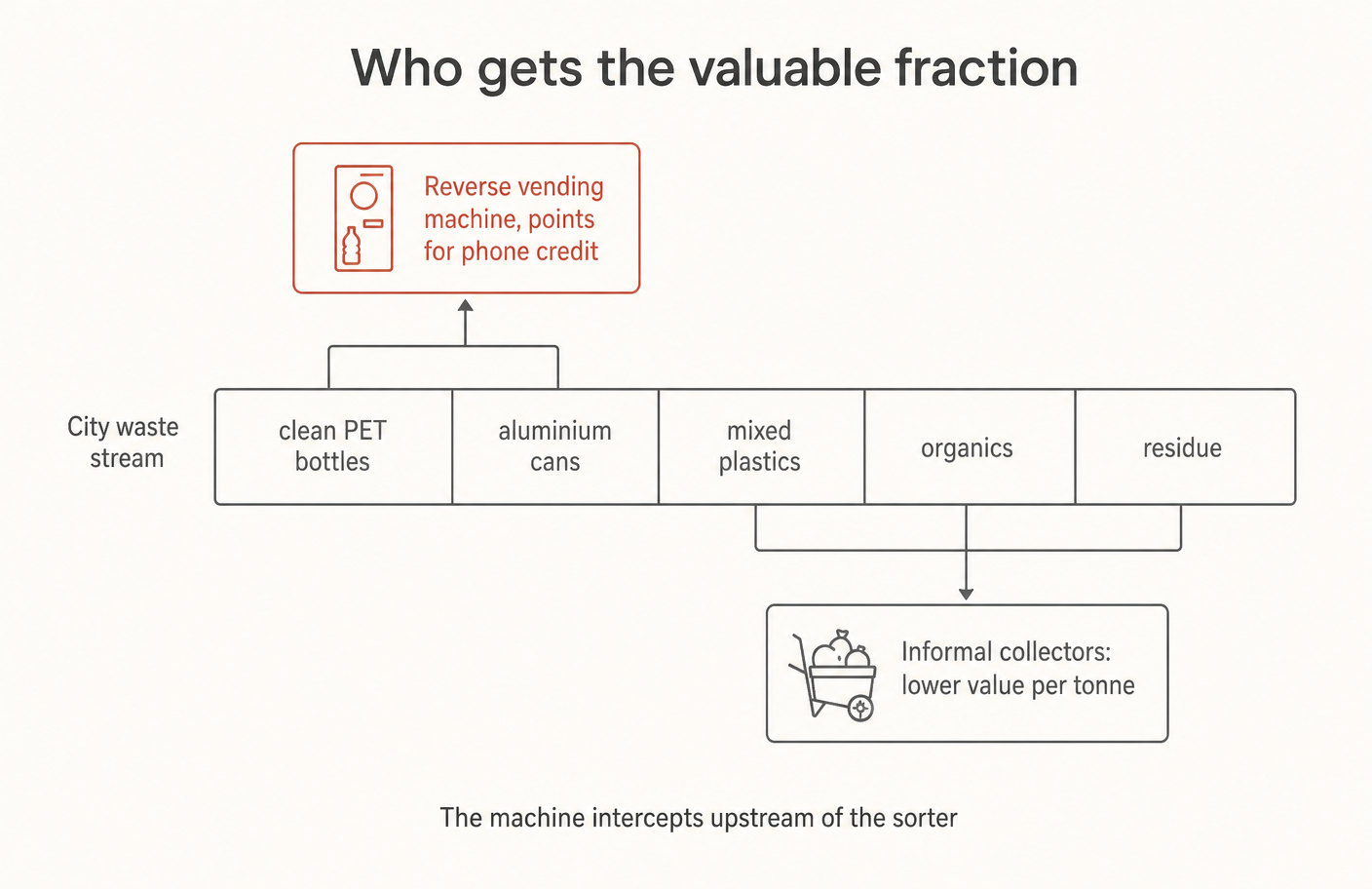
Value in a waste stream is not evenly spread. Clean PET bottles and aluminium cans carry most of the revenue per tonne; organics and mixed residue carry almost none. A reverse vending machine sits upstream of collection and takes exactly the high-value fraction, leaving the rest.
More recycling infrastructure is good for everyone working in recycling.
Here it is a transfer. The 30 to 40 percent margin depends on capturing the highest-value materials — which are the same materials an impoverished informal workforce depends on. The tide does not lift both boats when both are fishing the same fraction.
What has not been published
No environmental impact assessment. No social impact assessment. No integration plan with the informal sector — no buy-back arrangement, no collector-operated machines, no revenue share. Deposit-return systems elsewhere have been designed around informal collectors; nothing indicates that was attempted here.
The scale mismatch
A technology that raises measured recycling rates while lowering the income of the people doing most of the recycling has optimised the metric, not the system.
Cairo generates more than 15,000 tonnes of waste a day in a metropolitan area of 20 million where the World Bank estimates around 60 percent is collected at all. The binding problem is organics and collection coverage. Bottles and cans are the visible, profitable, already-recovered fraction.
References and image credits›
- 01Reuters — Dispute over recycling machines drags struggle over Cairo''s trash into public view
- 02CairoWhispers — Smart Can Bank recycling machines begin operating in Dokki
Photo: Donald Trung, Wikimedia Commons, CC BY-SA 4.0 · Photo: 008all, CC BY-SA 4.0, via Wikimedia Commons · Photo: US Department of Defense, public domain