
A dead lithium-ion battery is not safe in the trash or the blue bin
A battery that no longer powers your device still holds enough energy to start a fire when it is crushed in a collection truck or a sorting line. The recycling symbol on it does not mean curbside.
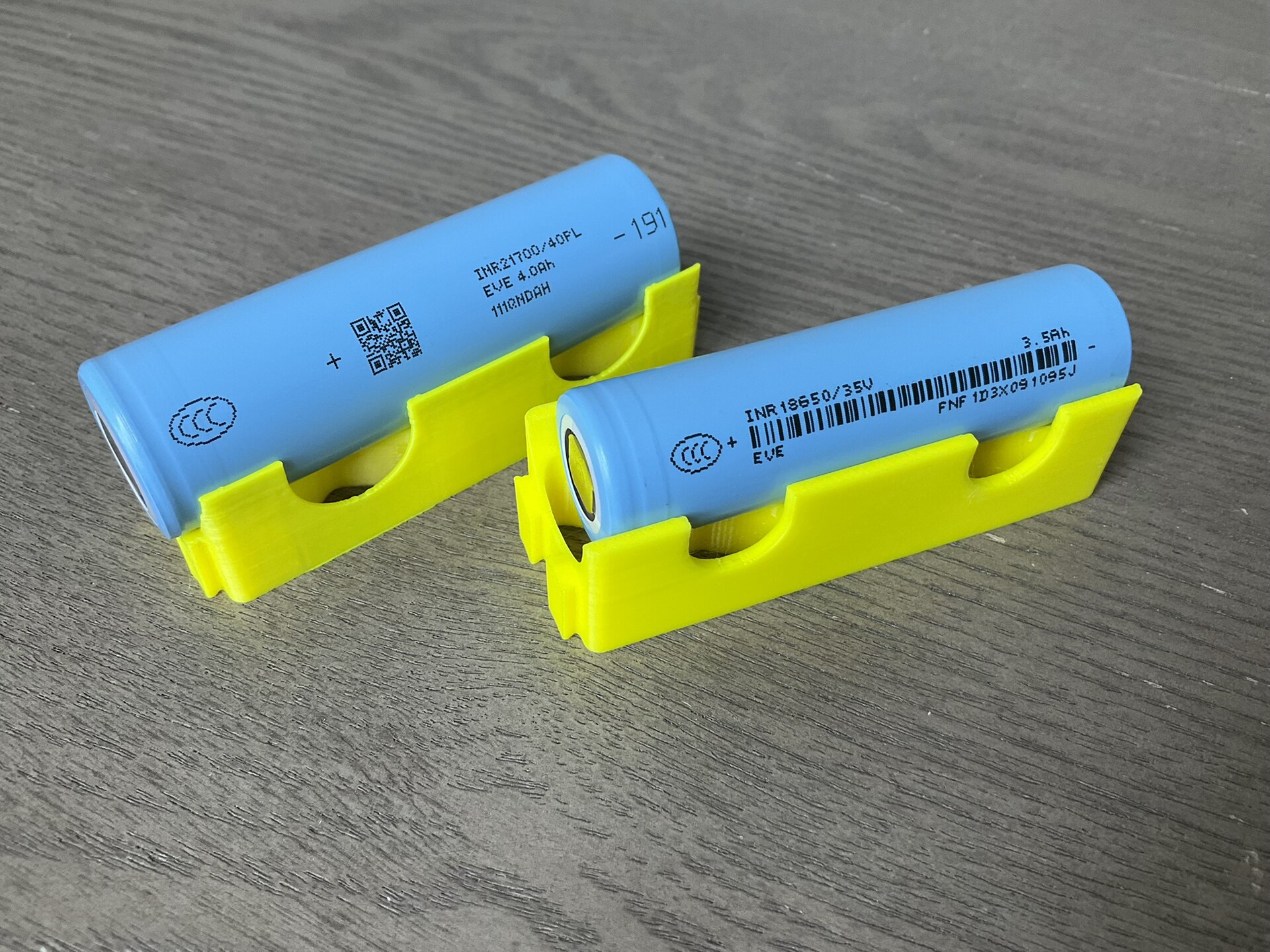
If a phone, power-tool or e-bike battery no longer holds a useful charge - or it has a recycling symbol on it - it can go in the household bin or the blue recycling cart.
EPA says lithium-ion batteries and devices containing them should not go in household garbage or municipal recycling bins. In collection trucks and MRF equipment they can be crushed or punctured, causing a short circuit, thermal runaway and fire. A recycling symbol is not a statement about curbside compatibility.
Why "dead" is the misleading word
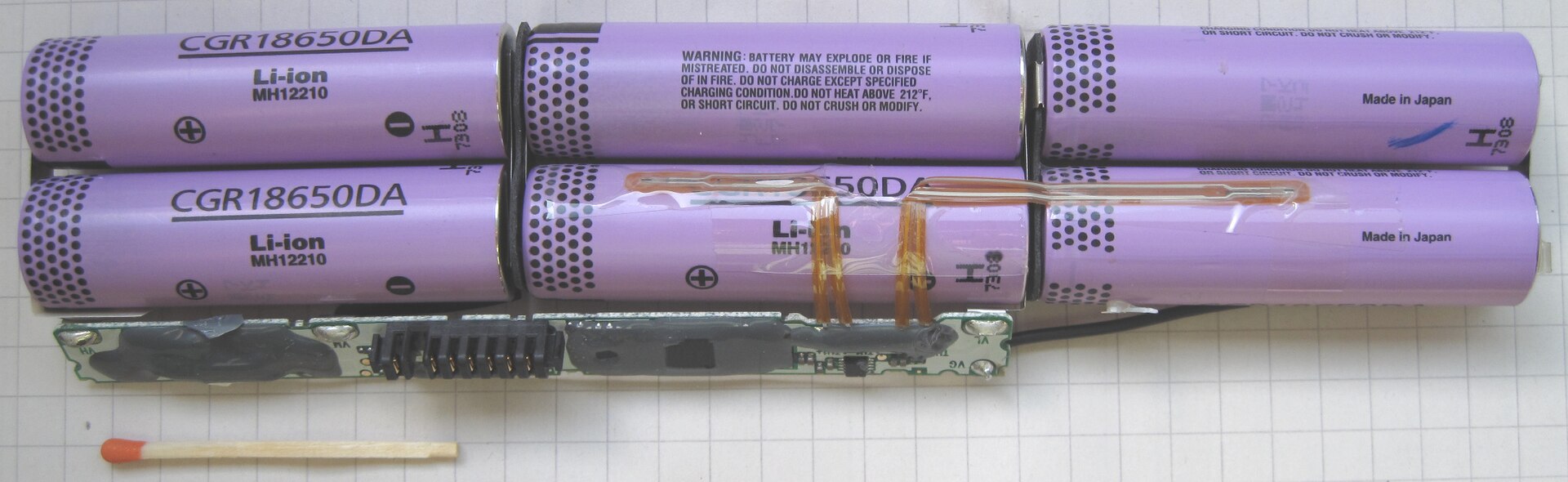
A battery that cannot run a device can still retain enough energy to injure someone or start a fire. "Flat" describes its usefulness to you, not its stored energy or its chemical state.
Mechanical damage is the trigger. Crushing or puncturing shorts the cell internally, heat builds faster than it escapes, and the cell enters thermal runaway - a self-sustaining reaction that neighbouring cells can propagate.
Waste collection is, mechanically, a crushing process. That is the whole problem.

Where the risk actually lands
EPA's 2026 report to Congress on battery collection identifies risk during transport, at landfills and at materials-recovery facilities.
None of those are places where a fire is easy to contain. A MRF is a building full of shredded paper and film plastic, moving on conveyors, with people standing beside them.
What to actually do
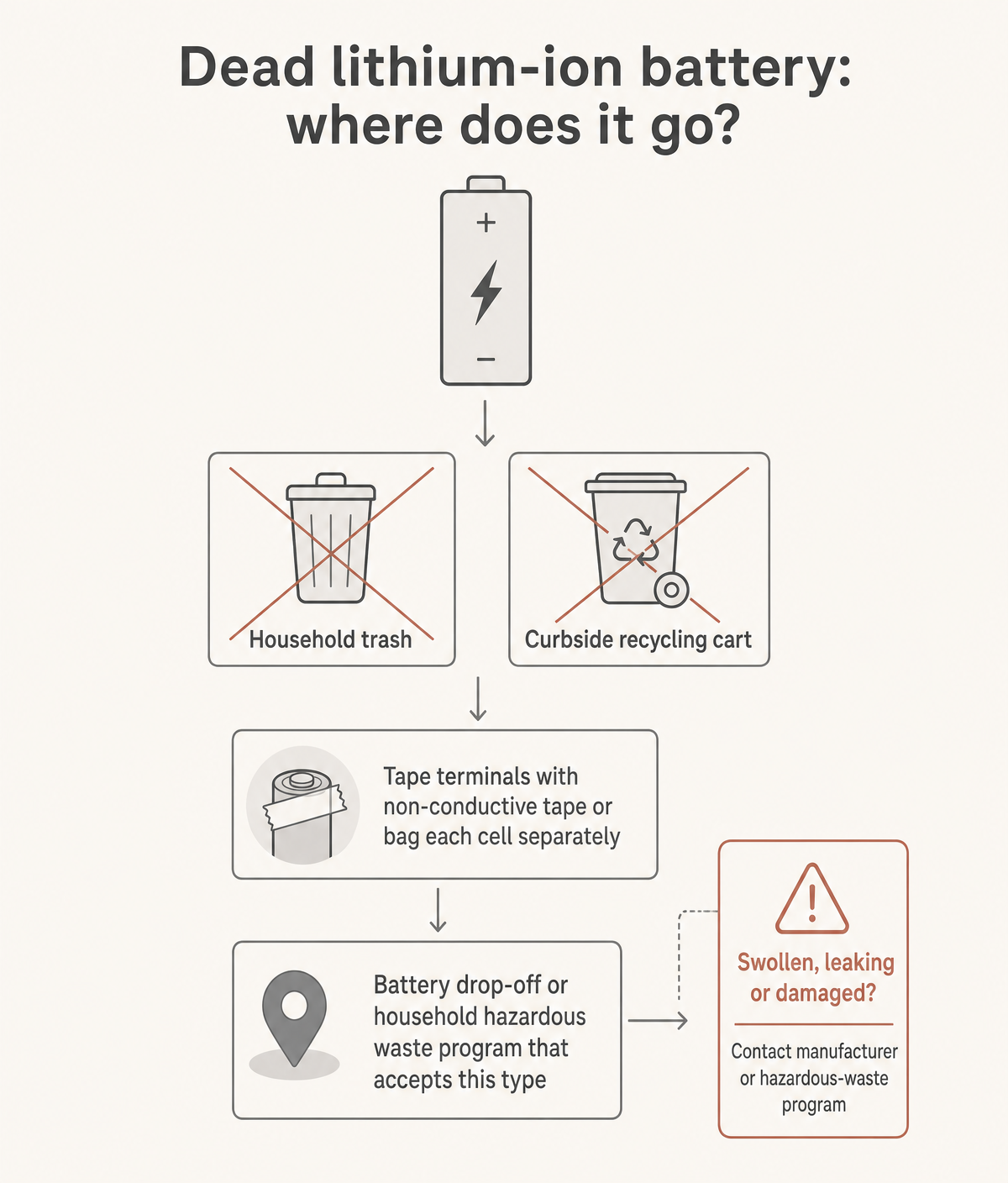
Tape exposed terminals with non-conductive tape, or put each battery in its own plastic bag. This prevents terminal-to-terminal contact in a container of mixed batteries.
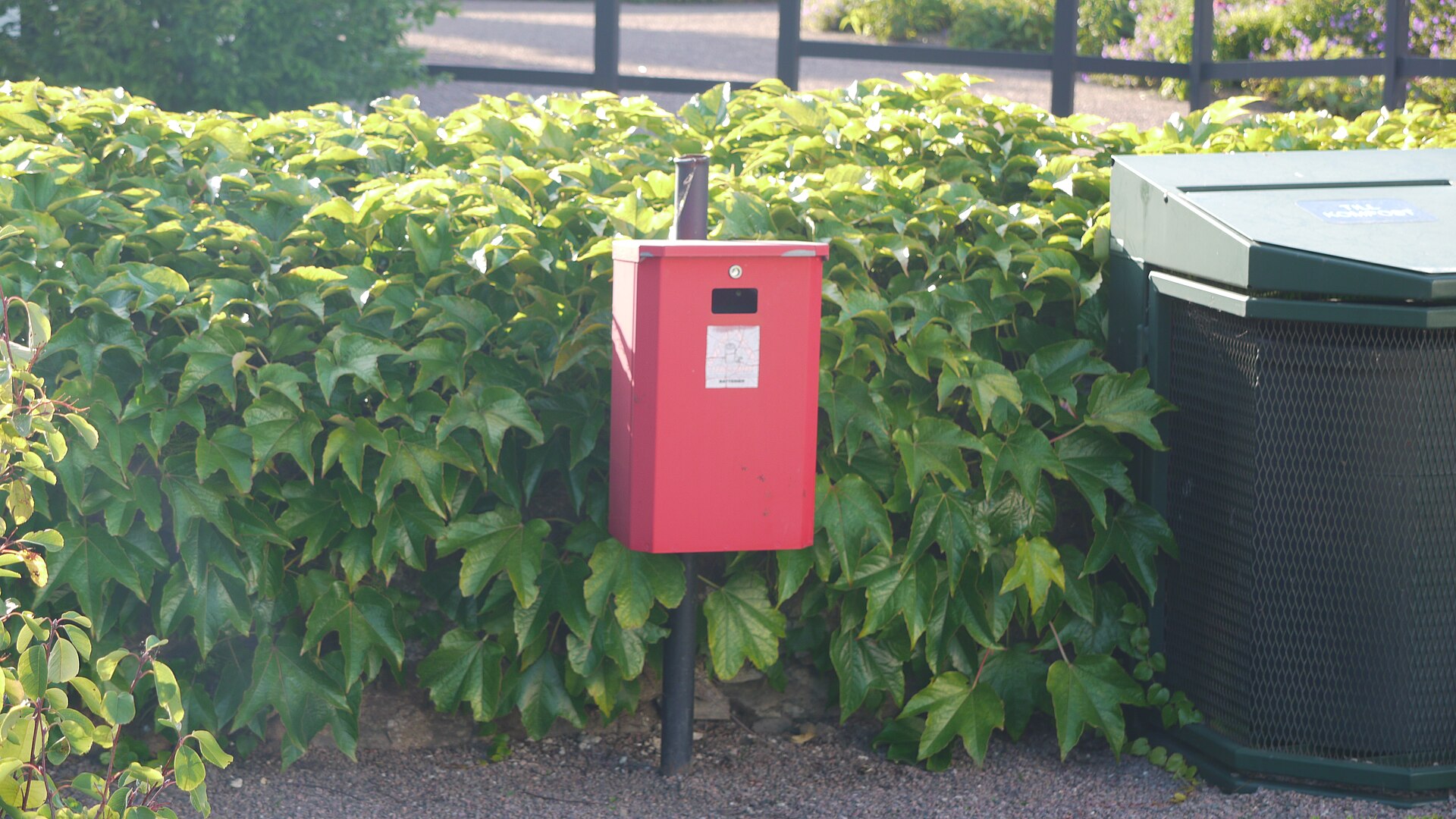
Then use a battery drop-off point or a household-hazardous-waste program that accepts that battery type. The type qualifier matters - acceptance is not universal.
For swollen, leaking or damaged batteries, do not improvise. Contact the manufacturer or the local hazardous-waste program and ask.
The promise
Keeping lithium batteries out of trash and curbside recycling can reduce preventable waste-facility fires and improve safe recovery of valuable battery materials.
Separate collection protects workers and facilities first, and improves material recovery second. Both are worth having, in that order.
The catch
There is no universal drop-off rule. Programs differ on loose cells, embedded batteries, e-bike packs and damaged units.
So the practical instruction is not "take it to the drop-off" - it is "check what your accepting program takes, then take it there." The rule that works everywhere is the negative one: not the trash, not the blue bin.
References and image credits›
- 01U.S. EPA - Used Lithium-Ion Batteries
- 02U.S. EPA - Frequent Questions on Lithium-Ion Batteries
- 03U.S. EPA - Battery Collection Best Practices Report to Congress
Photo: Sevenethics, CC0, via Wikimedia Commons · Photo: Tavo Romann, CC BY 4.0, via Wikimedia Commons · Photo: Lead holder, CC BY-SA 3.0, via Wikimedia Commons · Diagram: The Waste Stack · Photo: Autom, CC BY-SA 4.0, via Wikimedia Commons