
Dirty solvent in, reusable solvent out: the distillation loop behind on-site recycling
A US$25m financing deal for on-site solvent recycling is a good excuse to look at the mechanism itself: how heat, vapour and a condenser separate reusable solvent from everything else - and what the leftover still bottoms actually cost you.
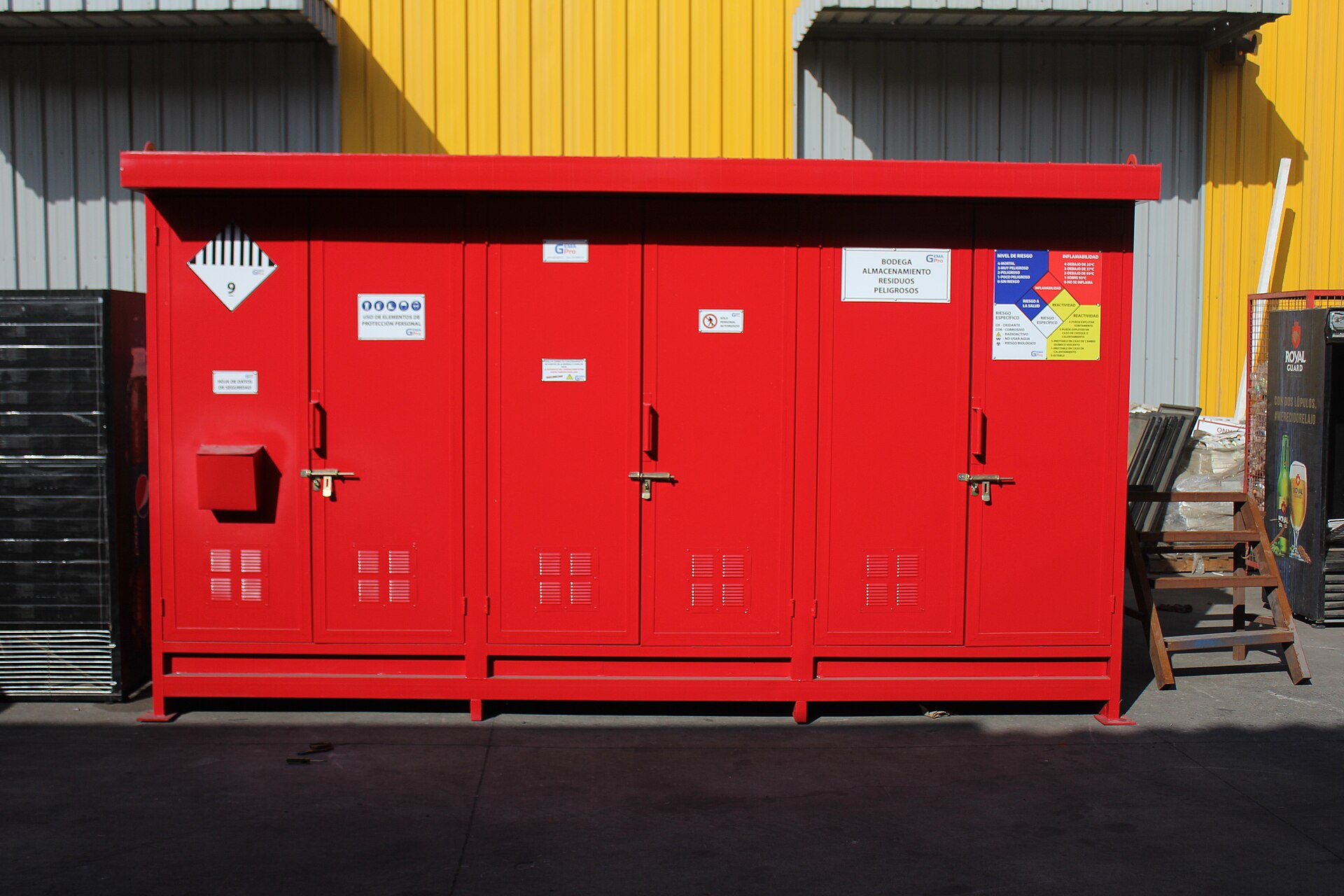
On 6 August, PaceZero announced a US$25 million hardware-as-a-service facility to help CleanPlanet put solvent-recycling systems inside customers' own plants across North America.
The financing is the news. The mechanism underneath it is older than the press release, and it is worth understanding on its own terms, because it explains both what on-site recovery can do and what it cannot.
What is actually in used solvent
A drum of spent solvent is not just contaminated solvent. It typically carries oils, resins, pigments, water and suspended solids picked up from whatever process it was cleaning or dissolving.
That mixture is why recovery is a separation problem rather than a filtration problem. Some of it can be taken out mechanically, and some of it can only be left behind.
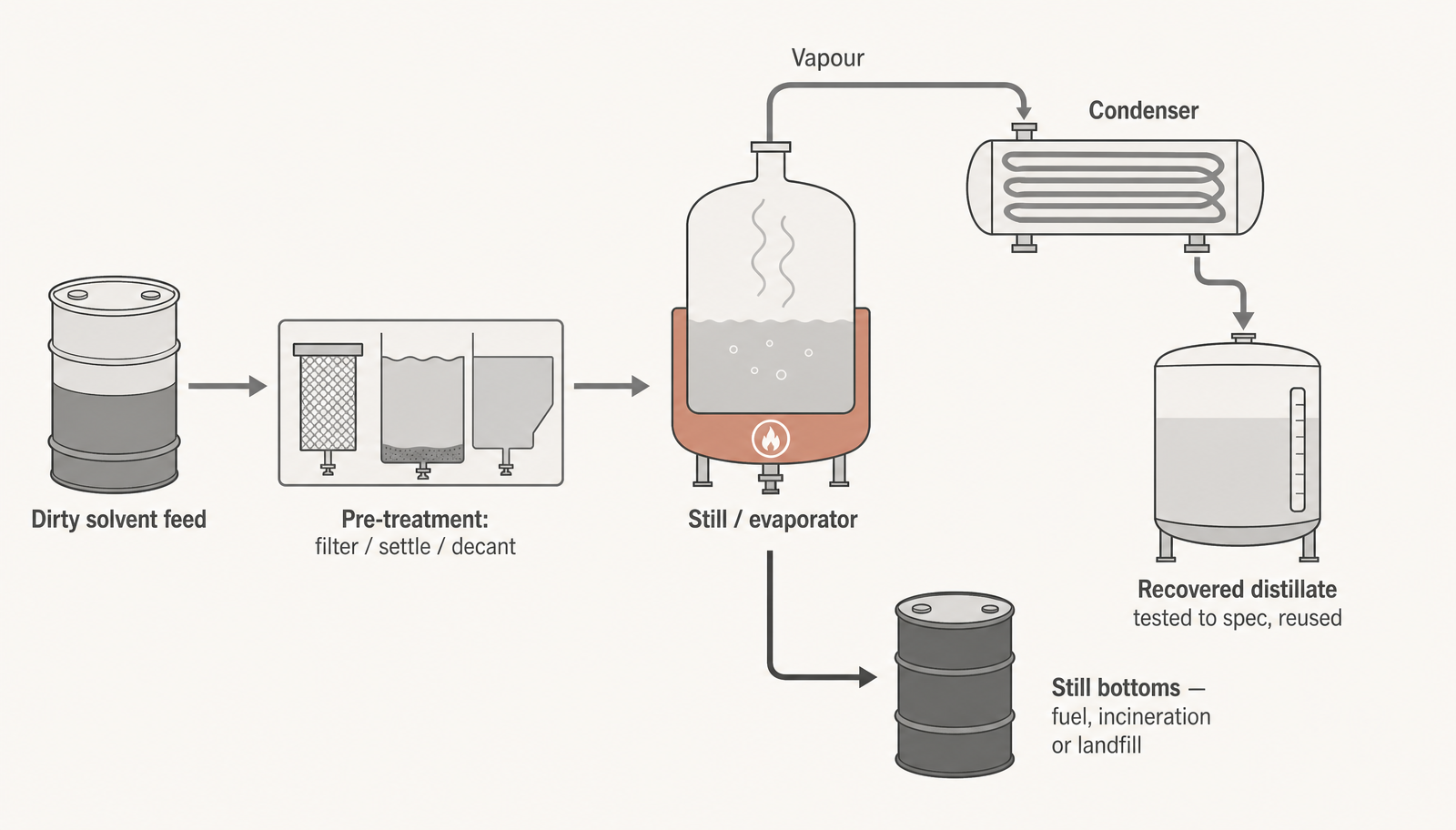
Filters, settling, decanting or centrifuging remove solids and free water before distillation. This is pre-treatment: it protects the still and improves what comes out of it.
The separation step
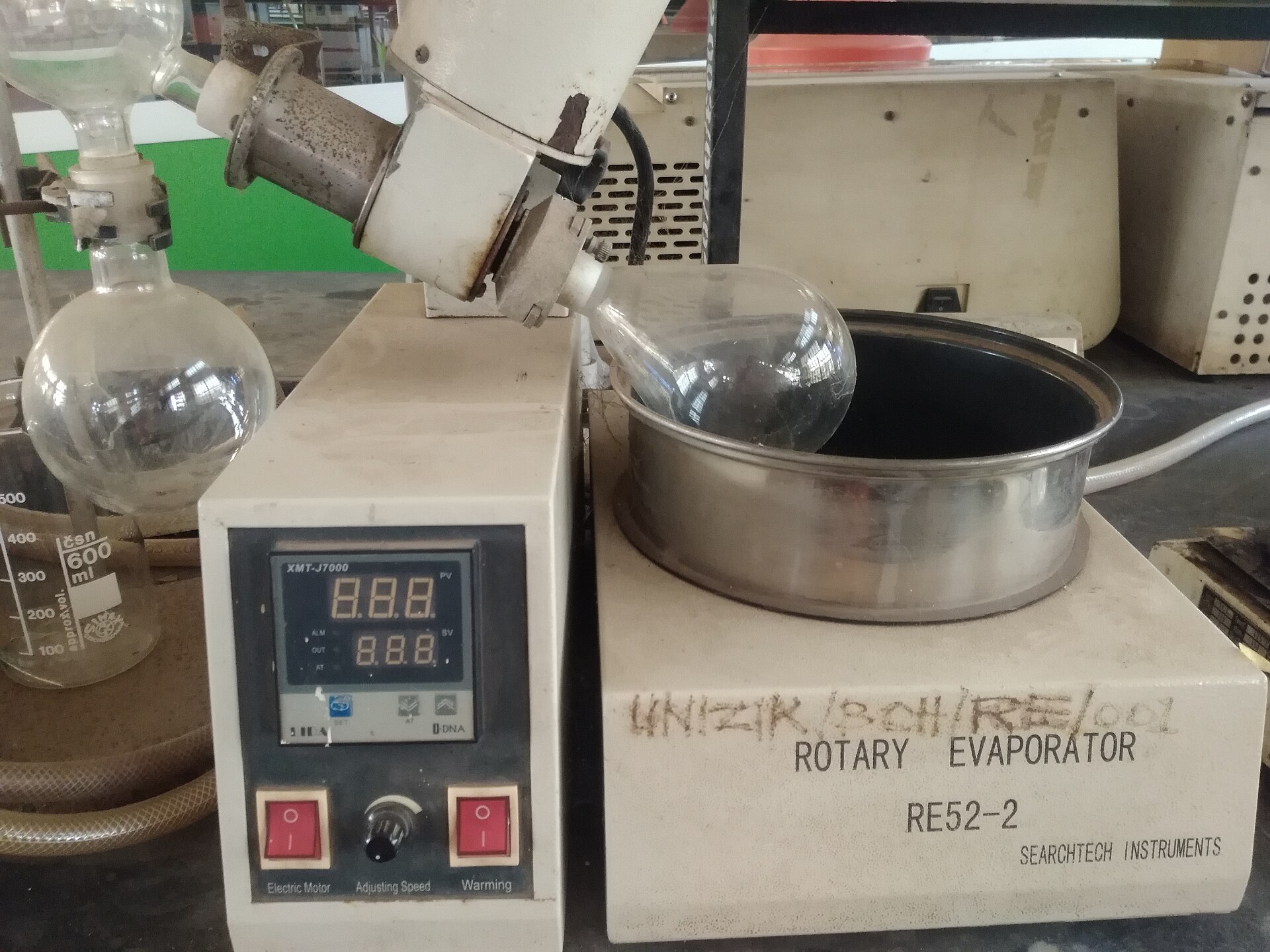
The pre-treated liquid is heated in a still or evaporator. More volatile solvent molecules vaporize; heavier contaminants do not, and stay behind as still bottoms.
The vapour passes through a condenser and returns to liquid. That condensate is the recovered distillate - the thing the whole system exists to produce.
Mixed solvents complicate this. Components with different boiling points may need repeated distillation or a fractionating column to come apart cleanly.
The step people forget: qualification
Recovered solvent is not automatically usable solvent. It is tested against the production specification before it goes back into the process.
That test is the real gate. A recovery system that produces litres of distillate that fail spec has not recycled anything - it has just moved the waste into a different tank.
The output nobody puts on the slide
Still bottoms are not eliminated. They are concentrated.
Whatever did not vaporize - oils, resins, pigments, degraded solvent - is now a smaller, dirtier stream that still requires management: fuel use, incineration, landfill or another permitted treatment route.
What the service model adds
CleanPlanet's offering is not just a still. The company says it combines proprietary distillation with sensors, remote monitoring and maintenance, billed as a monthly fee based on solvent recycled.
That structure matters commercially: it moves capital cost off the customer's balance sheet and ties the vendor's revenue to throughput rather than equipment sales.
The promise
On-site recovery can cut hazardous-waste transport, reduce fresh-solvent purchases and shrink the volume of liquid waste shipped off site. Those are real, measurable effects when the system runs to spec.
CleanPlanet says it recycled more than 20 million pounds of solvent waste in 2025 and avoided more than 30,000 metric tons of greenhouse-gas emissions.
The catch
EPA puts recovery efficiency anywhere from roughly 40% to 99%, depending on contamination and process. That is a wide enough band that "we recycle your solvent" is not a quantitative claim until someone names a number for a specific solvent and a specific feed.
Reclamation systems also carry VOC and particulate emission points of their own. And the 6 August announcement does not disclose throughput, energy use, solvent-specific recovery rates, residue composition, service fees or lifecycle results.
None of that makes the technology unsound. It makes the environmental claim unverified.
What would settle it
Three numbers, per solvent stream: the recovery rate against spec, the energy input per litre recovered, and the mass and fate of the still bottoms. With those, the circularity claim is checkable. Without them, it is a brochure.
References and image credits›
Photo: Gemapro, CC BY-SA 4.0, via Wikimedia Commons · Diagram: The Waste Stack · Photo: Adimora chidinma, CC0, via Wikimedia Commons · Photo: Cccefalon, CC BY-SA 3.0, via Wikimedia Commons