
The molecular clamp that grabs gold when you flip a switch
A University of Illinois team redesigned the extraction molecule itself so the organic liquid conducts its own current. It pulled 89% of the gold out of real e-waste leachate — with one to two orders of magnitude fewer reagents.
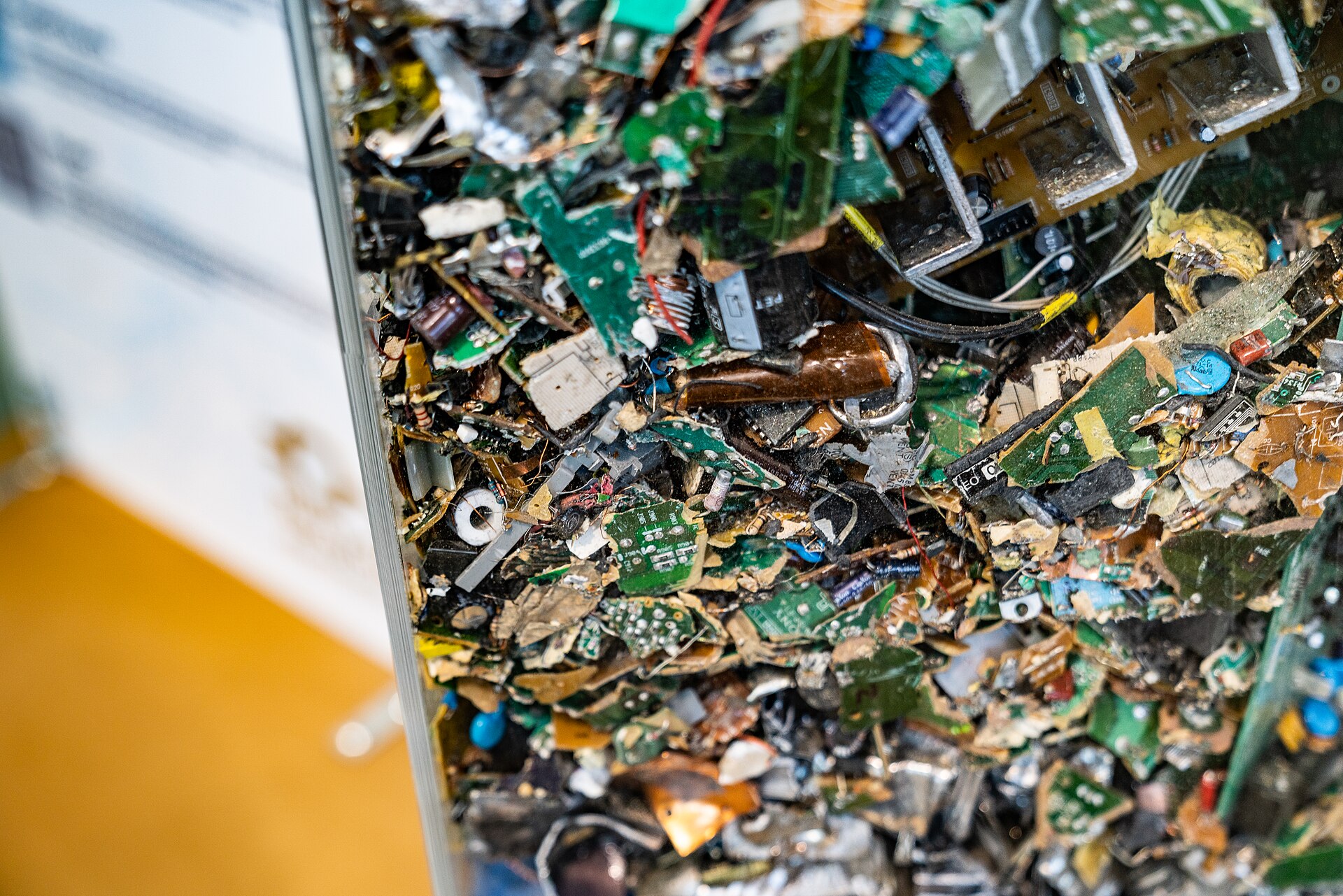
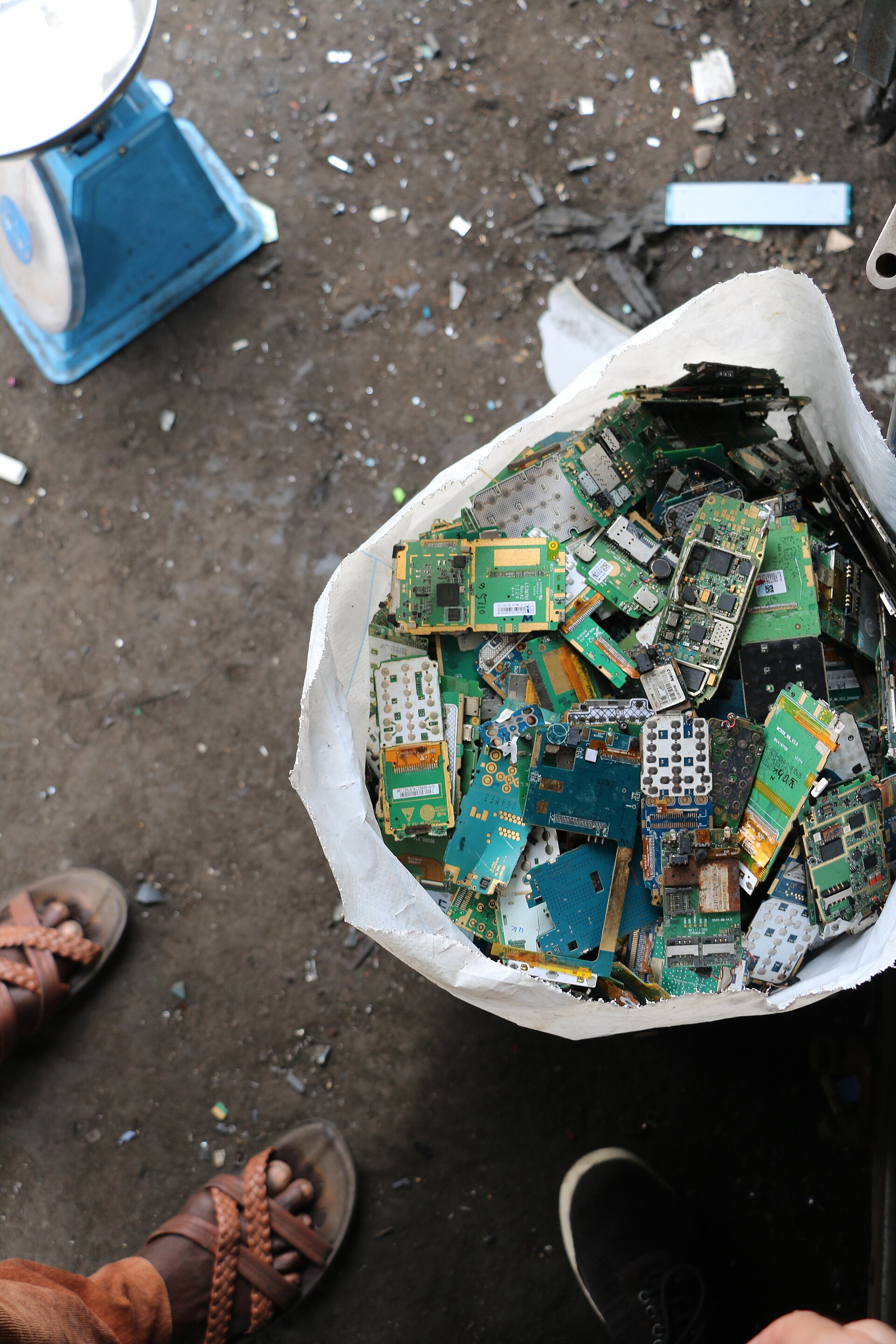
Gold recovery from scrap electronics has always been a chemistry problem dressed up as a recycling problem. The metal is there — a tonne of circuit boards carries far more gold per kilo than a tonne of ore — but getting it out cleanly has meant pouring reagents into the process at every step.
A group at the University of Illinois Urbana-Champaign has been chipping away at that, and their newest result changes the molecule rather than the machine.
The step everyone is trying to delete
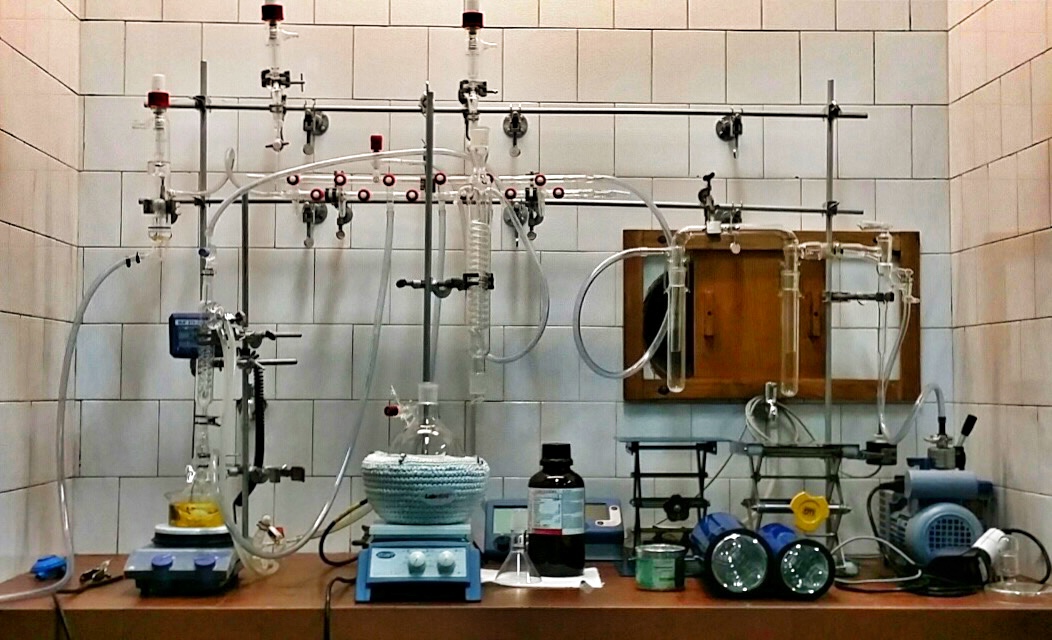
Conventional recovery runs on liquid–liquid extraction. Dissolve the boards in acid to make a metal-rich leachate, then add organic extractants plus acids and bases to shuttle the gold into an oil-like phase and back out again. It works. It also burns reagents continuously, and the reagents are most of the cost and nearly all of the waste.
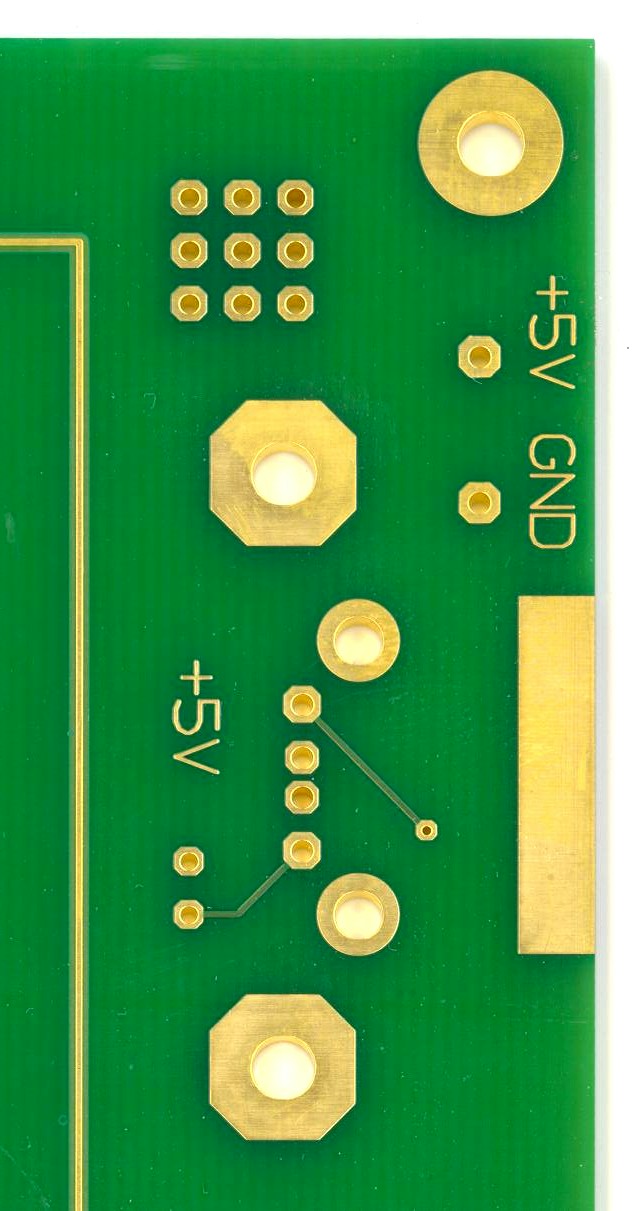
The lab's 2024 work, an electrified process they called e-LLE, showed that electricity could stand in for most of those acids and bases: apply a charge, the extractant grabs the metal; reverse it, the extractant lets go. Fewer chemicals, same shuttle.
But it still needed one helper chemical — a supporting electrolyte to make the organic phase conduct at all.
Baking the conductivity into the molecule
The new extractant, published in ACS Energy Letters in July 2026, is two things bolted together.
One half is a ferrocene redox centre — an iron-sandwich compound that flips oxidation state cleanly and reversibly when you add or remove electrons. That is the switch.
The other half is a permanently charged ammonium group. That is the quiet innovation. Because the molecule already carries a fixed charge, the organic liquid conducts electricity on its own. The extractant is its own electrolyte. The last helper chemical disappears not because it was replaced, but because it was designed out.
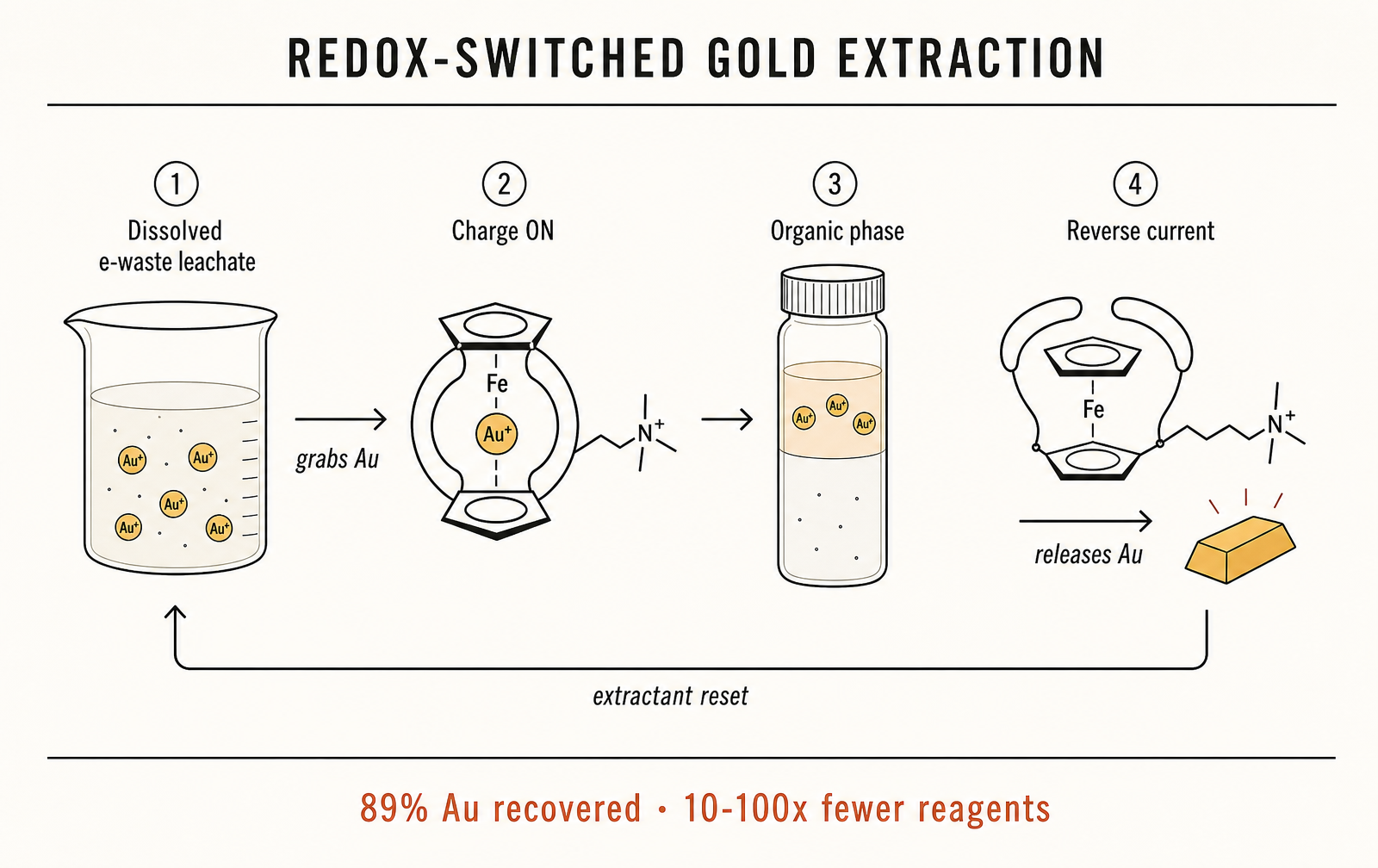
Charge it one way and the molecule captures a gold complex and carries it across the phase boundary. Reverse the signal and it releases the metal and resets. No reagent is consumed to make either half of that cycle happen.
Why this is a materials result, not a process result
Most "cleaner recycling" announcements optimise equipment: a better column, a smarter sequence, a heat-integration trick. This one changes the working molecule and lets the process simplify around it. That distinction matters, because molecular design principles travel. If a ferrocene-plus-fixed-charge architecture works for gold, the same logic can be tuned for palladium, platinum or copper by swapping the binding site.

What is not yet demonstrated
89% is a good number and a lab number. Competing sorbent approaches report figures closer to 99%, so on recovery alone this is not the leader — its advantage is what it does not consume.
The pre-treatment is unchanged: the boards still have to be dissolved in acid before any of this begins, which means the dirtiest part of the chain is still there.
Selectivity is the real test. Synthetic leachates are clean; actual e-waste leachate is dominated by copper, iron and nickel at concentrations thousands of times higher than the gold. A clamp that also grabs copper is a copper extractant with a gold hobby.
And there is no data on the thing industrial buyers ask about first: how many thousands of redox cycles the molecule survives before it degrades, and what it costs per kilogram at throughput.
The honest position
This is a well-aimed piece of molecular engineering that removes a real consumable from a real bottleneck. It is not a plant, a price or a proven separation against dirty feed.
Urban mining does not fail because nobody can dissolve gold. It fails because the clean route costs more than the dirty one. Anything that deletes a consumable is attacking the correct number.
References and image credits›
- 01Earth.com — electrically controlled molecular clamp for gold recovery
- 02Economic Times / EurekAlert — redesigned molecule removes the remaining chemical step
- 03Xiao Su group, University of Illinois Urbana-Champaign — electrochemically mediated separations
Photo: Tony Webster, CC BY 2.0 · Photo: Ulfbastel, public domain · Photo: CC0 · Photo: Veeblefetzer, CC BY 4.0 · Photo: Miha Bukleski, CC BY 4.0 · Photo: Fairphone, CC BY-SA 2.0