
The EU Right to Repair Covers Less Than the Headlines Suggest
The directive is a real obligation with real teeth. It also applies to a short list of product categories, and the biggest driver of e-waste volume — cheap devices with glued-in batteries — largely sits outside it.

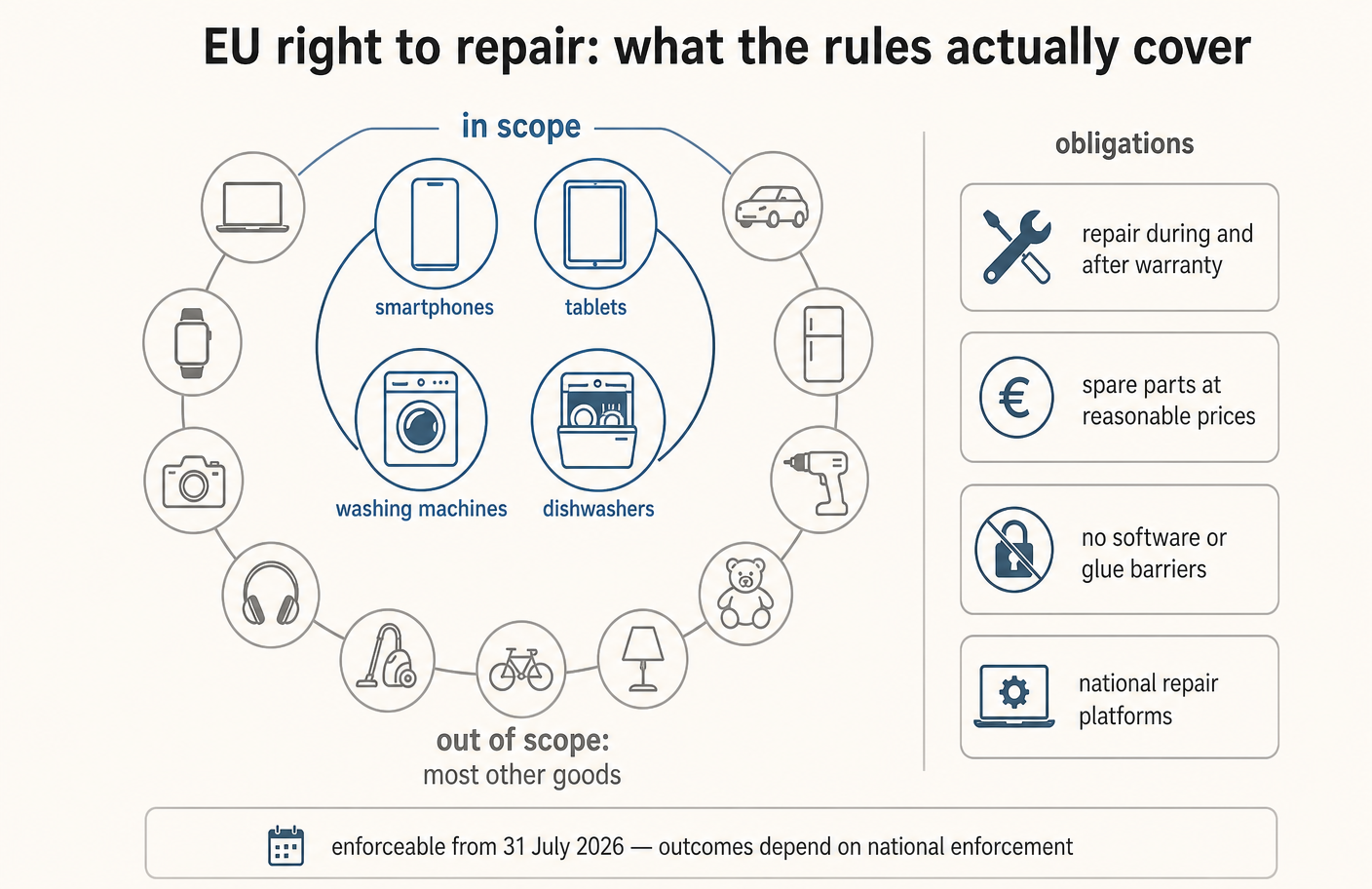
The EU right-to-repair directive obliges manufacturers to repair certain products within the legal guarantee period and beyond it, to supply spare parts at reasonable prices, and to stop using contractual or software techniques that block independent repair. That is meaningful and enforceable.
It is also scoped.
What is inside the scope
Products covered by existing ecodesign repairability requirements: washing machines, dishwashers, refrigerators, displays, welding equipment, vacuum cleaners, servers, and — through separate regulation — smartphones and tablets, which carry parts-availability and battery-endurance obligations.
What is outside it
Everything small and cheap. Wireless earbuds. Disposable vapes. Electric toothbrushes. Bluetooth speakers. Smart-home sensors. Toys with embedded lithium cells. Power banks.
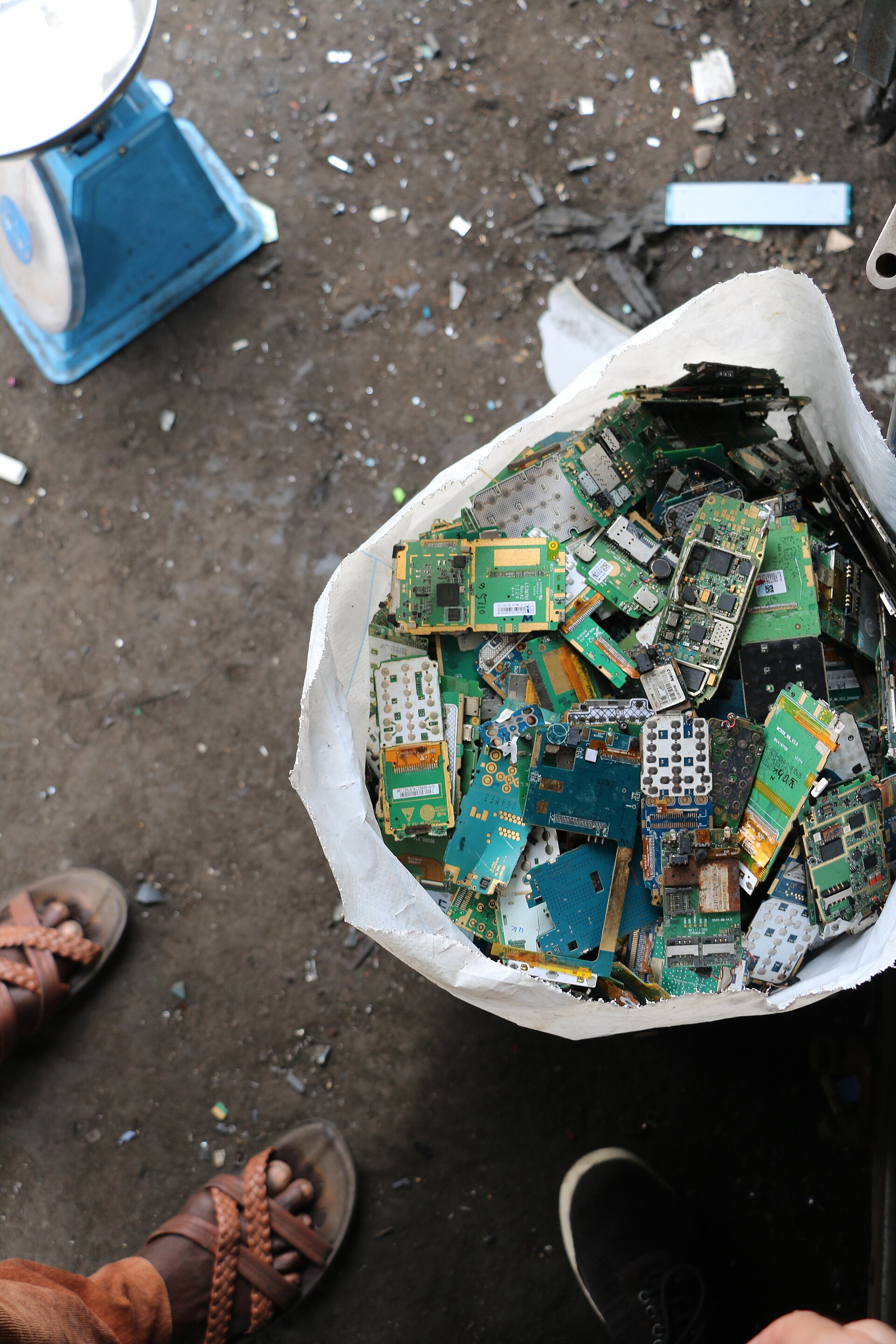
By mass these are minor. By unit count and by fire risk in waste facilities they are the fastest-growing part of the problem, and by design most of them cannot be opened without destroying them.

The EU has established a right to repair for consumer electronics.
It has established repair obligations for a defined list of categories. The high-volume, low-cost devices driving e-waste growth and facility fires are mostly not on that list.
The three enforcement gaps
The economic reality is unchanged for most products: repair costs more in labour than replacement costs in retail. Legislation that does not touch that ratio changes behaviour slowly.
"Reasonable price" is undefined. A manufacturer that prices a display assembly at 70% of the device price has complied with the letter and defeated the purpose.
Parts availability is not parts affordability, and neither is parts pairing. Serialised components that refuse to function unless authorised by manufacturer software remain a live restriction, addressed unevenly across product categories.
Cross-border enforcement is national. A directive is implemented by 27 member states with 27 enforcement capacities, and repair obligations are not high on most market-surveillance priority lists.
What it does achieve
It normalises repair as a default expectation rather than a niche. It creates a legal hook for independent repairers who previously had none. It forces documentation and part numbers into the open, which benefits the whole repair ecosystem including refurbishers and recyclers. And the smartphone battery-endurance requirements, in particular, change product design decisions directly.
Those are worthwhile. They are just smaller than "the EU has fixed e-waste", which is roughly how the coverage read.
References and image credits›
Photo: Ilvy Njiokiktjien, CC BY-SA 3.0 · Photo: CC0 · Photo: Fairphone, CC BY-SA 2.0