
"30% Recycled Content" Under Mass Balance Might Mean None in Your Bottle
Mass balance accounting lets a producer allocate recycled input to selected outputs. The molecules are real somewhere in the plant. They are not necessarily in the product carrying the label.
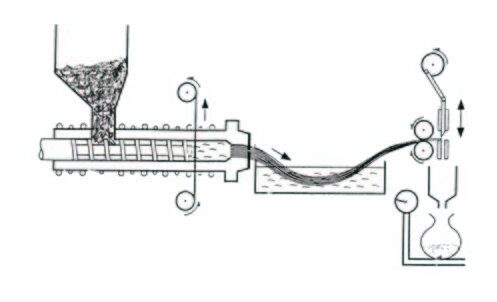
Chemical recycling feeds waste plastic into a cracker alongside fossil naphtha. Once inside, the streams are indistinguishable — that is the point of a cracker. So the industry needed a way to describe the recycled fraction of an output that is physically a blend.
The answer is mass balance: track recycled input at the plant gate, then allocate an equivalent quantity to chosen outputs. If 10% of the feed was pyrolysis oil from waste plastic, you may sell 10% of your production as "100% recycled" and the remaining 90% with no claim at all.
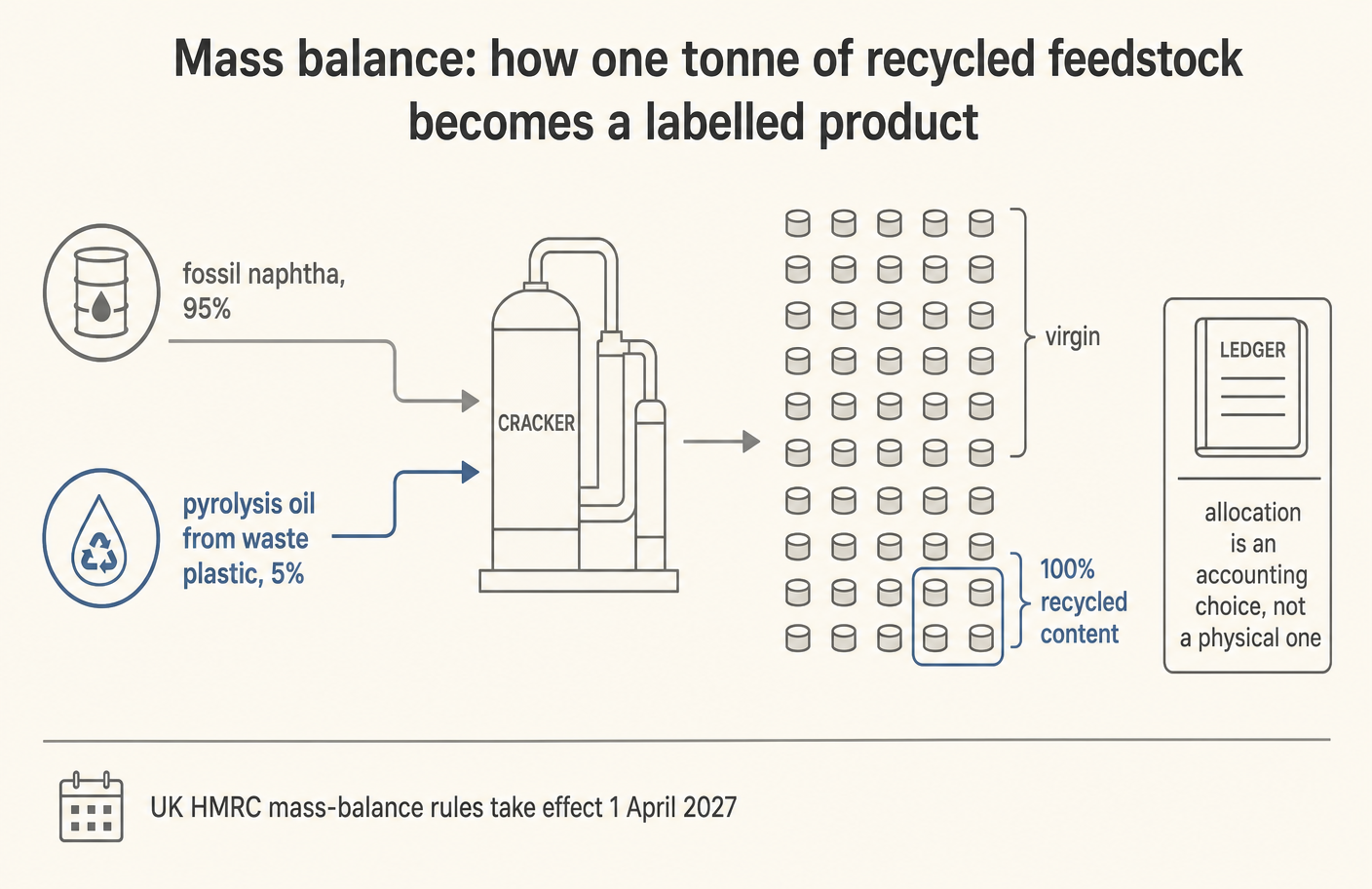
What is legitimate about it
Blending is unavoidable. Requiring physical segregation of recycled molecules through a steam cracker would mean building separate crackers, which nobody will do for volumes this small. The same logic underpins renewable electricity certificates and certified sustainable palm oil, and in those markets it demonstrably moved investment.
Where it goes wrong
Free attribution. Some schemes let a producer concentrate the entire recycled quantity into a small premium product line, so a food-contact bottle carries a 100% claim while the bulk output carries nothing. Nothing physical has changed for either.
Fuel-use exemption. Pyrolysis oil entering a cracker is partly burned as process fuel rather than becoming polymer. Certain accounting rules still allow that portion to be counted toward recycled content, which credits material that was combusted.
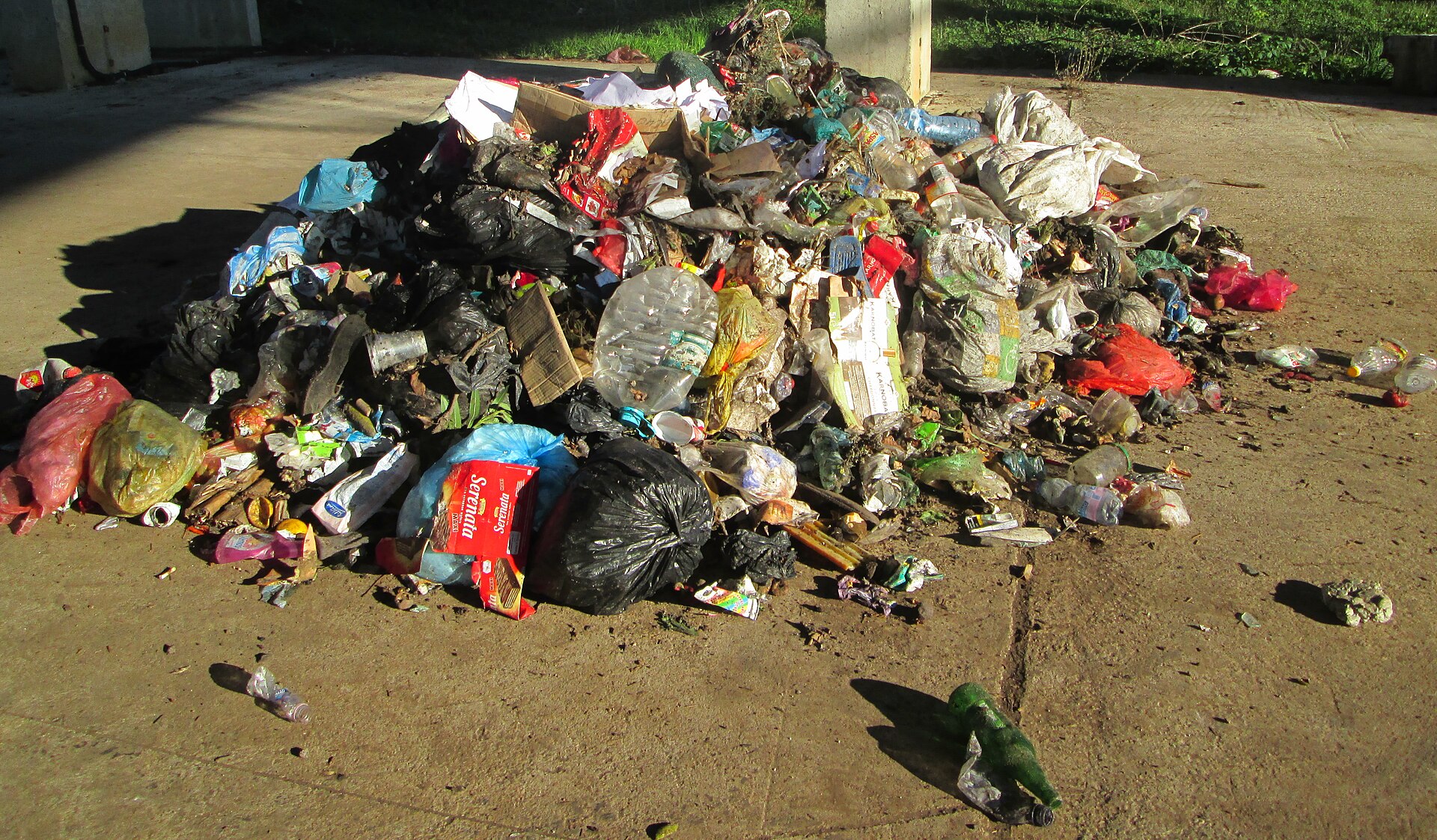
Yield loss. Pyrolysis of mixed plastic waste typically yields 60-80% oil, of which only a fraction becomes usable naphtha after upgrading. If the ledger counts waste at the plant gate rather than usable feedstock, the claim overstates the plastic actually displaced.
This product contains 30% recycled plastic.
The producer processed enough recycled feedstock plant-wide to allocate 30% to this product line. The physical recycled fraction in the item you are holding is unknown and may be zero.
How to read a claim
Three questions separate a meaningful claim from a weak one.
Which allocation rule? "Proportional" or "controlled blending" means every output carries the same fraction — that is the honest version. "Free attribution" or "fuel-exempt" means the number on the label was chosen.
Certified by whom, to which standard version? ISCC PLUS and RSB both permit multiple allocation approaches; the certificate name alone tells you nothing.
Counted at which point? Waste in, oil out, or polymer out. The three numbers can differ by a factor of two.
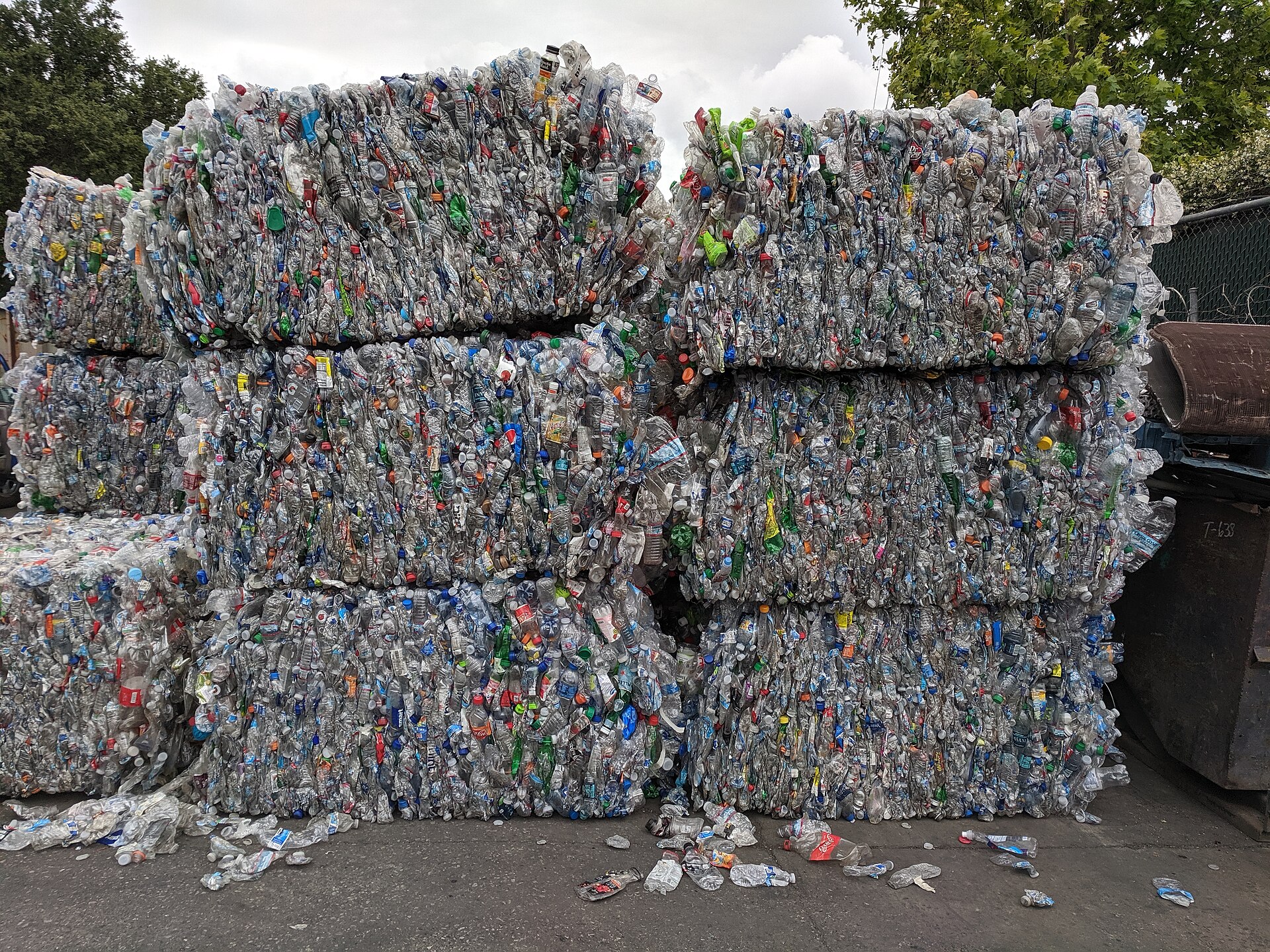
Mechanical recycling has no equivalent ambiguity: recycled PET flake in a bottle is physically there and can be measured. That difference is why regulators in several jurisdictions are moving to restrict mass-balance claims on consumer packaging while allowing them in business-to-business supply.
References and image credits›
- 01Ellen MacArthur Foundation — enabling a circular economy for chemicals with mass balance
- 02ISCC PLUS mass balance guidance
Photo via Wikimedia Commons, CC BY-SA · Photo via Wikimedia Commons, CC BY-SA 4.0 · Photo: 008all, CC BY-SA 4.0, via Wikimedia Commons