
EverestLabs Navigator: Agentic AI for MRFs, Announced by Press Release
Three stacked AI layers, a claimed 30 percent throughput gain, and one named customer. The architecture is plausible. The evidence is a launch announcement.
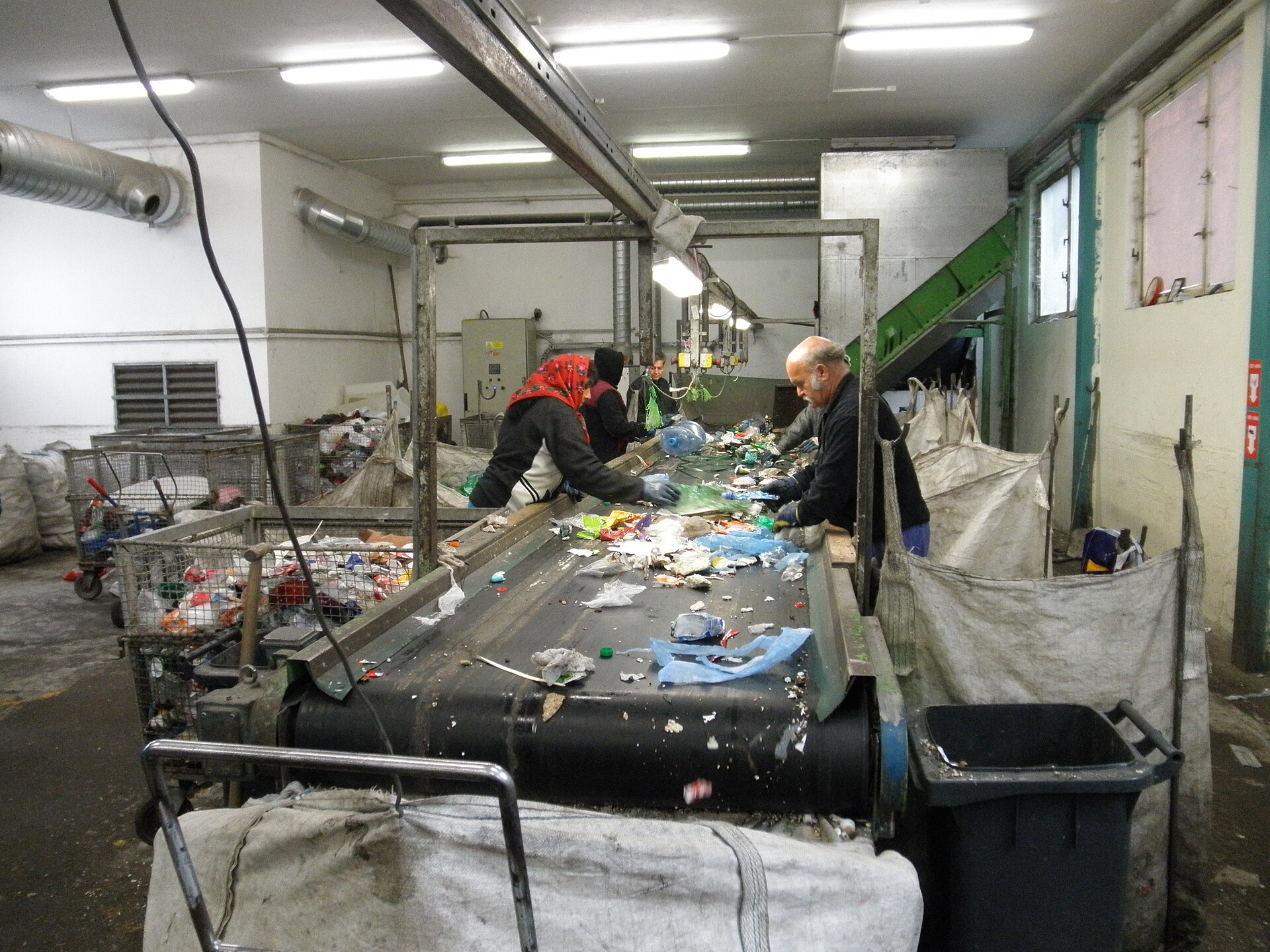
Materials recovery facilities are genuinely under-instrumented. Most run on belt speeds set by feel, maintenance schedules set by calendar, and recovery rates known only after the bales are sold. So a software layer that watches the whole plant is not a silly idea. The question is what has been demonstrated.
The architecture
EverestLabs launched Navigator on 24 August 2026, calling it the first multi-agent AI platform built for MRFs. Three layers:
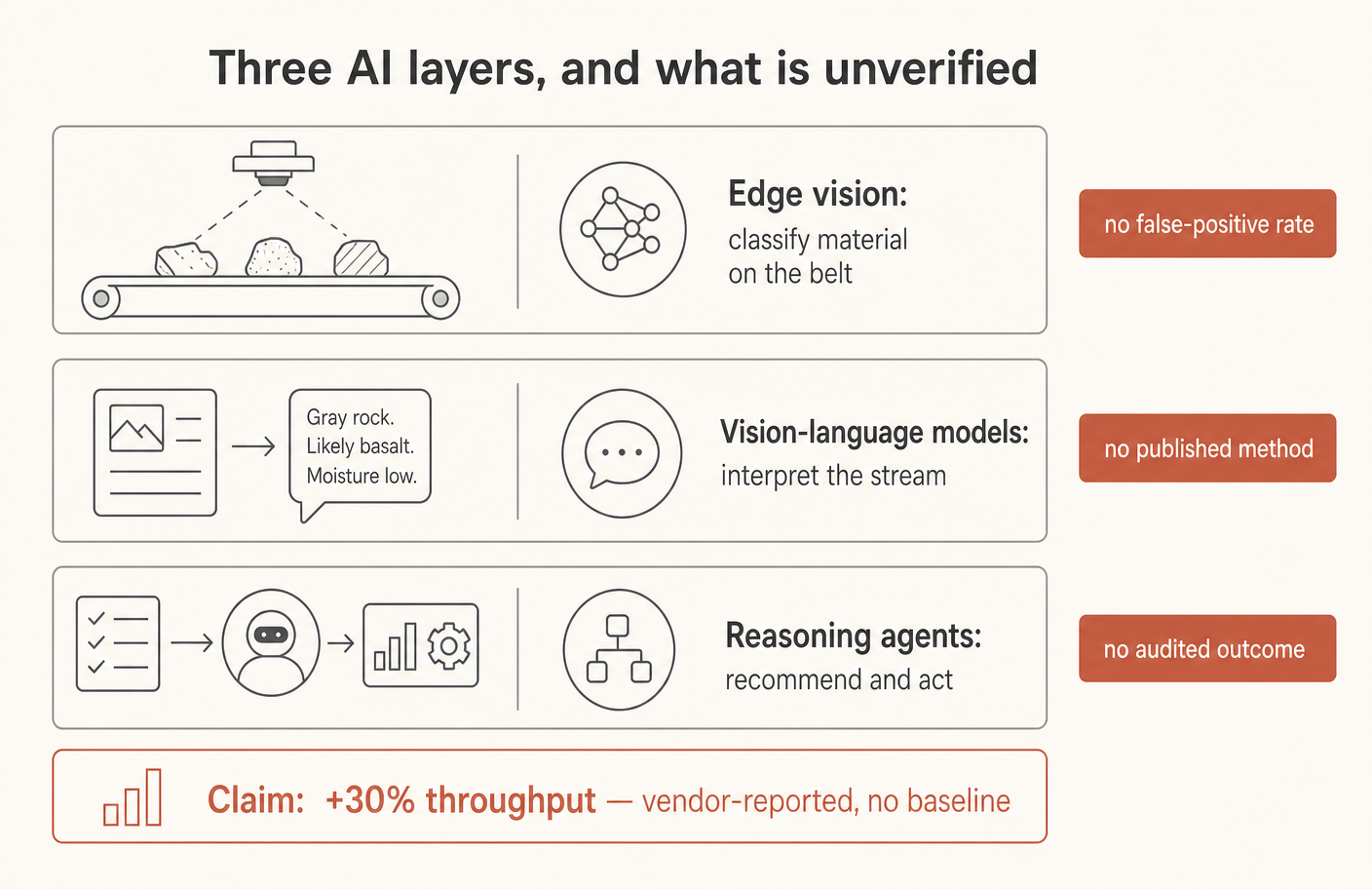
Edge vision models classify material on the belt in real time. Vision-language models sit above them and interpret the stream in context — not just "PET bottle" but "PET fraction rising, film contamination climbing on line two." Reasoning agents then recommend and execute actions: change a sorter setting, flag a bearing, slow a belt.

It plugs into existing plant control networks without retrofits, integrating with Schneider Electric's EcoStruxure and AVEVA stack and with Pellenc ST optical sorters.
The claims
"Millions of dollars" in avoided downtime. A framing statistic that 93 percent of raw materials are never reused, offered without citation. And a plant manager quote describing "a fully AI-run and managed plant."
What is missing
A baseline. A 30 percent throughput gain against what — the same plant last quarter, a plant with different feedstock, a theoretical maximum? Feedstock composition swings seasonally by more than 30 percent on some lines. Without a stated comparison method the number is unfalsifiable.
A false-positive rate. The whole system rests on classification. If the edge model misreads 3 percent of items and the agent acts on those reads at millisecond cadence, you have automated a small error into a continuous one.
Navigator increases throughput by up to 30 percent and saves millions in downtime.
Both figures are vendor-reported with no published methodology, no baseline, no third-party audit, and one named site. That is a launch announcement, not evidence.
The traceability question underneath
An unregulated proprietary model making real-time sorting decisions, with no disclosure of training data or error rates, is a governance gap before it is a technology gap.
Navigator's value proposition includes documenting where material went. Once that documentation flows through integrations into certification and recycled-content accounting, it inherits the attribution problems we covered in the mass-balance piece. A system that reports recovery is not the same as a system audited on recovery.
What would change the assessment
A published before-and-after from two plants with stated feedstock, stated measurement windows and an independent auditor. That exists in other process industries. It does not exist here yet, and until it does the honest description is a promising architecture with no results attached.
References and image credits›
Photo: Wikimedia Commons, CC BY-SA 4.0 · Photo: Shixart1985, Wikimedia Commons, CC BY 2.0