
Worn Again Has a Polycotton Recycling Plant. Half of It Is Running
Separating polyester from cotton is textile recycling's central unsolved problem. Worn Again's Swiss facility has module one commissioned and module two on paper.
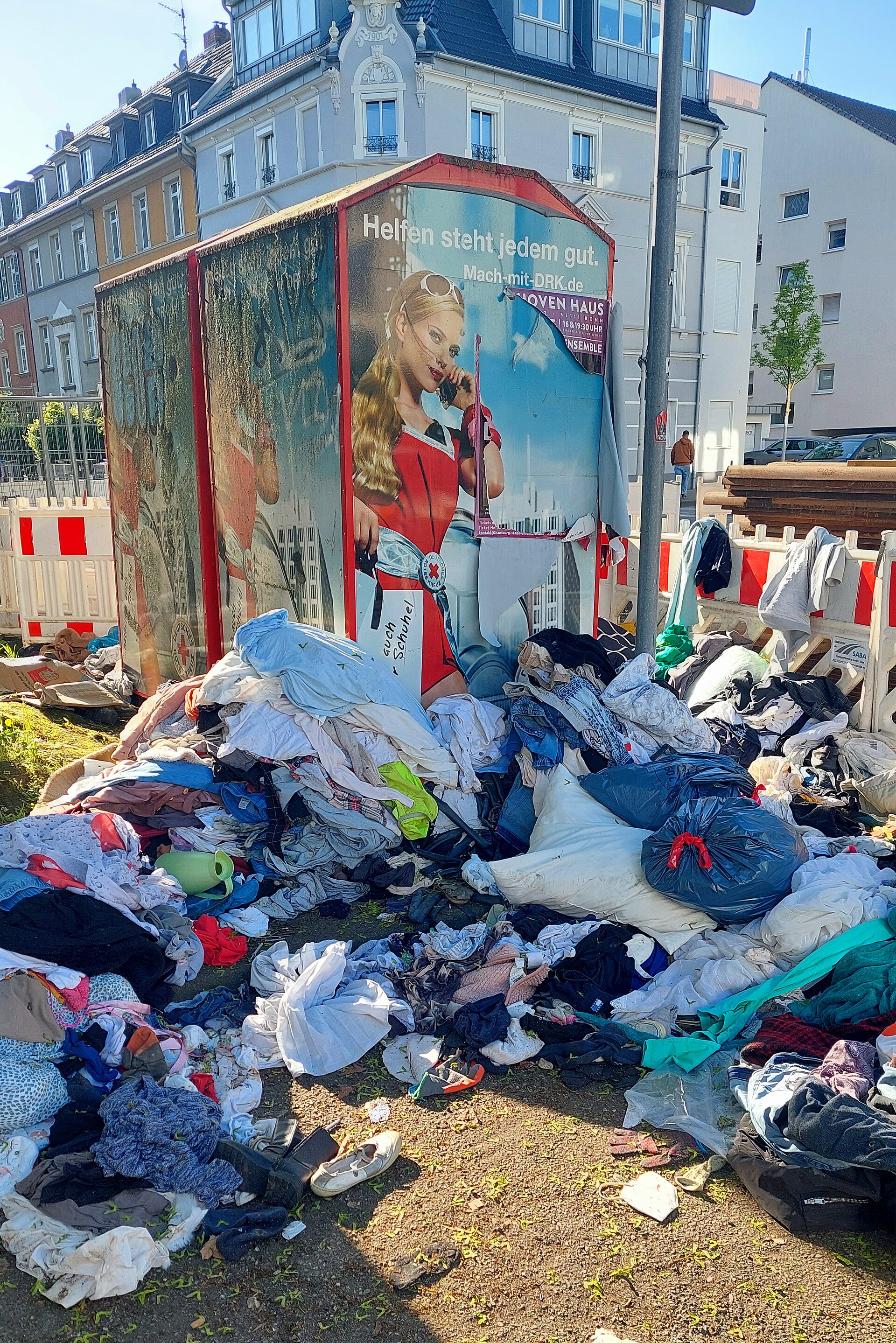
Roughly two thirds of clothing is a blend, and polyester-cotton is the dominant one. Mechanical recycling cannot handle blends: you shred a polycotton shirt and get a fibre mix nobody can spin into anything useful. This is the bottleneck the entire textile circularity conversation runs into.
What the Accelerator is
Worn Again Technologies operates a facility in Winterthur, Switzerland, designed around a solvent-based process that dissolves polyester away from cellulose, allowing both to be recovered separately rather than downcycled together.
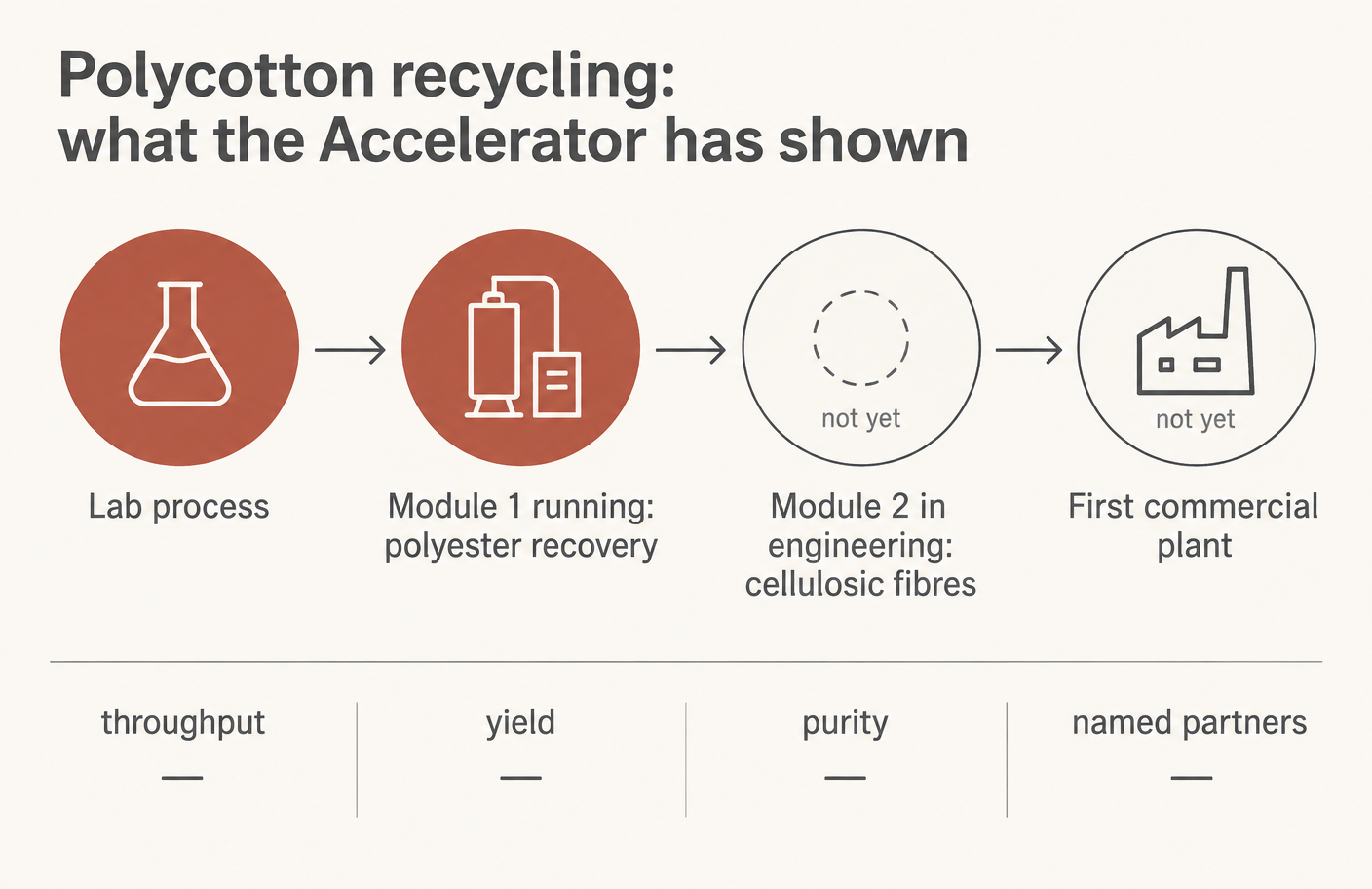
A polycotton recycling plant is operating in Switzerland.
Module one - feedstock preparation and polymer dissolution - is commissioned and running. Module two, which handles purification and the cellulose recovery side, is in engineering. The plant is half a plant.
Why partial commissioning still counts
Building a demonstration plant in modules is a sensible way to de-risk a process. It also makes progress announcements easy to over-read.
Textile recycling has an unusually high rate of announcements that never reach steel in the ground. A commissioned module, with feedstock actually moving through it, puts Worn Again ahead of most of the field. Solvent-based separation is also the right approach technically: it preserves polymer chain length in a way that shredding cannot.
What has not been published
No tonnes per year. No recovery percentage for either fraction. No solvent recovery rate - which for a solvent process is the number that decides both the economics and the environmental case. No cost per tonne against virgin polyester, which currently sits well below the price any chemical recycling route can hit.

There is also the feedstock question every textile recycler faces: post-consumer clothing arrives with elastane, dyes, coatings, buttons and mixed compositions that no single process handles uniformly. A plant that works on clean sorted polycotton and a plant that works on the contents of a clothing bank are not the same plant.
The reasonable read
Real progress on the hardest separation problem in textiles, at demonstration scale, with the second half of the process still unbuilt. Watch for module two commissioning and the first published yield figures.
References and image credits›
Photo: Wikimedia Commons, CC BY-SA · Photo via Wikimedia Commons, CC BY-SA 2.0 · Photo: Wikimedia Commons, CC BY-SA