
A raft of reeds cut a lagoon's methane by up to two-thirds
Wastewater treatment lagoons are cheap, common, and quietly among the largest methane sources in the water sector. A four-year Australian trial floated plants on one and measured what happened.
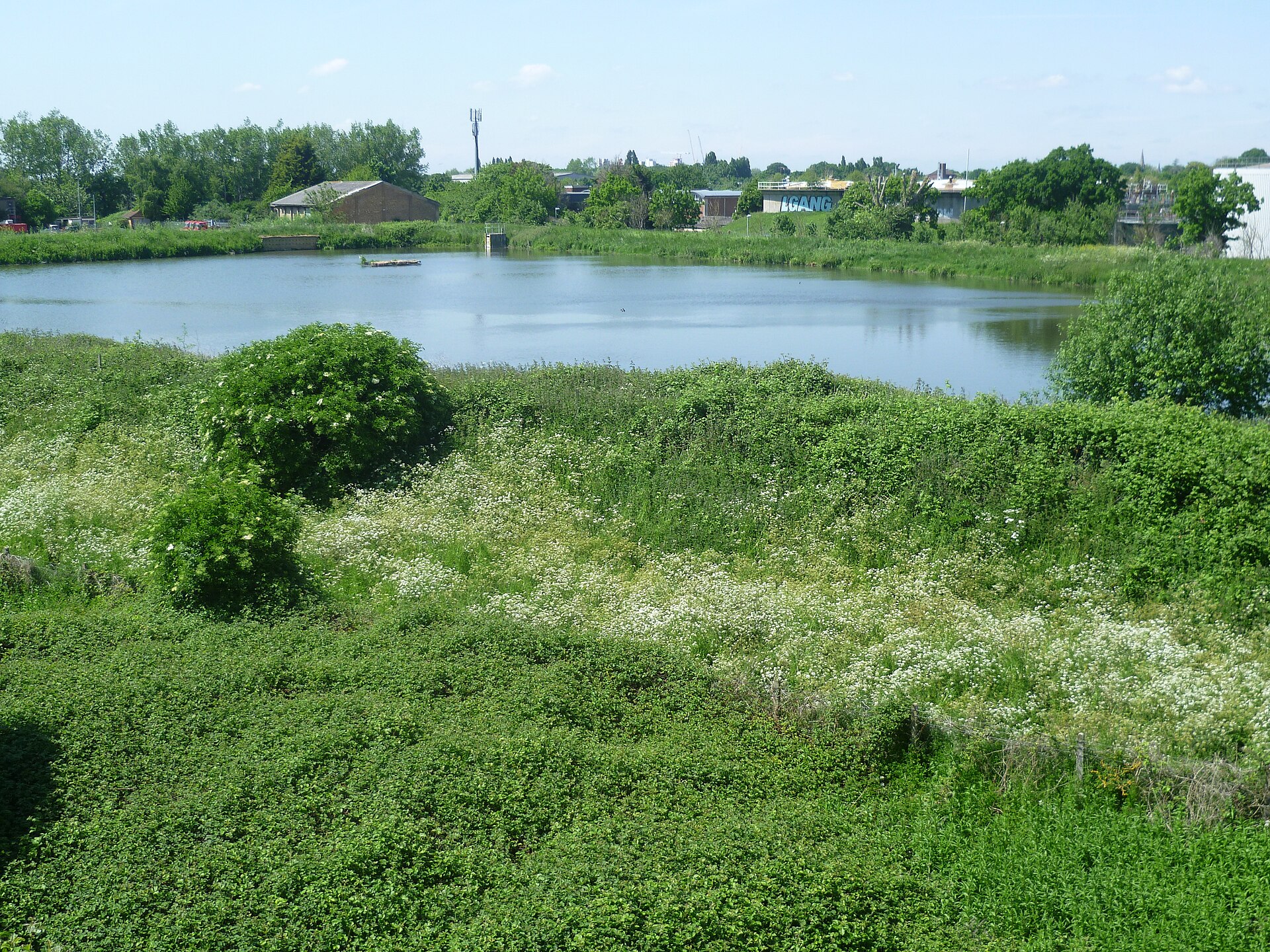
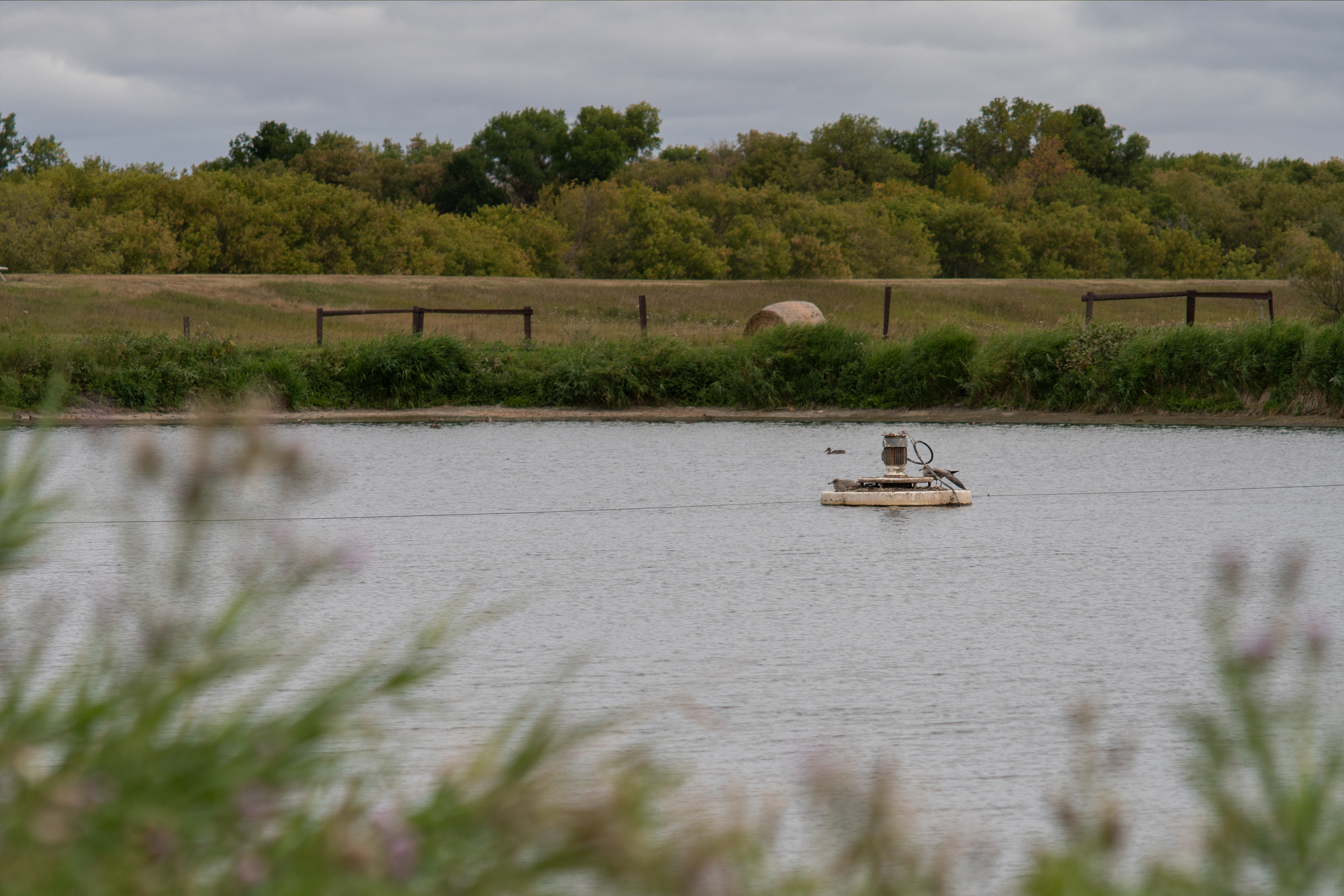
Most people picture wastewater treatment as tanks, blowers and clarifiers. For a large share of the world's smaller communities, it is a pond.
Lagoons are cheap to build, need almost no power, and tolerate neglect. They are also anaerobic at depth, which means they generate methane — and unlike a digester, there is no lid to collect it under.
The intervention
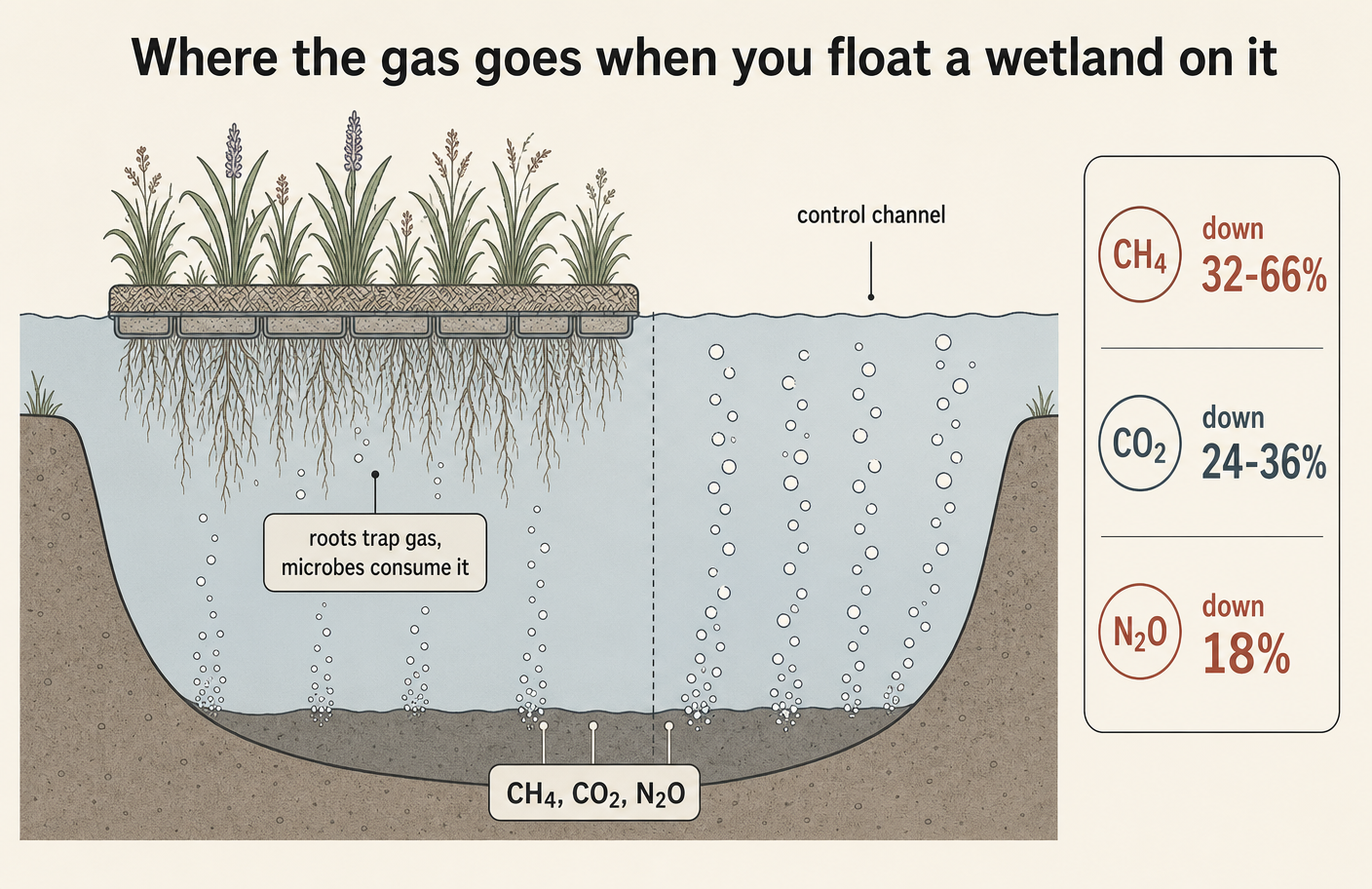
Researchers deployed floating treatment wetlands — buoyant mats carrying wetland plants whose roots hang down into the water column — across a working lagoon, and monitored greenhouse gas fluxes for four years.
Four years matters. Most trials of this kind run a single season, catch one set of temperatures, and cannot distinguish a real effect from a warm summer.
What was measured
Carbon dioxide fell 24–36% and nitrous oxide 18%. All three of the gases that matter moved in the same direction, which is unusual — interventions in wastewater frequently trade methane against nitrous oxide, and nitrous oxide is nearly 300 times as potent as CO2.
Why it works — probably
This is where the honest version diverges from the press-release version. The mechanisms are partly inferred, not demonstrated.
Root-zone oxygen. Wetland plants leak oxygen from their roots. Methanogens are strict anaerobes; oxygen in the root zone suppresses them and simultaneously supports methanotrophic bacteria that oxidise methane to CO2 before it reaches the surface. Converting CH4 to CO2 is itself a large win on a warming basis.
Nutrient uptake. Plants remove nitrogen and phosphorus, reducing the organic loading that feeds gas production in the first place.
Physical coverage. The mats shade the water, moderating temperature — and methanogenesis is strongly temperature-dependent.
There is a fourth possibility the researchers flag: the plants may act as conduits, venting gas through their tissue rather than preventing its formation. If that is happening, part of the measured surface-flux reduction is relocation rather than elimination — a real caveat that the paper does not resolve.
The harvest problem
Plants that are not harvested eventually die, sink, and decompose anaerobically, returning their carbon and nutrients to the sediment. Plants that are harvested disturb the mat and release a pulse. Neither the optimal harvest interval nor the net annual balance including harvest spikes is established.
Why it is attractive anyway
Compare it with the alternatives. Covering a lagoon and flaring the gas is capital-intensive and needs gas handling. Converting to activated sludge means blowers, power, and an operator. Both are out of reach for the small and rural systems where lagoons dominate.
A floating wetland is a retrofit. It goes on top of an existing asset, needs no energy, and delivers nutrient removal as a side effect. For a rural utility, a 22–31% cut in CO2-equivalent for the cost of some mats and plants is a very different proposition from a capital works programme.
What is still unknown
Whether the effect holds across climates and lagoon chemistries. Whether the reduction is prevention or plant-mediated transport. What the harvest-inclusive annual balance is. And what happens over a decade rather than four years.
Those are answerable questions, and the four-year dataset is a much better starting point than the field usually gets.
References and image credits›
Photo: Marathon, CC BY-SA 2.0 · Photo: Diego Delso, CC BY-SA 4.0 · Photo: via Wikimedia Commons, CC BY-SA · Photo: Dunn17, CC BY-SA 4.0, via Wikimedia Commons · Photo: USFWS, public domain