
“Flush unused medicines — the sewage works removes them anyway”
Conventional wastewater plants were built to remove suspended solids and biodegradable organic matter. Pharmaceutical compounds were never part of the design brief. The FDA's flush list exists precisely because flushing is the exception, not the default.
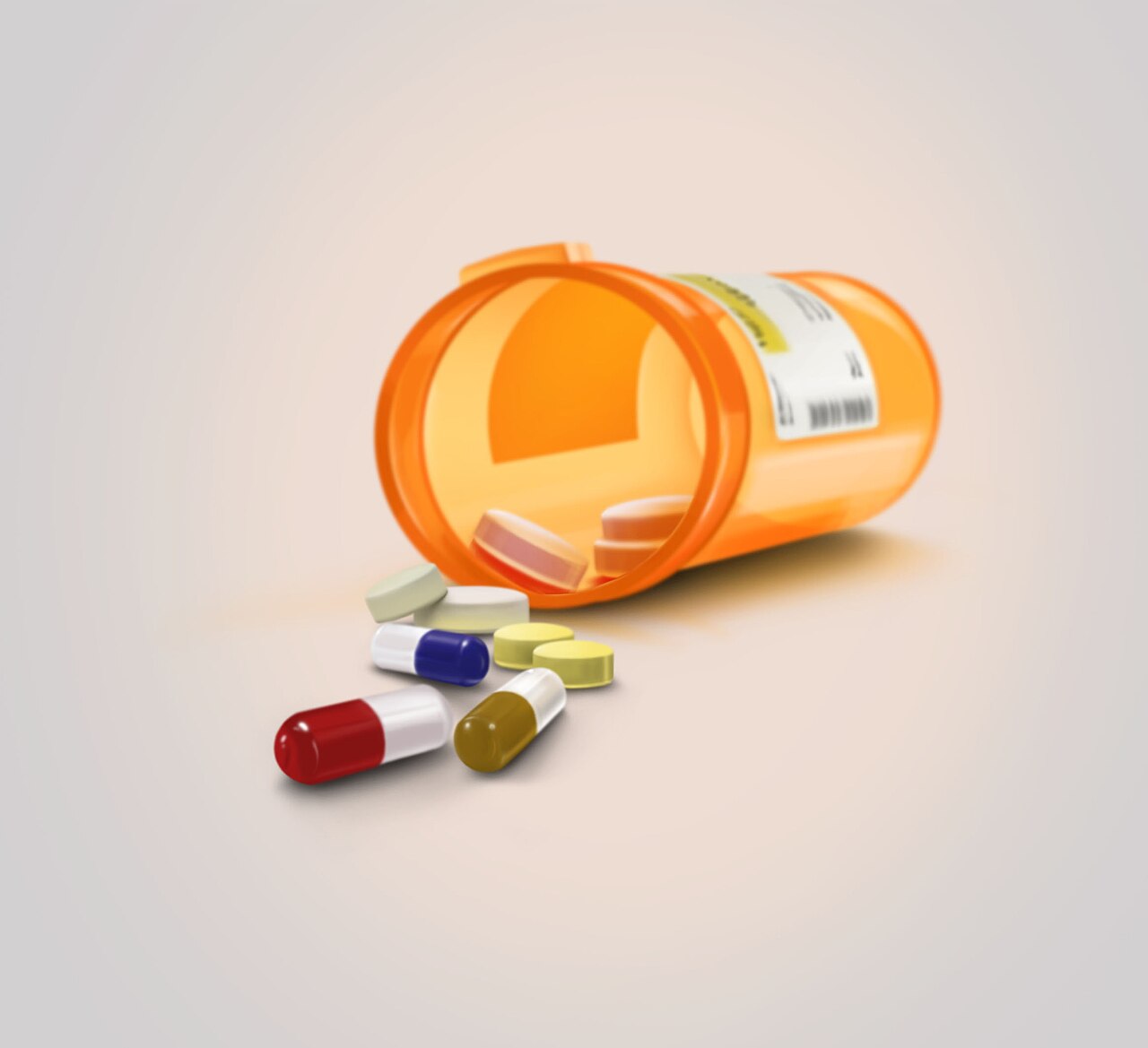
It is one of the most durable pieces of household disposal folklore: whatever goes down the drain gets cleaned up downstream, so old medicines may as well be flushed. The plumbing is real. The assumption about what happens at the far end is not.
Flushing is a universal and environmentally safe way to dispose of expired or unwanted medicines, because wastewater treatment removes them.
The EPA explains that medicines poured down drains or flushed can pass through conventional wastewater treatment, because municipal plants are generally designed for suspended solids and biodegradable organic matter — not for pharmaceutical compounds.
What a treatment plant is actually built to do
A conventional works is a sequence with a specific target list. Screening and grit removal take out rags and sand. Primary settling drops out suspended solids. Secondary biological treatment — activated sludge or a trickling filter — feeds biodegradable organic matter to microorganisms that eat it. Final clarification settles the biomass out again.
Every one of those stages is aimed at bulk organic load and solids. None of them is a barrier designed around a specific drug molecule.
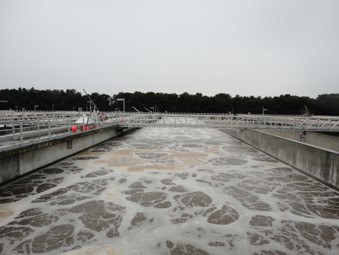
If a treatment plant is not designed to remove pharmaceuticals, then nothing gets removed and it makes no difference what I do.
"Not designed to remove" is not the same as "removes nothing". Different compounds behave very differently — some are partly biodegraded, some sorb onto sludge, some pass through largely unchanged — and removal varies between plants and between compounds.
The trash-can loophole
The alternative people reach for next is the bin — and that has its own return path. The EPA notes that medicines placed in household trash can end up in landfill leachate, which is often collected and sent to a wastewater treatment plant. The molecule takes a longer route to the same works.
That is not an argument for flushing. It is an argument for keeping medicines out of both waste streams where a dedicated route exists.
What the agencies recommend instead
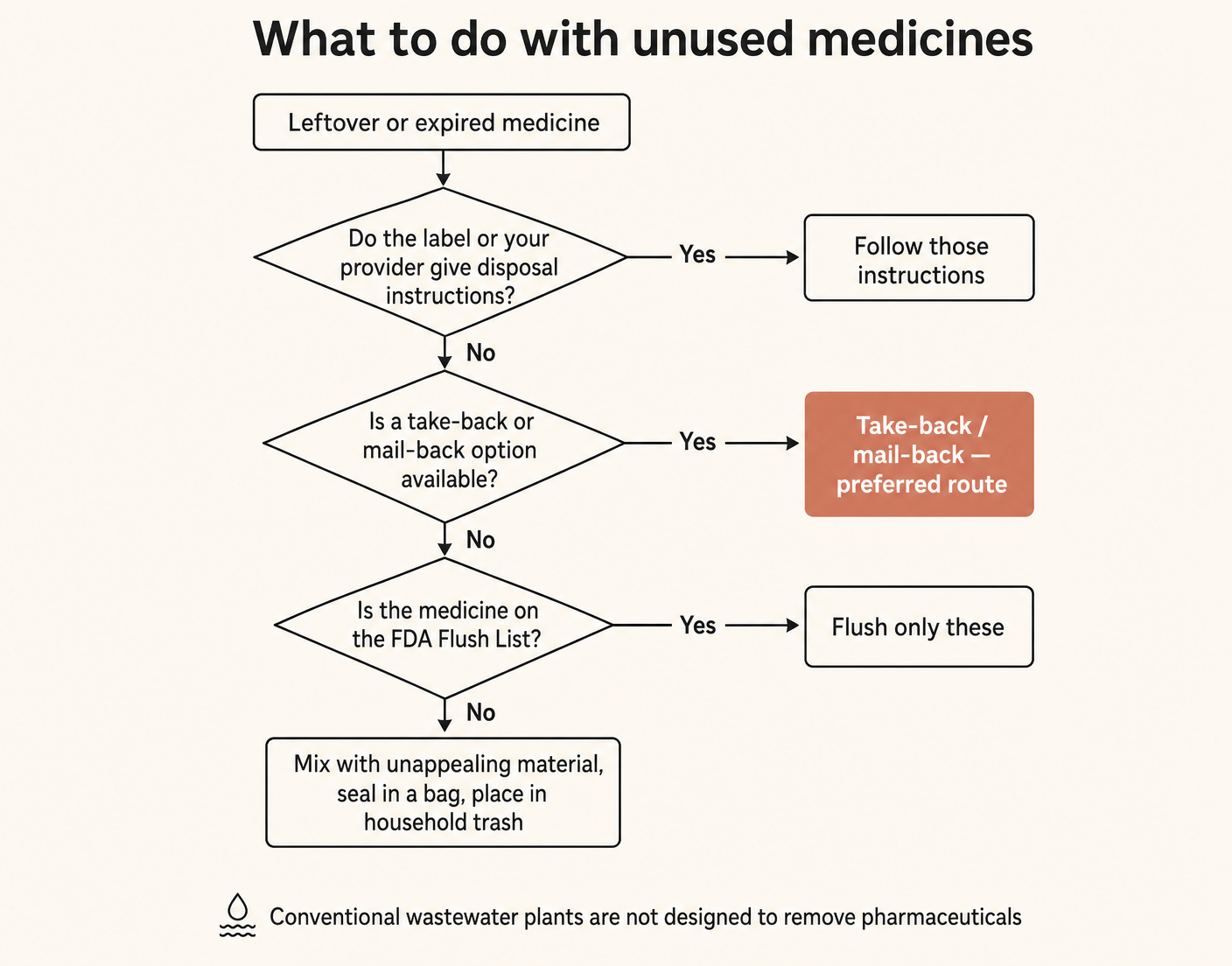
For most unused medicines the FDA recommends a drug take-back location or a mail-back service. Where no take-back option is available, consumers should check the FDA Flush List — and flush only medicines that appear on it.
The FDA Flush List proves flushing is fine.
The Flush List is short and specific. It covers medicines — largely potent opioids and a few others — where accidental ingestion by a child, a pet or another adult can cause severe harm or death within hours. Immediate removal from the house outweighs the environmental cost. That is a risk trade-off for a narrow set of drugs, not a general disposal policy.
Where the honest uncertainty sits
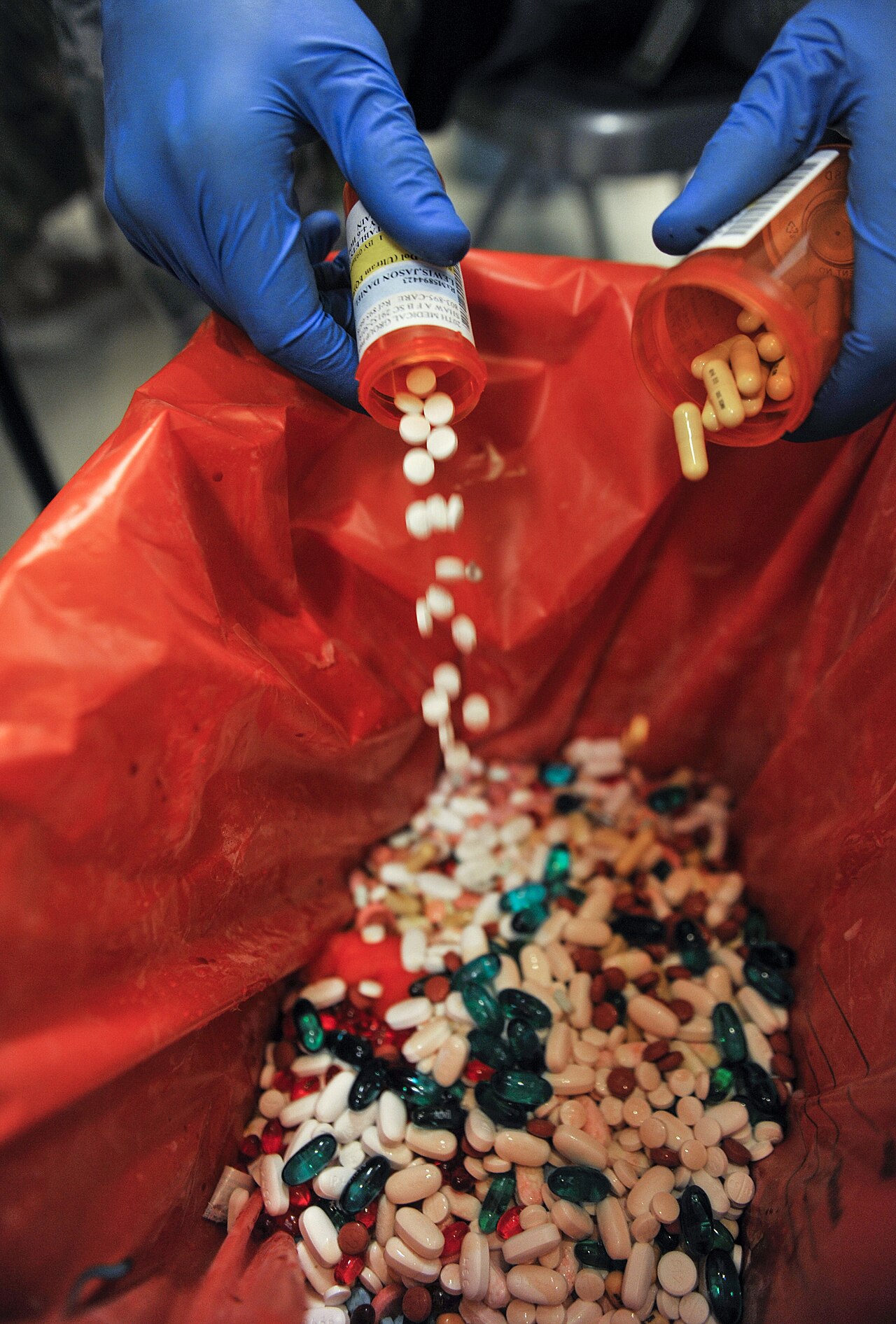
Take-back availability is genuinely uneven. Permanent collection kiosks are common in some pharmacies and police stations and absent in whole regions, and periodic take-back days are not a plan for a medicine you want out of the house tonight. Mail-back envelopes fill some of that gap; not everywhere, and not free.
Disposal advice can also depend on the specific product and on local rules, which is why "check the label and your provider first" sits at the top of the decision tree rather than the bottom.
What to take away
Take-back or mail-back first. The FDA Flush List only when nothing else is available and the medicine is on it. Household trash — mixed with something unappealing and sealed — for the rest, in the knowledge that landfill leachate is a slower path rather than no path.
Does your community make take-back easier than flushing, storing or binning old medicines? For most people the honest answer decides the outcome long before the chemistry does.
References and image credits›
- 01U.S. EPA — How pharmaceuticals enter the environment
- 02U.S. FDA — Drug disposal: FDA's flush list for certain medicines
Photo: Mpelletier1, CC BY-SA 3.0 · Photo: Marcos von Sperling, CC BY-SA 4.0 · Photo: U.S. Air Force / Nacho Anazawa, public domain · Photo: Bart Everson, CC BY 2.0