
Taro roots and a zig-zag channel: how a farm wetland is supposed to work
Longer contact with roots and biofilms can help treatment, but flow, land area and pathogen data are still needed.
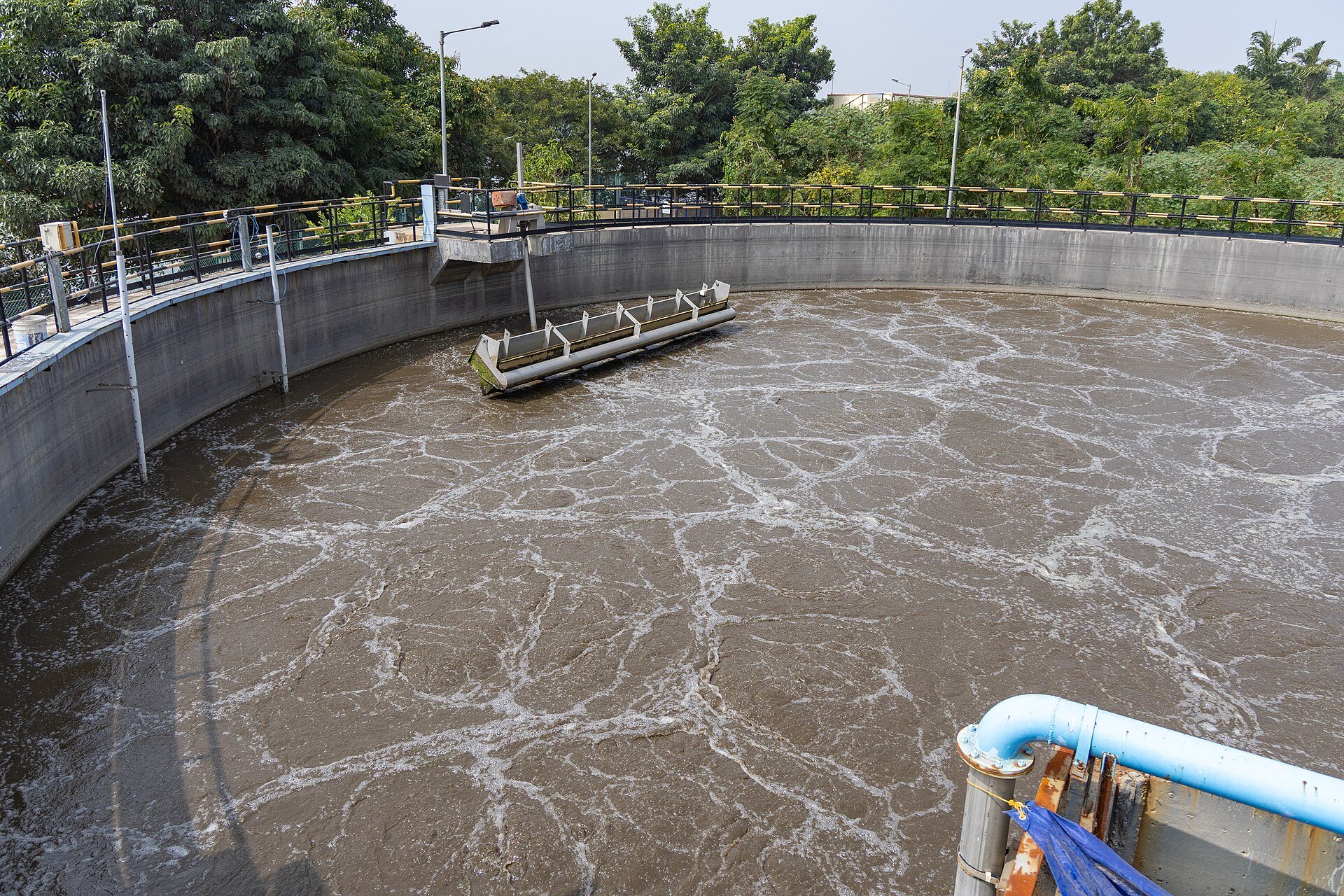
Plant-based treatment is not simply pouring wastewater beside a plant. In agricultural waste management, raw livestock slurry ranks among the most challenging waste streams to handle. Swine wastewater in particular carries extreme chemical oxygen demand, high concentrations of total suspended solids, elevated biological oxygen demand, and intense levels of ammonium, phosphorus, and microbial pathogens. Attempting to manage such an aggressive biological stream by discharging it over natural vegetation leads rapidly to waterlogged soil, anoxic soil failure, root rot, and unchecked surface runoff.
Engineered ecological treatment avoids these failures by treating the root environment as a biological reactor. It combines rigorous hydraulic design, physical solids separation, microbial metabolic pathways, and plant nutrient uptake into an integrated system. Researchers at IIT Guwahati reported a swine-wastewater concept that couples the hearty vegetative physiology of taro plants (Colocasia esculenta) with an engineered zig-zag flow channel. The configuration aims to provide low-energy decentralised remediation for rural piggeries, but delivering functional wastewater treatment at farm scale requires scrutinising the engineering balances that govern how these systems actually operate.
The channel controls contact and hydraulic pathways
The fundamental challenge in any passive, open-channel treatment system is short-circuiting. In an unbaffled ditch or broad surface-flow lagoon, incoming wastewater naturally follows the path of least hydrodynamic resistance. Fluid cuts a direct channel from the inlet directly to the outlet, leaving the bulk of the basin volume stagnant. When wastewater bypasses the wider volume of the system, retention times plummet, contact with biological surfaces drops, and untreated effluent escapes.
Baffles direct water through successive treatment zones instead of allowing it to take a short path from inlet to outlet. Forcing wastewater along a winding serpentine or zig-zag path transforms the hydraulic regime toward plug flow. That can improve contact with roots and attached biofilms by repeatedly steering the liquid column through the subterranean root mats suspended within the channel.
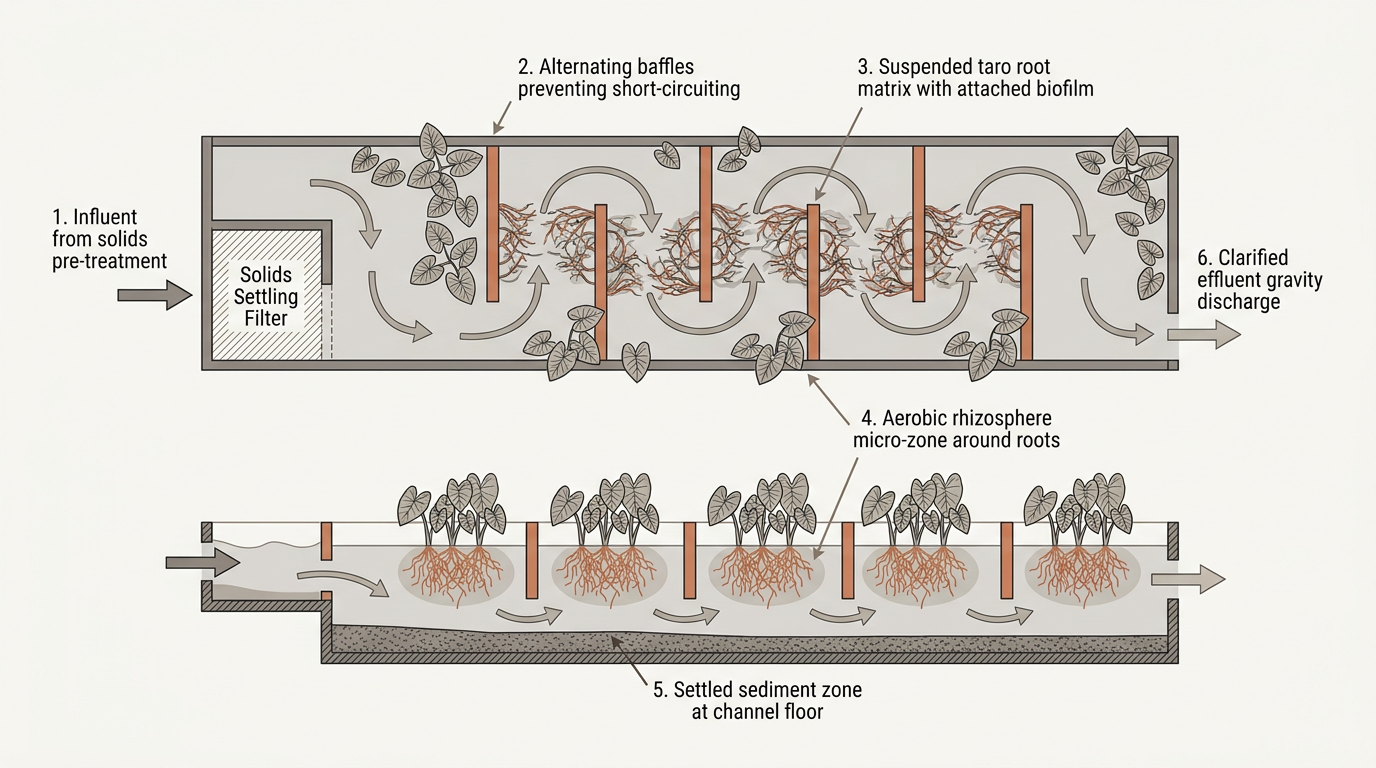
However, hydraulic baffling does not automatically increase retention time without considering the volume and flow rate: the nominal relationship remains volume divided by flow. Baffles can maximise hydraulic efficiency—ensuring that the actual detention time approaches the theoretical detention time—but they do not add volume. If an agricultural facility produces high daily wash volumes, no arrangement of internal turns can substitute for sheer physical basin capacity.
Root zones, biofilms, and biological transformation
A common misconception in phytoremediation is that emergent macrophytes or wetland plants purify water solely by drinking up pollutants through their vascular systems. In practice, the primary workhorse of any constructed wetland is the microbial community, with the plant root structure acting as a physical and biological scaffold.
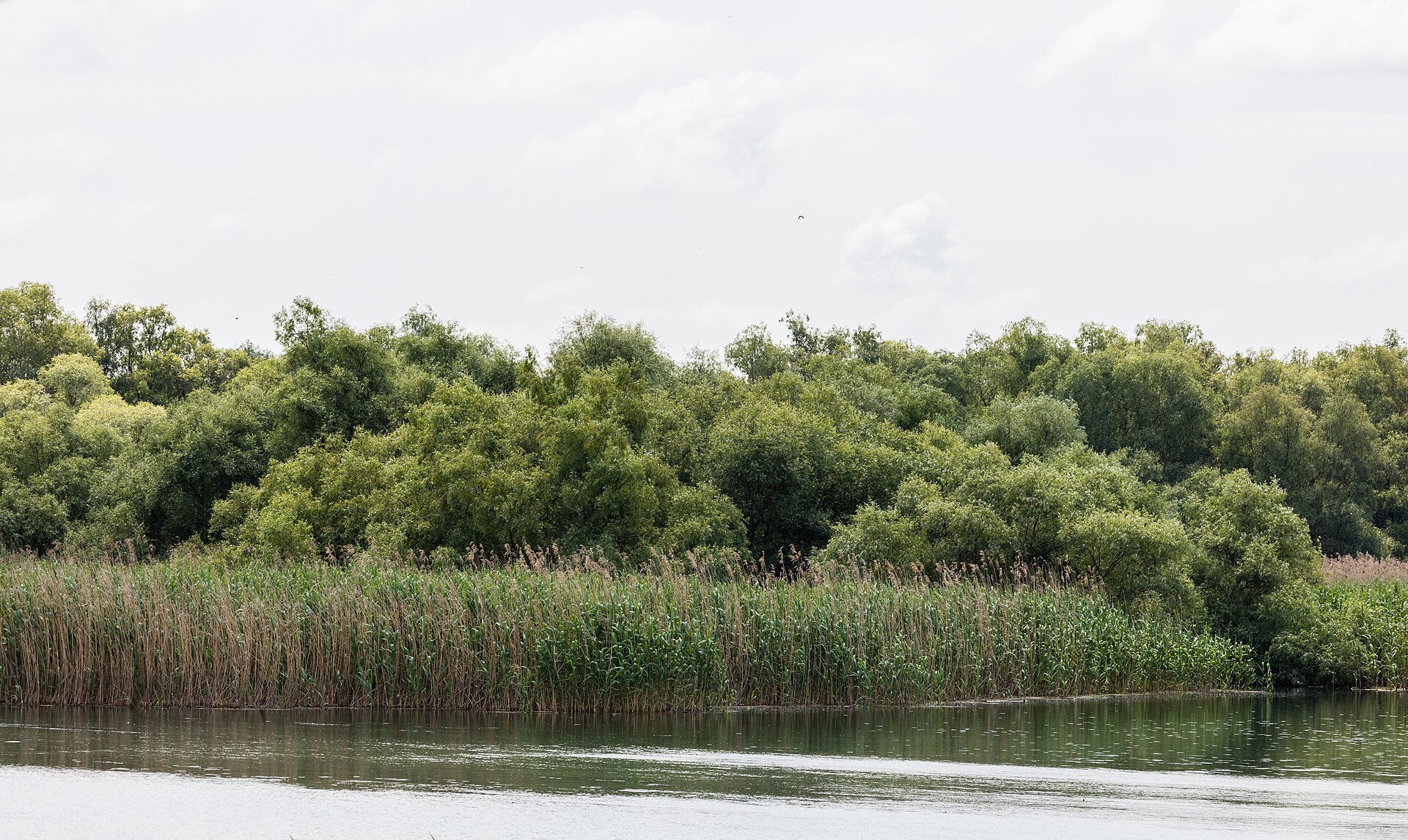
Root-associated microorganisms help transform organic matter and nitrogen. As wetland plants photosynthesise, they transport oxygen downward through aerenchyma tissues to sustain root respiration in saturated conditions. A fraction of this oxygen leaks into the immediate rhizosphere—a phenomenon known as radial oxygen loss. This leakage creates micro-aerobic zones in an otherwise anaerobic or anoxic water column. Nitrifying bacteria colonise these oxygen-rich root surfaces, oxidising toxic ammonia into nitrite and nitrate. As the water moves millimeters away into depleted, anoxic zones, denitrifying bacteria reduce that nitrate into harmless dinitrogen gas.
Plants take up some nutrients, while settling and other processes can remove material from the water. Taro plants take up bioavailable orthophosphates and mineralised nitrogen to build leaves and tuber tissue. Meanwhile, heavy particulate matter decelerates in the channel bends and settles out by gravity, and colloidal organic matter adsorbs onto the biofilm matrix. These mechanisms are different and need separate measurement. Conflating physical settling, plant tissue incorporation, and microbial volatilisation under the vague heading of "plant treatment" makes it impossible to calculate mass balances or anticipate when treatment performance will saturate.
Low energy does not mean no operating work
Passive, ecologically framed treatment systems are often marketed as self-sustaining installations that require negligible intervention. In reality, biological reactors managing livestock effluents demand continuous physical maintenance.
Constructed wetland channels run autonomously without human intervention or energy inputs.
Passive gravity flow eliminates electrical pumping, but systems require routine solids desludging, hydraulic clearing, weed management, and biomass harvesting to prevent channel clogging.
Gravity flow can reduce pumping where the site elevation allows it. A farm still needs reliable collection, solids pretreatment, hydraulic control, inspection and management of plant biomass. Swine slurry contains heavy concentrations of undigested feed fibers, hair, and grit. If introduced directly into a baffled root channel, these solids settle rapidly in the initial turns, creating anaerobic sludge banks that smother root systems, create dead zones, and trigger severe clogging within weeks.
Excess solids can clog a system; shock loads and heavy rain can change its performance. In monsoonal climates, sudden precipitation events drastically dilute effluent, elevate hydraulic flow rates, and risk washing out unanchored vegetative systems or flushing accumulated sludge beds directly into downstream waterways. Conversely, during cold seasons, bacterial kinetics slow down sharply, reducing nitrogen transformation rates. The cited press coverage does not provide the full flow, area, retention-time and removal data needed to size a farm installation. "Compact" cannot be evaluated without capacity per area.
Do not confuse treatment with food production
The choice of taro (Colocasia esculenta) in the IIT Guwahati research is technically interesting because of the plant's high biomass productivity, tolerance to waterlogging, and dense root system. However, taro is globally recognised as an agricultural food staple cultivated for its edible corms and leaves. This dual identity introduces severe public health and biosafety challenges if deployed on commercial livestock farms.
Taro grown in contaminated wastewater should not be assumed safe to eat or feed to livestock. Swine manure is a major reservoir of zoonotic parasites, enteric pathogens such as Salmonella and Escherichia coli, and residues of veterinary pharmaceuticals, particularly broad-spectrum antibiotics and heavy metals like zinc and copper added to feed. These contaminants can accumulate on root surfaces, translocate into plant tissues, or persist in the harvested biomass.
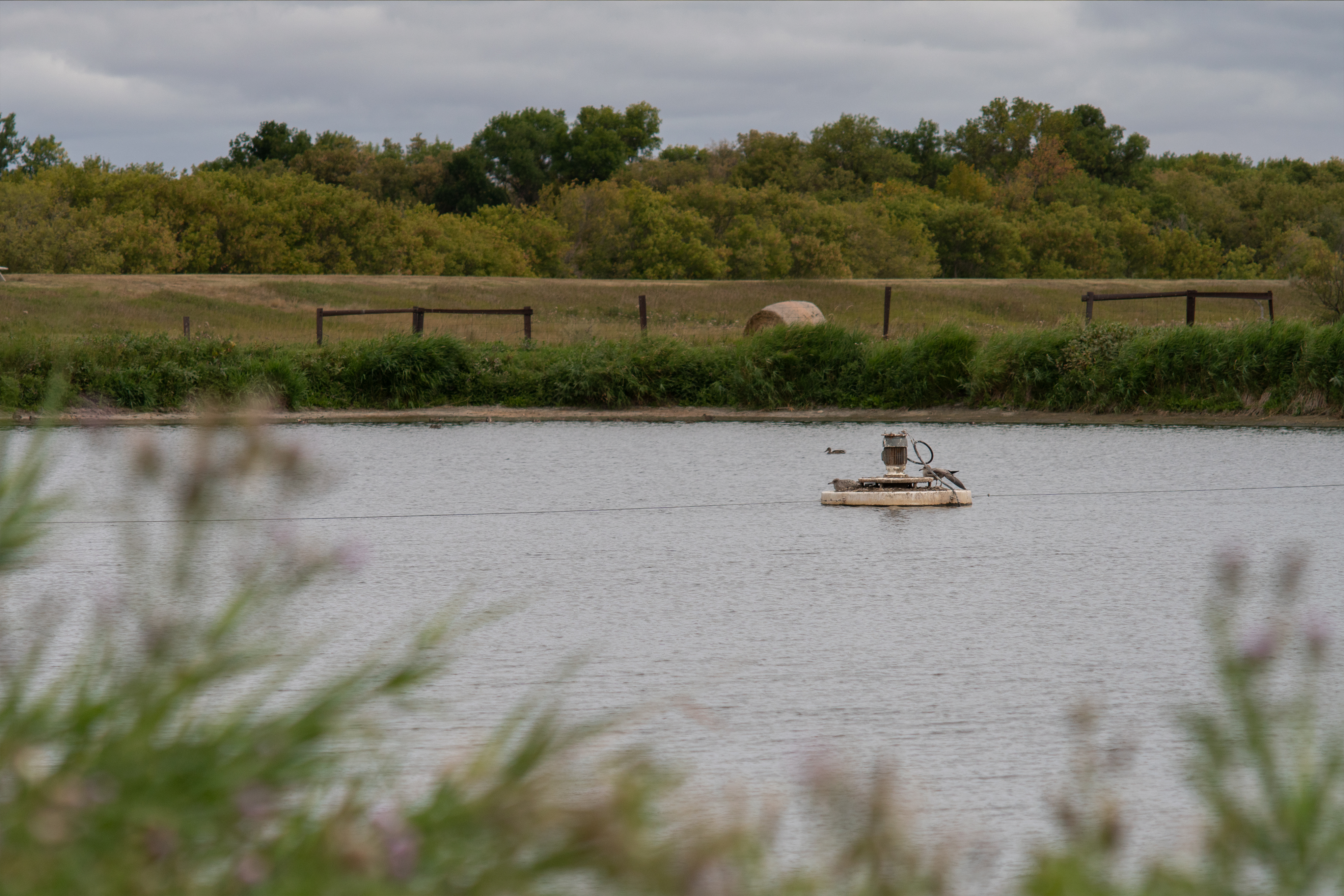
Antibiotics, pathogens and metals require assessment, and harvested biomass needs an appropriate handling route. If farm operators treat the vegetative beds as casual secondary crops, the risk of reintroducing pathogens or antimicrobial resistance genes into the human food chain or back into livestock herds is acute. The plant material must be managed strictly as an industrial waste byproduct—destined for non-food anaerobic digestion, thermophilic composting under controlled biosecurity protocols, or controlled incineration.
Moving from concept to agronomic scale
Small-scale livestock operations need accessible, cost-effective waste treatment methods that prevent local groundwater contamination and eutrophication. Passive root-zone systems that avoid mechanical blowers, motorized clarifiers, and continuous power consumption represent a critical engineering pathway for distributed rural sanitation.
The concept is plausible as decentralised treatment, particularly where energy is scarce. The next proof is measured effluent quality across seasons and representative farm loads—not just a greener-looking channel.
References and image credits›
Photo: Vraj Acharya / WELL Labs, CC BY-SA 4.0, via Wikimedia Commons · Diagram: The Waste Stack · Photo: Diego Delso, CC BY-SA 4.0 · Photo: Dunn17, CC BY-SA 4.0, via Wikimedia Commons