
A MOF can catch metals. Can it keep working in a treatment column?
High batch adsorption capacity is a starting point, not a specification for continuous wastewater treatment or rare-earth products.
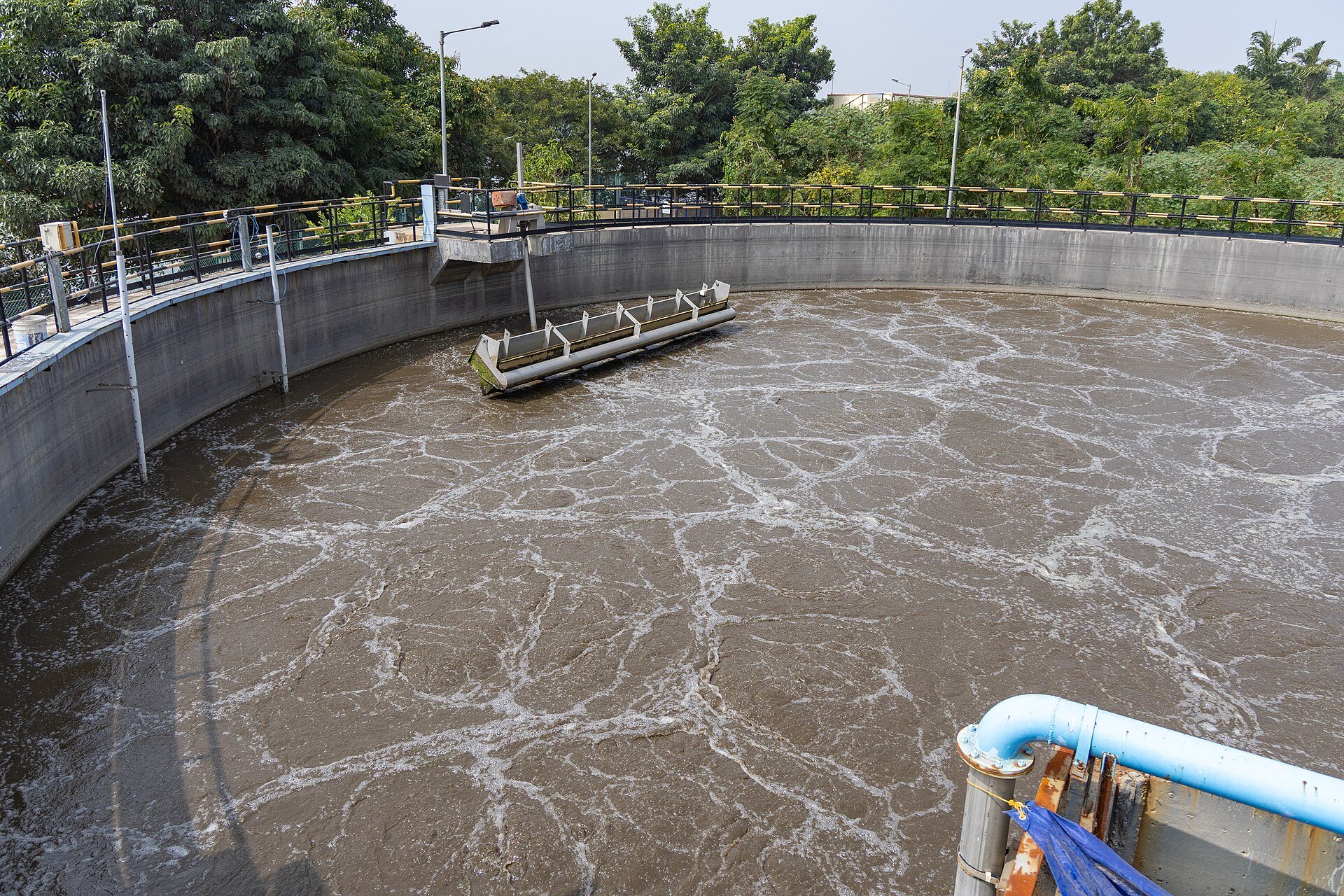
A metal-organic framework is a porous structure built from metal nodes and organic linkers. Its internal surfaces can carry sites that bind dissolved metals. That makes it a candidate for both pollution removal and resource recovery. Synthetic coordination chemistry allows researchers to tailor pore aperture, pore geometry, and functional surface chemistry with atomic precision. In academic literature, these materials frequently demonstrate extraordinary specific surface areas—often exceeding a thousand square meters per gram—paired with high theoretical affinities for specific aqueous cations.
Yet bridging synthetic coordination chemistry and industrial wastewater remediation requires confronting physical transport phenomena. A crystal structure that coordinates target ions with exceptional selectivity under pristine laboratory conditions must still operate inside hydrodynamic, thermal, and chemical environments that look nothing like an analytical vial. Industrial effluents carry multi-component ionic backgrounds, suspended solids, competing chelators, and fluctuating pH gradients. Evaluating these materials requires looking past idealized equilibrium metrics and examining how coordination polymers function across continuous operational cycles.
What the capacity measures
The IIT Gandhinagar-linked protocol describes frameworks tested for heavy-metal sequestration and rare-earth recovery. Reported capacities include up to 490 milligrams of lead per gram of sorbent, with substantial capacities for several rare-earth elements.
These are experimental adsorption capacities under stated conditions, not a promise that every gram will capture that amount from dilute, mixed factory wastewater. Starting concentration, pH, competing ions and contact time affect loading. Standardized laboratory testing typically relies on batch isotherm experiments: a finely milled powder is suspended in a synthetic solution containing an elevated concentration of a single target salt, stirred for hours until thermodynamic equilibrium is established, and then separated by centrifugation or membrane filtration to quantify remaining solute.
A sorbent that captures 490 milligrams of lead per gram in laboratory trials is ready to decontaminate industrial wastewater streams.
High equilibrium uptake in pure, single-solute batch solutions fails to account for competitive binding by background ions, dynamic contact times, pH swings, and column pressure drops in real operational environments.
In real process waters, equilibrium is rarely achieved. A continuous treatment system relies on mass transfer rates across a dynamic concentration boundary layer. Furthermore, factory effluents rarely present clean mono-elemental streams. An industrial discharge containing trace toxic lead or low concentrations of valuable rare-earth elements will also carry orders-of-magnitude higher concentrations of common background cations such as calcium, magnesium, sodium, and iron. If hard background ions occupy open coordination sites or physically foul pore mouths, effective capacity plummets long before the sorbent reaches its theoretical saturation ceiling.
The hydrodynamic reality: from powders to fixed-bed columns
Granulating fine coordination powders into millimeter-scale beads prevents column clogging, but binder matrices inevitably restrict mass transfer and lower effective site accessibility.
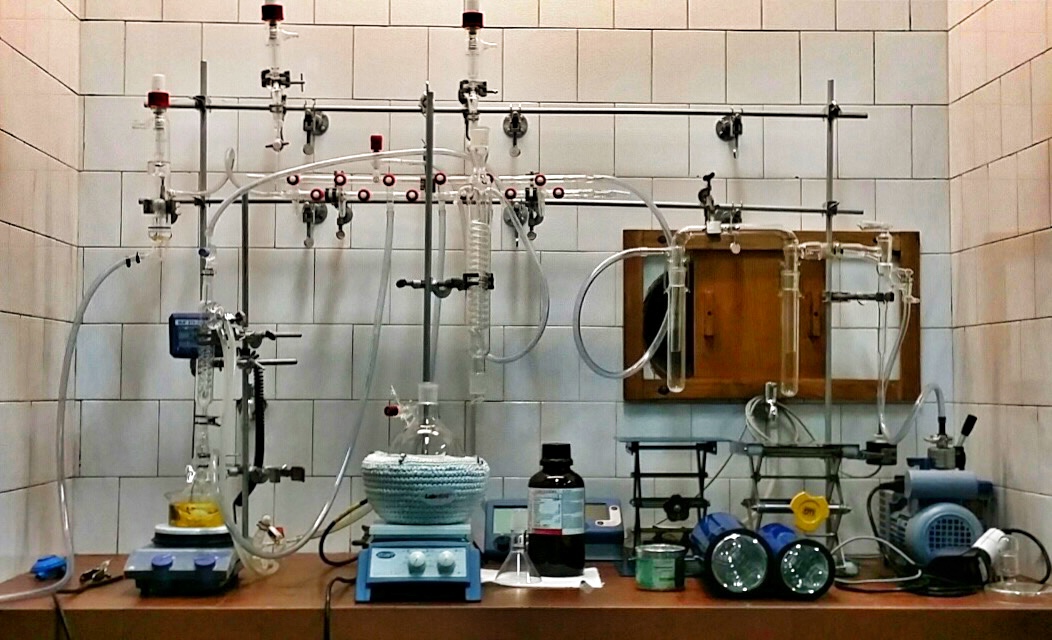
A batch experiment mixes sorbent with liquid and measures a result. A treatment column must sustain flow without excessive pressure drop, clogging or sorbent loss. Binding a powder into beads or another support can change its accessible surface and kinetics. As-synthesized metal-organic frameworks typically precipitate as sub-micron crystallites or fine, microcrystalline powders. Pouring fine powders directly into an industrial packed-bed contactor creates an impermeable hydraulic barrier. The interstitial voids between sub-micron particles are minute, causing hydraulic resistance and head loss across the bed to spike exponentially under operational flow velocities.
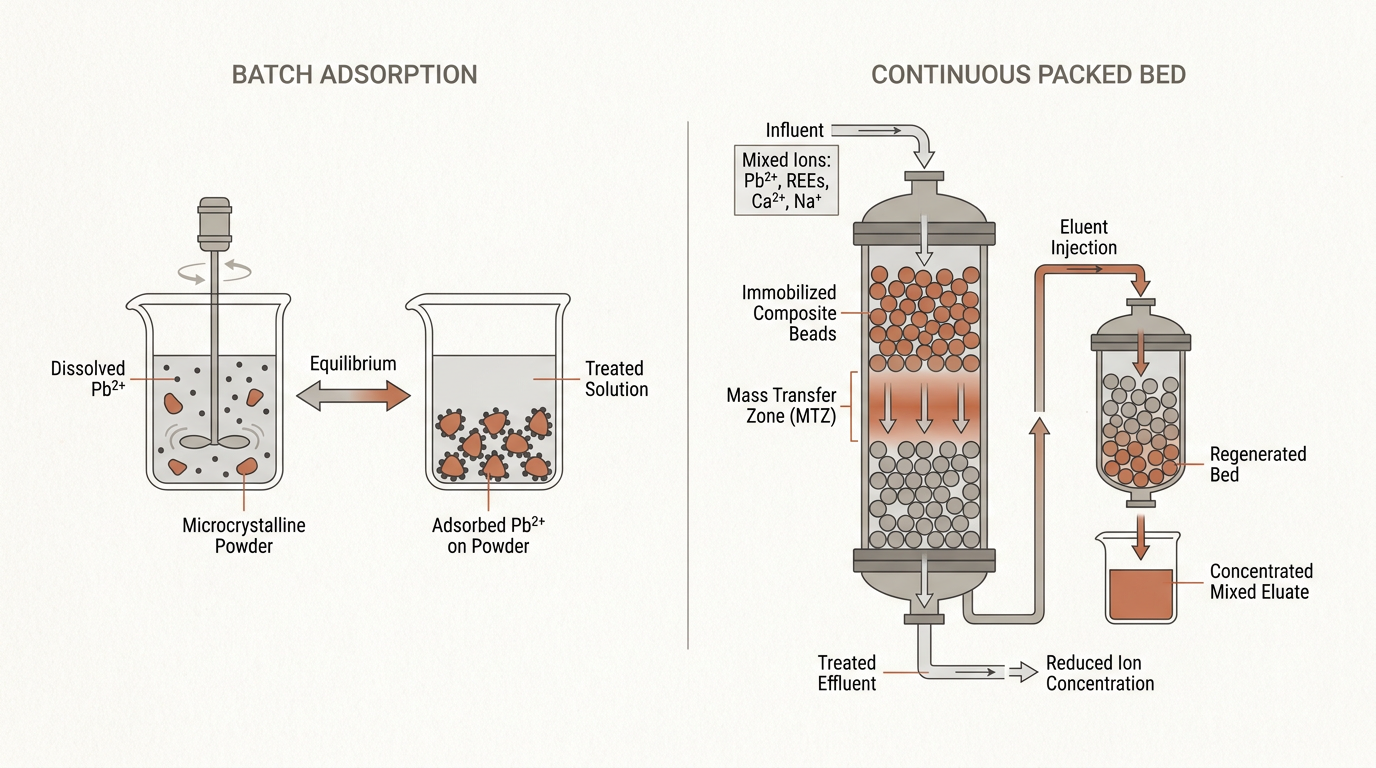
To make a framework physically viable in a continuous column, process engineers must granulate, pelletize, or immobilize the powder inside an inert macro-porous binder, such as sodium alginate, polyvinylidene fluoride, or porous silica. Every shaping process introduces an engineering compromise. Polymeric binders coat external crystal faces and partially obstruct micro-pore entrances, increasing internal diffusion resistance and lengthening the required empty bed contact time. If the mechanical binding is too weak, attrition from continuous fluid shear will erode the media, flushing fine coordination complexes downstream as suspended solids and contaminating the treated discharge.
Desorption, regeneration, and the downstream separation bottleneck
Removal is also not the same as a saleable metal product. The loaded sorbent must be regenerated, metals separated and the resulting liquids managed. A concentrated mixture of several rare earths is not automatically a purified material for manufacturing. In environmental remediation, extracting a heavy metal from water only completes the front half of the treatment circuit. The target cations are now concentrated onto a solid stationary phase that must either be permanently stabilized for hazardous disposal or chemically stripped to restore its adsorption capacity.
Elution typically demands washing the loaded column with mineral acids, strong bases, or aggressive organic chelating agents like ethylenediaminetetraacetic acid. This shifts the target species into an acidic or chelated eluate. If the goal is valorization—such as harvesting critical rare-earth elements from acid mine drainage or electronic waste leachates—the resulting strip liquor contains an indiscriminate blend of all desorbed elements. Rare earths must subsequently undergo energy-intensive, multi-stage solvent extraction or fractional precipitation to separate adjacent lanthanides before they possess commercial utility in magnet or battery supply chains. A media that sequesters mixed ions merely transfers the concentration problem from thousands of cubic meters of dilute water to dozens of liters of corrosive concentrate.
Check what the sorbent releases
A copper-based framework requires monitoring for copper leaching and changes in stability during repeated treatment and regeneration. A process that removes one contaminant while releasing another has not solved the treatment problem. The structural nodes that form the backbone of many high-capacity frameworks rely on coordination bonds with transition metals, including copper, zinc, zirconium, or chromium. These coordination bonds exist in dynamic equilibrium with the surrounding liquid phase.
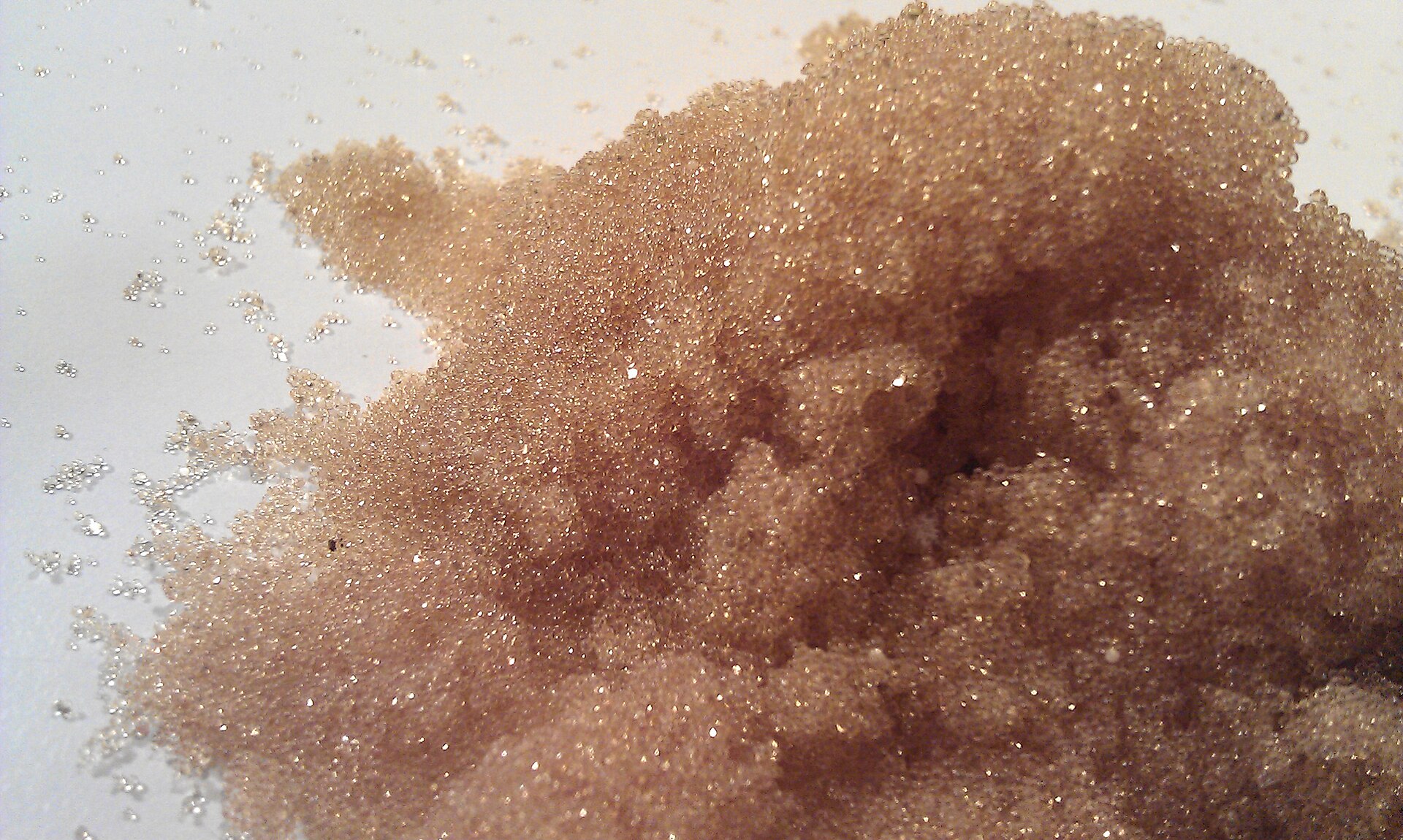
Under shifting aquatic chemistries—particularly low pH conditions during regeneration cycles or when exposed to coordinating anions like sulfates and phosphates—the framework itself can hydrolyze or undergo ligand exchange. Node dissolution releases structural metal ions directly into the effluent stream. If a copper-based framework leaches free copper into treated wastewater, the facility risks violating discharge permits for secondary toxicity even as it records high removal efficiencies for target lead or lanthanides. Sorbent endurance must be measured over dozens or hundreds of successive adsorption-desorption cycles, verifying both mechanical integrity and chemical durability against node leaching.
The protocol provides a reproducible research route. The deployment case needs long-duration column tests, competing-ion selectivity, regeneration balances, effluent compliance and cost. Impressive capacity is evidence for the material, not yet for an industrial treatment train.
References and image credits›
Photo: Vraj Acharya / WELL Labs, CC BY-SA 4.0, via Wikimedia Commons · Photo: Miha Bukleski, CC BY 4.0 · Diagram: The Waste Stack · Photo: Tomásdearg92, Wikimedia Commons, CC BY-SA 3.0