
A greasy pizza box does not automatically belong in the trash
Grease alone is not a disqualifier for a pizza box — EPA says recycle it. Loose food, liners and your local programme's rules are the parts that actually decide.
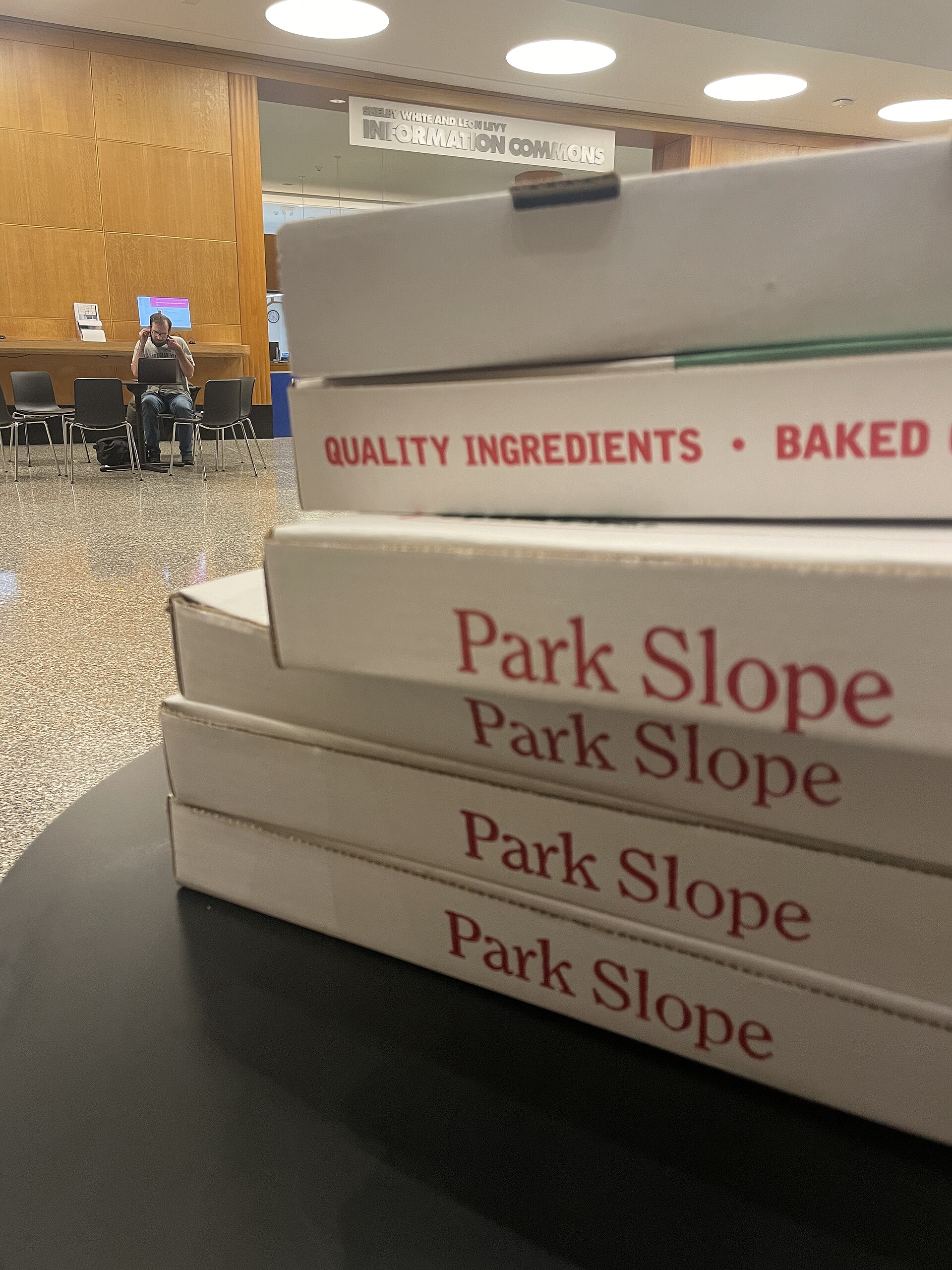
This is one of the highest-frequency household sorting mistakes, and the correction is simple enough to act on tonight.
Any pizza box with grease on it is contaminated and has to go in the trash.
EPA says pizza boxes can be recycled even when they have grease on them. Remove the food scraps, flatten the box, and put it in the recycling bin if your local programme accepts it.
Where the myth came from
The intuition is reasonable — oil does interfere with pulping, and for years "no greasy pizza boxes" was standard advice in a lot of programmes. What changed is that mills and municipalities looked at the actual quantities: the small amount of oil in a typical box is tolerable in a fibre stream, while the cardboard itself is genuinely useful material. What is not tolerable is loose food.
The three-step check
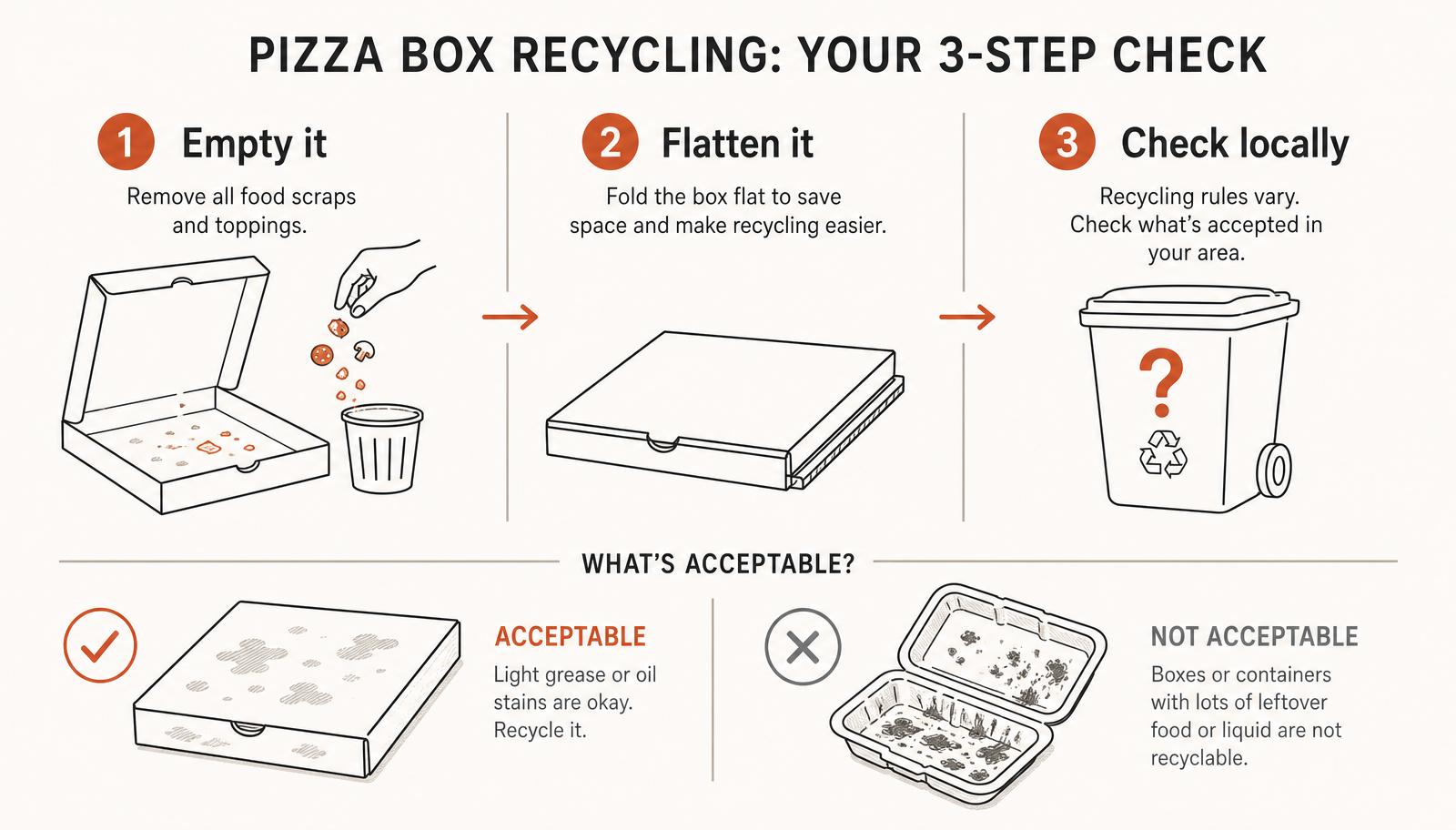
Empty it: remove crusts, toppings, and any paper or plastic liner. Flatten it, which also helps at the sorting line. Then check locally, because your programme's accepted-materials list is the final word.
The nuance that gets skipped
EPA gives a different rule for paper and cardboard takeout containers: scrape or rinse them so they are "spatula-clean", and heavily food-contaminated containers may not be recyclable at all.
So "grease is okay" is not the same as "all food-soiled paper is okay". A clamshell with sauce pooled in it, a box saturated through the board, or a container with a plastic liner is a different object from a stained pizza box — even though both are cardboard.
One national rule tells me what to do with my pizza box.
EPA explicitly says local programmes can have different rules. The accepted-materials list for your collection service overrides any general advice — including this post.
What to actually do
Empty the box, pull out liners and food chunks, flatten it, and follow your local programme. If the board is saturated with food or your programme rejects pizza boxes outright, use organics or trash rather than wish-cycling it — putting a doubtful item in the blue bin to be safe is the behaviour that degrades whole loads.
What is the most confusing item in your local recycling rules: pizza boxes, plastic film, coffee cups, or something else?
References and image credits›
Photo: Wil540, CC BY-SA 4.0 · Photo: PizzaToast, CC0