
Can old solar panels be "flotation-mined" for silver?
A University of Newcastle pilot ran end-of-life solar cell material through continuous froth flotation and recovered virtually all of its silver. Here is the mechanism, stage by stage — and what "nearly 100%" actually covers.
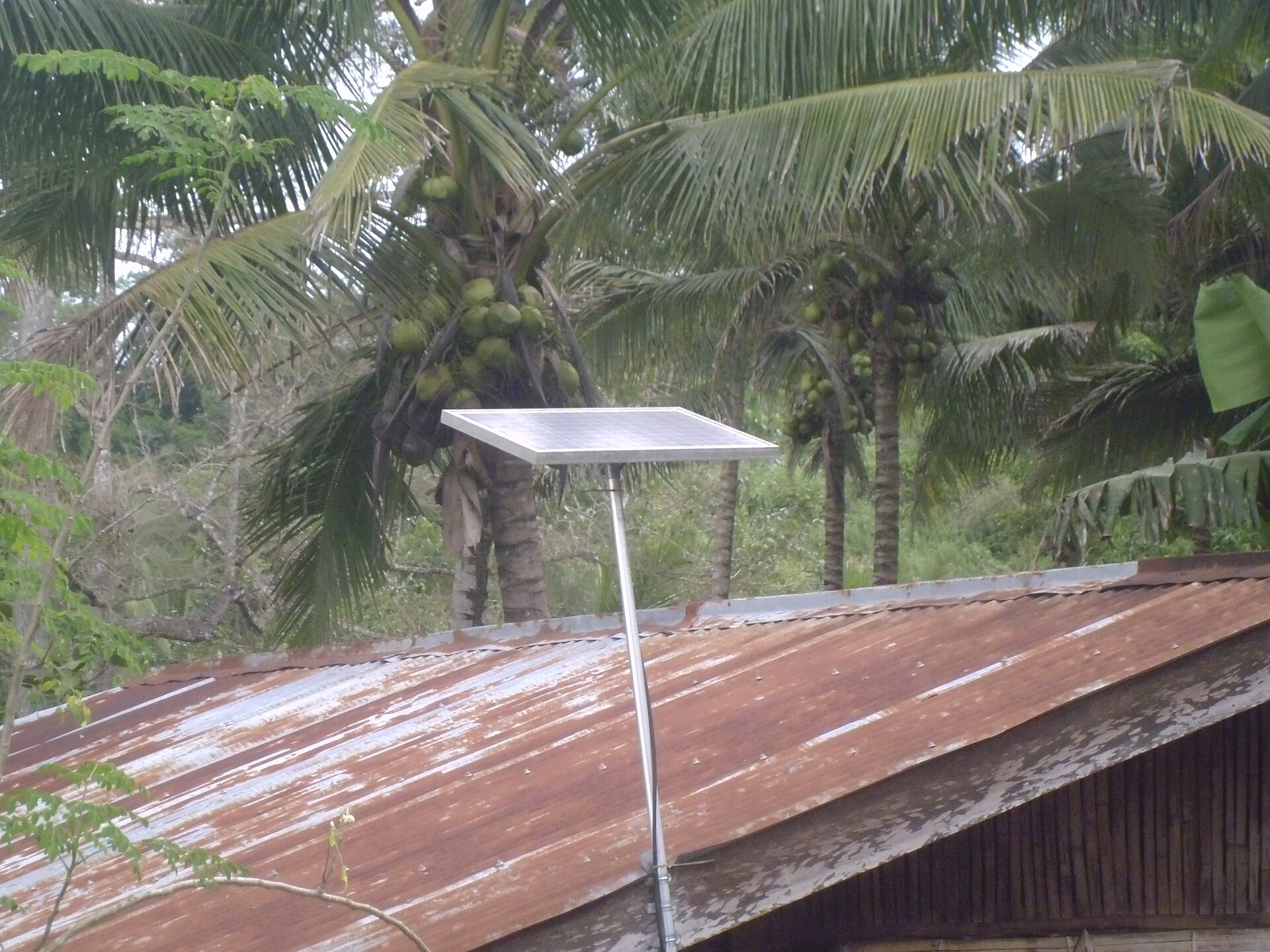
Silver is one of the few genuinely valuable things inside a crystalline-silicon solar panel, and it is spread through the cell in thin printed lines. A University of Newcastle group has borrowed a separation method from mineral processing — froth flotation — and run it continuously on end-of-life cell material, reporting virtually complete silver recovery. The mechanism is worth walking through carefully, because the headline number covers a narrower step than most readers assume.
Start with the right fraction
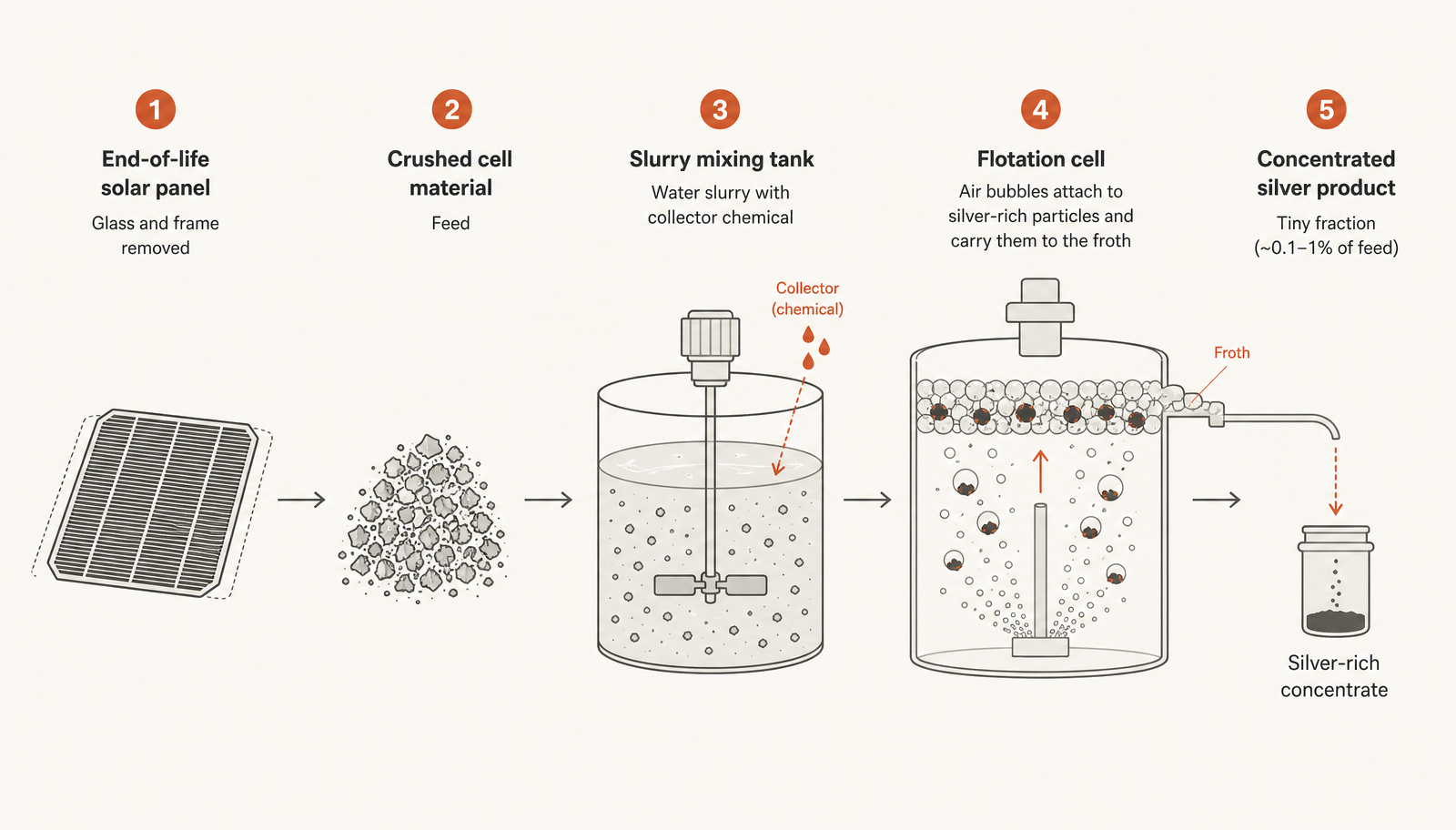
An end-of-life panel is not an ore body. Glass, aluminium frame, backsheet and encapsulant have to come off before the cell material can become a process feed. The preprint reports that roughly 22 kg of cell material corresponded to about 468 kg of rooftop panels — so the flotation feed is a small slice of what arrives at the gate. What the paper does not give is a complete front-end dismantling and liberation recipe, which is exactly the part that dominates cost in most panel-recycling schemes.
Make a water-based slurry
The prepared material is mixed with water and conditioned with collectors — surface-active chemicals that make the target particles water-repellent so bubbles will stick to them. The study names two industrial reagents, AEROFLOAT 242 and AEROPHINE 3418A, both standard in sulphide mineral flotation. Nothing exotic is being invented here; the novelty is applying a mature reagent system to photovoltaic waste.
Give the silver a lift
Air is injected into the flotation cell. Collector-treated, silver-rich particles attach to the rising bubbles and gather in a froth at the surface; less responsive material stays in the slurry and reports to the tailings. The appeal against the alternative is straightforward: this uses water, air and small reagent doses rather than the large acid volumes that conventional leaching routes need.
Turn batch performance into a flow process
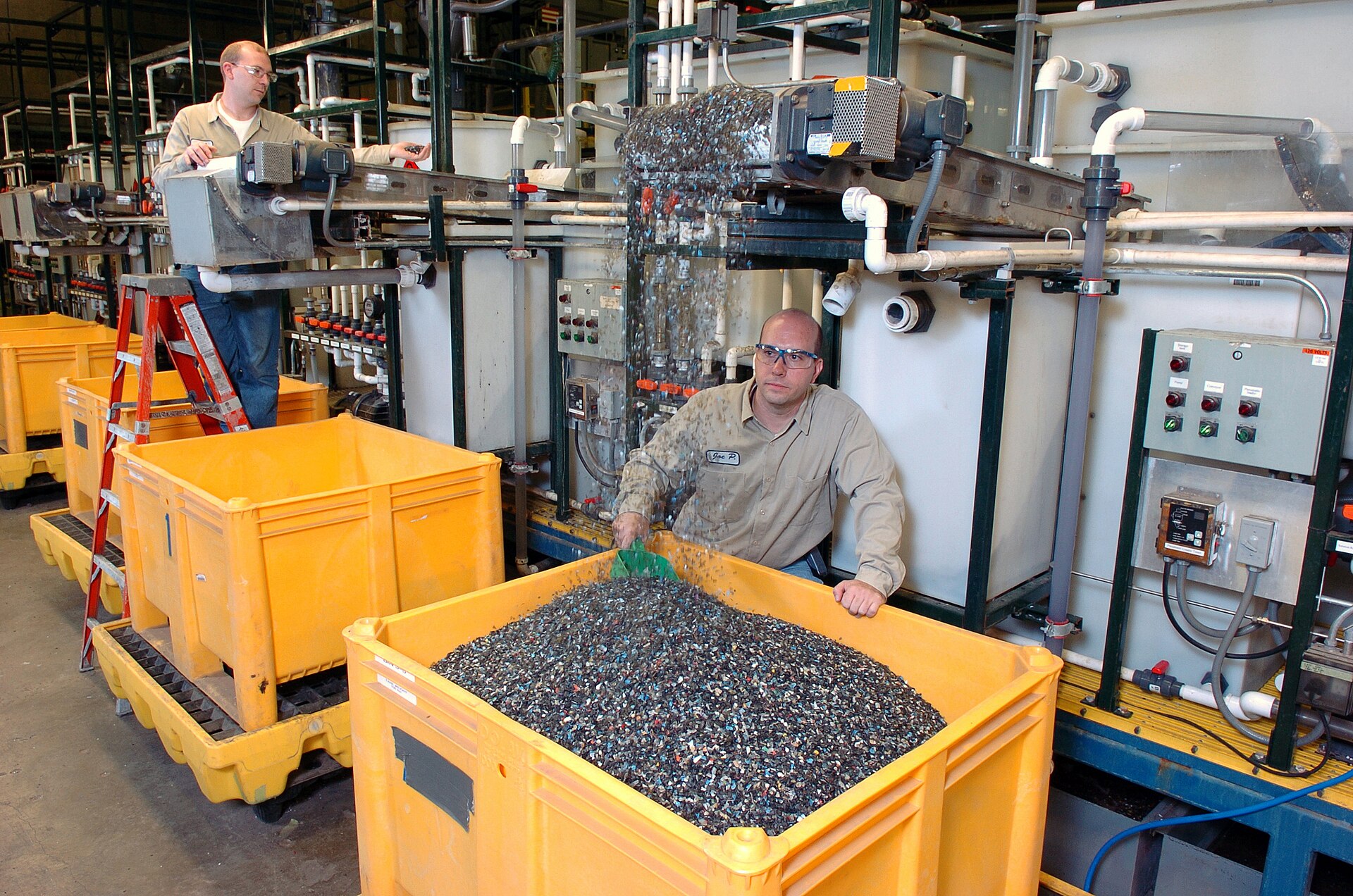
This is the part that matters for engineering credibility. A batch cell that is filled, floated and emptied proves chemistry; a continuous cell proves the beginnings of a process. The researchers ran flotation continuously for about 90 minutes with a one-minute gas–liquid residence time, and assessed steady-state performance over a 42-minute window.
Concentrate, then refine
The froth becomes a small, silver-enriched product stream. The preprint reports virtually 100% silver recovery with an approximately 83-fold upgrade at steady state, and the news coverage says the concentrated product was about 1.25% of the original material by mass. That concentrate still has to go somewhere — a refiner — but shipping 1.25% of your feed to a refinery is a very different economic proposition from shipping all of it.
Keep the headline in perspective
The authors describe the work as around Technology Readiness Level 5 — a demonstration in a relevant environment, not a commercial plant. The published material does not report long-run operation, energy or water demand, reagent dosage per tonne, operating cost, life-cycle impact, or recovery of the other valuable materials in the panel.
So read the number precisely: nearly 100% recovery of silver, from a prepared cell-material stream. It is not 100% recovery of a panel. The unanswered engineering questions are feed variability across panel vintages and manufacturers, front-end dismantling cost, reagent and water management, concentrate purity at the refiner's gate, and multi-shift reliability.
If silver recovery makes panel recycling more profitable, there is a real strategic choice buried in it: optimise first for the highest-value metals, or for maximum recovery of every panel material?
References and image credits›
- 01Tech Xplore — Flotation process recovers nearly 100% of silver during solar panel recycling
- 02ChemRxiv — Continuous flotation unlocks full recovery of silver from end-of-life solar cells
Photo: Bonvallite, CC BY-SA 3.0 · Photo: Argonne National Laboratory, CC BY-SA 2.0 · Photo: Chris Allen, CC BY-SA 2.0 · Photo: Grendelkhan, CC BY-SA 4.0