
The magnet that cracks itself apart: how hydrogen decrepitation closes the rare-earth loop
Expose a neodymium magnet to hydrogen and it fractures along its own grain boundaries into a demagnetised powder that can be pressed straight back into new magnets. The mechanism is elegant. Getting the magnets out of the devices is the hard part.
The hidden engine nobody recycles
Neodymium-iron-boron magnets are why a modern EV traction motor is the size it is, why a wind turbine can use a direct-drive generator, and why a hard drive's read head can move as fast as it does. They are also close to unrecycled.
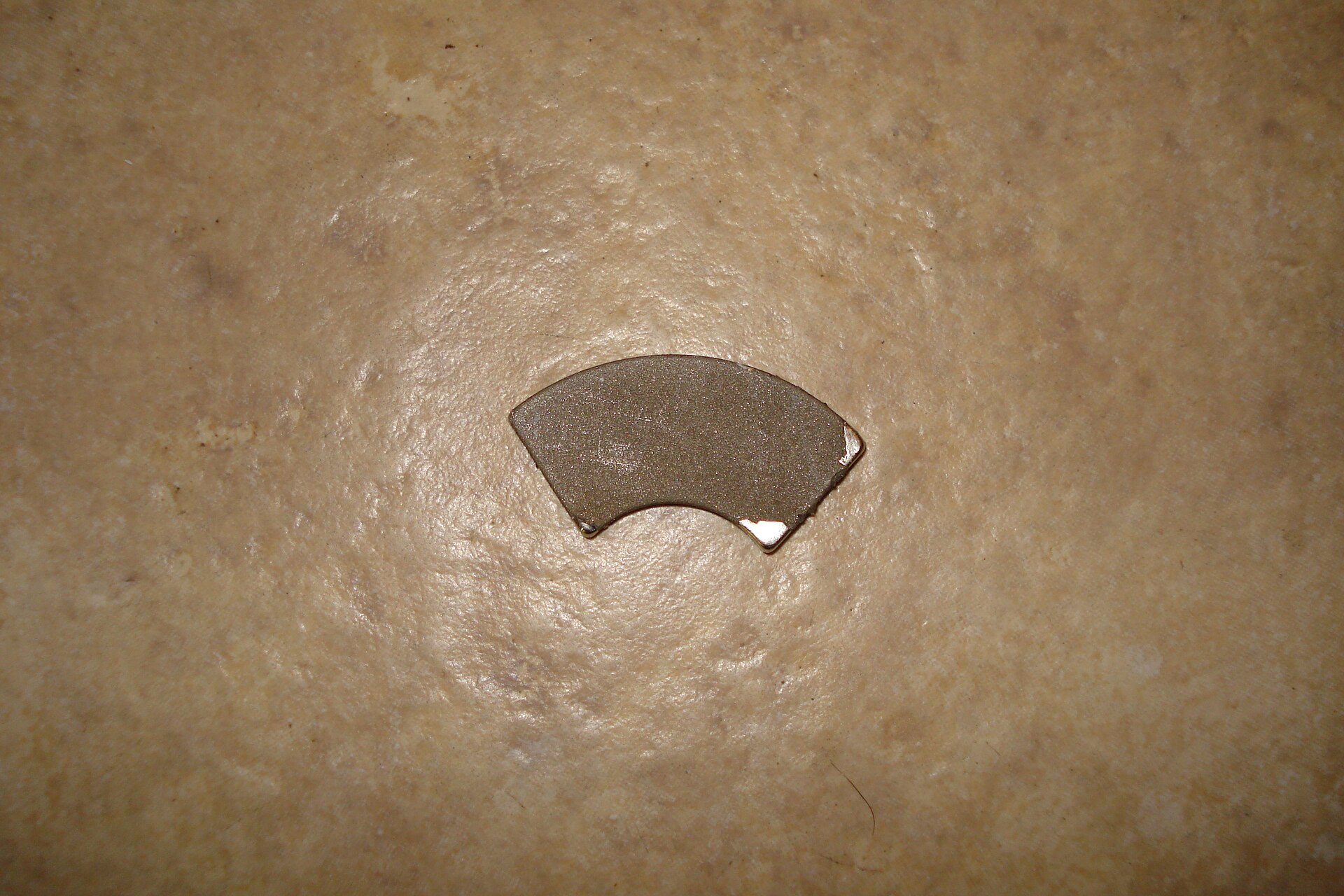
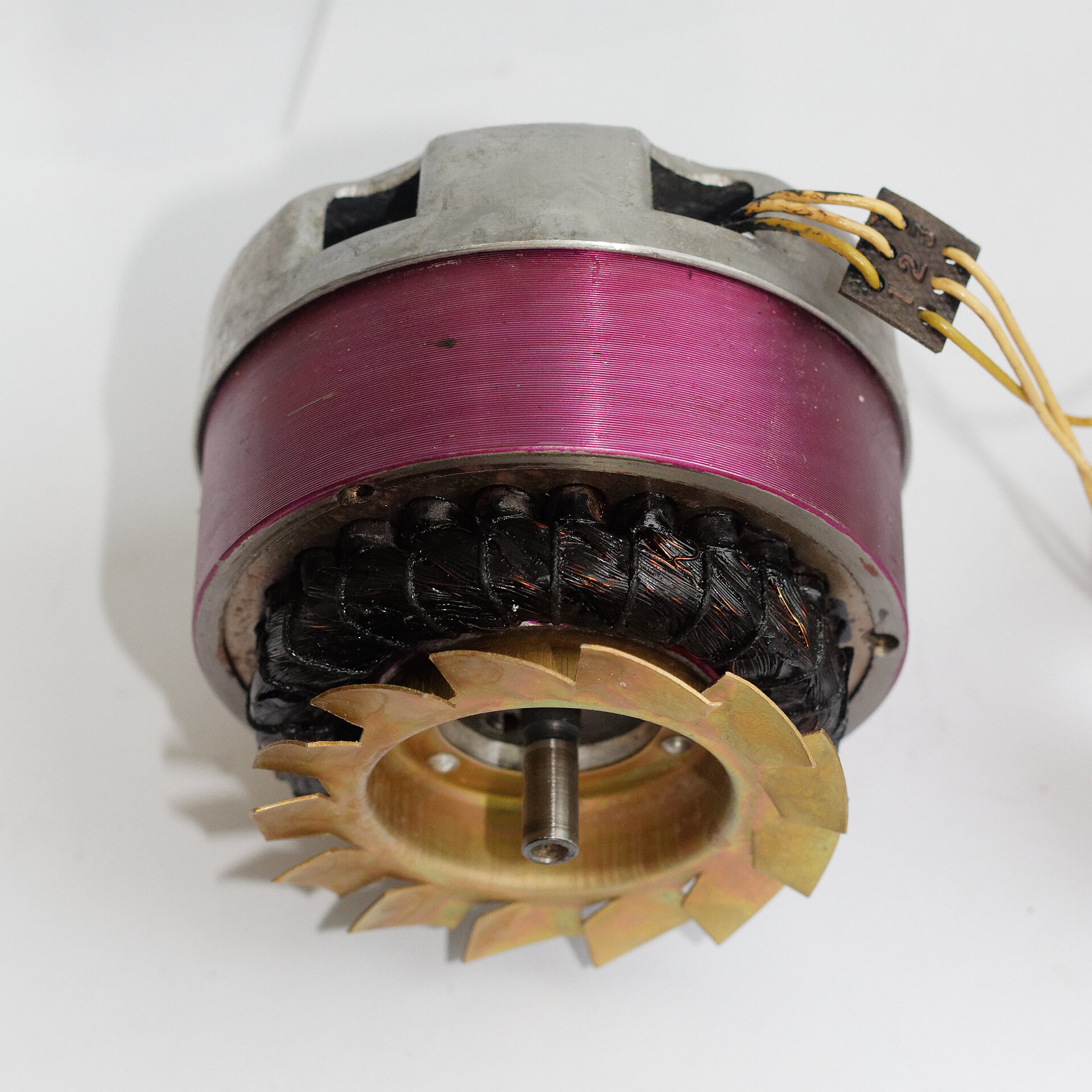
The reason is how they are made. Sintered magnets are pressed from powder and heated until the grains fuse into a dense block, then magnetised. That block is then glued, clamped or press-fitted deep inside a motor or drive assembly. Conventional recycling shreds the whole device and remelts the metal fraction, at which point the rare-earth content disperses into slag or a mixed alloy and its value as magnet material is gone.
Hydrogen makes the magnet break itself
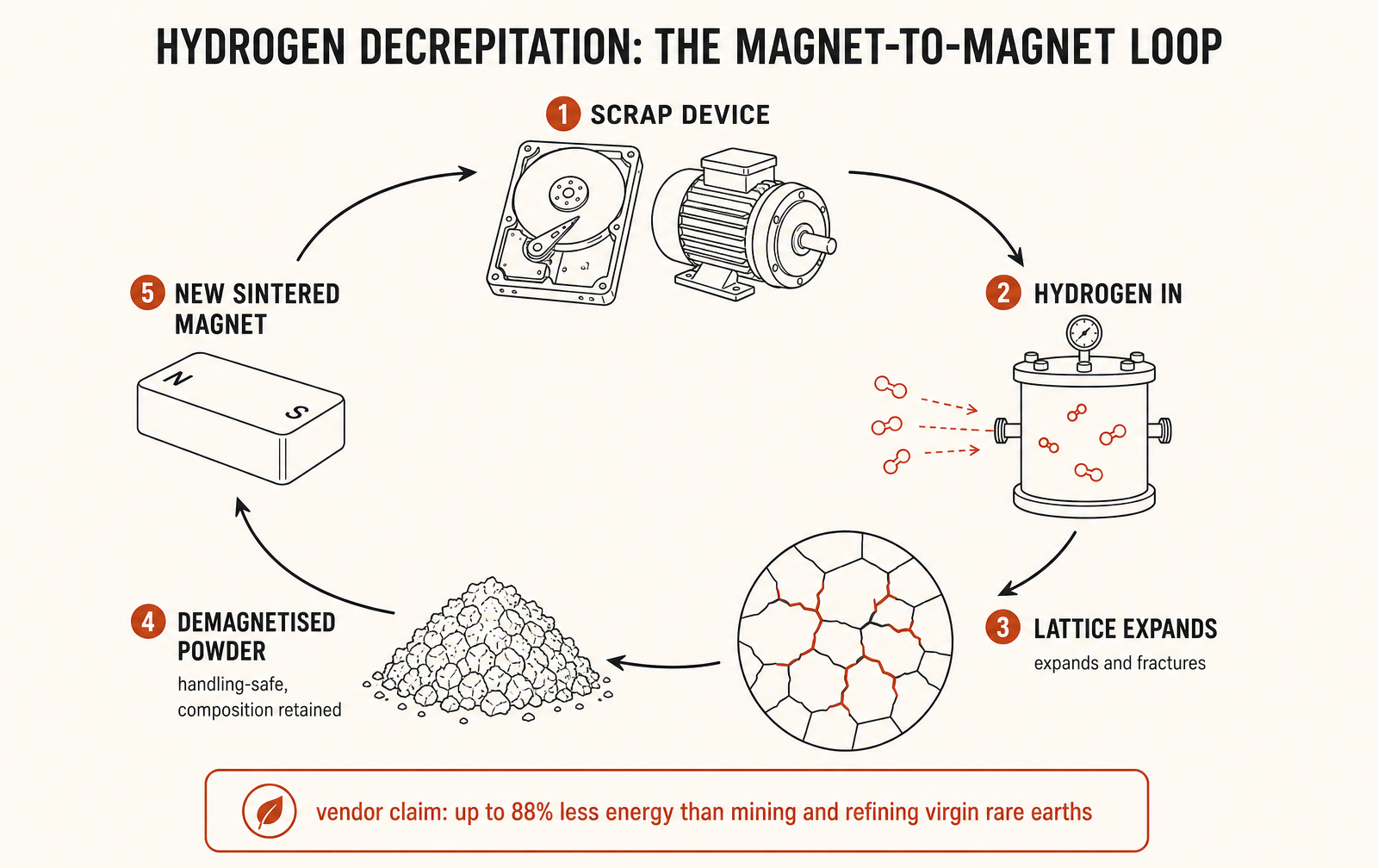
Here is the mechanism. Expose an NdFeB magnet to hydrogen gas at modest pressure and near-ambient temperature. Hydrogen atoms — small enough to slip between the metal atoms — diffuse into the crystal structure and react preferentially with the neodymium-rich phase that sits along the grain boundaries.
That reaction makes the material expand. Because the expansion is uneven and concentrated at the boundaries, the block cannot accommodate it and fractures along those boundaries into a coarse powder. The metallurgical term is decrepitation: the magnet takes itself apart.
Demagnetisation comes free
There is a second, practical gift in the same step. A fully magnetised NdFeB block is genuinely dangerous on a processing line — it snaps to steel hard enough to break fingers and it wrecks sorting equipment. Normally you would heat the material past its Curie temperature to kill the field before handling it, which costs energy and a furnace.
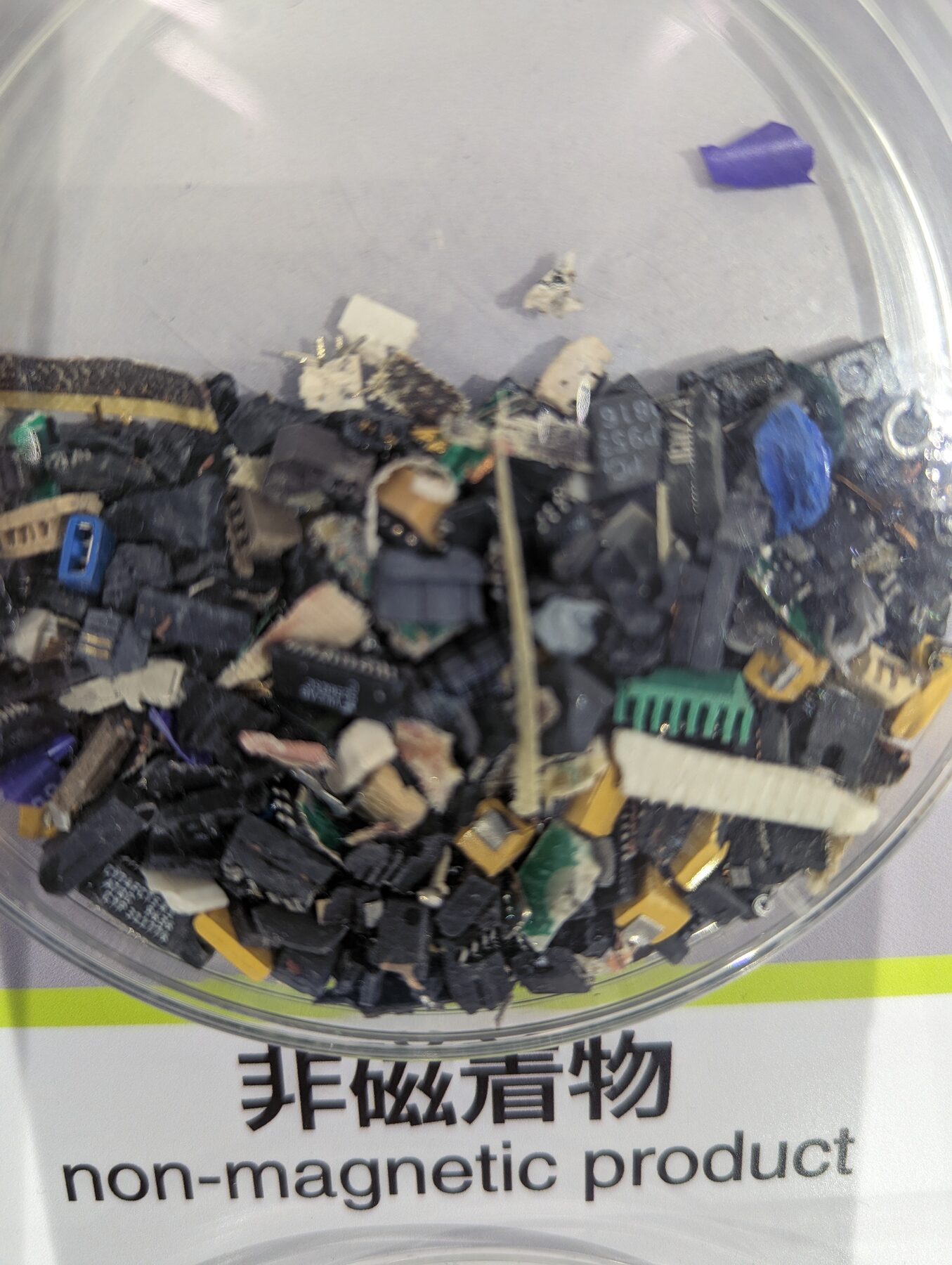
Decrepitation does it in passing. The powder that comes out of the vessel is non-magnetic and pours like sand.
Closing the loop
The recovered powder is milled, blended to correct the composition, pressed and re-sintered into new magnets. HyProMag, the UK company commercialising the process as Hydrogen Processing of Magnetic Scrap, puts the energy saving at up to 88% against mining and refining virgin rare earths — a magnet-to-magnet loop rather than a magnet-to-slag one.

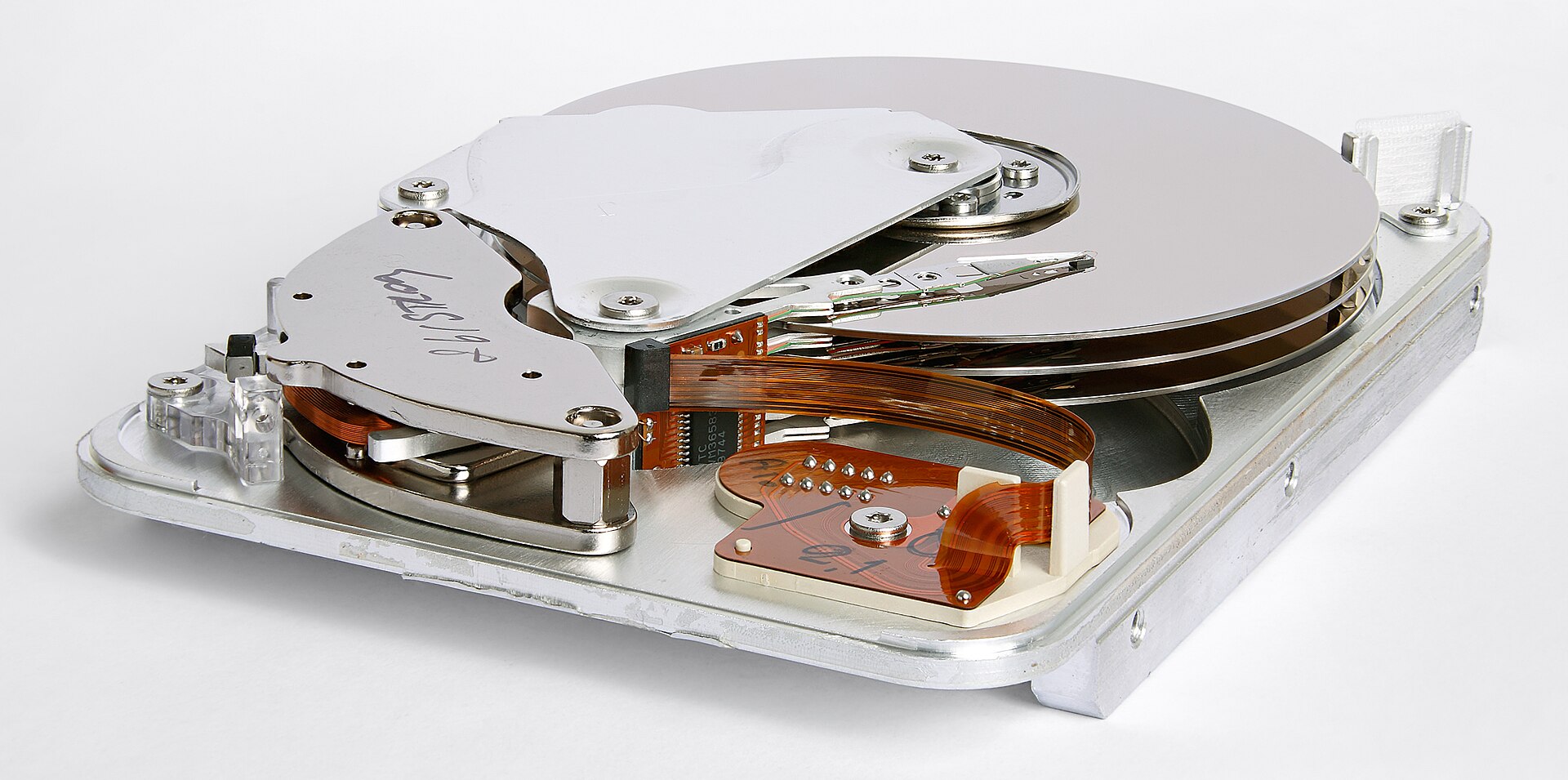
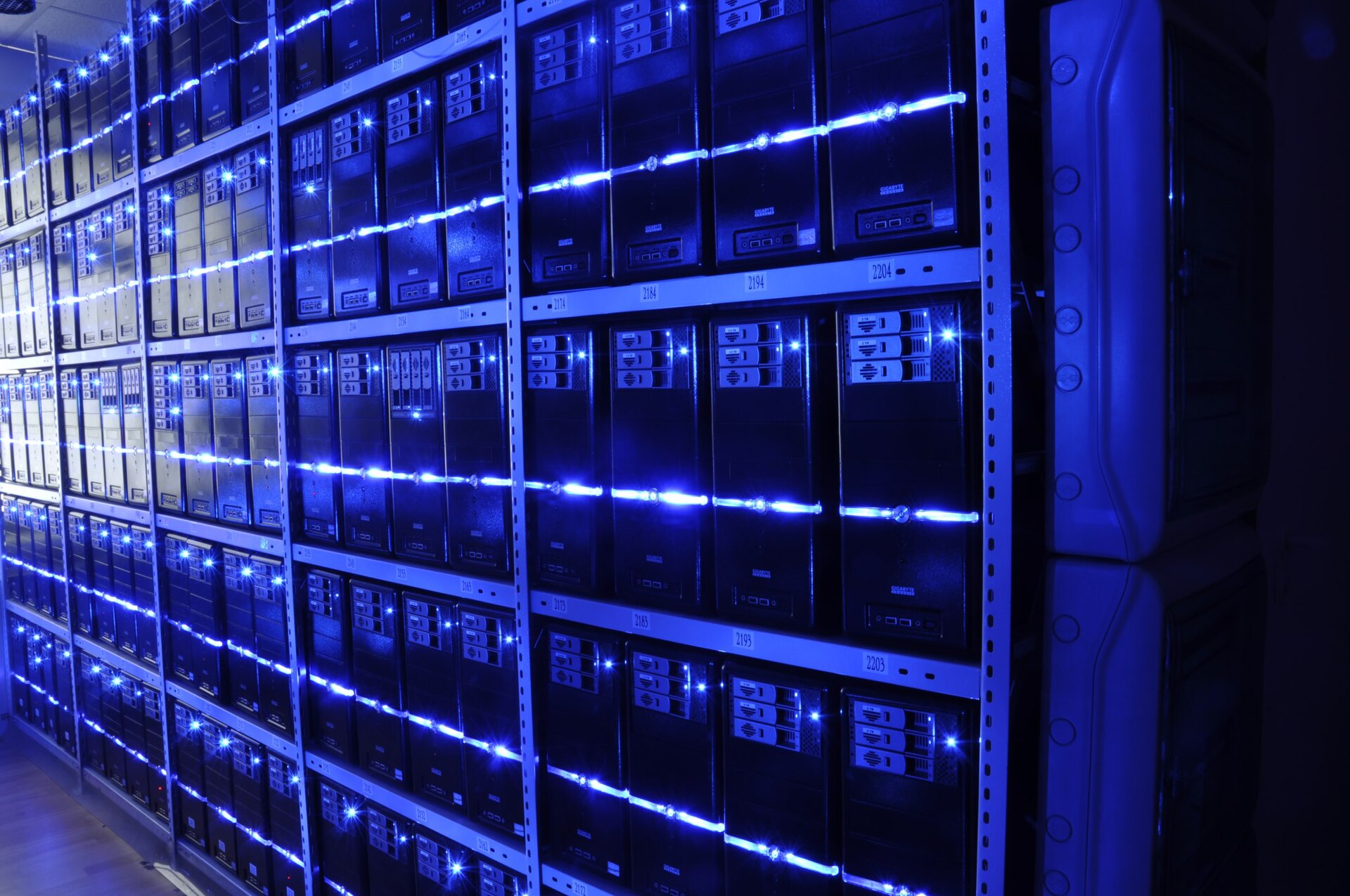
The feedstock story is what makes this timely. Data centre operators refresh storage hardware on a cycle measured in a few years, and every hard drive contains a small, consistent, easy-to-locate NdFeB voice-coil magnet. That is an unusually uniform waste stream by e-scrap standards.
Where it actually gets hard
The chemistry is the easy part. Everything upstream of it is not.
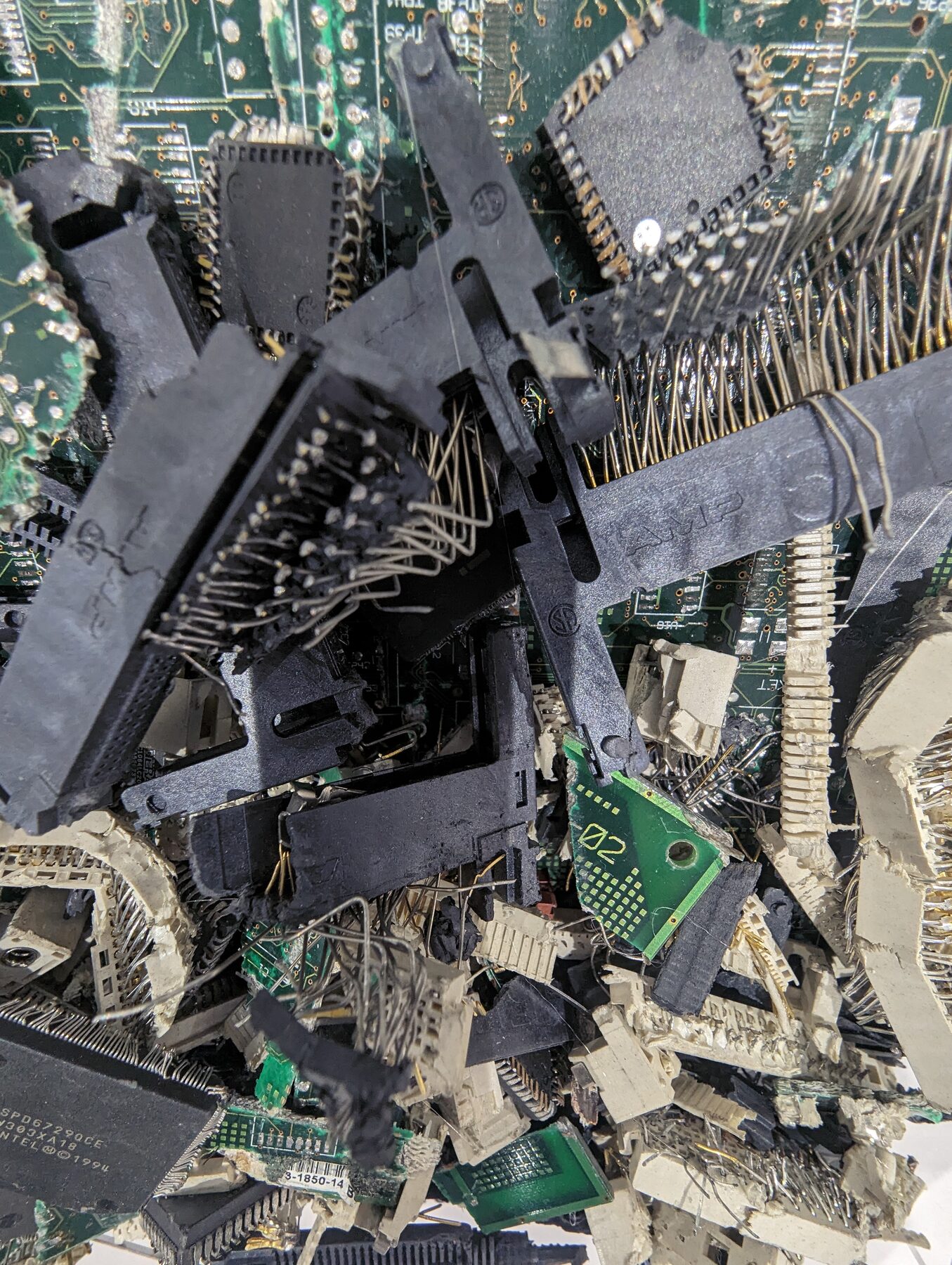
Rare-earth magnets remain, in the sector's own language, a critical and difficult material stream. Extracting the magnet from a motor casing or a drive chassis is a disassembly problem, and disassembly is labour, and labour is what shredding exists to avoid. Hard drives are the favourable case — a data centre gives you thousands of identical units and one decision-maker. A mixed bin of consumer appliances gives you neither.
Then there is capital. Hydrogen handling vessels, milling, blending and sintering are specialised equipment with uneven adoption, and each plant needs enough throughput to justify itself. And the 88% figure is a vendor number without a published independent baseline — plausible on first principles, since you are skipping mining, beneficiation, separation and reduction, but not verified.
References and image credits›
- 01Resource Recycling — The cyber-physical MRF: AI and robotics reshape e-waste recovery
- 02Royal Society of Chemistry — Upcycling e-waste for sustainable innovation
Photo: Tremaster, public domain · Photo: Retired electrician, CC0 · Photo: CC BY-SA · Photo: RubinObs/NOIRLab/SLAC/NSF/DOE/AURA/J. Pinto, CC BY 4.0 · Photo: Eric Gaba, CC BY-SA 3.0 · Photo: CC BY-SA · Photo: CC BY-SA · Photo: CC BY-SA