
Scrap car aluminium has an iron problem. Oak Ridge designed an alloy that eats it.
Shredders mix steel rivets into aluminium body sheet, and iron makes recycled aluminium brittle. ORNL's answer was not to purify the scrap but to design an alloy that tolerates the contamination — found by screening two million calculations and verified with neutrons.
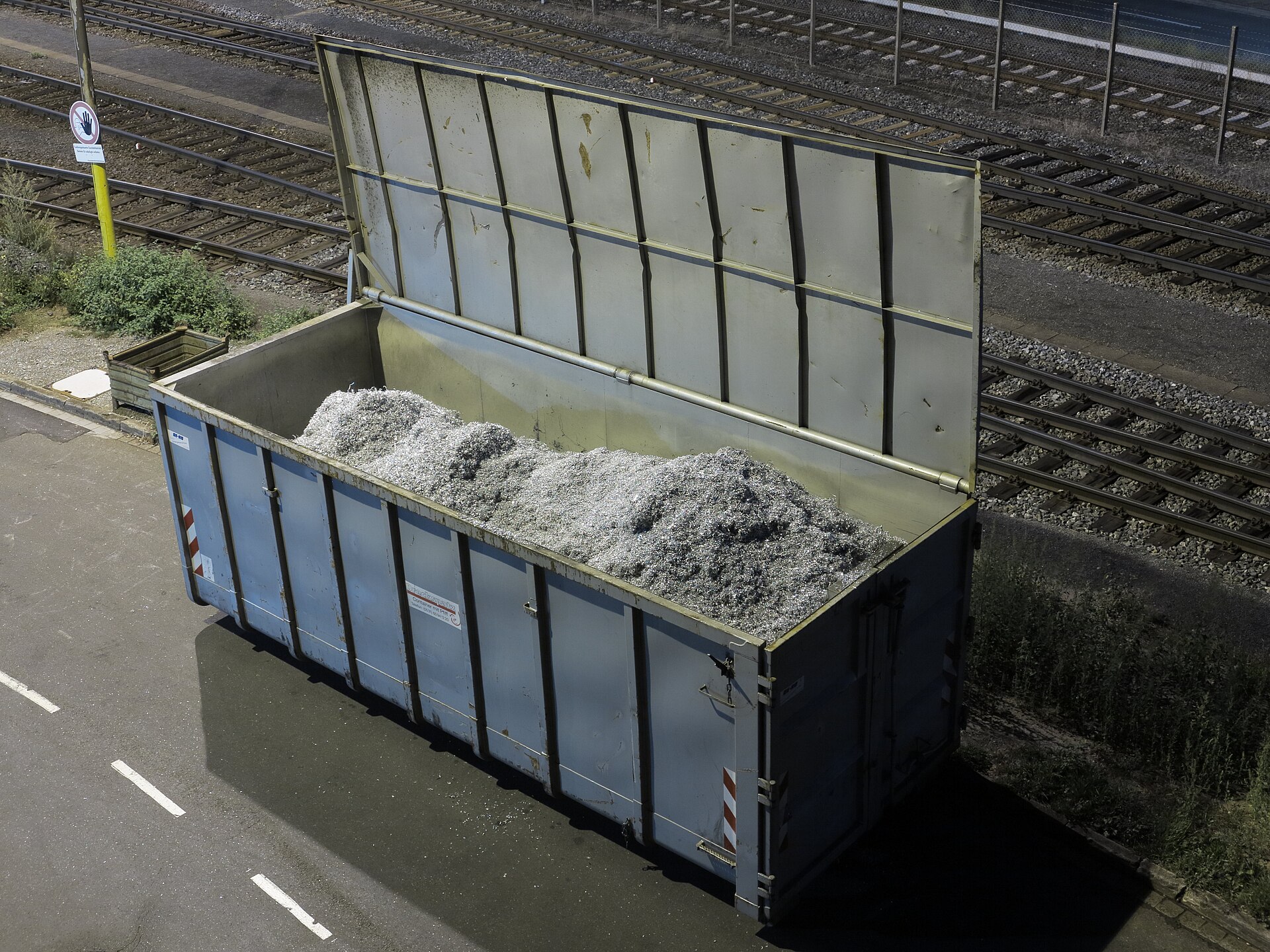
The bottleneck is a rivet
Aluminium-bodied vehicles are a recycling problem that has not arrived yet. The Ford F-150 has been aluminium-bodied since around 2015; those trucks start reaching scrap yards in serious numbers in the early 2030s, at up to 350,000 tonnes of body-sheet scrap a year in North America alone.
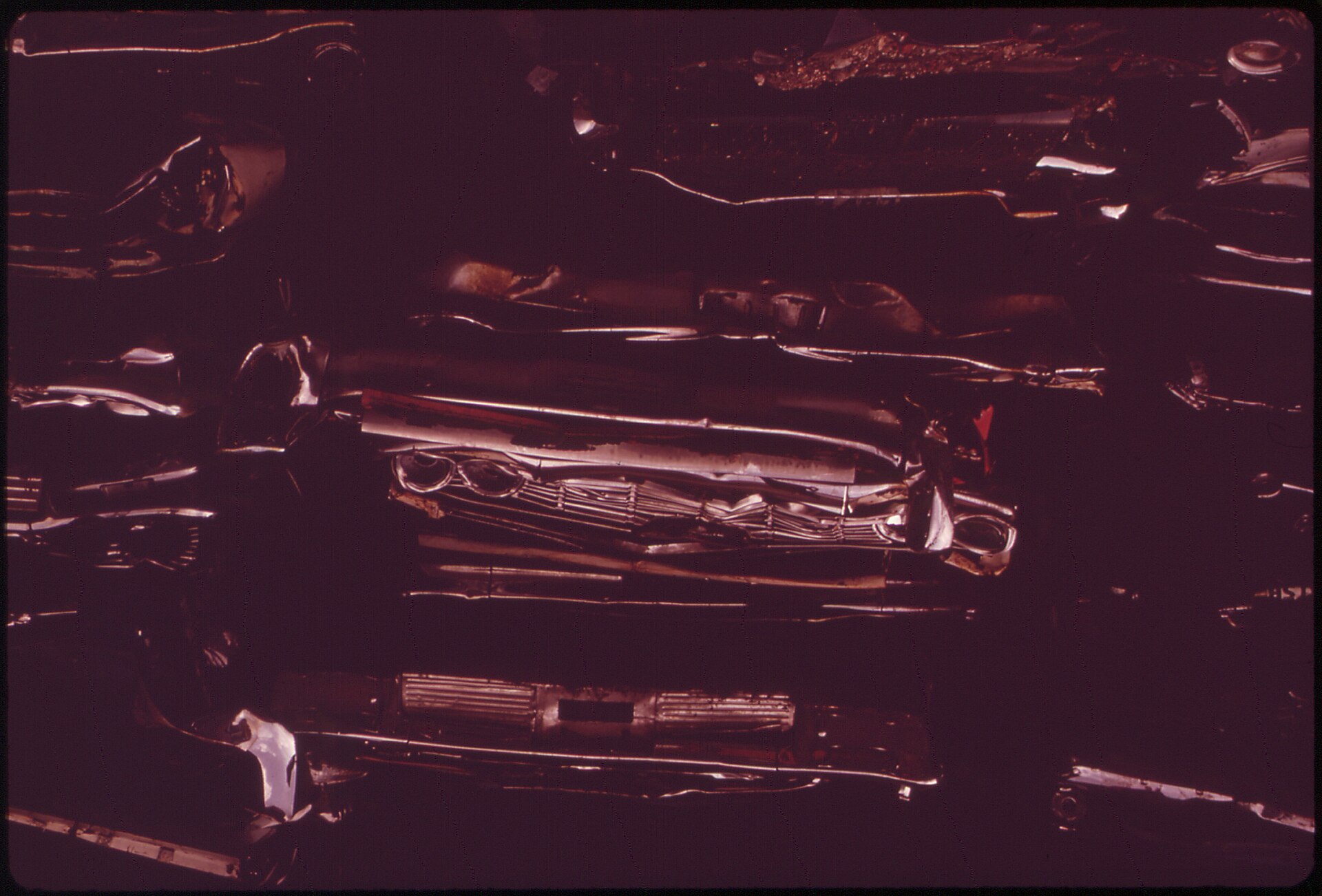
The trouble starts inside the shredder. A car body is not a sheet of aluminium; it is aluminium fastened to itself and to everything else with steel rivets, bolts and brackets. Chew the whole thing up and iron ends up dissolved through the aluminium stream. Iron in aluminium forms brittle needle-shaped intermetallic phases that act as internal crack starters, so the recycled metal behaves unpredictably under load.
So the industry downcycles. Contaminated aluminium becomes engine blocks and other low-stress castings, or it is baled and exported. Meanwhile most structural lightweight parts are still cast from primary aluminium — smelted from ore, much of it imported, at roughly twenty times the energy of remelting.
Stop scrubbing. Start designing.
The conventional fix is purification: sort harder, sink-float, dilute the contaminated melt with primary metal until the iron fraction drops back under spec. All three cost energy and money, and dilution defeats the point of recycling.
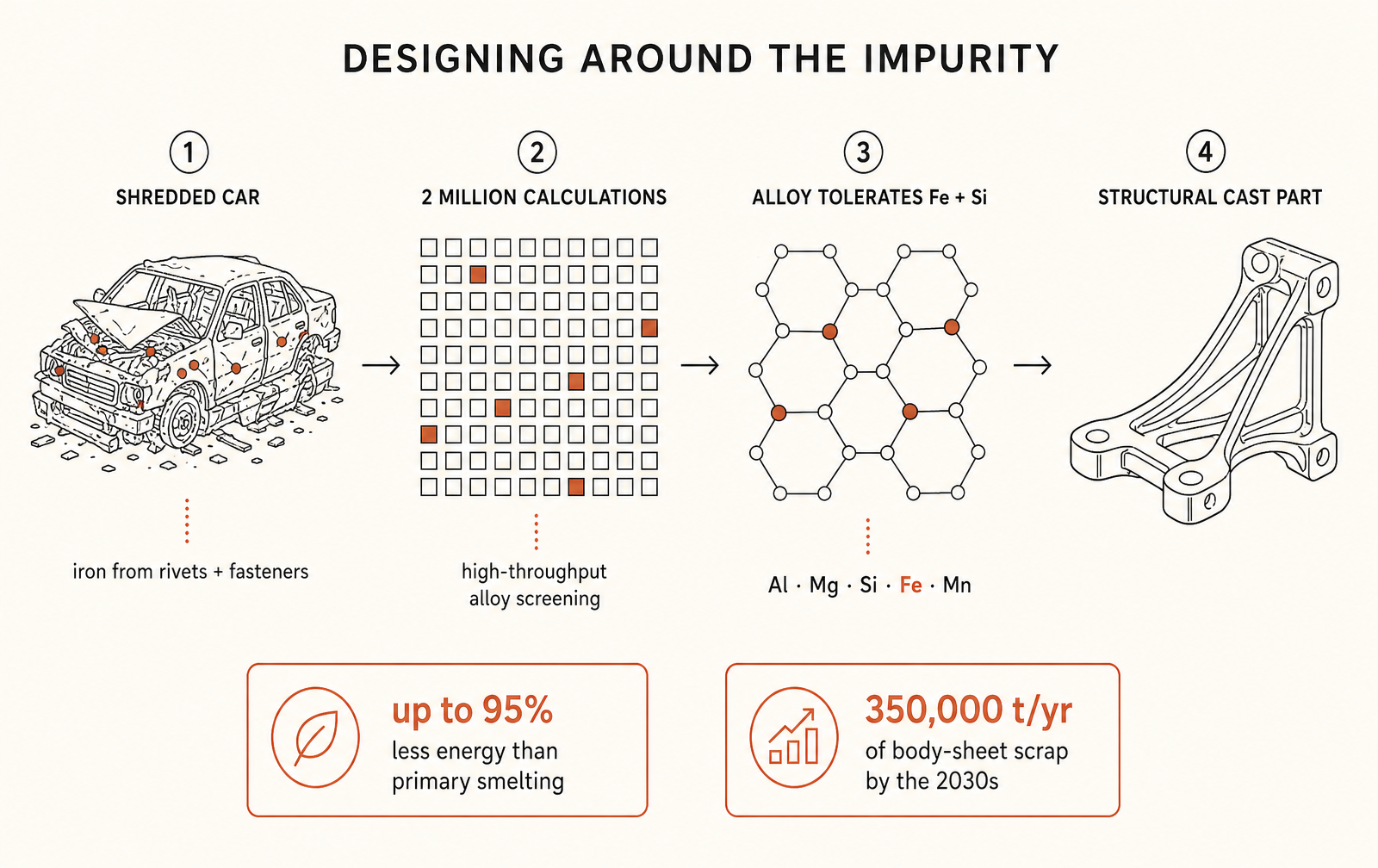
Oak Ridge National Laboratory announced a different move on 27 August. Their alloy, RidgeAlloy, is designed so that the impurities the shredder unavoidably introduces are tolerated by the chemistry rather than fought. The recipe sits on aluminium, magnesium, silicon, iron and manganese — manganese in particular is a known lever for pushing iron into less damaging phase morphologies rather than brittle needles.
Two million calculations, then neutrons
You cannot find that alloy by casting samples one at a time. ORNL ran more than two million calculations predicting which element combinations would hit the mechanical targets with contaminated feedstock, then cast only the shortlist. Computational alloy design has been promised for two decades; this is a fairly clean example of it paying off against a specific industrial bottleneck.
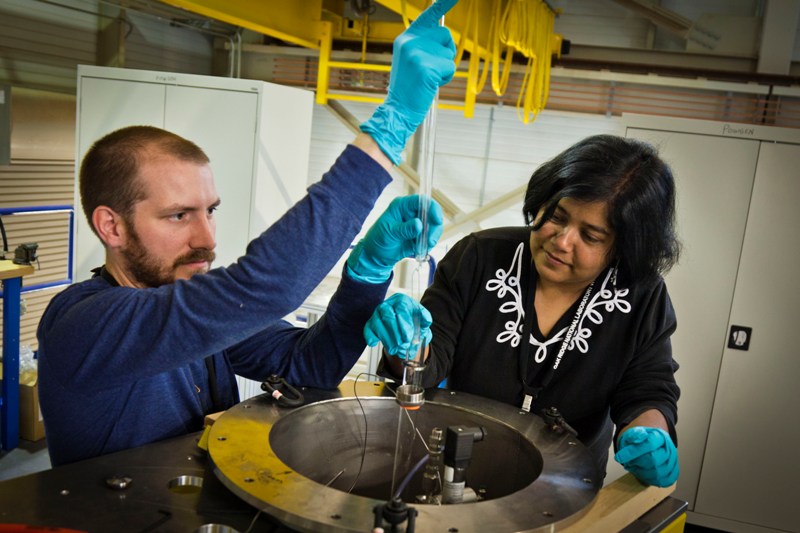
Verification used neutron diffraction at ORNL's Spallation Neutron Source. Neutrons pass through dense metal without destroying the sample and scatter off atomic nuclei, so you can watch how the lattice and its secondary phases actually arrange themselves around the iron — which is the difference between knowing an alloy works and knowing why it works.
The loop, closed once
The demonstration is what separates this from a paper. Mixed auto-body scrap was remelted and recast into RidgeAlloy ingots by PSW Group's Trialco Aluminum in Chicago, then high-pressure die-cast into a real automotive component by Falcon Lakeside Manufacturing in Michigan. Concept to physical part in fifteen months.

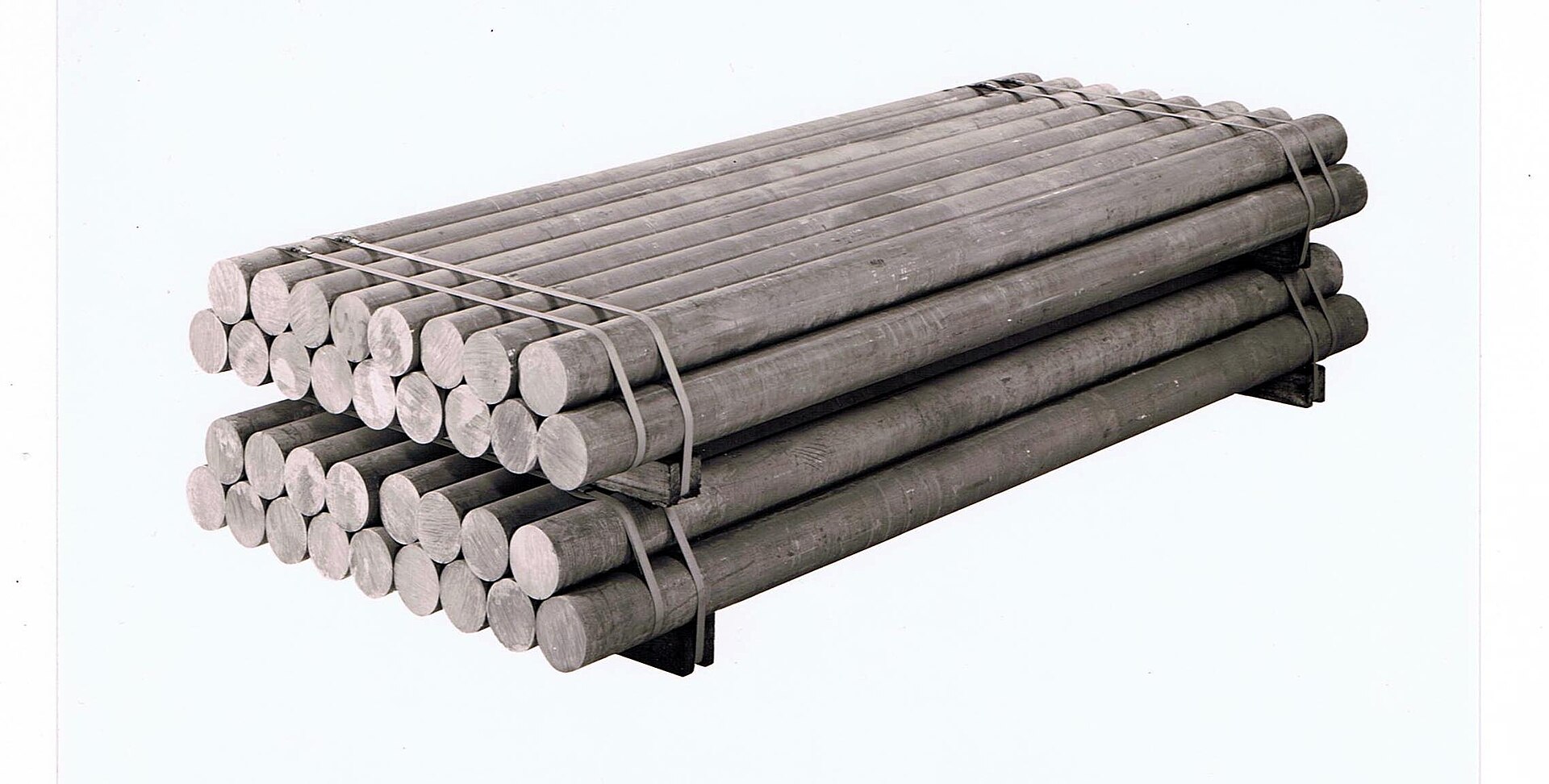
ORNL's projection is that remelting rather than smelting cuts part-level energy by up to 95%, and that RidgeAlloy could eventually supply structural castings equivalent to at least half of current annual U.S. primary aluminium production.
What is not in the announcement
Those absences matter, because without a stated impurity ceiling nobody can tell whether a given shredder's output qualifies as feedstock. The demonstrated part was medium-sized and moderately complex; the large single-piece gigacastings that would actually displace primary aluminium at volume remain a goal, not a result.
So read the 95% and the "half of U.S. primary production" as projections from a validated mechanism, not as measured outcomes at scale. The mechanism is the part worth trusting: designing alloys around contamination instead of purifying it away is a transferable idea, and there are plenty of other dirty streams — mixed copper, secondary steel, mixed polyolefins — where the same computational approach has not yet been pointed.
References and image credits›
- 01ScienceDaily / ORNL — Scientists turn scrap car aluminum into high-performance metal for structural parts
- 02Resource Recycling — Industry announcements for August 2026
Photo: Hope Alexander / U.S. National Archives, public domain · Photo: TeWeBs, CC BY-SA 4.0 · Photo: U.S. Department of Energy, public domain · Photo: David Stowell, CC BY-SA 2.0 · Photo: Aluminiumhütte Rheinfelden, public domain · Photo: Paul Sladen, CC0