
How sunlight turns plastic waste into hydrogen: inside Cambridge's 1 m² photoreforming panel
A semiconductor catches light, a cobalt–zirconium catalyst makes hydrogen, and dissolved plastic supplies the electrons. The first outdoor square-metre test works — modestly.
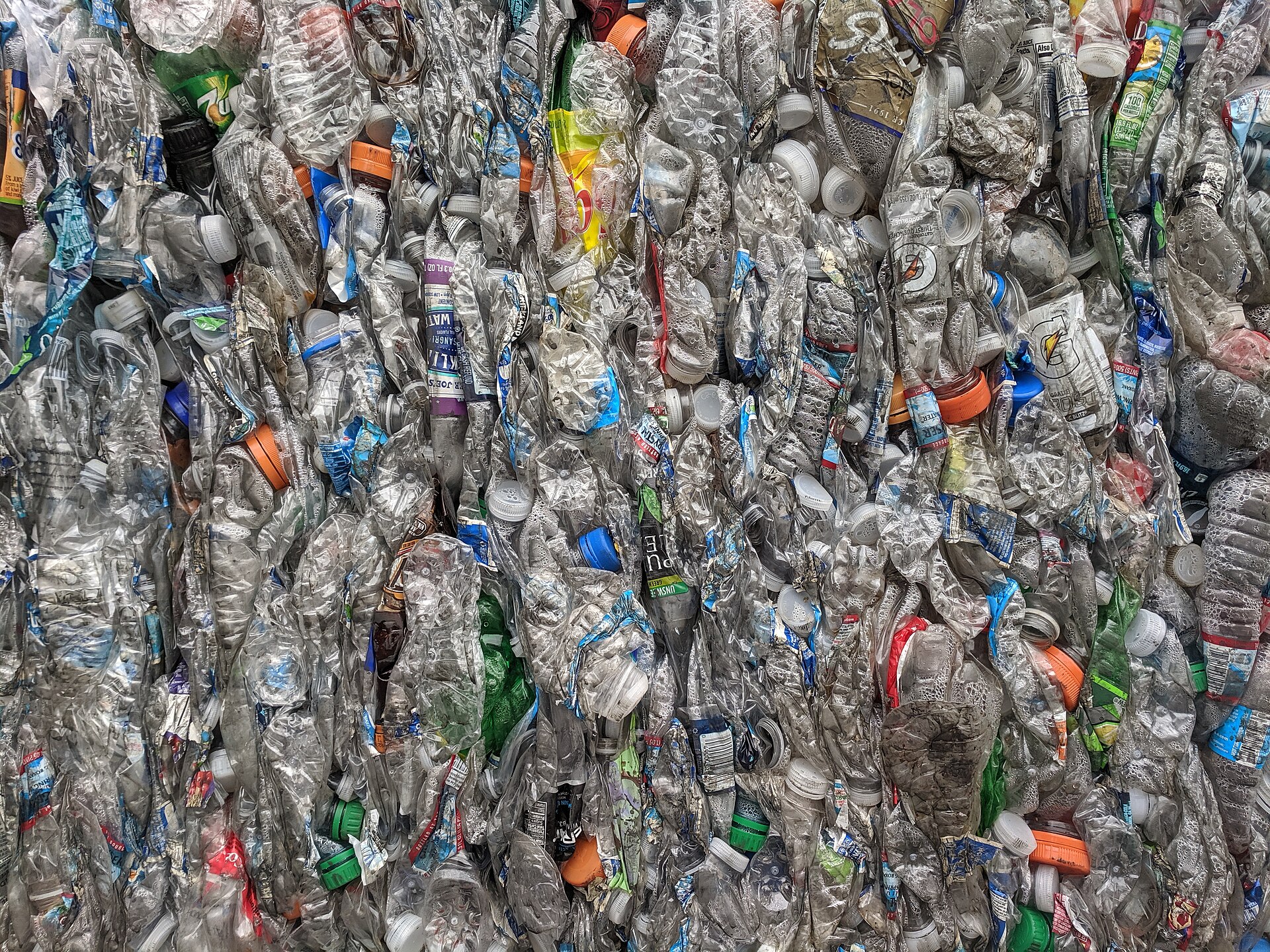
More than 95% of hydrogen is still made from fossil fuels. Photoreforming uses sunlight to break down organic waste — including plastic — into hydrogen and useful chemicals. Erwin Reisner's group at Cambridge has now run it on a 1 m² panel outdoors for the first time.
The process in five steps
- Dissolve the waste. Plastic such as PET bottles sits in hot alkaline solution for several days until it breaks down into a liquid. Glucose and pretreated cellulose were also tested.
- Load the reactor. The liquid flows over a panel carrying a light-absorbing semiconductor and a hydrogen-making catalyst.
- Absorb light. Photons free electrons in the semiconductor, leaving positively charged "holes".
- Oxidise the plastic. Holes pull electrons from the dissolved plastic molecules, releasing protons and by-products such as formate and acetate.
- Make hydrogen. The catalyst combines protons with freed electrons into H2, which is collected.
What is new
Earlier panels needed high heat or polymer binders to attach the catalyst. Cambridge used a single-source precursor — one molecule containing cobalt and zirconium in a fixed ratio — sprayed onto glass and dried at room temperature. The films are transparent, so light still reaches the semiconductor. Platinum catalysts block it.
Outdoor results
Six hours in Cambridge at roughly half of lab sunlight intensity:
PET produced less hydrogen than cellulose at lab scale, but did work and gave useful by-products — which may be worth more than the hydrogen.
The limits the team reports
- UV only. The semiconductor uses about 5% of the solar spectrum; a visible-light absorber is essential.
- Catalyst loss. About 60% of the cobalt dissolved after 22 hours. Respraying restores it; the researchers call repeated respraying impractical.
- Batch, not flow. Reactors must be refilled between runs.
- Cost. The team's own analysis puts this hydrogen above fossil hydrogen.
Where that leaves it
A real engineering step — outdoors, at square-metre scale, without precious metals — with a clear to-do list: better light absorption, a stable catalyst, continuous operation. It is a long way from treating plastic waste at meaningful volumes.
References and image credits›
- 01C&EN — Solar energy produces hydrogen fuel from waste
- 02Nature Chemical Engineering — outdoor photoreforming panel
Photo: Privateconfidential1970, CC BY-SA 4.0 · Photo: ATGabdrahmanov, CC BY-SA 4.0