
One Enzyme That Eats Bioplastic and Penicillin
A soil-derived enzyme called LCPH1 breaks down long-chain polyester bioplastics and cleaves the penicillin beta-lactam ring. It is much better at the second job than the first, which is the detail worth sitting with.
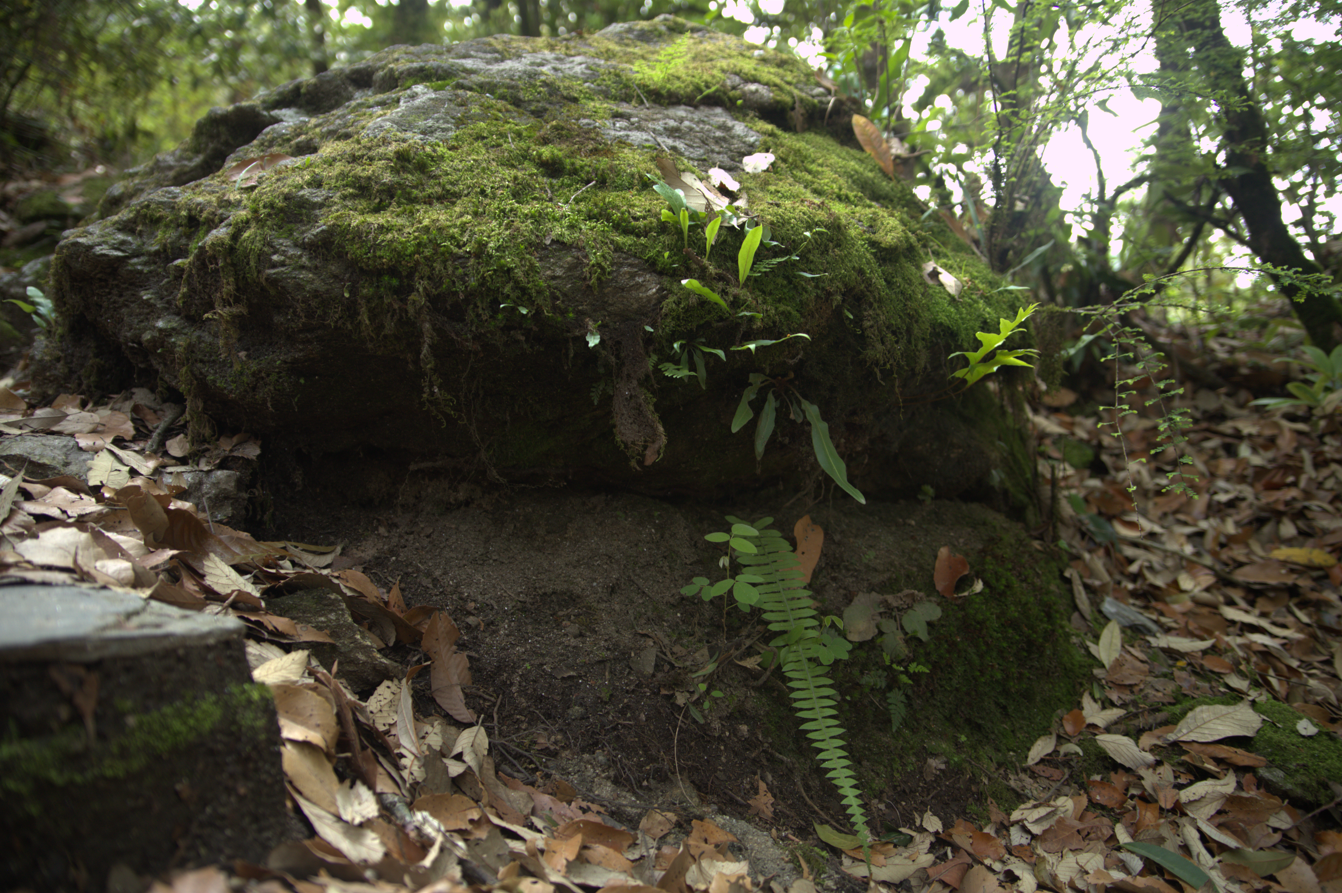
Bioplastics have a quiet failure mode: "biodegradable" usually means "degrades in an industrial composter", and industrial composters are not where most of this material ends up. What actually breaks polyesters down in soil is enzymes produced by soil bacteria, and those enzymes work at whatever rate they work.
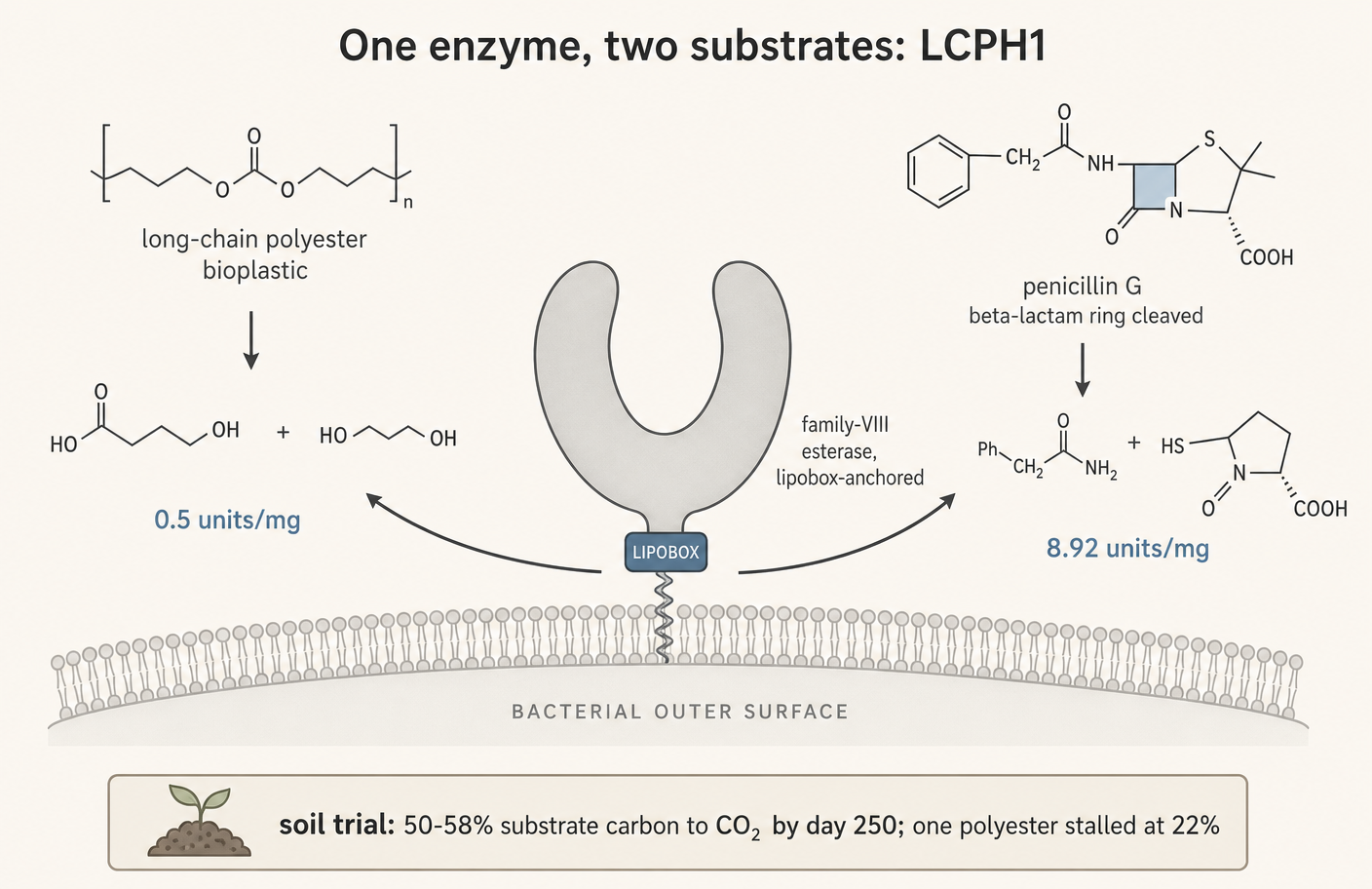
LCPH1 is one of them — a family-VIII esterase found anchored to a bacterial outer membrane by a lipobox motif. Two things make it interesting. It degrades long-chain polyester bioplastics. And it cleaves the beta-lactam ring in penicillin G.
Two substrates, very different rates
The reported activities are 0.5 units per milligram against the polyester and 8.92 units per milligram against penicillin G — roughly eighteen times faster on the antibiotic.
That ratio matters for how you read the finding. This is not primarily a plastic-degrading enzyme that happens to touch antibiotics. It is an esterase with broad ester and amide chemistry, and plastic degradation is the slower of its two demonstrated activities.
The soil trial is the honest part
Over 250 days in soil, 50-58% of the substrate carbon in the tested polyesters was converted to CO2. One polyester stalled at 22%.
Two things are worth pulling out of that. First, 250 days is a long time — this is not fast mineralisation, and any product label implying a season is overstating it. Second, the stalled polyester is the more informative result: chain length, crystallinity and side groups determine whether the enzyme can get purchase, and "polyester" is not one material.
The antibiotic angle is the underrated one
Beta-lactam residues in pharmaceutical effluent and hospital wastewater are a live antimicrobial-resistance concern, and conventional treatment does not reliably destroy them. An enzyme that cleaves the ring degrades the antibiotic activity specifically, at ambient temperature, without oxidants.
The gap between that and a deployed technology is the usual one: enzyme stability in real effluent, immobilisation onto a support so you are not dosing enzyme continuously, cost per cubic metre treated, and performance against the full family of beta-lactams rather than penicillin G alone. None of that is solved here.
What this result is
It is a well-characterised enzyme with two documented activities and a long-duration soil dataset that includes a negative case. That combination is more useful than a higher headline number would have been, because the stalled polyester tells you where the limit is.
References and image credits›
- 01Family VIII esterases and beta-lactam hydrolysis — review
- 02Biodegradability of bioplastics in soil environments — EU JRC
Photo: Krishna K. Sahh, CC0, via Wikimedia Commons · Photo: Whispyhistory, CC BY-SA 4.0 · Photo: Huaqiangqiang, CC BY-SA 4.0