
The Sensor Under the Belt: How Magnetic Fingerprinting Finds a Hidden Battery
Litech mounts a flat sensor beneath an existing conveyor and reads magnetic signatures every millisecond, aiming to flag concealed lithium cells before they reach the shredder. The mechanism is elegant. The numbers are missing.

Fires are now the defining operational risk in material recovery, and almost all of them start the same way: a lithium cell nobody saw goes into a shredder. A Norwegian company, Litech, is pitching a detection layer that sits underneath the belt you already own.
Why optical detection keeps missing
Cameras and near-infrared sorters read surfaces. A battery sealed inside a bin bag, taped inside a vape, or buried under a layer of textiles presents no surface to read. X-ray works through material but brings shielding, licensing and maintenance obligations that most facilities will not take on for a single hazard class.
That leaves the hazard undetected until the moment of mechanical damage — which is precisely the moment it ignites.
What magnetic inductive spectroscopy actually measures
The sensor is a flat unit mounted under the belt, and it is not looking at the object at all. It generates an alternating magnetic field, and every conductive object passing through that field develops eddy currents. Those currents generate their own opposing field, which the sensor reads back.
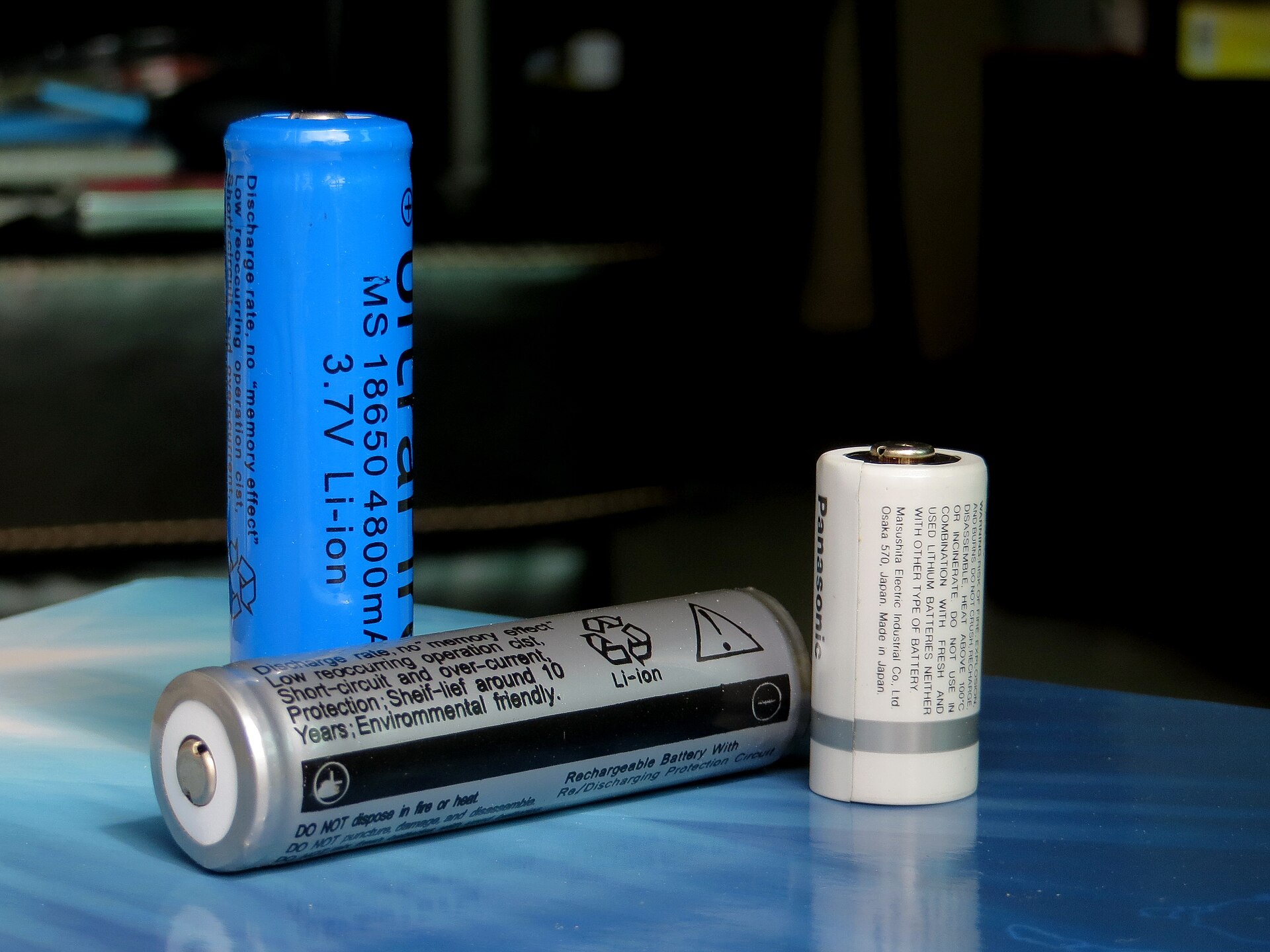
The useful part is that the response varies with frequency. Conductivity, magnetic permeability and geometry all shift the response differently across the frequency band, so sweeping multiple frequencies produces a curve rather than a single number. A steel can, an aluminium tray and a lithium cell with its copper and aluminium foils, steel casing and electrolyte return measurably different curves.
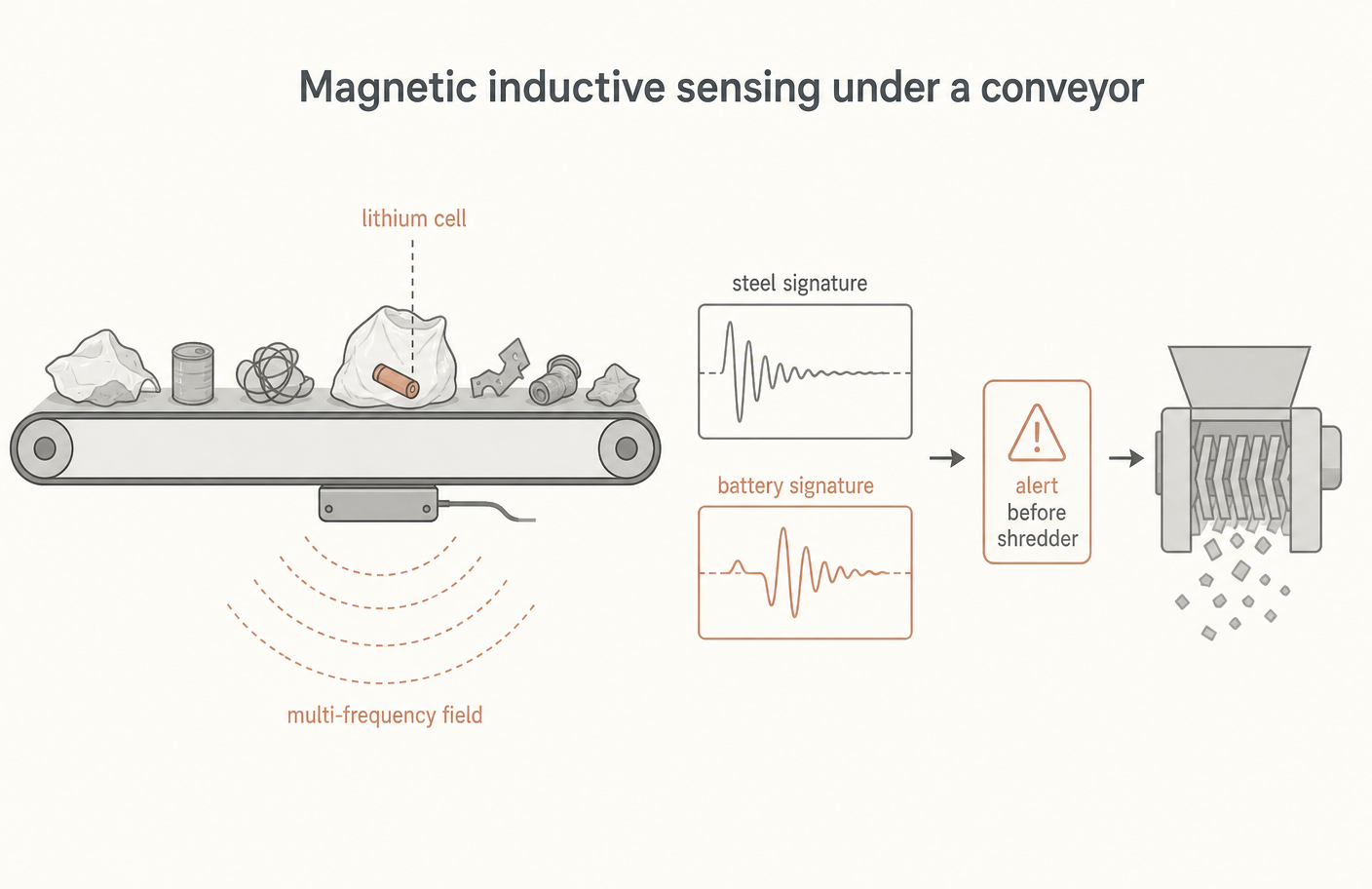
Because magnetic fields pass through plastic, cardboard and textiles without meaningful attenuation, the bag is effectively invisible to the sensor. That is the whole reason the approach is interesting: it inspects the contents, not the packaging.
Where it sits in the line
Placement is the point. The sensor goes upstream of the shredder, so a flagged object triggers a warning while there is still belt length to act on — stop the line, divert the fraction, or pull the item by hand. Detections are logged to a dashboard, which over time turns "we get fires" into a rate with a location attached.
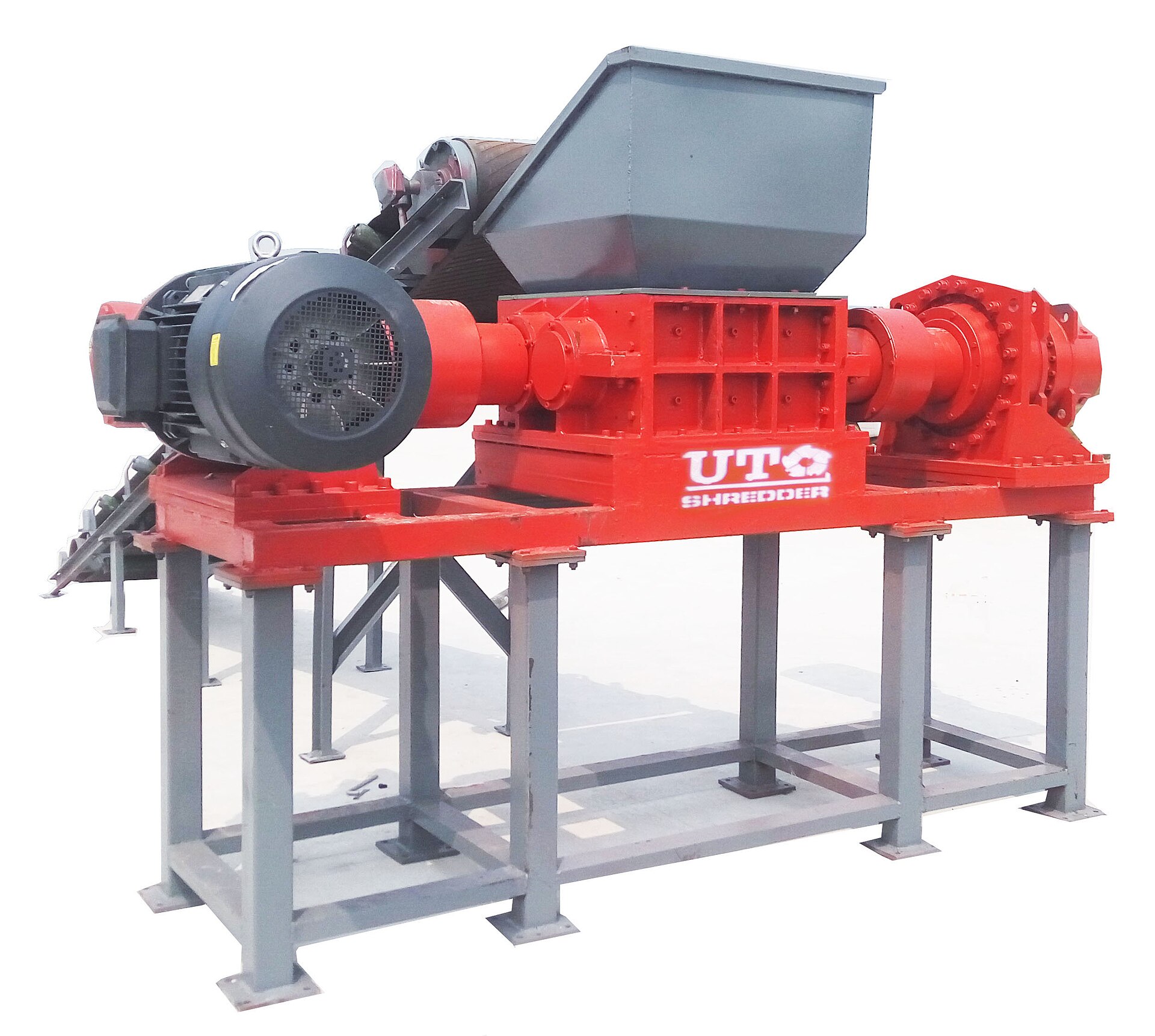
The system is now running on a pilot line with Suez.
What has not been published
There is no disclosed detection accuracy, no false-positive rate, no penetration depth in millimetres of burden, and no maximum belt speed. Litech's own FAQ leaves these open. Those four numbers are the entire engineering case: a detector that halts a line on scrap metal costs more in downtime than the fires it prevents, and one that only reads the top 50 mm of a 300 mm burden depth will miss most of what matters.
The Suez deployment is a single dedicated test line, not a facility rollout. That is the honest status: a plausible physical mechanism, a real operator willing to test it, and no published performance envelope yet.
What to watch
The number that decides this is not detection rate. It is false positives per operating hour at realistic burden depth and belt speed. Ask for that figure before asking about anything else.
References and image credits›
Photo: CaptJayRuffins, CC BY-SA 4.0, via Wikimedia Commons · Photo: Mk2010, CC BY-SA 3.0 · Photo: Robert Kropf, CC BY-SA 4.0