
Shredded Paper Is Paper. That Does Not Make It Recyclable
Most recycling programmes reject loose shredded paper, and the reason is mechanical: the strips are the wrong size for the machines that sort paper.
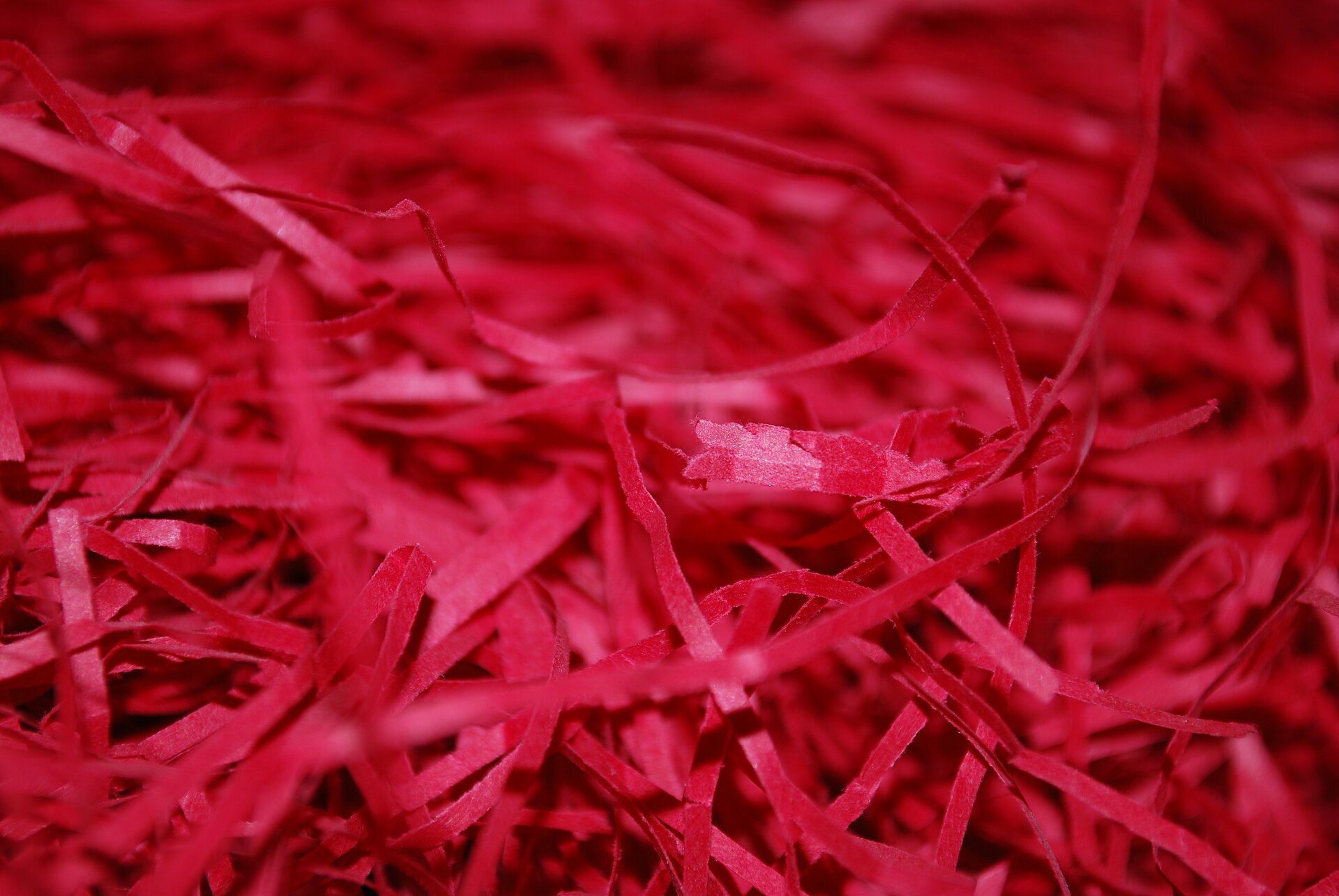
You shred documents because you should. Then you tip the bag into the recycling bin, because it is paper. That last step is where it usually goes wrong.
Shredded paper is still paper, so it belongs in the paper recycling.
Most materials recovery facilities explicitly reject loose shredded paper. It is not a policy preference - the strips physically do not survive the sorting line.
Reason one: it falls through
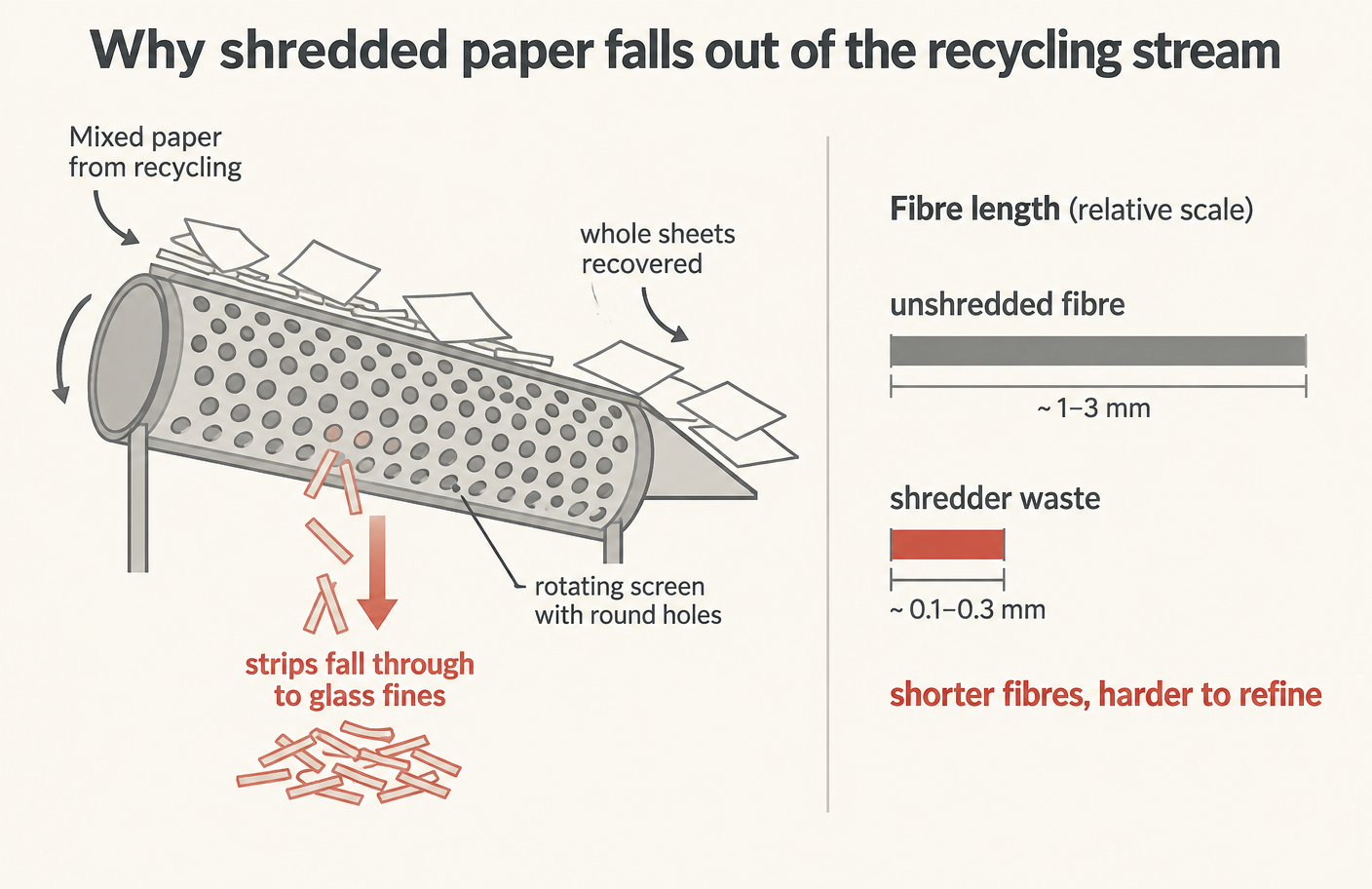
A materials recovery facility separates paper from everything else using rotating screens sized for whole sheets. Sheets ride over the top of the screen; shredder strips drop straight through the holes and land in the fines, mixed with broken glass.
Reason two: it contaminates everything else
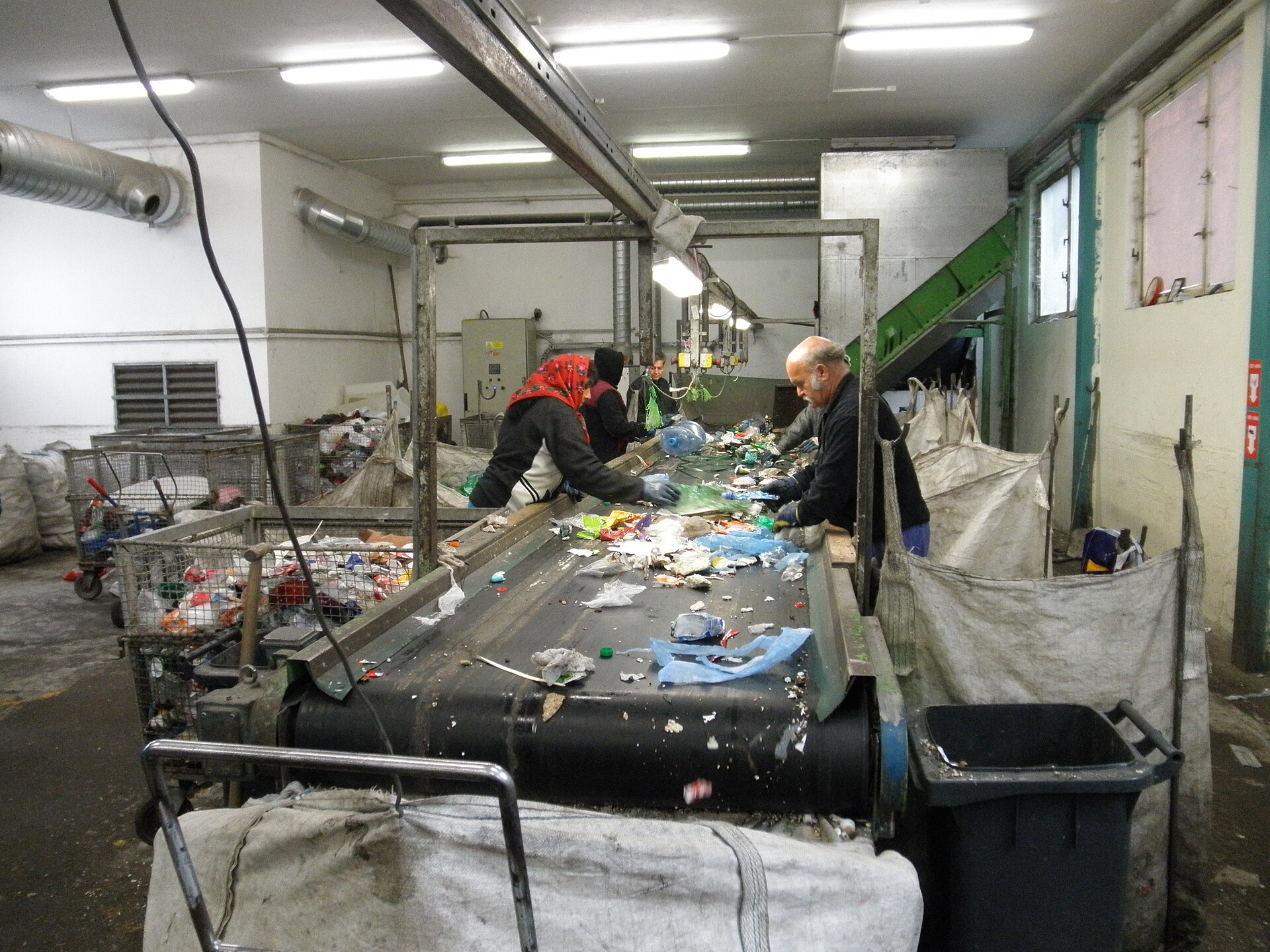
The strips that do not fall through wrap around shafts, blow across the building and end up in the glass fraction, which makes the glass unmarketable. Workers pull it out by hand and the line slows down.
Reason three: the fibres are already damaged
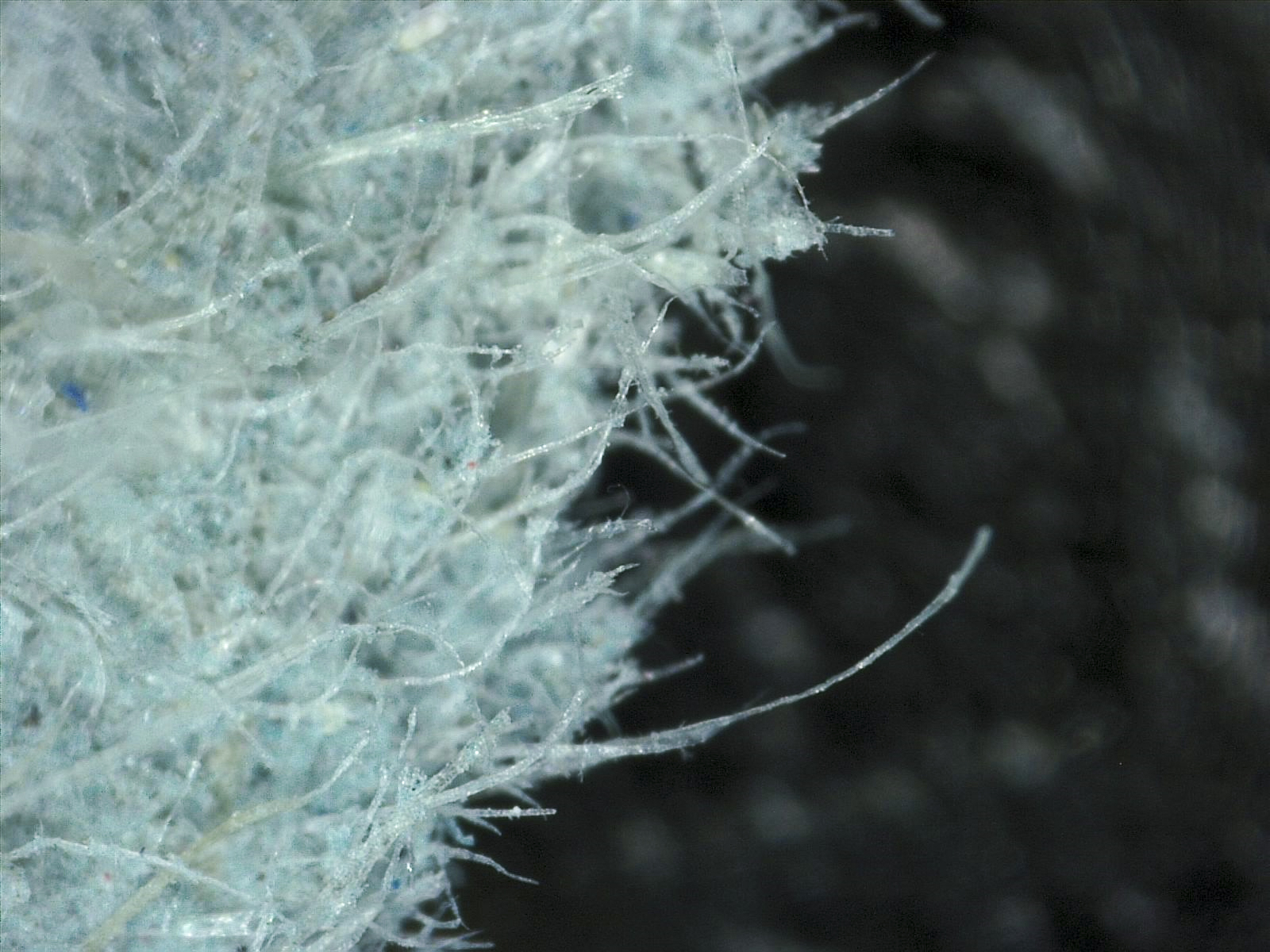
Paper fibre survives roughly five to seven recycling cycles before it is too short to bond. A 2021 peer-reviewed study found that office shredder waste produces pulp with severely shortened fibres that are measurably harder to refine than fibres from unshredded recovered paper. Shredding spends several cycles' worth of fibre length in one pass.
What to do instead
Check whether your programme takes shreddings bagged in paper - many drop-off sites do, and the bag keeps the strips off the screens. Otherwise compost them, use them as packing material or pet bedding. The short fibres that make them bad pulp make them good compost feedstock.
The honest caveat
Guidance really does vary by municipality; some programmes accept bagged shreddings and some accept none. There is no national standard to point at, which is precisely why the default assumption is wrong so often. And the trade-off is real - not shredding sensitive documents carries its own risk.
References and image credits›
- 01Earth911 - Is Shredded Paper Recyclable?
- 02Impact of shredding degree on papermaking potential (PMC, 2021)
Photo: Aldude999, Wikimedia Commons, CC BY-SA 3.0 · Photo: Wikimedia Commons, CC BY-SA · Photo: Wikimedia Commons, CC BY-SA