
Mexico's paper recycling headline, taken apart
54.1% recovered. 89.5% recycled content. Both figures are real, both come from the same 10 August study, and they measure different things. Separating them changes what the numbers say about household recycling.
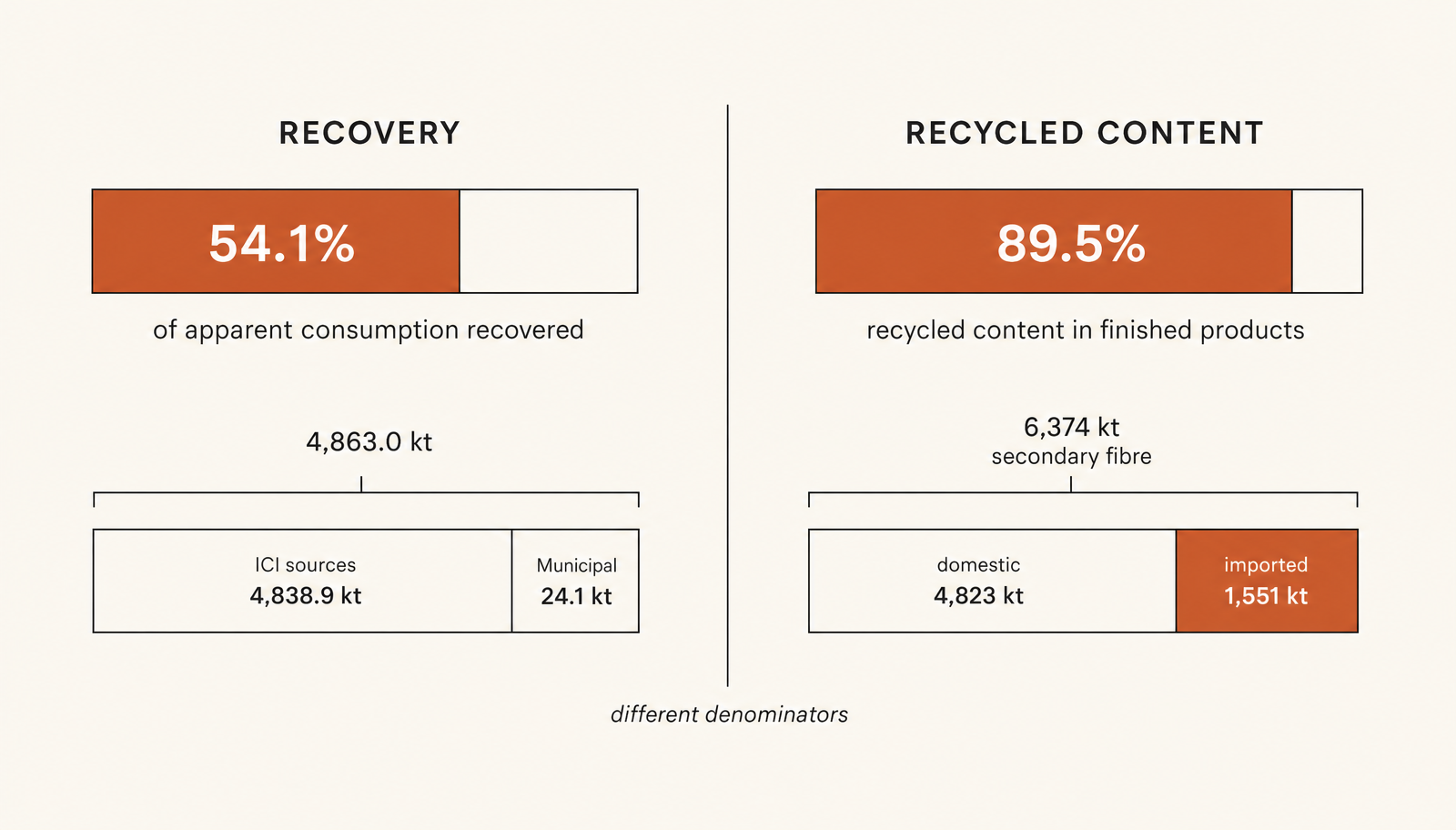
The Commission for Environmental Cooperation published a Mexico-focused paper and cardboard study on 10 August 2026. Two numbers from it travel well: roughly 54.1% of apparent paper consumption recovered for recycling, and 89.5% recycled content in finished products.
Both are defensible. Read together as a single story about Mexican circularity, they mislead.
The claim
Mexico recovered approximately 4,863 kilotonnes of paper and cardboard for recycling in 2023, equal to 54.1% of apparent consumption. Final products were reported to contain 89.5% recycled material.
What is genuinely strong
This is not a thin report. It maps the value chain end to end: infrastructure, markets, the regulatory frame, and the role of informal base recyclers who do a large share of the actual collection.
Cardboard dominates the recovered stream at 3,959 kilotonnes, about 82% of the total, with a reported 62.9% recovery rate. That is a real, functioning industrial fibre loop, and the study is right to say so.
The first correction: content is not recovery
89.5% recycled content is not 89.5% domestic recovery. Mexico consumed 6,374 kilotonnes of secondary fibre, of which 1,551 kilotonnes were imported.
So a meaningful slice of that high recycled-content figure is supported by fibre collected somewhere else. The mills are running on recovered paper; not all of it is Mexican recovered paper.
The second correction: recovery is industrial, not domestic
A 54.1% national recovery rate built almost entirely on ICI streams tells you very little about what happens to a cereal box in a kitchen.
This is the number that changes the story. The executive summary identifies 4,838.9 kilotonnes recovered from industrial, commercial and institutional sources, against 24.1 kilotonnes recovered municipally.
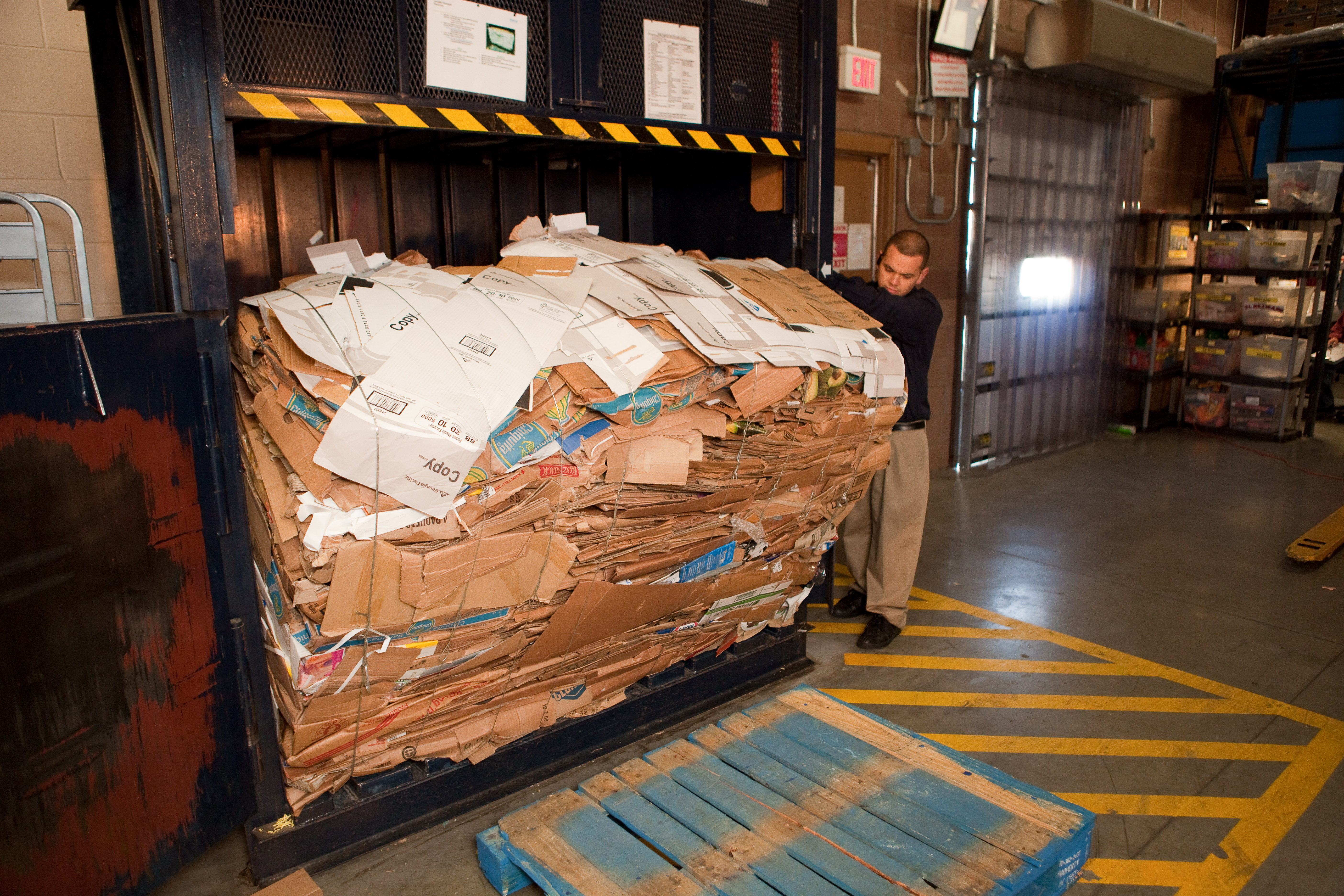
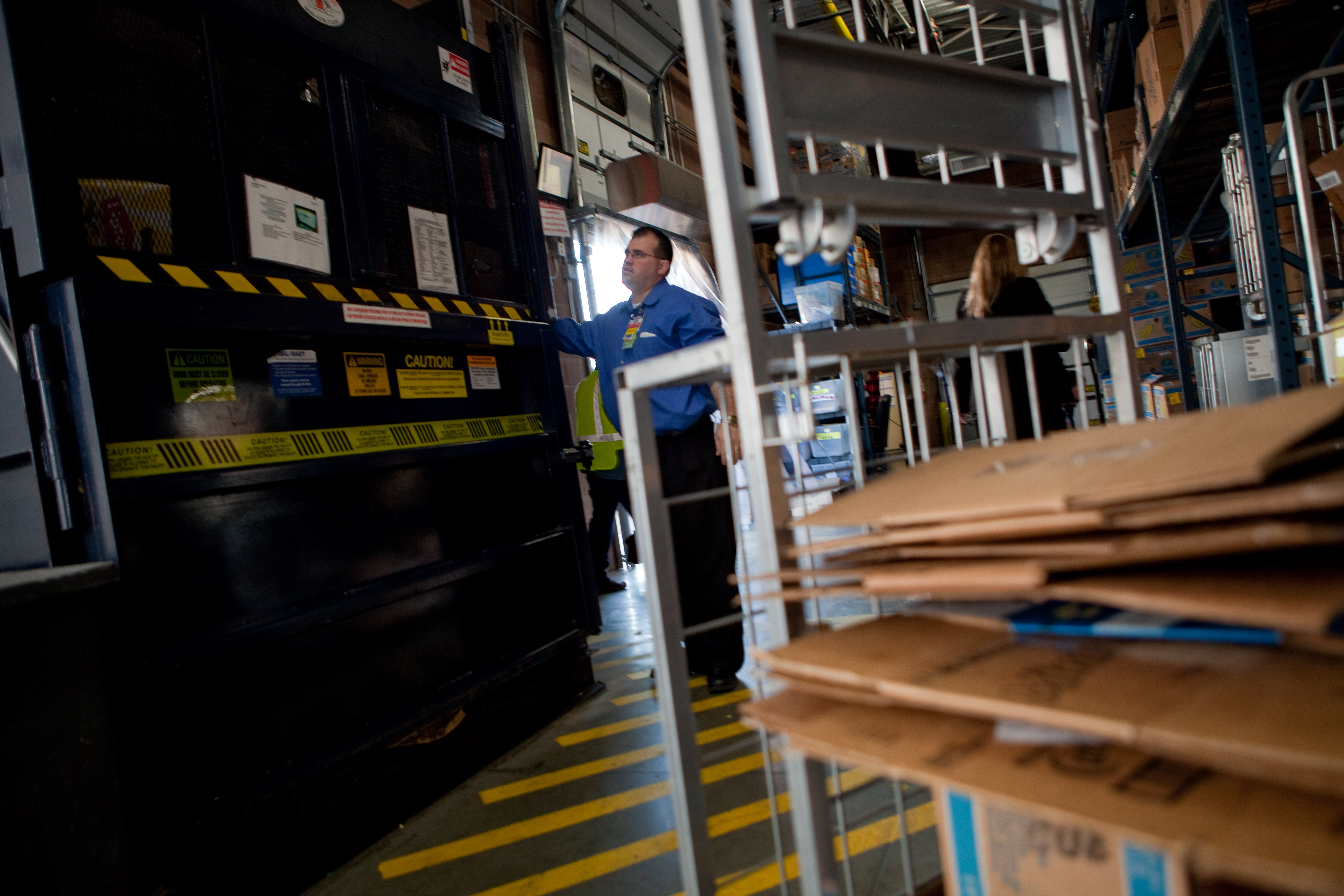
Household collection is not driving the headline. Back-of-store baling at retailers, factory offcuts and office fibre are. Those streams are clean, concentrated and already have a commercial owner, which is exactly why they work.
The data-quality question
Mexico's main data year is 2023, compared with 2021 for the United States and 2020 for Canada. The study leans heavily on the CNICP 2023 industry report plus expert knowledge, checked against official sources.
That is a reasonable method for a market with limited municipal data. It also means the trilateral comparisons in the report are useful context rather than like-for-like benchmarks, and the ICI-heavy structure of the Mexican figure should be carried into any comparison someone makes with it.
The implementation gap
The recommendations are sensible: selective collection, extended producer responsibility, infrastructure investment, better integration of informal workers, stronger end markets.
What the summary does not provide is a costed implementation plan with funded targets and measured household outcomes. Naming the right directions is not the same as showing who pays for the collection round, what the tonnage target is, and how it will be verified.
The promise
Mexico has something many countries do not: a substantial secondary-fibre market with real domestic demand and a high share of recycled fibre in finished products. The pull is there. Extending that industrial strength into household collection is an easier problem than building the mills would have been.
The catch
The headline overstates local circularity if product recycled content is read as domestic collection. Recovery is concentrated in ICI streams, mixed collection contaminates fibre, municipal capacity is uneven across the country, and informal workers remain central to the system while being weakly integrated into it.
Which metric should a policymaker headline: material recovered from households, total domestic recovery, or recycled content in finished products?
References and image credits›
- 01CEC, Paper and Cardboard in Mexico - full report
- 02CEC, Paper and Cardboard in Mexico - executive summary
Photo: Walmart Corporate, CC BY 2.0, via Wikimedia Commons · Photo: Work With Sounds, CC BY-SA 4.0, via Wikimedia Commons · Diagram: The Waste Stack · Photo: Walmart Corporate, CC BY 2.0, via Wikimedia Commons