
No, the recycling facility does not wash your containers
A sorting facility separates materials. It does not run a dishwasher. Here is what "empty and rinsed" actually means, why food-soiled items cause real damage, and where over-cleaning becomes its own problem.
It is one of the most comfortable beliefs in household recycling: put it in the bin dirty, someone downstream will clean it. It is also the belief that quietly wrecks loads.
The claim
I can toss a half-full or food-covered container into the blue bin - the recycling facility will wash it.
EPA guidance does not treat washing as a substitute for correct preparation. The practical rule is to empty and rinse plastic, metal and glass, and keep paper clean and dry.
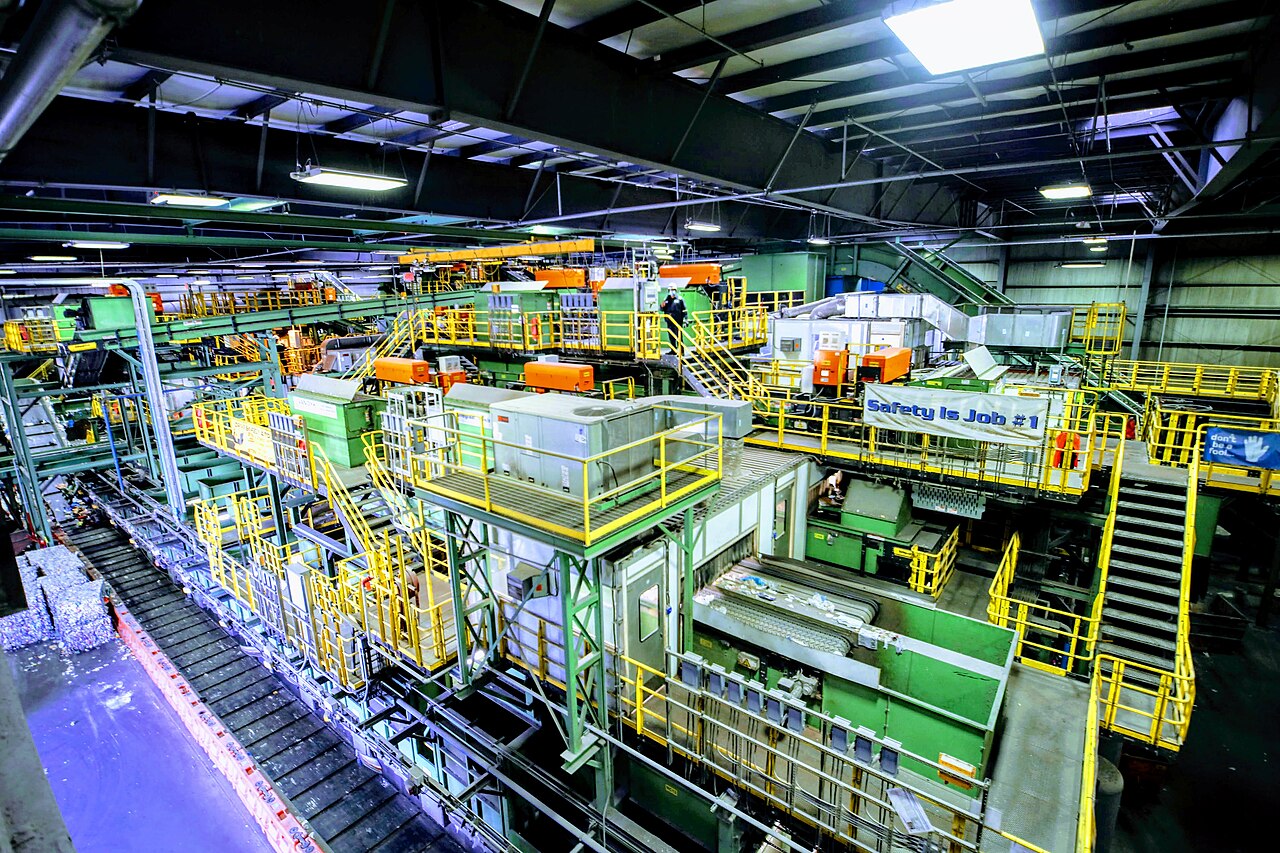
A material recovery facility is a sorting line: screens, magnets, eddy currents, optical sorters, balers. Its job is separation, not cleaning. Washing happens later, at a reprocessor, on material that has already been sorted and sold - and material that arrives contaminated often never gets that far.
Why it matters
Food, liquid and wet paper do not stay in one container. Liquid soaks into fibre on the same belt, and wet fibre is worth less or nothing. Unaccepted items can damage equipment and increase processing costs, and contamination can in some cases send an entire load to disposal.
That is the part people underestimate. The failure mode is not "this yoghurt pot gets rejected." It is "this yoghurt pot degrades the fibre around it."
What "clean enough" actually means
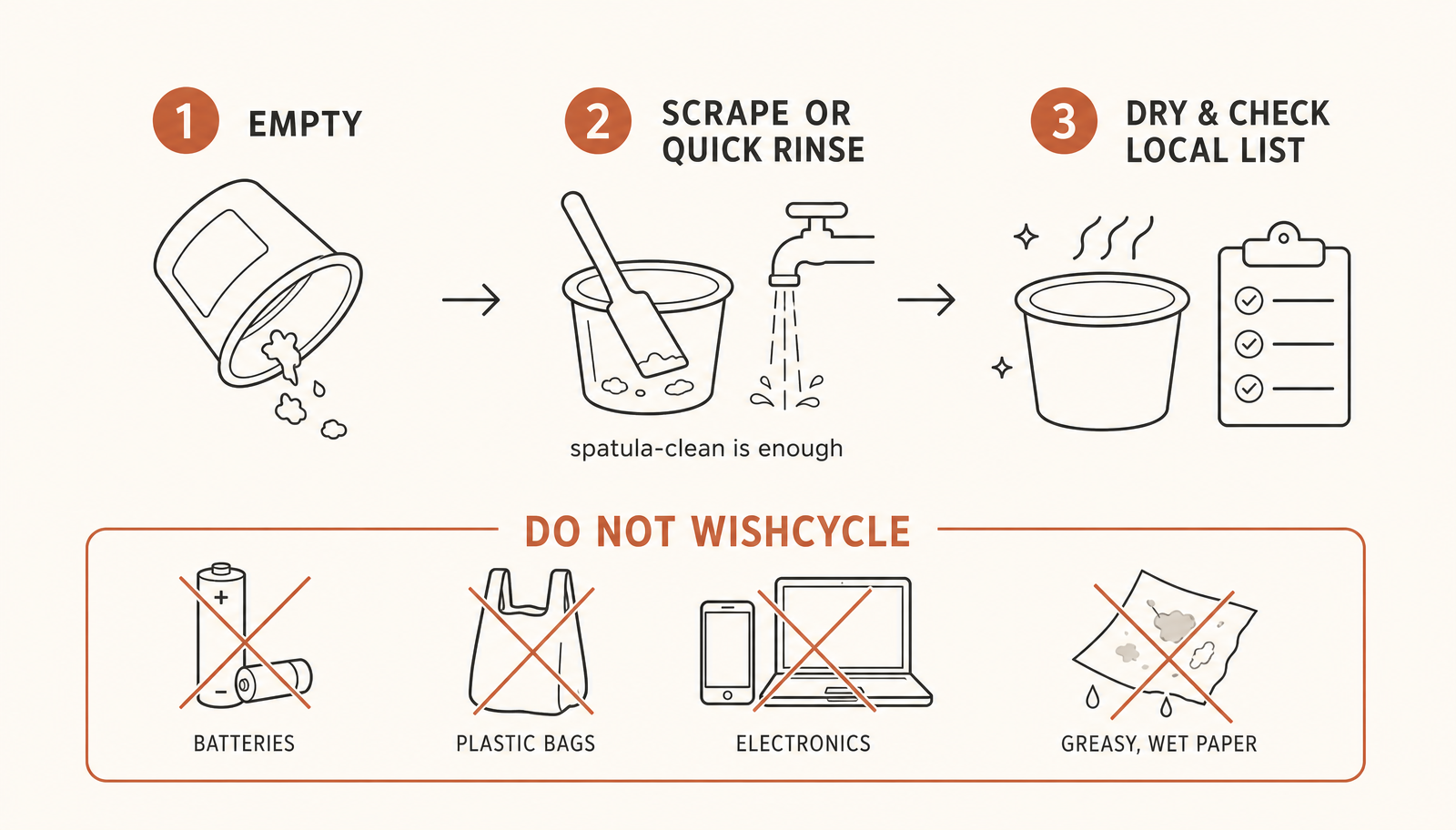
And do not put batteries, electronics, bags or other special materials in the recycling bin unless your local programme specifically accepts them. These are not contamination in the food sense - they are fire and equipment hazards, and they need their own route.
The nuance people miss in the other direction
Do not use large volumes of potable water trying to sterilise packaging. The target is empty, reasonably clean and dry. Running hot water over a jar for a minute costs more, environmentally, than the marginal quality gain it buys.
If a bit of rinsing helps, thorough washing must help more.
Past the point of "empty and drained", extra washing mostly buys water use. And no amount of washing makes an unaccepted item acceptable to your local programme.
The promise
Cleaner, drier feedstock produces higher-quality recovered material and fewer contamination losses. EPA notes that source separation produces cleaner material and can improve the value of recyclables - which is the whole economic point, because a bale only moves if someone wants to buy it.
The catch
A rinse does not change what your local programme accepts, and programmes genuinely differ. Some food-soiled paper belongs in organics collection rather than recycling. Over-washing creates unnecessary water use. Checking the local list is not a cop-out answer - it is part of the answer.
What is the messiest thing people routinely put in your local recycling bin, and where should it actually go?
References and image credits›
- 01US EPA, Frequent Questions on Recycling
- 02US EPA, Best practices for source separation of recyclables
Photo: via Wikimedia Commons · Photo: CaptJayRuffins, CC BY-SA 4.0, via Wikimedia Commons · Diagram: The Waste Stack