
MIT's recyclable stretch yarn: a design win, not yet a system
A polyethylene core-sheath yarn that stretches like PET-spandex and survives ten melt-and-respin cycles. The material result is real. The gap between a recyclable yarn and a recyclable garment is where almost all of the difficulty still sits.
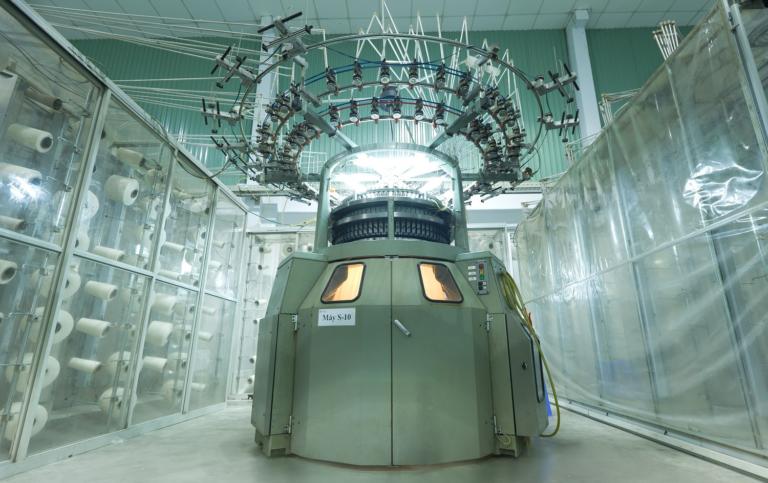
Stretch apparel is one of the hardest recycling problems in textiles, and the reason is embarrassingly simple: the garment is two incompatible polymers twisted together. A polyester or nylon shell around a spandex core gives you the stretch consumers expect and a material nobody can economically separate afterwards.
MIT researchers have gone at the problem from the other end — not better separation, but a yarn that never needs separating.
The claim
The team reports a polyethylene-family core-sheath yarn that matches or exceeds the mechanical performance of commercial PET-spandex yarns while remaining thermo-mechanically recyclable.
What is genuinely strong
The construction is an elastic olefin block copolymer core inside a stronger polyethylene sheath. Both are olefins. That single decision is the whole idea: because the components sit in the same chemical family, they can be remelted together instead of being pulled apart first.
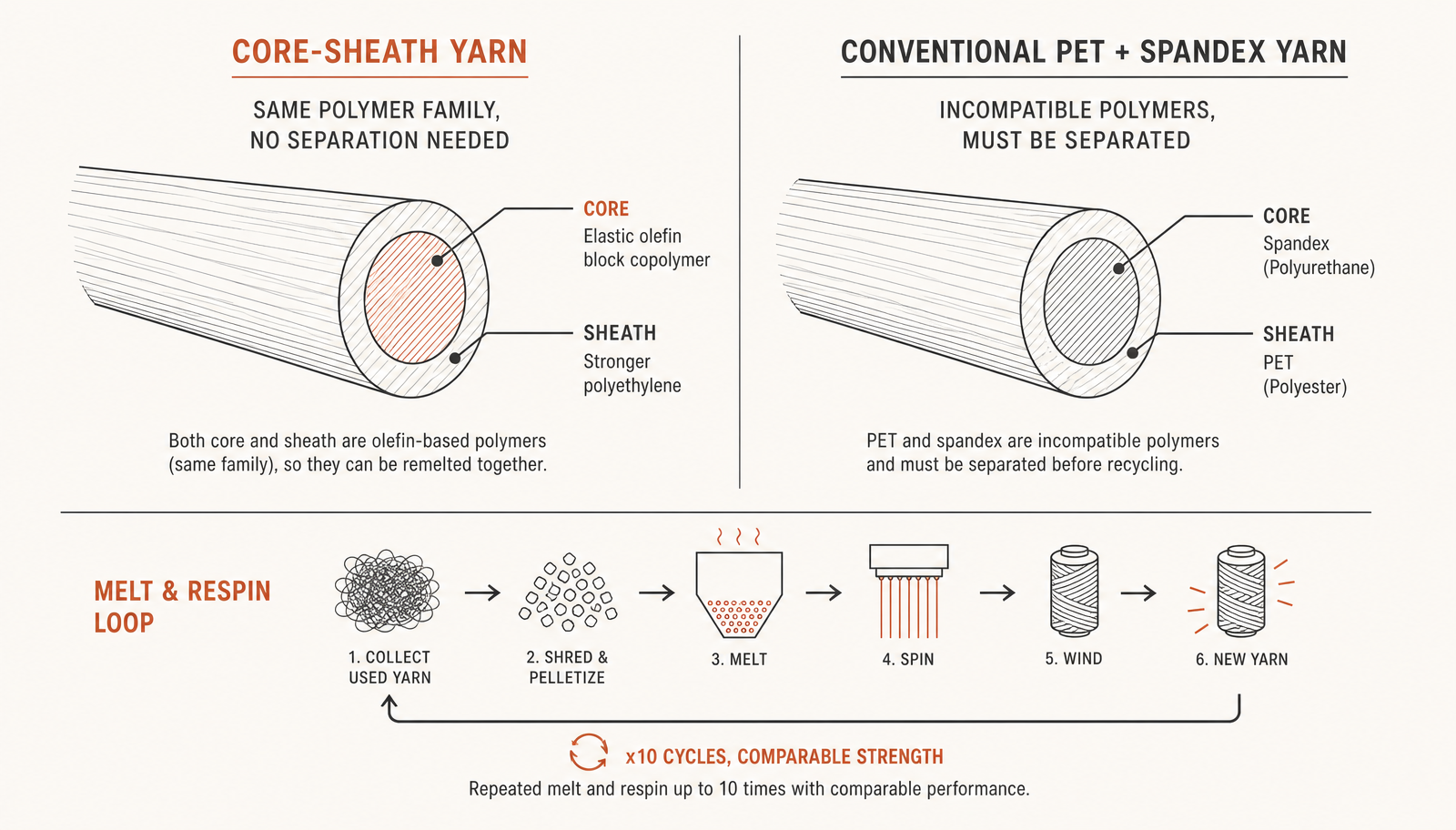
The underlying paper reports joint reprocessing of polyethylene homopolymers and copolymers without phase separation or performance loss. That is the technically interesting result — not that the yarn is recyclable in principle, but that mixing the two grades in the melt does not degrade what comes out.
Where the claim stops
A recyclable yarn is a material property. A recyclable garment is an infrastructure outcome. The first does not produce the second.
The public demonstration is at the material and yarn level. MIT describes knitting and weaving finished textiles as the next stage, with industrial-scale spools framed as a scale-up goal rather than a present capability.
Between the two sit at least four requirements that no laboratory result can satisfy: unambiguous material identification on the finished garment, separate collection, sorting capable of pulling PE textiles out of a mixed stream, and a facility willing to remelt them.
The scale of the surrounding gap
The European Commission names fibre blends, elastane, chemical finishes and insufficient sorting capacity as major barriers to textile recycling — and puts the share of textile waste feeding back into new textiles at under 1% globally.
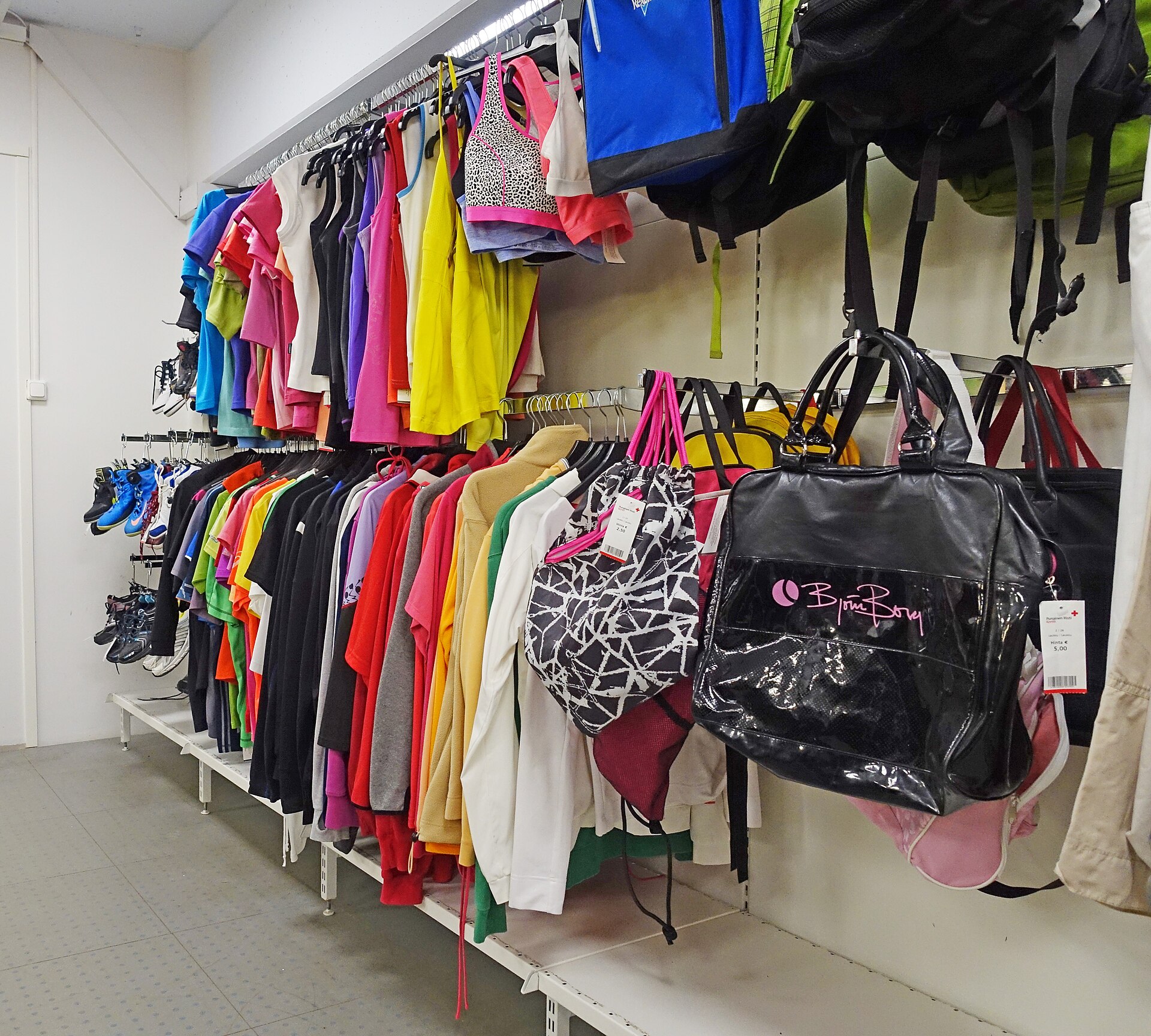
This yarn directly attacks two items on that list — blends and elastane. It does nothing about sorting capacity, and a single-material garment is only identifiable as single-material if the sorting line can tell.
The promise
Designing the fibre for recycling removes a failure mode that no downstream process has solved cheaply. Paired with take-back and a sorting route, a single-material stretch garment could plausibly return as yarn, or at least as a durable plastic product rather than as landfill or an incinerator feed.
The catch
Unresolved: full-garment durability, dyes and finishes (which are themselves contaminants in a melt), microfibre shedding in wash, sorting economics, contamination tolerance, remelting energy, and performance beyond ten cycles. And it remains a fossil-derived polyethylene product unless the feedstock and the energy behind it change.
There is also a quieter risk. A garment marketed as recyclable, entering a system with no route to recycle it, is a material improvement and a consumer-behaviour problem at the same time.
What would count as system proof
A knitted garment made at production scale. Wash and wear durability data. A shedding measurement against a conventional equivalent. A named sorting technology that can identify the material in a mixed post-consumer stream. And one facility, anywhere, remelting collected PE textiles into new yarn at volume.
Until then this is a strong material result with an honest gap in front of it — which is a better position than most textile-recycling announcements, and still not a recycling system.
References and image credits›
- 01MIT News — MIT engineers design recyclable elastic yarn
- 02SeongHyeon Kim et al. — Polyethylene-based thermo-mechanically recyclable stretchable yarns for circular sustainable textiles
- 03European Commission — EU Strategy for Sustainable and Circular Textiles
Photo: Pschemp, CC BY-SA 3.0 · Photo: Lluis tgn, CC BY-SA 3.0 · Photo: Thygesen Textile Vietnam, CC BY 4.0 · Photo: Tiia Monto, CC BY-SA 3.0