
The battery-fire tripwire inside an MRF
CP Group's Sentry pairs X-ray with RGB cameras and AI to spot batteries and propane cylinders on a moving recycling line. Circular Services is installing it now — here is how the detection zone works, and which numbers nobody has published yet.
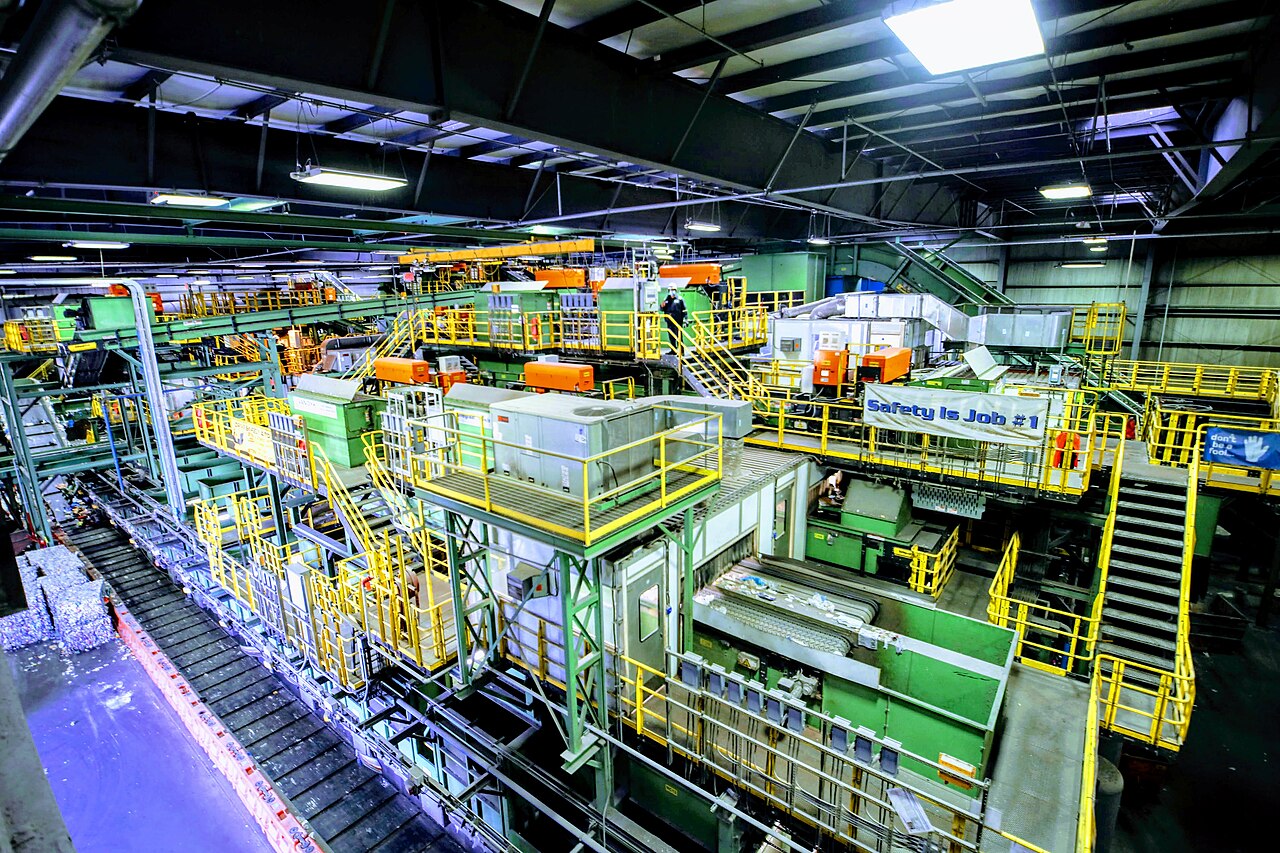
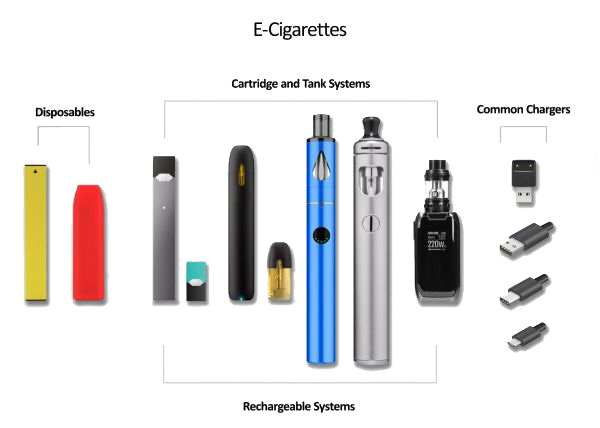
A materials recovery facility is a fire risk with a conveyor running through it. Lithium cells arrive hidden inside toys, vapes, power tools and cordless razors, get crushed by a shredder or a baler, and ignite in a building full of dry paper and film. The industry's standard defences are downstream: suppression, thermal cameras, insurance. A detection system tries to move the defence upstream — find the hazard while it is still an object on a belt.
A 14 August report says Circular Services is installing and testing CP Group's Sentry system to detect batteries and other hazards on its recycling lines.
What the detection zone actually does
Mixed material travels along a conveyor through a fixed detection zone. Two sensing modes look at the same object at the same moment.
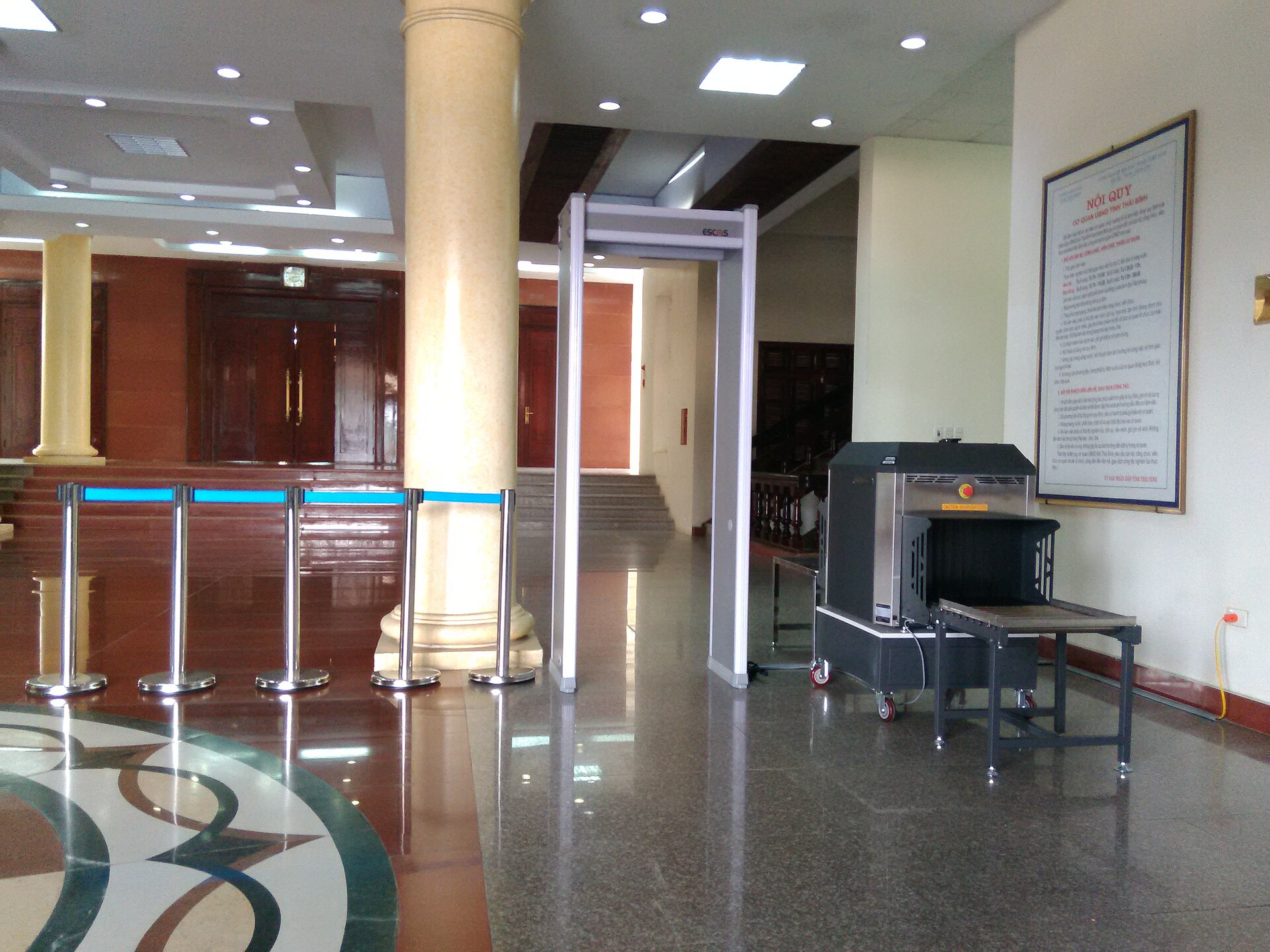
X-rays report on internal features — density and shape under the packaging. RGB cameras capture the visible surface: colour, label, form factor. Sentry combines both streams with AI-based image analysis.
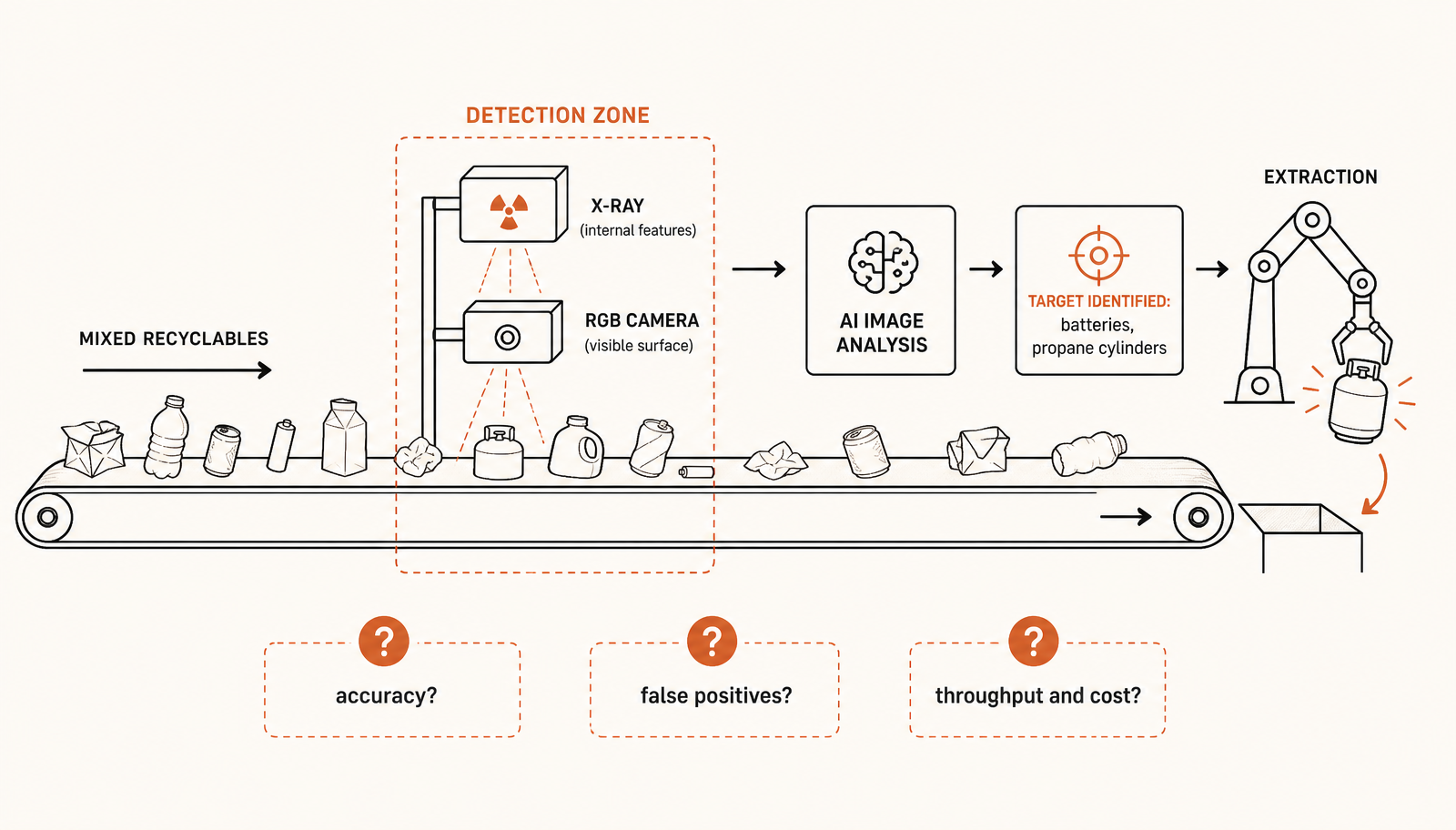
The reason for two modes is that neither alone is sufficient. A lithium cell sealed inside a plastic toy has no useful visible signature; X-ray sees the electrode roll. A propane cylinder is obvious to a camera and ambiguous to a density read against a similar steel can. Combining them narrows both error directions at once.
Configurable targets, not a fixed list
The AI identifies target hazards such as batteries and propane cylinders. CP Group says operators can configure which hazards to target based on the facility's specific equipment risks and its local waste stream.
That matters more than it sounds. A facility whose main risk is a shredder cares about cells. A facility feeding a baler cares about pressurised vessels. A region with a heavy disposable-vape stream has a different target profile from one dominated by power-tool packs.

Detection is only half the loop
CP Group describes the intended workflow as integrating detection with extraction equipment and controls, so identified targets can be removed without slowing or stopping the conveyor.
This is the part that decides whether the system is useful or merely informative. A detector that flags a cell and requires a line stop and a manual pull converts a fire risk into a throughput cost, which is exactly the trade facilities already refuse to make. The value case rests on removal happening at line speed.
The promise
Early detection could reduce battery fires, equipment damage, downtime and the direct worker intervention that currently means someone reaching into a moving stream. Circular Services says it hopes the system can become a broadly useful automation tool rather than a single-purpose safety device.
The catch
Sentry is still being installed and tested. The current report publishes no accuracy figure, no false-positive or false-negative rate, no throughput impact, no maintenance burden, no extraction success rate and no cost.
Two failure modes matter in opposite directions. Missed cells mean the fire risk is unchanged while the operator believes it is managed. Over-flagging means good material is diverted to a hazard bin, and the crew starts ignoring the alarm — the classic path by which a safety system stops being a safety system.
What would count as proof
A published recall and precision figure against a hand-audited sample of the same stream. Extraction success rate, separately from detection rate. Throughput before and after. Sensor cleaning and calibration interval in a dusty building. Cost per tonne against the insurance and downtime it is supposed to offset.
None of that exists yet, which is fine for a system in test — it just means this is an interesting installation, not yet an evidenced solution.
Would your local facility spend first on automated battery detection, on better take-back collection, or on both?
References and image credits›
- 01Waste Dive — Circular Services eyes battery detection tech for proactive fire safety
- 02CP Group — Strategic alliance to remove hazardous materials from recycling streams
Photo: Wikimedia Commons contributor, CC BY-SA · Photo: United States Food and Drug Administration, public domain · Photo: Tomás Castelazo, CC BY-SA 4.0 · Photo: Mirddincom, CC BY-SA 4.0 · Photo: Bill Harrison, CC BY-SA 2.0