
rStream's Gillette Stadium sorter: strong pilot signal, incomplete proof of scale
A trailer-mounted AI sorter is processing post-event waste at Gillette Stadium, with a reported 99% accuracy across seven events. The deployment is real. The denominator, the tonnage and the end-market data are not published.
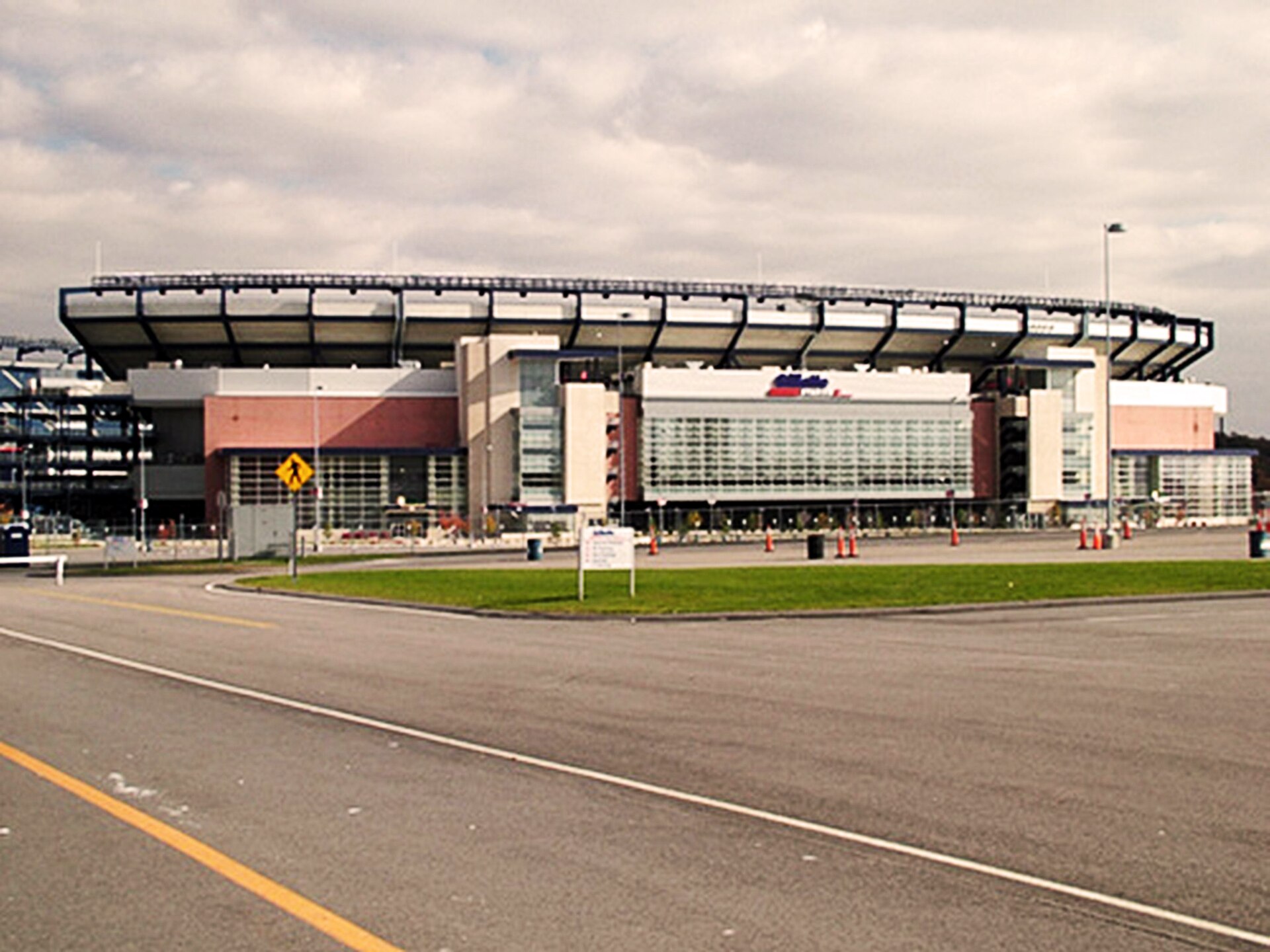
Most AI-sorting stories are laboratory demonstrations wearing an operations costume. This one is not. rStream's system is running on post-event waste at Gillette Stadium, and the company is now targeting stadiums, airports and other lower-throughput sites where a conventional 40-tonne-per-hour facility makes no economic sense.
That makes it worth a careful read rather than a dismissal — and a careful read is exactly where the headline number stops holding up.
The claim
rStream's trailer-based system uses computer-vision cameras, machine learning and precision actuators to separate mixed venue waste into recycling, compost and trash within 24 hours of an event. The company reports approximately 99% accuracy and 479,000 recyclable objects across seven full-stadium events.
What is genuinely strong
This is an operating deployment, not a demonstration rig. Three things make it operationally credible.
The model is venue-specific — trained against the actual cup, tray and packaging SKUs that this stadium sells, which is a far more tractable classification problem than open kerbside. Material records exist at event level, meaning the system produces a data trail rather than an anecdote. And a human quality monitor watches the outlet, which is honest about where automation currently sits.
The public-interest signal
A US Department of Energy REMADE Institute award listing identifies a $1,251,359 rStream Recycling project with D&K Engineering to develop a compact AI sorter for low-throughput settings such as universities, airports and theme parks.
That validates the problem as worth solving. It is not proof of diversion, and it is not proof of unit economics. Funding selects for promise, not for performance.
What the headline leaves out
An object count with no denominator is a marketing metric. Tonnes of clean material sold to a named buyer is an operations metric. Only one of them survives an audit.
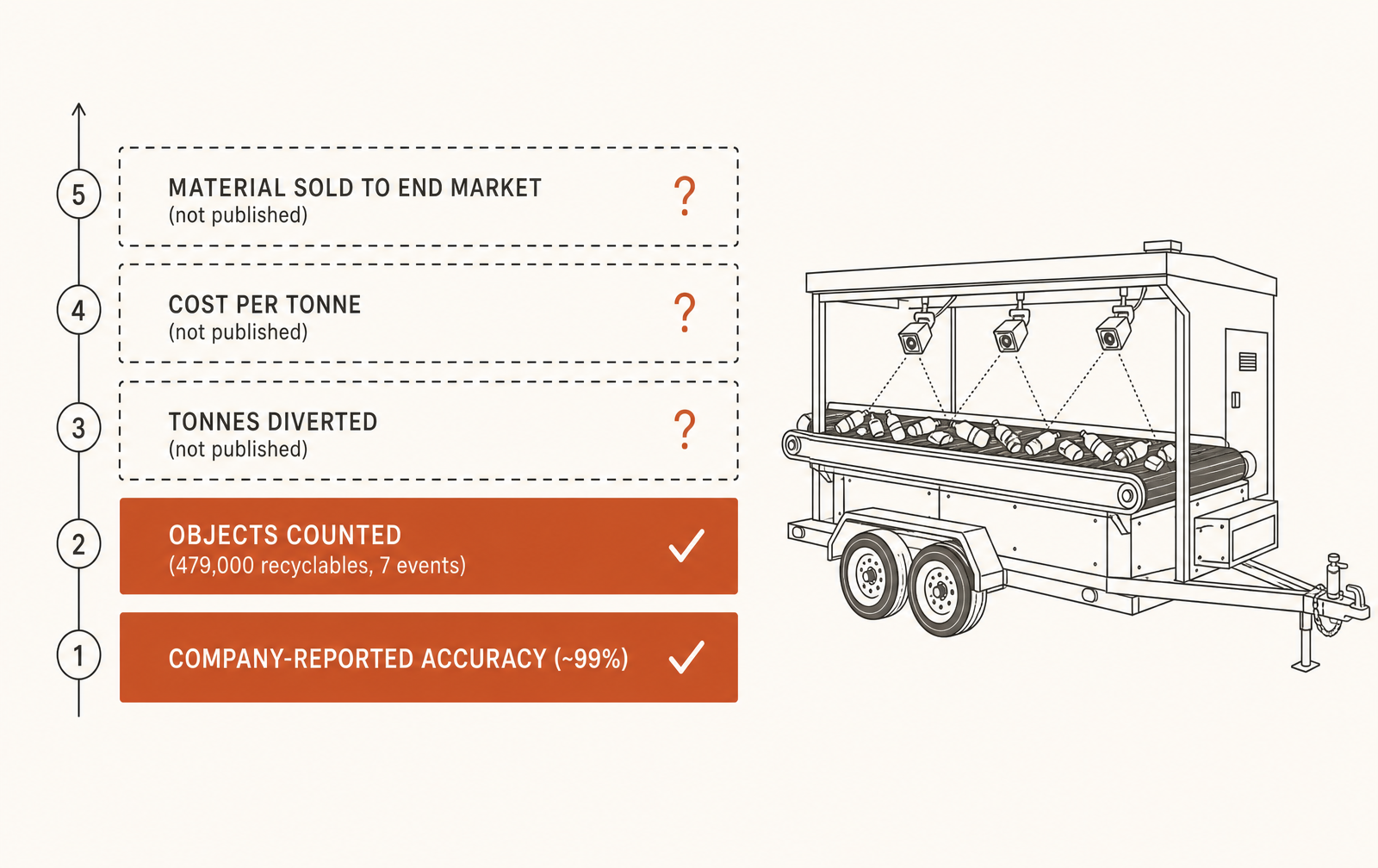
"Approximately 99%" arrives without a published denominator or test methodology. Accuracy of what — items correctly classified, items correctly ejected, or items correctly classified among those the system chose to act on? Those three numbers can differ by twenty points on the same run.
The 479,000 figure counts recyclable objects. Not total objects. Not tonnes. Not contamination avoided. Not material actually sold into a secondary-material market. Counting the things you caught is not the same as reporting the share of things there were to catch.
An operator still monitors the outlet, and residual waste goes to waste-to-energy — so the diversion claim depends on where you draw the system boundary.
Scale and business model
The strongest version of this story is not "99% accurate." It is "sorting became viable at a site where no MRF would ever be built." That claim is more defensible and more interesting.
The current system is tailored to stadiums, with rStream anticipating a smaller non-trailer version later in 2027. Accuracy and economics still need testing across airports, campuses and remote sites, all of which have different waste compositions and, critically, different SKU stability. A stadium sells the same twelve items all season. An airport does not.
The promise
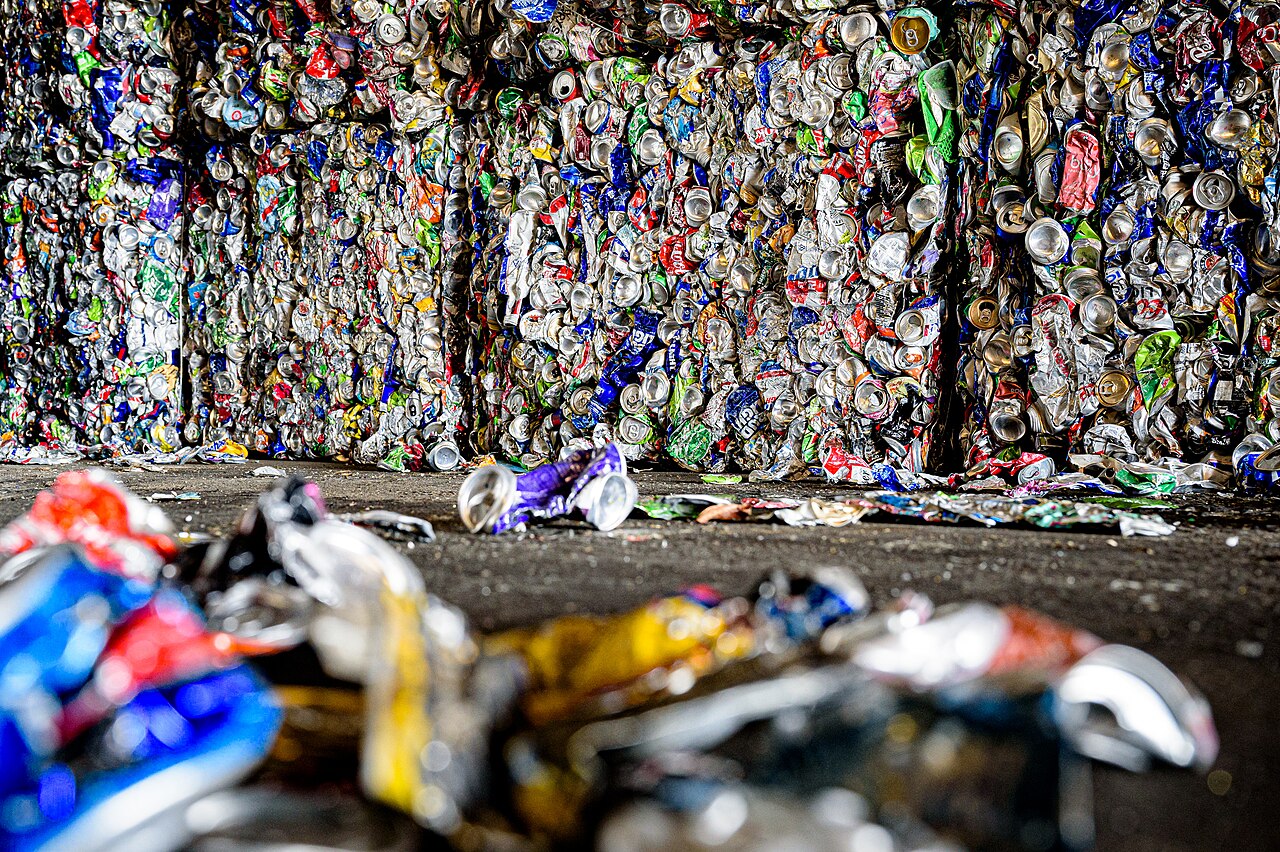
Compact automation could make sorting viable where a conventional facility is uneconomic, reduce manual handling of contaminated material, and recover material that would otherwise be discarded wholesale because nobody was going to hand-pick a stadium's worth of cups.
The catch
The evidence base is one venue, seven events, company-reported accuracy, and no public data on lifecycle impact, cost per tonne, contamination rates, energy use or end markets. This is promising niche infrastructure. It is not yet proof of universal small-site scalability.
Is "99% accurate" meaningful without an independent audit — or should tonnes of clean material actually sold be the primary metric?
References and image credits›
- 01Waste Dive — What's next for rStream's AI recycling tech after Gillette Stadium debut
- 02GlobeNewswire — rStream and Gillette Stadium Partner to Bring AI Robotics to Stadium Waste
- 03U.S. Department of Energy — REMADE Institute funding selections
Photo: Mark Goebel, CC BY 2.0 · Photo: Acediscovery, CC BY 4.0 · Photo: Wikimedia Commons contributor, CC BY-SA