
The Ocean Cleanup Says 50 Million Kilograms. Here Is What That Is a Fraction Of.
The removal figure is real and independently plausible. Set against annual plastic inflow to the ocean, it represents a small fraction of a single year — and the river interceptors are the part of the programme that actually scales.
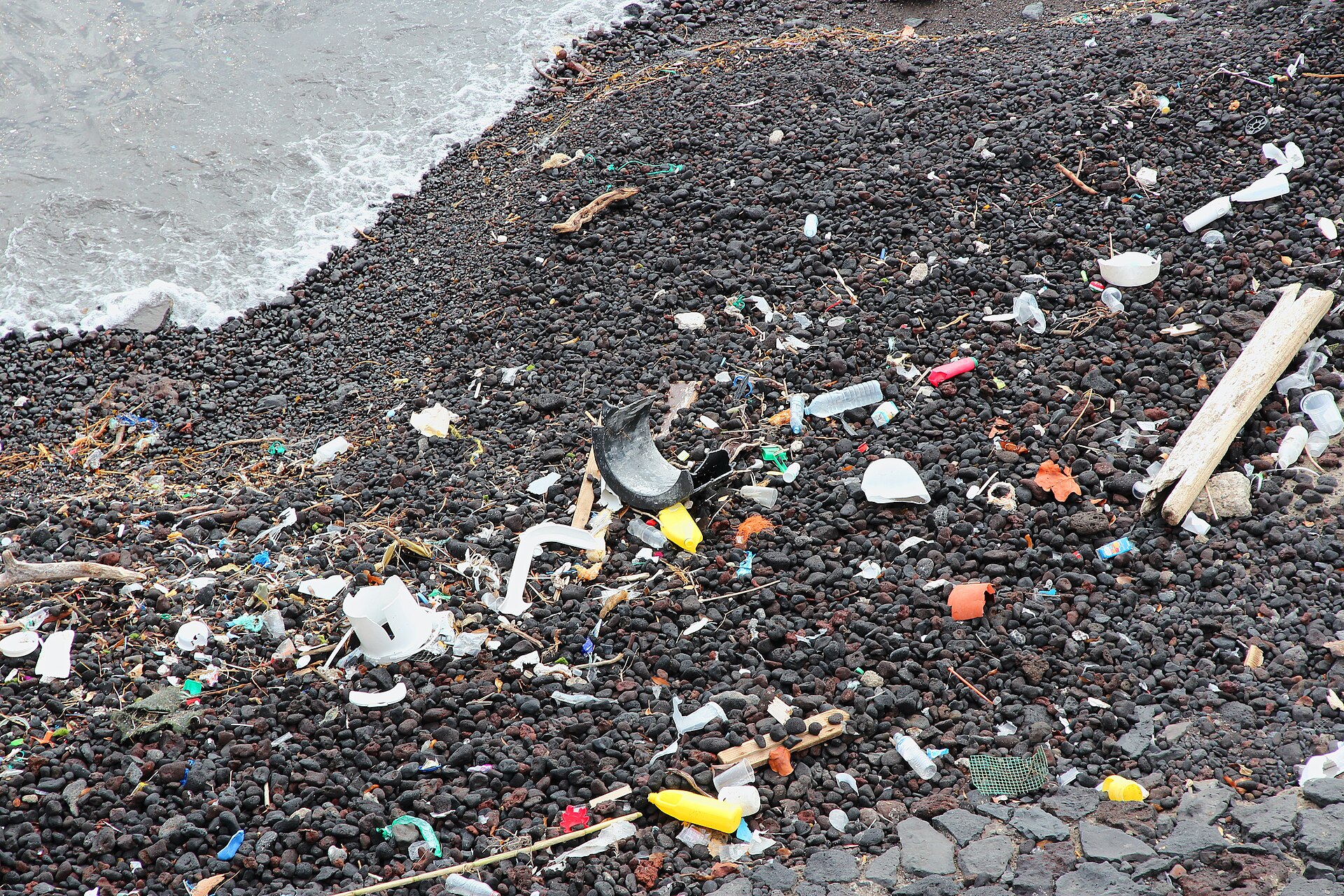
The Ocean Cleanup has removed a cumulative total in the tens of millions of kilograms of plastic from rivers and the ocean. That is a substantial operational achievement, delivered by an organisation that publishes its data and has survived a decade of engineering failures in public.
It is also worth putting next to the input figure.
The arithmetic
Estimates of plastic entering the ocean annually run from roughly 1 to 11 million tonnes, with 8 million tonnes the commonly cited midpoint. Fifty million kilograms is fifty thousand tonnes.
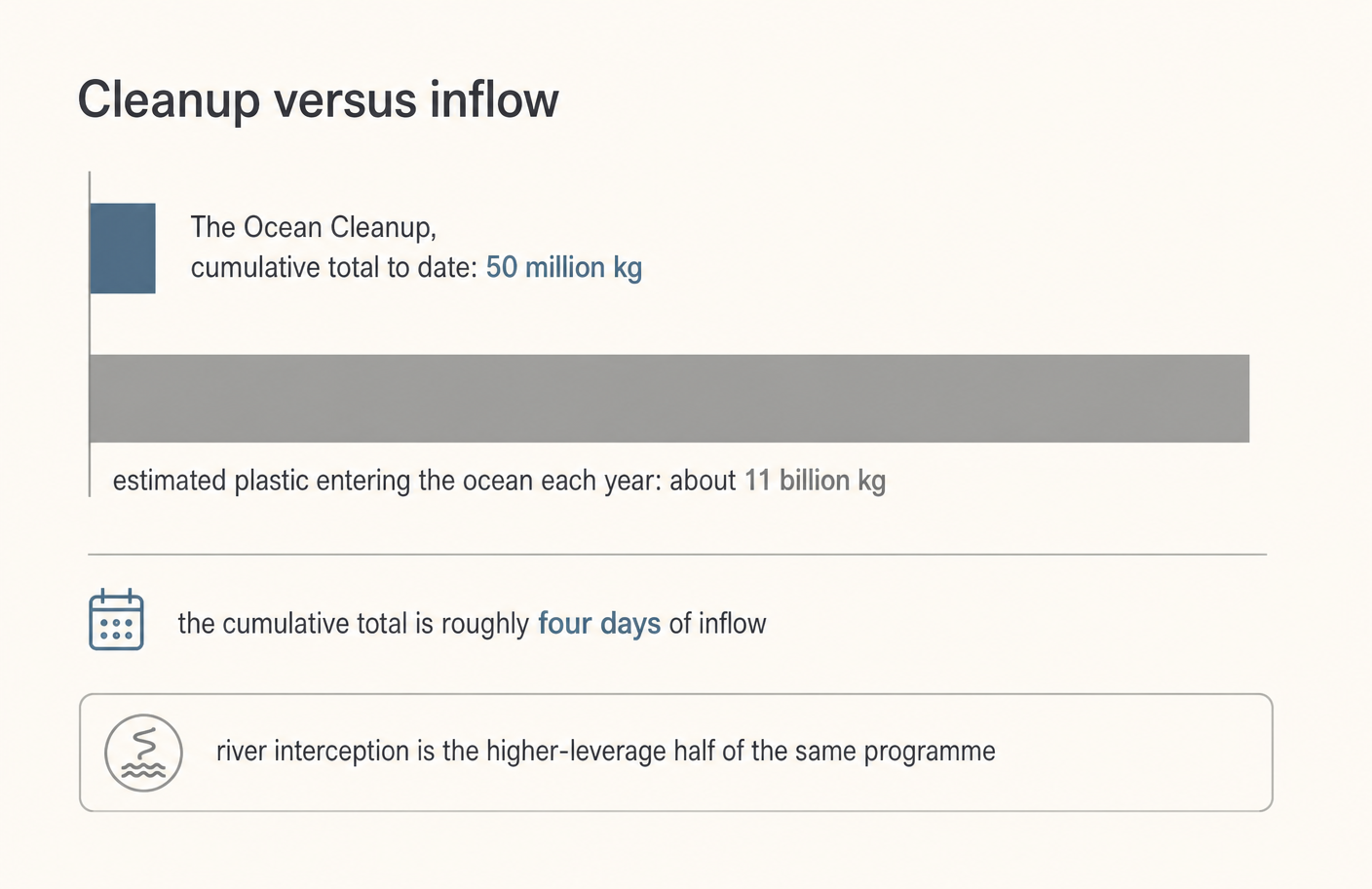
Cleanup systems are removing ocean plastic at meaningful scale.
Cumulative removal over roughly a decade is under one percent of a single year of estimated input. The interception work is where the leverage is.
Why the gyre systems are the weaker half
The Great Pacific Garbage Patch is not an island. It is a diffuse region where surface concentration is elevated to perhaps a few kilograms per square kilometre. Extracting that requires sweeping enormous areas of ocean with vessels that burn fuel continuously.
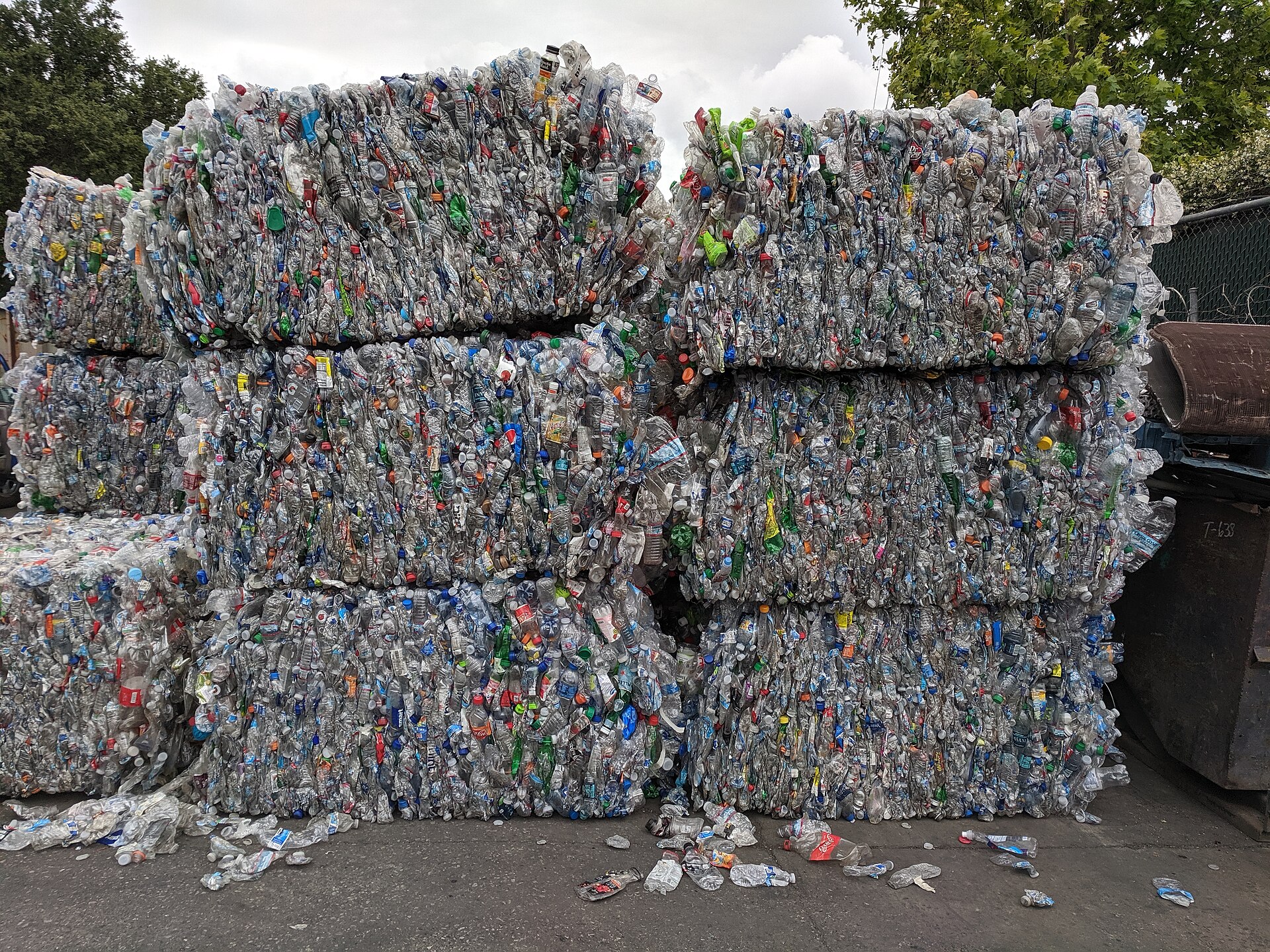
Three consequences follow. Energy cost per kilogram recovered is high. Bycatch of neuston — the surface-dwelling organisms that share the same accumulation zones — is a genuine ecological concern that the organisation has acknowledged and studied. And the material recovered is heavily degraded by UV and salt, so its recycling value is close to zero.
Why the river interceptors are the stronger half
The ocean systems bought attention and funding. The river systems do the work. Both statements are needed to describe the project honestly.
Roughly 1,000 rivers carry the large majority of plastic reaching the ocean. In a river the material is concentrated, freshly discarded rather than degraded, and moving through a fixed cross-section you can put a barrier across.
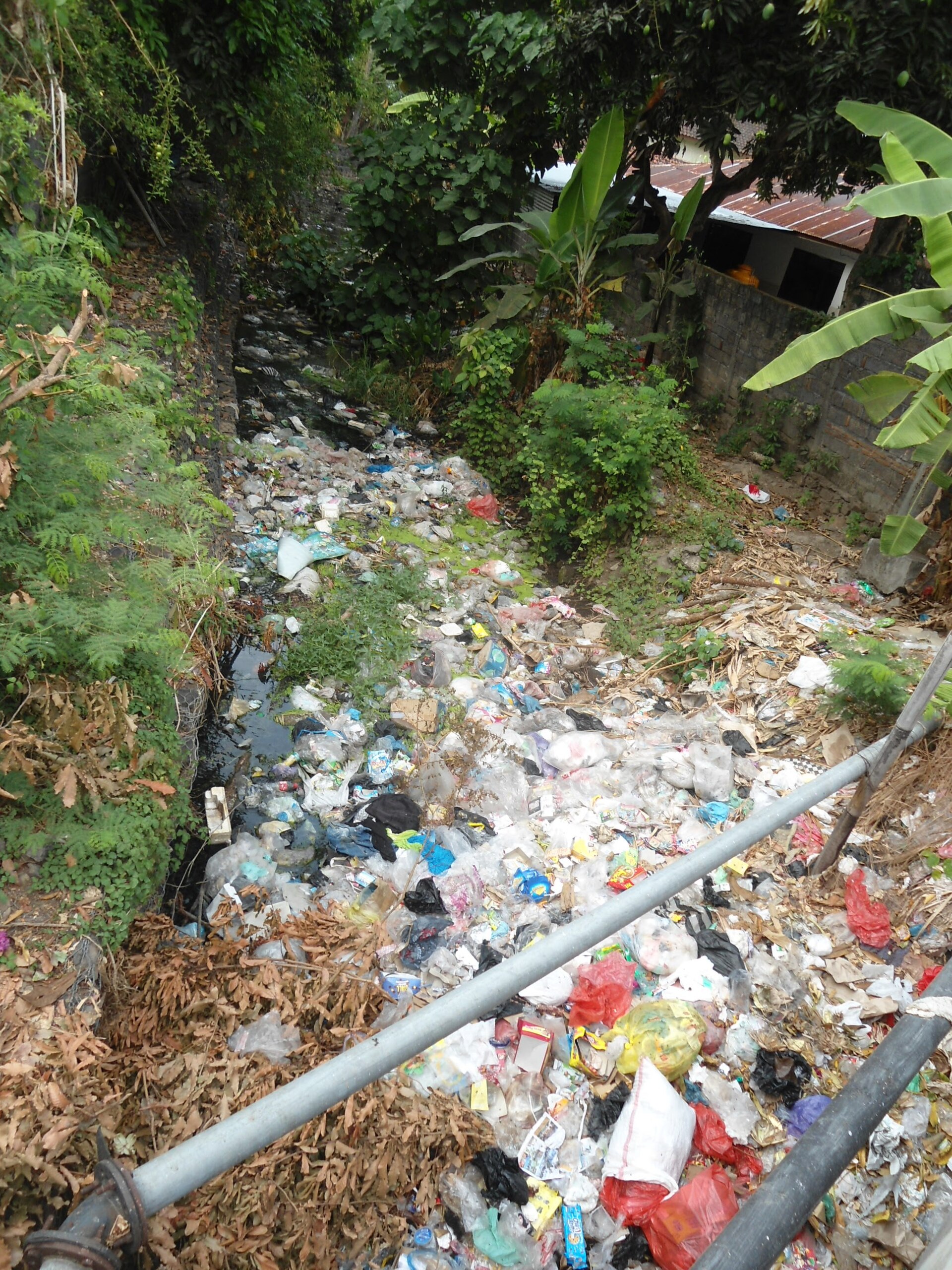
Cost per kilogram intercepted in a river is far below cost per kilogram recovered offshore, the plastic is often still recyclable, and the systems run continuously without a crewed vessel. If the organisation had launched with only the interceptors, the engineering story would be less dramatic and the impact per dollar considerably better.
What the criticism often gets wrong
It is not true that cleanup is pointless because it does not address the source. Legacy plastic already in circulation will keep fragmenting into microplastic for decades whether or not emissions stop, and removing macroplastic before it fragments has real value.
It is true that framing removal as a solution creates a moral hazard — it lets producers point at cleanup instead of at material design and waste infrastructure. The measured position is that interception is worth funding, gyre extraction is a demonstration with poor economics, and neither substitutes for keeping plastic out of rivers in the first place.
References and image credits›
- 01Meijer et al., river plastic emissions to the ocean, Science Advances
- 02UNEP — from pollution to solution: marine litter assessment
Photo via Wikimedia Commons, CC BY 3.0 · Photo via Wikimedia Commons, CC BY-SA 4.0 · Photo: DayakSibiriak, CC BY-SA 4.0