
How biohazardous lab plastics can become recyclable material
Laboratory plastic is regulated waste before it is a material. A new on-site system shreds, disinfects and dewaters it where it is generated, so what leaves the building is polymer flake rather than a hazard consignment. The step from flake to product is the one still missing.
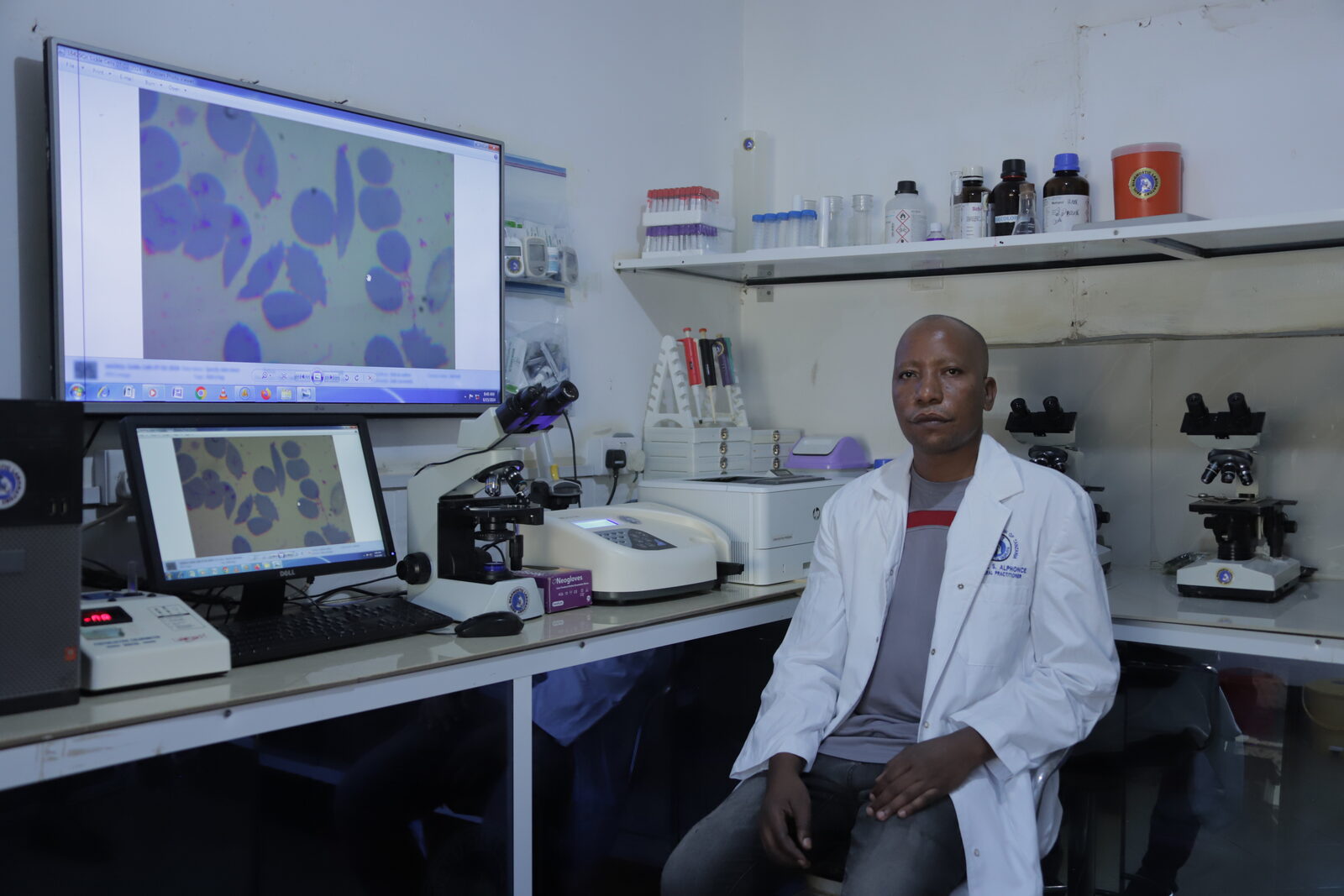
A pipette tip is polypropylene. A Petri dish is polystyrene. A culture flask is a clean, single-polymer moulding of exactly the kind a reprocessor would like to buy. And almost none of it is recycled, because the moment it touches biological material it stops being a plastic and starts being a regulated waste stream.
Envetec's GENERATIONS system, which Scottish Water has adopted as the first utility deployment, is an attempt to change the category before the waste leaves the building.
Why lab plastic is the awkward case
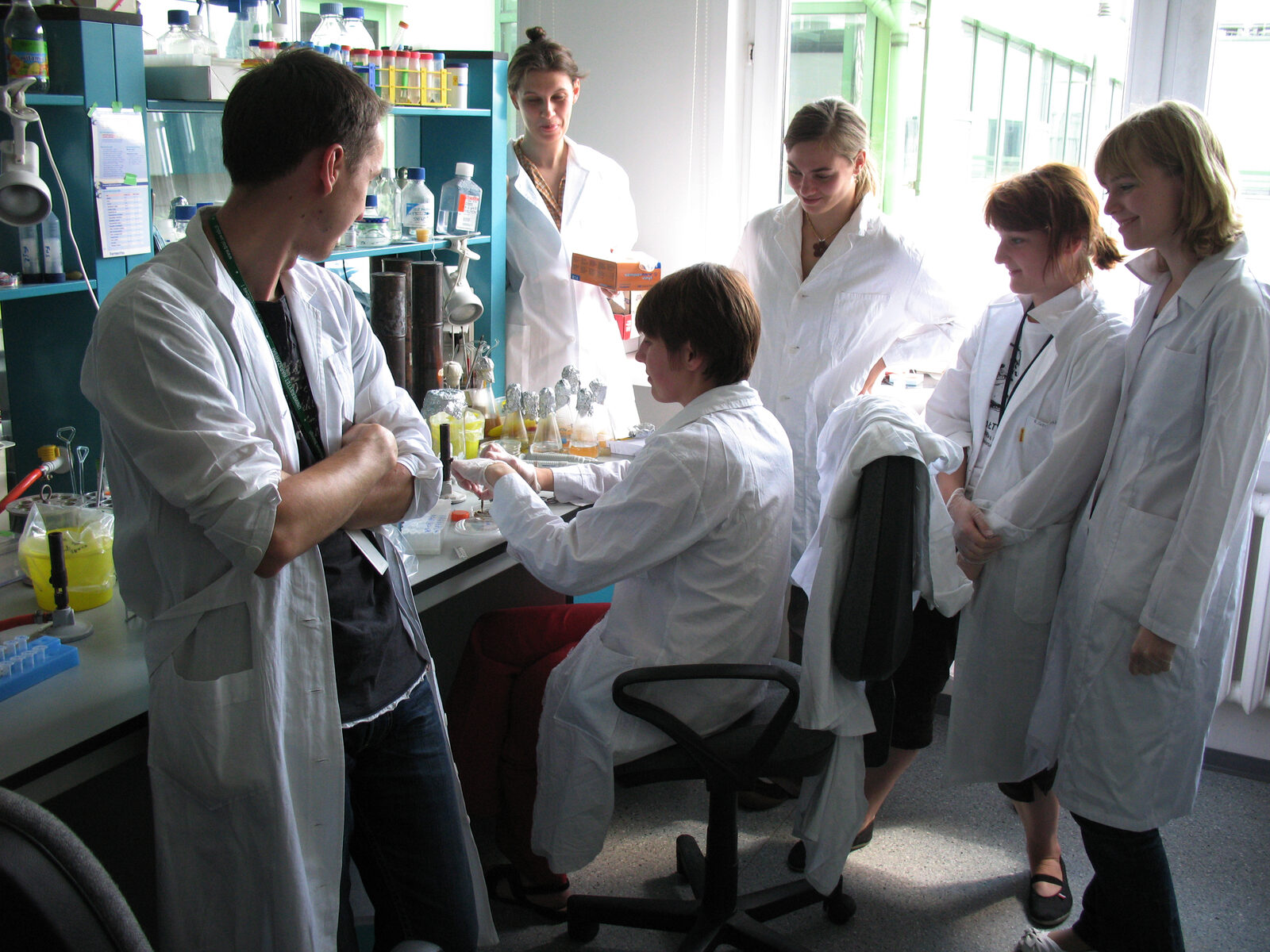
Most recycling problems are material problems: mixed polymers, additives, coatings, contamination you cannot see. Lab plastic is not that. It is usually well identified, often virgin-grade, and produced in predictable quantities by institutions that already track it carefully.
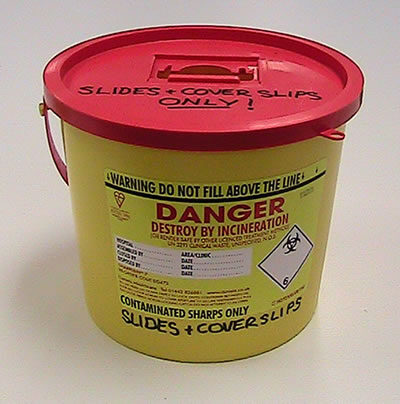
The problem is regulatory and logistical. Once a consumable is classified as clinical or biohazardous waste, the compliant routes are autoclaving followed by landfill, or incineration. Both consume the polymer. Both require the waste to be boxed, stored, collected and hauled by a licensed contractor.
Treating at the point of generation
The design premise is that if you neutralise the hazard where the waste is produced, everything downstream changes: no hazardous consignment, no specialist haulage, and an output that a materials recovery facility can actually accept.
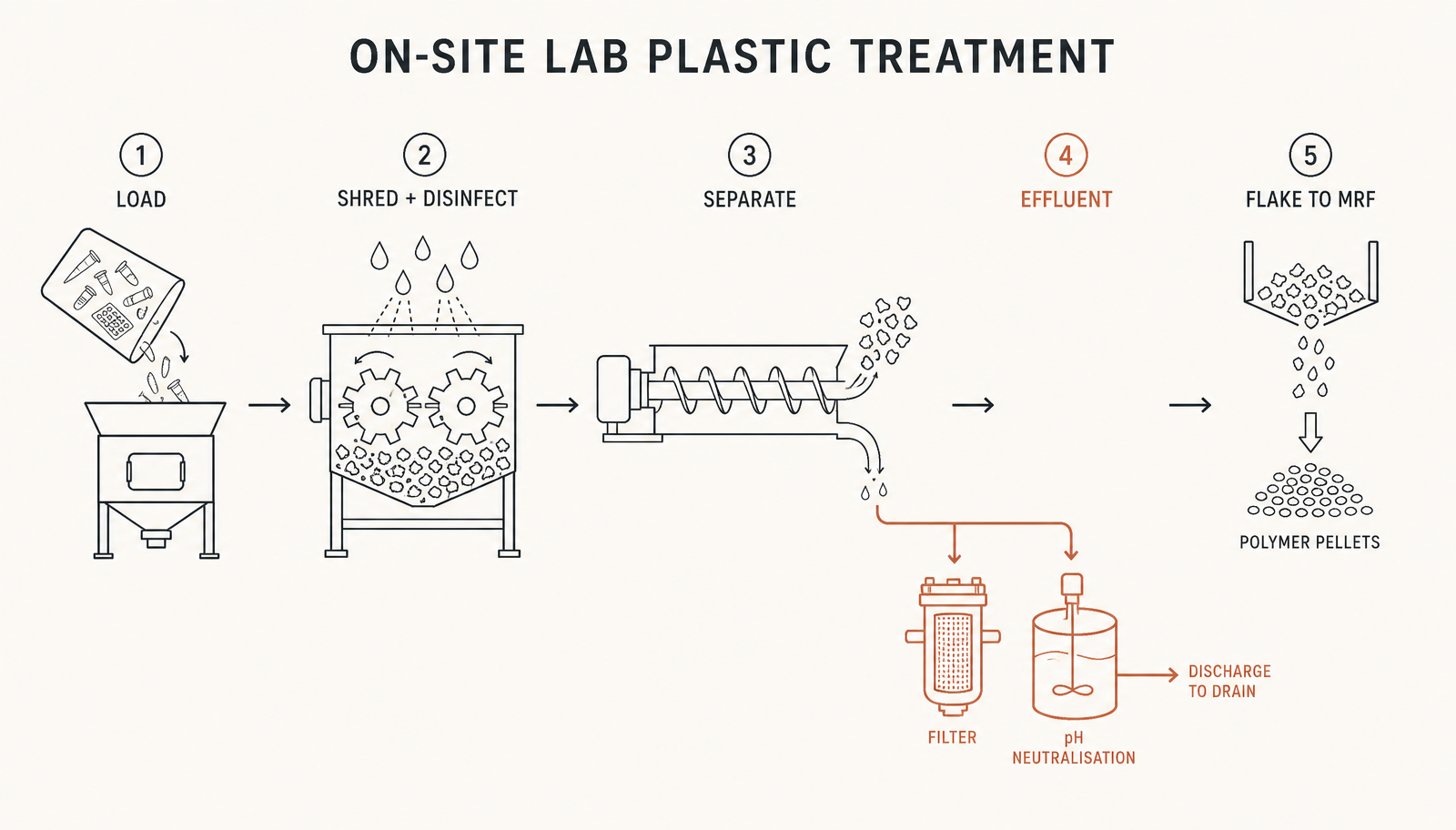
Load
Waste goes into the receiver in the lab, rather than into a bin that waits for collection.
Shred and disinfect at once
Blades reduce the material while an organic, biodegradable treatment compound disinfects it. The two happen together for a reason: shredding creates surface area, and a chemical disinfectant only works on surfaces it can reach. A sealed flask with contaminated liquid inside is not disinfected by anything applied to its outside.
There is no thermal step. Autoclaving is the conventional way to reach a defensible kill, and it is also what degrades the polymer, driving energy use and hauling hot, wet, sterilised waste to landfill.
Separate solids from liquid
An auger pushes the treated material forward and squeezes it, splitting the stream in two: wet polymer solids in one direction, effluent in the other.
Deal with the effluent
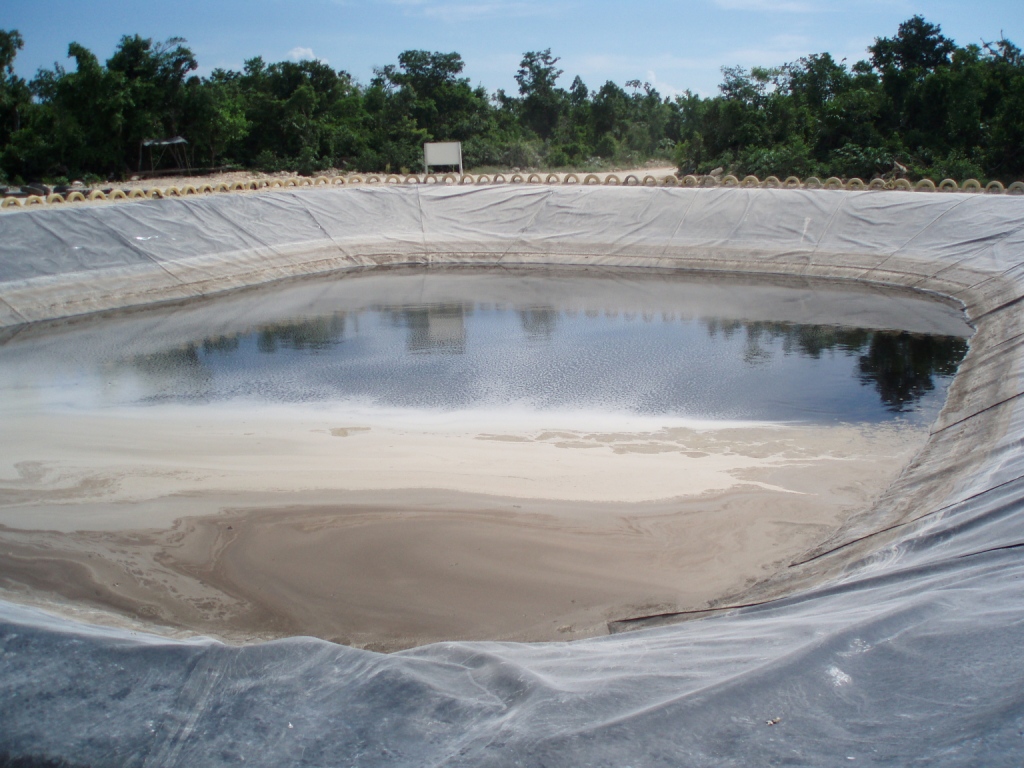
This is the part that gets left out of the elevator pitch. The liquid carries visible solids, microplastics generated by shredding, and residual treatment chemistry. It is filtered to capture particulates, then neutralised to bring pH into a dischargeable range before it goes to drain.
Produce flake
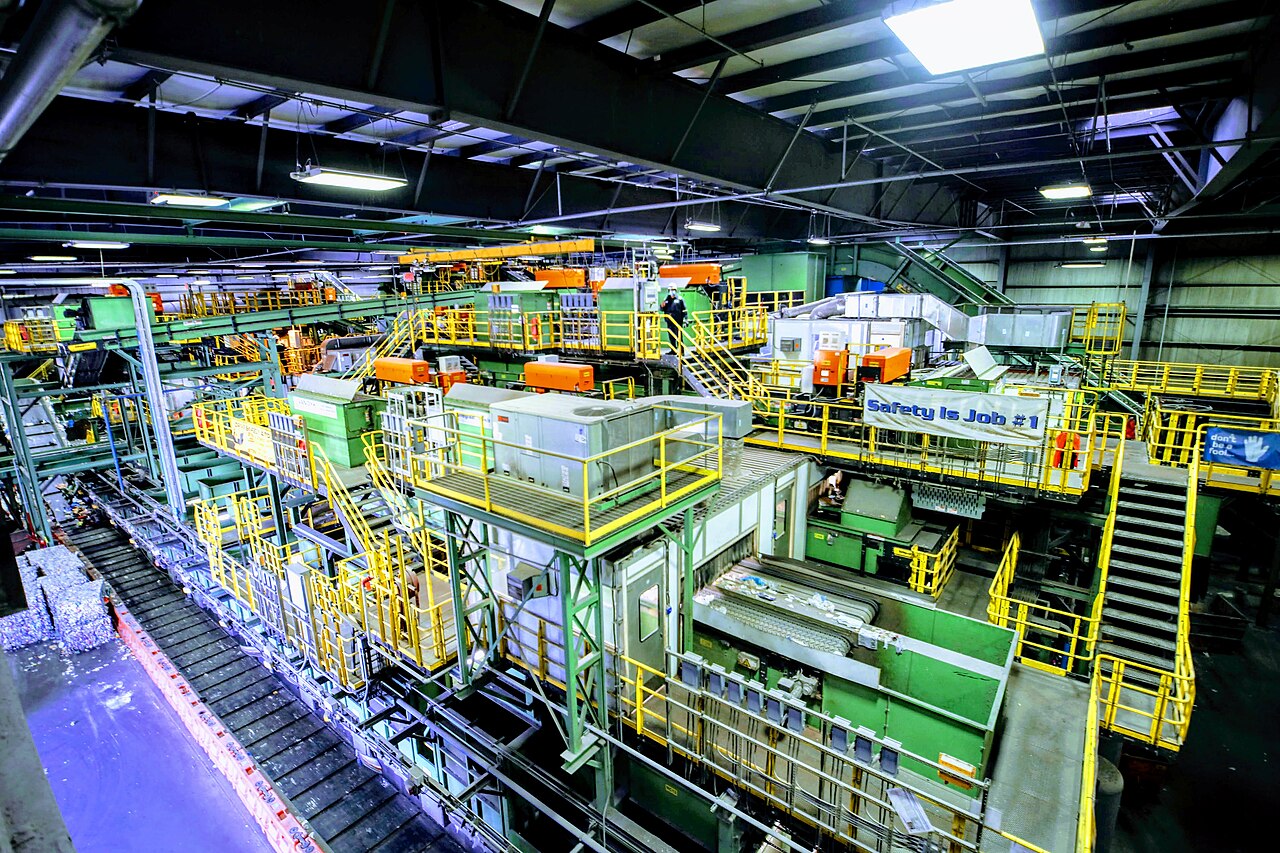
What comes out is a dry polymer flake — mixed, but no longer regulated. It goes to a materials recovery facility for separation and pelletisation like any other post-consumer plastic.
Does the flake become anything?
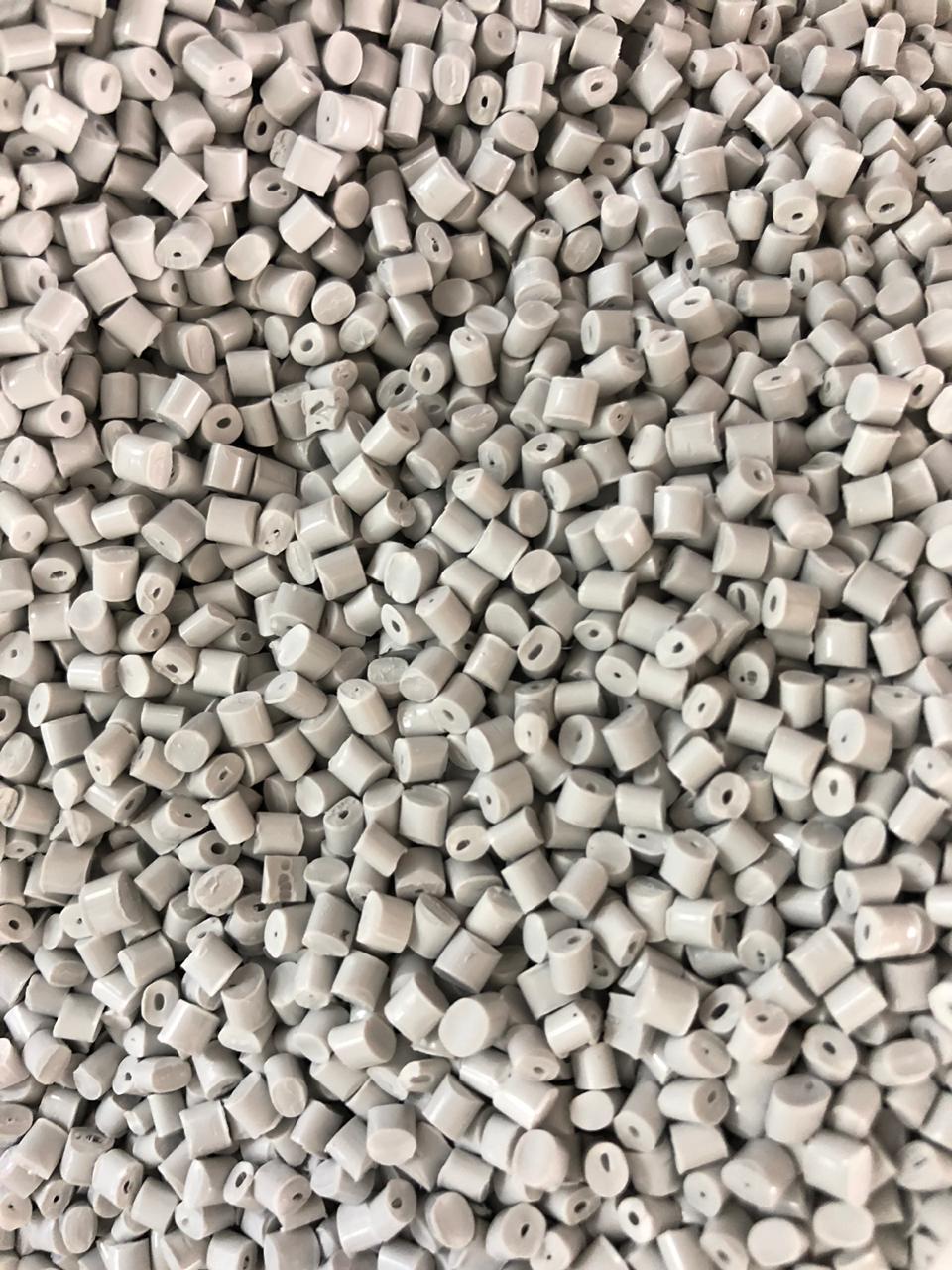
Envetec and BD ran a feasibility study on exactly that question. Post-industrial polystyrene media was converted into pellets and moulded into Petri-dish prototypes: lab plastic in, lab plastic out.
The reported numbers
Against its specified comparators, Envetec reports average reductions of 90% in treatment emissions, 94% in transport emissions and 70% in water use. Those are large figures, and the mechanism behind them is intuitive: no autoclave, no truck, no wash cycle.
The caveat is in the phrase "specified comparators". A comparison against long-haul incineration will produce a very different number from a comparison against on-site autoclaving with local landfill.
What has not been shown
The feasibility work used unused post-industrial material, not treated waste from a working lab. No recovery rate is disclosed — how much of the input mass becomes saleable flake. No economics are published. And the description of new-product manufacturing is qualified: it happens "where possible".
"Recyclable flake" is a material property. A closed loop is a supply chain, and it requires someone downstream to buy the flake, at a price, repeatedly.
Worth asking
Would you accept on-site chemical treatment of regulated lab plastics over off-site incineration — and what independent evidence would you want first? Third-party validation of the log reduction on real waste, discharge monitoring on the effluent, and a published mass balance would be a reasonable starting list.
References and image credits›
- 01Envetec — press releases
- 02Envetec — GENERATIONS technology
- 03BD and Envetec — closed-loop recycling feasibility study
Photo: Dariusz Bartosik, CC BY-SA 3.0, via Wikimedia Commons · Photo: Vivrolfe, CC BY-SA 4.0, via Wikimedia Commons · Photo: Victor787, CC BY 3.0, via Wikimedia Commons · Photo: CaptJayRuffins, CC BY-SA 4.0, via Wikimedia Commons · Photo via Wikimedia Commons, CC BY-SA 4.0 · Photo: Shimbaleo, CC0, via Wikimedia Commons · Photo: Grendelkhan, CC BY-SA 4.0, via Wikimedia Commons