
How molten salts turn plastic bags into fuel at 200°C
ORNL cracks polyethylene into gasoline-range fuel below 200°C using cheap aluminium-chloride salts. Clever chemistry — but lab-scale, polyethylene-only, and still a route to burning plastic.
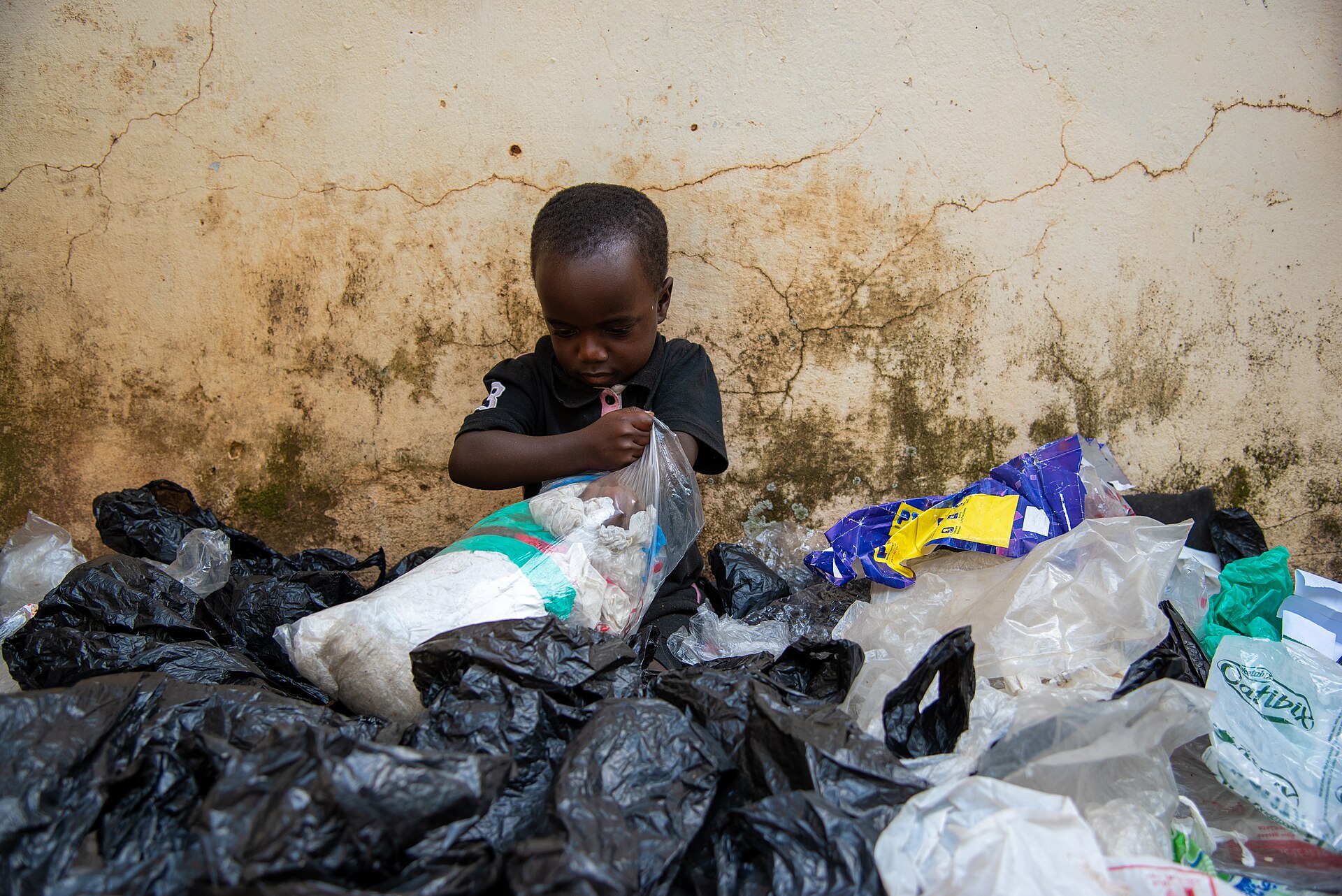
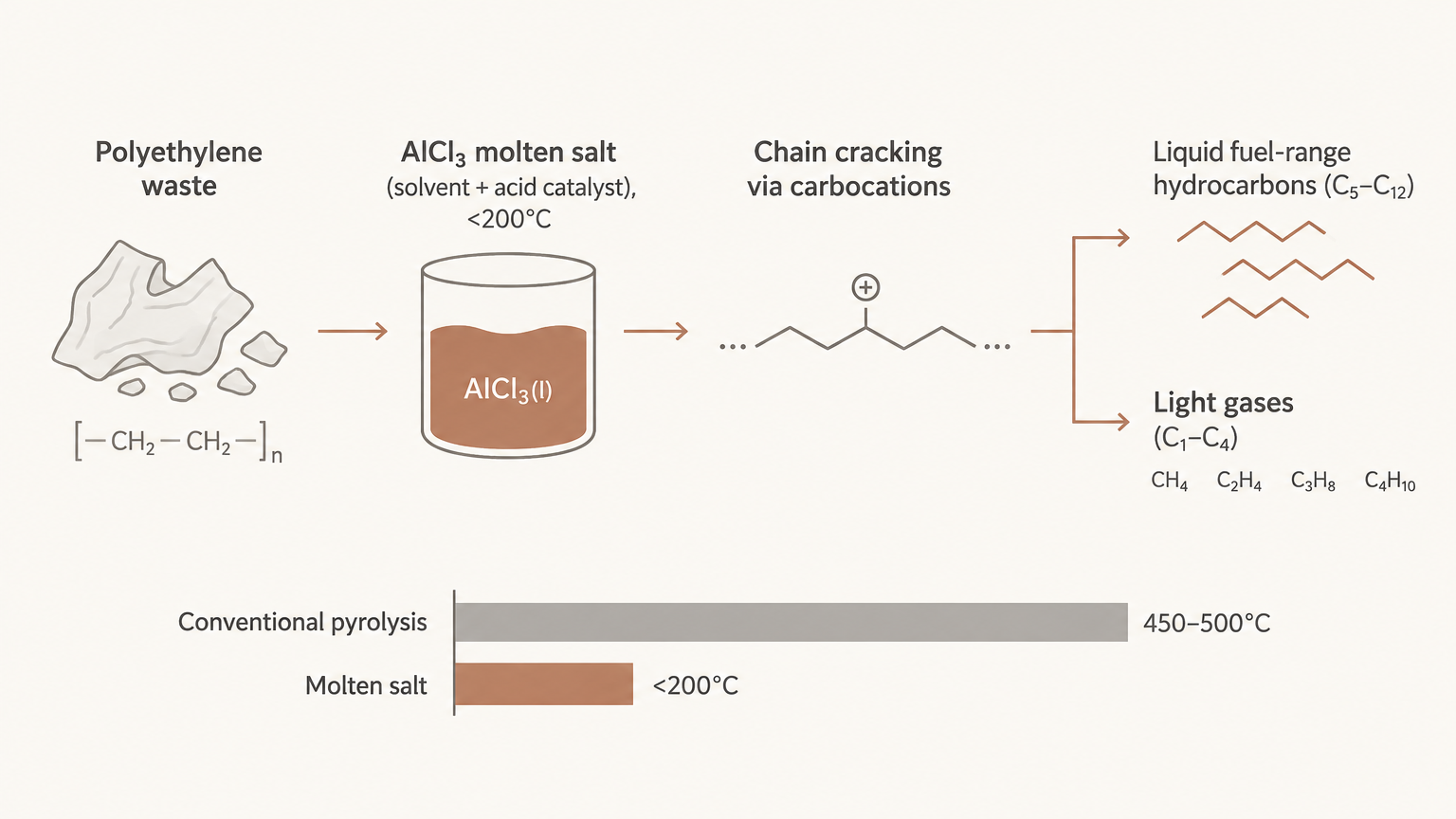
Polyethylene is the plastic in shopping bags, film wrap and cutting boards. It is also stubborn: its long carbon chains are held together by strong single bonds, and conventional pyrolysis needs roughly 450–500°C to crack them into fuel-range hydrocarbons.
A team at Oak Ridge National Laboratory (ORNL), led by Sheng Dai with postdoctoral researcher Liqi Qiu, reports doing the same job below 200°C — about kitchen-oven temperature — using inexpensive molten salts based on aluminium chloride.
One liquid, two jobs
The molten salt acts as both the solvent and the catalyst. The polyethylene dissolves into it, and the salt itself drives the reaction. That removes the usual extras: no noble-metal catalyst, no organic solvent, no external hydrogen and no chemical initiator.
Where the cracking happens
Aluminium atoms in the melt bind to three other atoms, which leaves them strongly acidic. Those acidic sites attack the polymer chains. When a chain meets one, it forms a carbocation — a positively charged carbon — which keeps breaking the chain into shorter molecules.
The team traced this using deuterium labelling, neutron scattering at ORNL's Spallation Neutron Source, soft X-ray spectroscopy at Berkeley's Advanced Light Source, NMR, in-situ X-ray diffraction and quantum-chemistry modelling. A binding-energy shift when an aromatic intermediate coordinates with aluminium is their evidence that the aluminium sites are the active ones.
What comes out
Simpler chains lean toward gasoline-range products; more complex chains toward diesel-range ones. The reported gasoline yield is about 60%.
The promise
- Lower heat: under 200°C, compared with 450–500°C for pyrolysis.
- Fewer ingredients: cheap, commercially available salts; no precious metals that can be poisoned.
- Commercial intent: a patent application has been filed.
The catch
- Lab scale only. No pilot plant, throughput or cost data has been published.
- The salt absorbs water. Aluminium chloride is hygroscopic, which makes it unstable and hard to handle industrially. The researchers are exploring ways to confine it; that is not solved.
- Missing numbers. No diesel yield, fuel purity, salt recovery rate or salt lifetime is reported. If gasoline is 60%, the other 40% is not described.
- Polyethylene only. Mixed plastic waste would need sorting first.
- It is still fuel. The carbon in the plastic is burned and released as CO₂. Plastic-to-fuel is downcycling, not a loop back to new plastic. ORNL frames the work partly around energy security, which is a different goal from solving plastic waste.
Sources
- ScienceDaily — A new process turns plastic waste into gasoline and diesel fuel
- ORNL — Molten salt chemistry converts consumer polymer into fuel
- JACS — Polyethylene Upcycling to Liquid Alkanes in Molten Salts
Is turning plastic into fuel real recycling, or a cleaner way to burn old plastic?
References and image credits›
Photo: via Wikimedia Commons, CC BY-SA · Diagram: The Waste Stack